In short
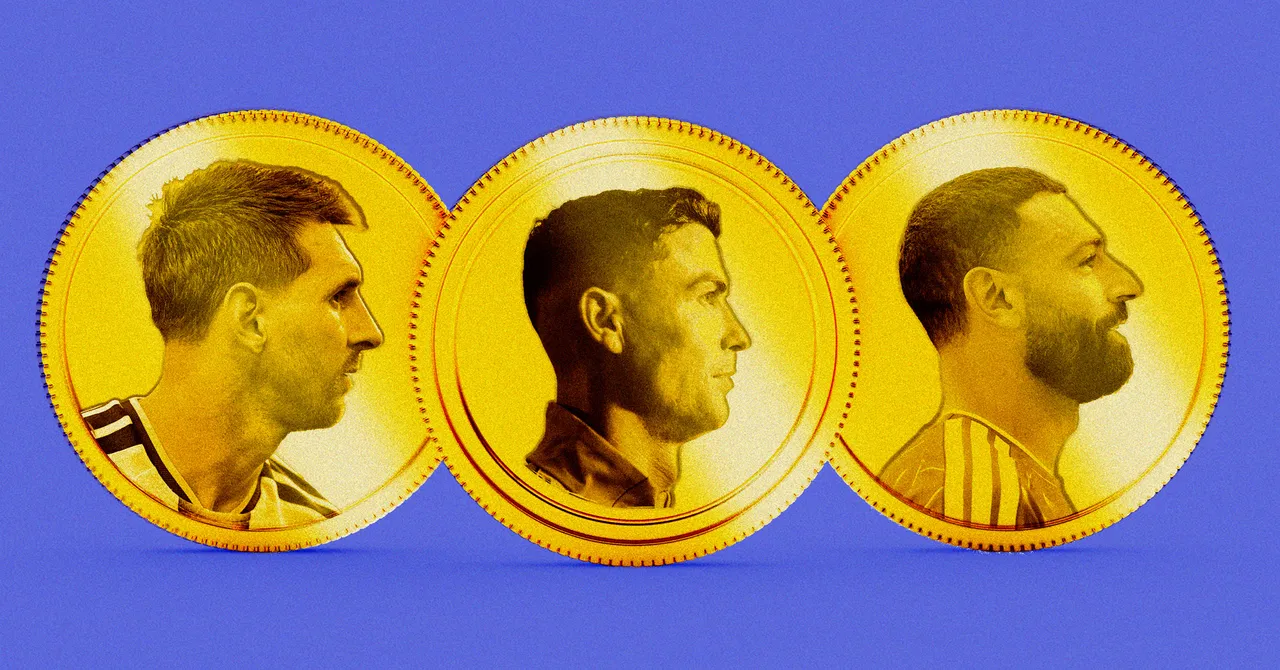
Messi and Ronaldo are increasingly turning football wealth into equity stakes in startups, AI and health technology, while Salah is sticking to endorsements, property and philanthropy. The contrast shows how elite athletes are rethinking life after football.
- Messi has built a venture-style portfolio through Play Time and other tech-linked investments.
- Ronaldo is concentrating on health tech, wellness platforms and performance-focused businesses.
- Salah’s off-field strategy remains more traditional, centered on endorsements and property.
- The rise of athlete equity deals reflects a broader shift from sponsorship income to long-term ownership.
For two decades, Lionel Messi, Cristiano Ronaldo and Mohamed Salah have helped define modern football at its highest level. On the pitch, they have been measured by goals, trophies and global influence. Off it, their paths are now separating in a way that says as much about the business of elite sport as it does about their personal brands.
As the 2026 FIFA World Cup brings one chapter of that rivalry to a close and adds another milestone to the careers of all three stars, their financial strategies are becoming easier to compare. Messi and Ronaldo are building portfolios that look increasingly like those of venture-backed founders and private equity investors. Salah, by contrast, is keeping his holdings more conventional, leaning on endorsement deals, property and philanthropy rather than startup equity.
The contrast matters because the sports economy has changed. Top athletes are no longer just paid to wear a logo or appear in a campaign. Increasingly, they are being invited to own part of the companies they promote, giving them a chance to benefit if those businesses grow. With hundreds of millions of followers, superstars can deliver not only credibility but also distribution, attention and cultural cachet that many startups cannot buy through advertising alone.
That transformation has made the world’s most famous footballers into something closer to strategic investors. It has also raised the stakes around valuation, risk and long-term planning for athletes who may spend only a decade or two at the top of their professions.
From endorsements to ownership
For much of the modern era, athletes monetized fame through sponsorships, appearance fees and branded campaigns. The new model is different. Rather than collecting a one-time payment, they may receive a stake in a company and wait for the upside to materialize later.
That shift reflects a broader change in how wealthy athletes think about security. A sponsorship can be lucrative during peak playing years, but equity has the potential to compound over time. If a startup succeeds, the value of a small ownership slice can far exceed the cash payout from a conventional marketing contract.
Dubai-based valuation specialist Kamraan Khan said the trend reflects a wider effort by athletes to create durable wealth beyond the limits of a sporting career.
He argued that moving away from simple sponsorship arrangements toward equity and startup exposure is part of a longer-term strategy to secure financial stability after retirement.
Khan also noted that ownership can offer capital growth and, in some cases, dividends — a structure that can be more sustainable than relying on annual endorsement campaigns.
That logic is especially relevant to athletes with enormous global reach. A football star with a fan base spanning Europe, the Middle East, Africa, Asia and the Americas can offer a startup something that looks like built-in international marketing infrastructure. For founders, that can be worth more than the money itself.
Messi’s venture-style portfolio
Messi has become the most visibly venture-oriented of the trio. In 2022, he helped launch Play Time HoldCo, a San Francisco-based investment firm created with entrepreneur Razmig Hovaghimian, who previously founded the streaming platform Viki before its acquisition by Rakuten.
Play Time was initially described as targeting about $200 million in capital, though the firm’s exact scope has evolved. What is clear is that its investment mix now reads like a crossover between Silicon Valley and global sports business.
According to the company’s website, Play Time has backed a range of startups spanning artificial intelligence, media and sports technology. The portfolio includes FieldAI, Fish Audio, World Labs, Perceptron, Intangible and SuperAnnotate. It also features more sports-specific bets such as the FIFA-licensed mobile game Matchday and memorabilia marketplace AC Momento.
That spread is revealing. Instead of focusing on one narrow category, Messi’s firm appears to be positioning itself across the infrastructure of digital culture: tools for creating AI systems, platforms for entertainment and products tied to fandom and sports commerce.
Messi’s other tech-linked bets
Play Time is only part of Messi’s broader investment picture. Outside the fund, he also has an equity stake in Sorare, the fantasy sports platform that lets users collect and trade officially licensed digital cards. Sorare has long been one of the most recognizable examples of the overlap between sports fandom, digital ownership and speculative value.
Messi is also a shareholder in KRÜ Esports, the gaming organization founded by his former Argentina teammate Sergio Agüero. That move places him within one of the fastest-growing sectors in sports entertainment, where competitive gaming has become a serious global business with sponsorships, broadcasting rights and event revenue of its own.
In addition, Messi signed a three-year global ambassadorship with Socios.com, the blockchain-based fan-token platform. The arrangement reportedly carried a value of about $20 million. Importantly, that deal was a promotional contract rather than a disclosed equity investment, showing that Messi still uses more traditional commercial agreements alongside his ownership positions.
Perhaps the most unusual part of Messi’s off-field financial strategy is the ownership component attached to his 2023 move to Inter Miami. In Major League Soccer, player compensation is tightly structured, and an ownership element for a star player remains highly unusual. Reports have suggested a stake was included in the deal, though the club and the league have not publicly detailed the terms.
The timing appears favorable. Sportico valued Inter Miami at $1.45 billion in February 2026, up 22 percent from the prior year and the highest valuation ever recorded in Major League Soccer. If Messi does indeed hold a meaningful slice, the arrangement could become one of the most lucrative athlete-club alignments in North American sports history.
Ronaldo’s health-tech strategy
Ronaldo’s investment profile looks different, but no less deliberate. His portfolio is centered less on broad venture exposure and more on health, fitness and longevity — themes that match the personal brand he has cultivated for years.
In May 2024, Ronaldo became an investor in Whoop, the wearable fitness and health analytics company. Whoop described the move as one of his most significant investments to date. He was not new to the product: he had already been a paying user for years before putting capital behind the company.
Ronaldo has said that Whoop is one of the key tools he uses to support his long-term health, underscoring how closely his investment choices mirror his public identity.
That alignment is strategic. For a player whose image has long been built around discipline, conditioning and performance longevity, backing a company that measures recovery and athletic readiness makes commercial as well as symbolic sense.
Whoop’s expansion in the Middle East has also been supported by heavyweight sovereign investors, including the Qatar Investment Authority and Mubadala Investment Company. That backing points to the growing institutional appetite around wellness technologies, particularly in markets with strong health, lifestyle and elite-sport ambitions.
The Pro2col and Bioniq deals
Ronaldo’s most concrete recent move came in early 2026, when he paid $7.5 million for a 10 percent stake in HBL Pro2col Software, a Herbalife subsidiary behind Pro2col. The company describes Pro2col as a personalized digital health and wellness operating system, and the transaction deepened a business relationship between Ronaldo and Herbalife that dates back more than a decade.
A month later, Herbalife announced it would acquire London-based Bioniq in a transaction worth up to $150 million. Ronaldo had already been an early investor in Bioniq, which uses AI to personalize supplement recommendations. Under the new structure, Bioniq’s technology is expected to be folded into Pro2col.
Ronaldo framed the combination as a way to scale tailored wellness products to a much wider audience.
In a joint statement, he said that bringing together Bioniq’s personalized supplement approach, Pro2col’s platform and Herbalife’s global distributor network would allow the company to deliver individualized wellness on a much larger scale.
That is consistent with a broader commercial trend: fitness and nutrition companies are racing to use data, AI and personalization to lock in recurring relationships with consumers. Ronaldo’s investment approach suggests he sees that market as a natural extension of the performance culture that made him famous.
Ronaldo’s club ownership angle
Ronaldo has also been linked to ownership in Saudi Arabian football. Reports have indicated he received a 5 percent stake in Al-Nassr, the Riyadh club he joined in 2023. The deal was said to have been finalized in 2025 and valued at roughly £50 million, or about $66.7 million.
If accurate, that stake adds another layer to Ronaldo’s business profile: not only as an athlete and brand, but also as a participant in the club’s long-term commercial upside. As football in Saudi Arabia continues to expand its international profile, such arrangements could become increasingly common.
Salah’s more traditional path
While Messi and Ronaldo are stepping deeper into startup ownership, Salah has taken a comparatively cautious route. His public business footprint remains centered on commercial holdings and real estate rather than widely disclosed investments in venture-backed technology companies.
That does not mean he is passive off the pitch. It means his strategy appears more conservative, more familiar and perhaps more deliberately insulated from the volatility of startup investing.
Salah’s best-known commercial relationships remain standard endorsement deals with brands such as Adidas, Pepsi and Vodafone Egypt. Alongside those arrangements, he has maintained a philanthropic profile through the Mohamed Salah Charitable Foundation.
That mix reflects a different philosophy of wealth building. Where Messi and Ronaldo are increasingly willing to accept equity risk in exchange for upside, Salah seems content to combine endorsements with tangible assets and charitable work.
There is no single correct model. For some athletes, startup investing offers a chance to participate in the growth of industries they already understand. For others, the stability of real estate, holding companies and brand partnerships may be more attractive, especially when paired with high-visibility charitable efforts.
Why athletes are becoming investors
The football superstars’ diverging strategies sit within a much larger shift across elite sport. Athletes are more financially sophisticated than they once were, and the ecosystem around them is more prepared to treat them as capital partners rather than just advertising faces.
Social media has amplified that trend. A top player now arrives with built-in global distribution: millions of people who are likely to notice a company because the athlete is involved. In a crowded market, that can help startups cut through the noise and build trust faster.
At the same time, investors and founders are looking for cultural legitimacy. A celebrity backer can signal that a product is not merely a financial bet but a brand with mass appeal. In sectors like AI, health tech, consumer wellness and gaming, that signal can be especially valuable.
This does, however, raise questions. Celebrity investors can bring attention, but attention does not guarantee business success. Many startups still fail, regardless of the fame attached to them. Equity can deliver outsized gains, yet it can just as easily become worthless.
That is why due diligence matters. Khan stressed that whether the asset is a startup, a private business or property, understanding valuation and risk remains essential before committing capital.
A quick comparison of the three approaches
| Player | Main off-field focus | Representative deals | Overall style |
|---|---|---|---|
| Lionel Messi | AI, media, sports tech and digital assets | Play Time, Sorare, KRÜ Esports, Inter Miami ownership component | Venture-style, diversified and startup-heavy |
| Cristiano Ronaldo | Health tech, wellness and performance tracking | Whoop, HBL Pro2col Software, Bioniq, possible Al-Nassr stake | Focused, brand-aligned and health-centric |
| Mohamed Salah | Commercial endorsements, property and philanthropy | Adidas, Pepsi, Vodafone Egypt, charitable foundation | Traditional, conservative and lower-profile |
What the World Cup moment adds
The timing of this comparison gives it extra weight. World Cups are not just tournaments; they are global career markers. For Ronaldo, this tournament marked his final appearance at the event, closing the loop on a six-World Cup run that has defined an era of Portuguese football.
For Messi, the competition remains another stage on a career already crowded with milestones. For Salah, it is another chance to reinforce his status as one of the defining players of his generation, even if his post-career strategy looks less flashy than that of his peers.
That global stage also amplifies the off-field story. The same audience that watches these players under pressure is also learning how they intend to deploy their wealth and influence after retirement.
In that sense, the tournament is doing more than deciding results. It is offering a public glimpse into the financial futures of three athletes whose legacies now extend far beyond goals and trophies.
What comes next for football’s investor class
The next phase of athlete investing will likely become even more sophisticated. As private markets deepen and more startups seek recognizable backers, sports stars may be asked not just to invest but to help shape product design, distribution and brand strategy.
That could lead to more specialized portfolios. Messi’s activity suggests a broad venture approach across technology and entertainment. Ronaldo’s choices point toward performance, health and data-driven wellness. Salah’s restraint suggests a model in which endorsements and tangible assets still offer the best balance of visibility and control.
For the companies involved, the upside is obvious. A single athlete can open doors to new audiences and markets. But success will still depend on product quality, execution and market fit — not just fame.
For the players, the stakes are personal. The careers of elite footballers may be long by sporting standards, but they are still finite. Building a post-playing income stream that is resilient, diversified and potentially scalable is a logical response to that reality.
Messi and Ronaldo appear to have concluded that the smartest way to do that is through ownership. Salah seems to prefer stability and simplicity. None of those approaches is inherently better. Together, though, they reveal how the business of football is changing, one investment at a time.
What once was a rivalry measured by goals and trophies is now also a study in capital allocation. On that score, football’s great names are not just competing for legacy — they are building very different futures.