In short
Three Amazon employees say the company threatened discipline after they testified in favor of Seattle’s data center moratorium. They have asked the city to investigate possible political discrimination.
- Employees say HR meetings followed their public testimony on data centers.
- The complaint alleges Amazon violated Seattle protections for political speech.
- Seattle has imposed a one-year moratorium while reviewing data center impacts.
- The case highlights rising tension around AI infrastructure, utilities, and local community concerns.
- Amazon has not yet publicly responded to the allegations.
Three Amazon software engineers who publicly backed tighter limits on large-scale data centers in Seattle say the company has responded by putting their jobs at risk. The workers, all active in Amazon Employees for Climate Justice, allege that Amazon summoned them to HR meetings after they testified before the Seattle City Council and warned them that disciplinary action, including possible termination, could follow.
The dispute lands in the middle of a wider political fight over the rapid expansion of data centers, the power they consume, and the extent to which local governments should slow or reshape that growth. It also raises a sensitive question inside one of the world’s largest technology companies: whether employees can take part in public policy debates about the infrastructure powering artificial intelligence without fearing retaliation.
On Thursday, the workers filed a complaint asking Seattle’s Office for Civil Rights to investigate Amazon’s conduct. The complaint argues that the company violated city protections against employment discrimination based on political beliefs and organizational membership. Amazon did not immediately comment.
What triggered the complaint
The three employees — Patrick Schloesser, Darius Irani, and Liesl Wigand — testified earlier this month at Seattle City Council hearings about proposed limits on major data center development. Their remarks came as the city was considering a one-year moratorium on large-scale data centers, a pause intended to give lawmakers time to study the consequences of the sector’s expansion.
According to the workers, the hearing appearances were followed almost immediately by separate meetings with Amazon’s Employee Relations team. Schloesser and Irani said they were contacted shortly after the council debate, while Wigand was also called in. The employees say HR representatives told them the company was reviewing their conduct and that the outcome could include discipline or dismissal.
Schloesser said the meeting felt abrupt and unsettling. He described receiving an unexpected Zoom call while he was preparing for another work meeting and said the conversation left him with the sense that he was being pressed to confess to wrongdoing. In his account, the company accused him of violating Amazon’s communications rules, even though he said he did not represent himself as an official company spokesperson during the public hearing.
Schloesser said he does not intend to be silenced by the company or by any large corporation, framing the conflict as a defense of employees’ right to speak on political issues in the city where they work.
Irani described a similar experience. He said HR sent him a confidential meeting request and asked questions about the hearing and about other employees who had attended. He said he left the meeting feeling shaken and uncertain, only later becoming angry after realizing the other testifying employees had undergone comparable questioning.
The broader battle over Seattle’s data center future
The controversy does not exist in a vacuum. Seattle recently enacted a one-year moratorium on large-scale data centers, freezing new proposals while officials examine what the industry means for the city’s future. The pause comes amid growing public concern over the environmental and civic cost of giant computing facilities, especially as artificial intelligence accelerates demand for power-hungry infrastructure.
City leaders have said they want more information on several fronts before letting the market move ahead unchecked. The review is expected to examine impacts on land use, public health, water consumption, electricity rates, city infrastructure, and employment. Supporters of the pause argue that the public should understand the full cost of these projects before more approvals are granted.
Seattle’s action reflects a broader national backlash against data center construction. Communities across the U.S. have raised concerns about noise, water use, grid strain, and local utility bills. The issue has been especially charged in the Seattle region, where Amazon and Microsoft both sit at the center of the cloud and AI economy.
Why the city matters to the tech industry
Seattle is not just another local battleground. It is one of the most important hubs in the global technology supply chain, hosting companies whose cloud services power everything from consumer apps to enterprise AI tools. Decisions made there can shape how local governments elsewhere think about zoning, environmental review, and utility planning for large AI facilities.
As companies rush to build more compute capacity, municipalities are increasingly being asked to decide whether data centers are routine industrial development or a special category of infrastructure that deserves stricter oversight. Seattle’s moratorium suggests the latter view is gaining traction, at least for now.
Who the employees are and why they spoke out
All five Amazon employees who attended the hearings and testified are members of Amazon Employees for Climate Justice, a worker-led group made up of current and former employees focused on climate policy and the company’s environmental footprint. The organization has become one of the most visible internal sources of pressure on Amazon over emissions, renewable energy commitments, and the social consequences of its expansion.
Last year, the group published an open letter signed by more than 1,000 Amazon employees calling on the company to power its data centers with additional local renewable energy. The message was not simply about cleaner electricity. It also reflected a belief that the benefits of the AI and cloud boom should not be separated from the environmental burdens imposed on surrounding communities.
Irani said he has followed the national rollout of data centers closely and believes many of the advantages flow to technology companies rather than residents. He argued that communities should have a meaningful role in deciding how the infrastructure is built and where it goes.
Irani said he felt proud to testify because, in his view, local communities have too often been left out of major infrastructure decisions while bearing the consequences.
The legal argument: political discrimination in the workplace
The complaint filed with Seattle’s Office for Civil Rights relies on a city law that protects workers from discrimination based on political beliefs and the organizations they belong to. That protection is relatively unusual in the United States and is designed to shield employees from retaliation for public advocacy and civic participation.
According to AECJ’s counsel, Abby Lawlor of Barnard Iglitzin & Lavitt, the Seattle ordinance is one of only a small number of laws nationwide that explicitly bars private employers from penalizing workers over their political views or membership in civic organizations. Lawlor said those protections were central to the employees’ decision to testify publicly in favor of regulation.
The complaint asks the city to investigate Amazon and take any steps needed to correct what it describes as unlawful discrimination. At issue is not only whether the company may have acted within its own internal policies, but whether those policies were applied in a way that conflicts with local civil rights law.
Amazon’s corporate communications policy is part of the dispute
Schloesser said an HR representative told him he had violated Amazon’s communications policy, which bars employees from speaking as if they are official company spokespeople without advance approval. But he said the testimony at City Council did not involve that kind of representation. According to his account, he identified himself only by his job role and his membership in Amazon Employees for Climate Justice.
That distinction matters. Employers generally maintain control over who can speak for the company, especially on sensitive policy or regulatory matters. But workers often retain the right to express personal views, particularly when they are not claiming to represent the employer. The complaint suggests Amazon crossed that line by treating public civic speech as if it were an unauthorized corporate statement.
The company’s alleged reaction could become a test case for how far workplace speech protections extend in an era when employees increasingly weigh in on AI, climate, labor rights, and tech regulation.
What happened after the hearing
The sequence described by the employees was strikingly fast. Seattle’s council approved the moratorium on data centers one day before at least one of the HR meetings took place, and the employees say they were contacted within a week of giving testimony.
That timing has become central to their claim. The workers argue that the proximity between their public comments and the HR outreach shows the company’s response was tied directly to their advocacy. Amazon, for now, has not publicly addressed the accusation.
Supporters of the workers say the episode could chill speech across the industry if companies can investigate staff simply for participating in public hearings. Critics of the workers’ position may argue that corporations have a legitimate interest in preventing employees from implying company endorsement of policy views. The complaint asks Seattle to determine where the legal line lies.
| Key event | Date / timing | Why it matters |
|---|---|---|
| Seattle City Council hearings on data centers | Early June 2026 | Employees testified in favor of stronger local oversight |
| Seattle approves one-year moratorium | One day after the hearing | City pauses new large-scale data center proposals |
| HR meetings with Amazon employees | June 9-10, 2026 | Workers say they were warned about possible discipline |
| Complaint filed with Seattle Office for Civil Rights | Thursday, June 18, 2026 | Employees allege political discrimination and retaliation |
Why data centers are becoming a flashpoint
Data centers used to be treated mostly as a technical or real-estate issue. That has changed dramatically as artificial intelligence has made computing capacity a strategic resource. New AI systems require enormous amounts of electricity, cooling, land, and network connectivity, which means local communities are increasingly feeling the impact of decisions made by global technology firms.
Residents and local officials have raised several recurring concerns:
- High electricity demand that can strain the grid or affect utility planning
- Water use for cooling, especially in regions facing climate stress
- Noise from HVAC and backup systems
- Possible effects on land use and zoning
- Questions about whether jobs and tax benefits justify the footprint
In Seattle, those issues are magnified by the scale of the companies involved. Amazon, in particular, is both a major employer and a major consumer of data center capacity. That makes internal dissent especially sensitive, because the company’s business interests and workers’ civic concerns are directly intertwined.
The scale of the proposed buildout
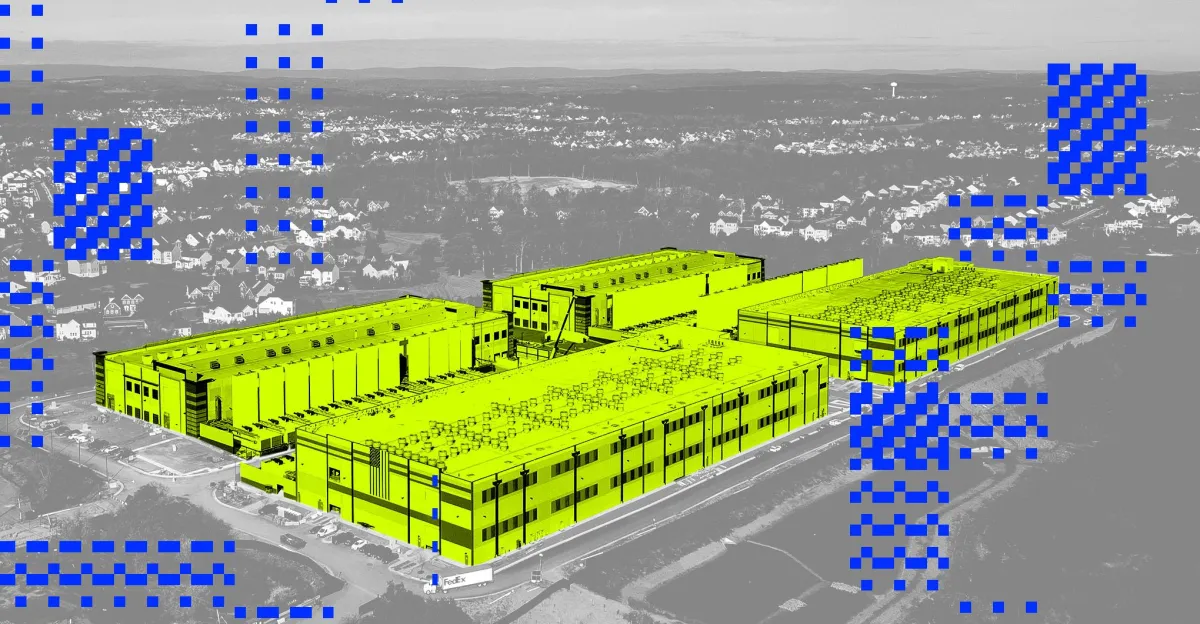
The Seattle Times previously reported that, two months before the council vote, four unidentified companies had filed proposals for five large-scale data centers inside the city. Combined, the projects would have drawn electricity equal to roughly one-third of Seattle’s average daily use, and their power demand would have been about ten times greater than the city’s existing data center footprint.
Those figures help explain why the debate has become so heated. Even if a city welcomes tech investment, a cluster of huge facilities can place substantial pressure on power infrastructure and water systems. The larger the AI boom gets, the more difficult it becomes for local governments to treat each project as an isolated development decision.
Why lawmakers chose a moratorium
A moratorium gives policymakers time to gather information before approving more projects. It is not a permanent ban, but it can create leverage in negotiations with developers. In Seattle’s case, the pause is meant to force a closer look at what benefits the city should require in exchange for future data center growth.
That may include demands for stronger environmental commitments, better transparency, local economic gains, or infrastructure contributions. For opponents, a moratorium is a warning sign that cities are becoming more skeptical of AI-era expansion. For supporters, it is a necessary check on a fast-moving industry with outsized impacts.
Amazon, workplace culture, and the fear of speaking up
Schloesser said the events did not surprise him entirely because of what he described as Amazon’s internal culture. He pointed to layoffs, performance improvement plans, stack ranking, and attrition targets as tools that can create anxiety inside the company. In his view, that atmosphere makes employees less likely to publicly challenge policies or company priorities.
Schloesser said that workers who worry about their jobs are less likely to take risks, including speaking in public on matters of law and policy, even when that speech is protected.
His comments reflect a broader tension in the tech industry. Companies often celebrate boldness and mission-driven thinking, but employees may feel that direct criticism carries career consequences. When that criticism touches on climate, AI, or infrastructure, the stakes rise further because those issues are central to corporate strategy and public scrutiny.
The case also arrives at a moment when workers across the technology sector are increasingly organizing around ethical concerns. Employee activism has previously shaped debates over military contracts, immigration, surveillance, content moderation, and climate commitments. Data center regulation may be the next major front.
What happens next
The Seattle Office for Civil Rights will now have to determine whether Amazon’s response violated local anti-discrimination protections. That process could involve fact-finding, interviews, and possibly a formal determination on whether the company’s actions were unlawful.
Even if the complaint does not result in penalties, it is likely to intensify scrutiny of how large employers handle staff activism. A ruling in the employees’ favor could strengthen the ability of workers in Seattle and other jurisdictions to speak at public hearings without fear that their company will retaliate. A ruling for Amazon could give employers more room to investigate workers whose public statements intersect with corporate policy.
Either way, the dispute illustrates how AI infrastructure has moved from a technical back-end issue to a public civic controversy. Data centers are no longer just buildings filled with servers; they are a major source of local political friction, labor debate, and environmental concern.
Why this fight reaches beyond Seattle
Seattle may be the immediate setting, but the implications are national. As AI growth drives more investment in compute infrastructure, other cities and states are likely to confront the same questions: How much power should data centers receive? What should they give back to communities? And can employees inside the companies building them safely speak about those issues in public?
The answer will shape not just where data centers are built, but how much democratic oversight there is over the AI economy as a whole. The Amazon complaint is one of the clearest signs yet that the debate is entering a new phase, one in which worker speech, city law, and the physical costs of artificial intelligence are all colliding at once.