In short
Apple is asking a court for faster discovery in its lawsuit against OpenAI, saying evidence tied to a former Apple employee may be at risk. OpenAI denies the allegations and says Apple is blaming others for its own process problems.
- Apple says OpenAI delayed turning over a MacBook tied to ex-employee Chang Liu.
- The company claims the device may contain forensic data and confidential Apple information.
- OpenAI denies that Liu misused Apple data and calls the dispute Apple’s own making.
- The judge could decide whether Apple gets expedited discovery in the case.
- The lawsuit could influence how AI companies handle employee departures and evidence preservation.
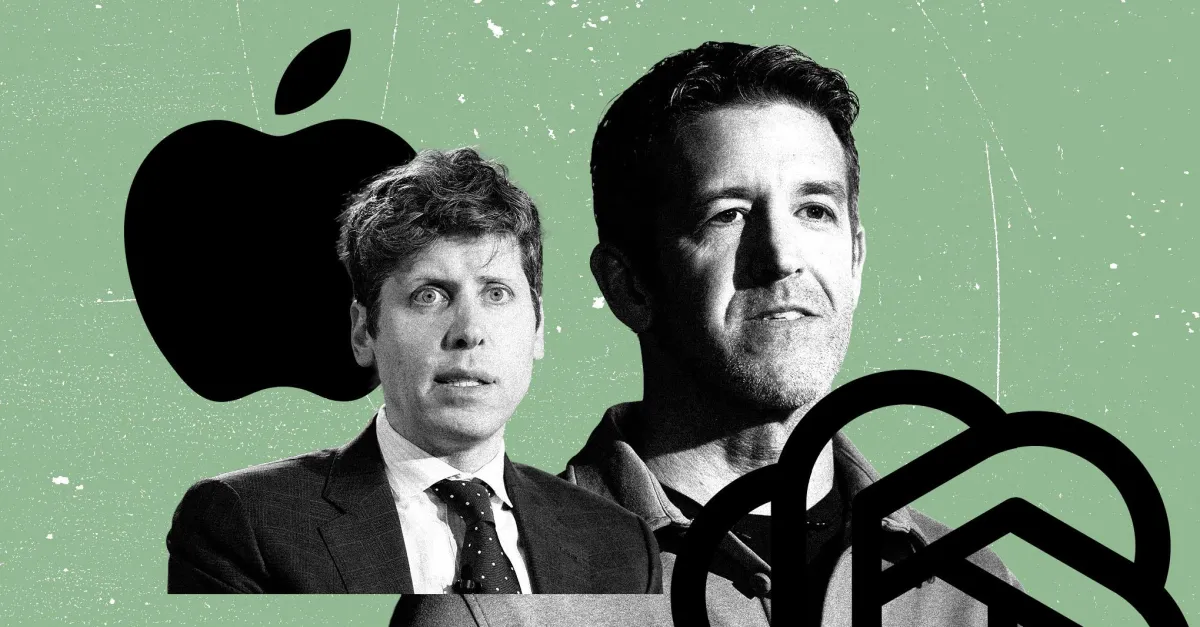
Apple is asking a court to speed up discovery in its trade secret lawsuit against OpenAI, arguing that the ChatGPT maker may be deleting or losing evidence tied to a former Apple employee at the center of the case. The dispute matters because it could shape how seriously the court treats Apple’s claim that OpenAI used confidential Apple material to help build an AI device.
In a filing submitted Monday, Apple said OpenAI did not turn over a MacBook used by former Apple worker Chang Liu until late August, weeks after the case began, and that the laptop allegedly contained messages about “destroying” the kind of forensic data Apple says it needs to prove its case.
What is Apple accusing OpenAI of?
Apple is not only accusing OpenAI of trade secret theft; it is now also suggesting that potentially relevant digital evidence may be disappearing. The company wants the court to order faster access to documents and devices so it can examine what Liu and others may have done after leaving Apple.
According to Apple’s filing, OpenAI had possession of the laptop from the start of the lawsuit in July but did not provide it to Apple until August 21. Apple says that delay mattered because forensic evidence on laptops and cloud accounts can be overwritten, deleted, or otherwise lost as time passes.
The argument turns the case from a simple intellectual property dispute into a fight over evidence preservation, a subject that can heavily influence how judges assess credibility and compliance with discovery rules.
Why does the MacBook matter so much?
The MacBook is important because Apple says it was used by Chang Liu, one of three former Apple employees who later joined OpenAI and are linked to the broader lawsuit. Apple alleges the device contained proof that Liu downloaded a confidential Apple circuit schematic and later used it in work connected to OpenAI.
Apple also claims the laptop included messages suggesting Liu talked about restoring Apple-owned devices and then resuming use of them after learning that Apple was investigating the matter in June. In Apple’s view, those communications raise the possibility that relevant traces could have been concealed or wiped.
Apple argues that the newly surfaced material shows “a very real risk” that evidence could be destroyed and says that forensic records such as logs, metadata, and device activity data are temporary by nature and can be lost if not preserved quickly.
That concern is common in digital litigation. In many corporate disputes, a matter of days or weeks can affect whether investigators can recover messages, browsing records, application logs, and file histories that might otherwise help establish what happened.
Who is Chang Liu and why is he central to the case?
Chang Liu is one of three former Apple employees named in the dispute and is now working at OpenAI. Apple says he kept a company-owned MacBook after leaving the company and that OpenAI had reason to know he still had access to Apple systems and cloud storage tied to his former job.
Apple’s filing alleges that Liu and other OpenAI staff were aware he retained access to Apple’s third-party cloud storage service, which could have allowed him to reach company material even after his departure. Apple has framed that alleged access as part of a broader effort to show how internal information may have been carried over to a rival company.
At this stage, Apple is making allegations, not presenting a final finding of wrongdoing. Still, the emphasis on Liu underscores how central employee mobility has become in AI competition, where engineers, researchers, and hardware specialists often move between companies carrying knowledge that is difficult to police and even harder to prove was misused.
How did OpenAI respond?
OpenAI says Apple is trying to shift blame and overstate the significance of the evidence issues. In its own filing, OpenAI described the case as a mess largely created by Apple’s own procedures and said Apple’s employee offboarding process is disorganized.
The company also denied that there is proof Liu accessed Apple information for an improper purpose or through improper means. OpenAI said Liu had no reason to use Apple confidential materials and insisted there is no evidence linking him to misconduct as Apple describes it.
OpenAI’s position is that the dispute is being exaggerated and that Apple has not shown Liu used any protected information in a way that would support its allegations.
The differing statements highlight a familiar pattern in commercial litigation: one side frames incomplete records as suspicious, while the other argues the accusations are built on speculation and routine employee transition issues.
Why is Apple seeking expedited discovery now?
Apple is seeking faster discovery because it believes waiting longer could make it impossible to recover the digital traces that would support its claims. When a company suspects evidence may be deleted, it often asks the court to accelerate document production, device inspection, and preservation obligations.
In this case, Apple says the delay in receiving the MacBook made it harder to protect the records it considers crucial. Once devices are in the hands of lawyers or investigators, even ordinary activity can alter timestamps, application histories, and system logs. That is why litigants often fight aggressively over custody and access to hardware.
What kinds of evidence is Apple worried about?
Apple says it is concerned about forensic artifacts, including logs, metadata, and usage history. These records can show when files were opened, copied, transmitted, or erased, and they can sometimes help reconstruct whether a person interacted with confidential material before or after leaving a job.
The company’s filing also suggests that temporary data related to cloud storage, device settings, and account access could disappear if not captured promptly. In a case involving sensitive product development, that kind of detail may matter as much as the underlying files themselves.
How does this fit into the larger Apple-OpenAI fight?
This latest filing is part of a broader lawsuit in which Apple accuses OpenAI of taking trade secrets to help create an AI hardware product. The dispute has attracted attention because it pits one of the world’s most valuable consumer technology companies against the leading maker of ChatGPT, a company already reshaping the AI market.
The lawsuit also comes at a time when rumors and reports about OpenAI’s hardware ambitions are multiplying. The company has been linked to device concepts developed with designer Jony Ive, and the prospect of an OpenAI-branded consumer product has intensified scrutiny around who contributed ideas, designs, and technical know-how.
Apple has a long history of protecting its product design and engineering secrets, and it is known for pursuing legal remedies when it believes former employees or competitors may have crossed a line. OpenAI, by contrast, has made its business case around transforming access to advanced AI models into a consumer and enterprise platform. The collision between those strategies is what gives this lawsuit broader industry significance.
Why trade secret cases matter in AI hardware
Trade secret disputes in AI are no longer limited to source code or model weights. They increasingly involve industrial design, power management, chip layouts, interface concepts, and prototype workflows. Those details can be enough to influence a new device before it reaches the market.
In hardware, the line between general expertise and protected corporate knowledge can be especially hard to draw. Engineers often move between employers carrying domain experience, but companies argue that specific schematics, internal test results, and unpublished design decisions are off-limits.
Timeline of the dispute
The key events Apple describes show how quickly the conflict escalated after Liu left the company and joined OpenAI.
| Date | Event | Why it matters |
|---|---|---|
| June 2026 | Apple says Liu learned the company was investigating him. | Apple argues he then discussed restoring Apple devices and resuming use of them. |
| July 2026 | Apple files its lawsuit against OpenAI. | The case formally begins, triggering preservation and discovery duties. |
| August 21, 2026 | OpenAI provides Liu’s MacBook to Apple. | Apple says the delay hindered forensic inspection of the device. |
| Monday filing | Apple asks for expedited discovery and raises evidence-destruction concerns. | The company signals that it believes the digital record may be changing too quickly to protect. |
What does this mean for the lawsuit?
Apple’s latest filing does not settle the merits of the trade secret claims, but it could affect how the court manages the case from here. If the judge agrees that there is a real risk of lost evidence, OpenAI may face tighter deadlines, broader preservation obligations, or more aggressive inspection requests.
That could also increase pressure on both companies to produce emails, device records, cloud logs, and internal communications sooner rather than later. In complex technology cases, discovery disputes can become almost as important as the underlying allegations because they shape what evidence will be available at trial.
For Apple, the goal is clear: preserve the data before it disappears and build a record strong enough to show that confidential material was taken and used improperly. For OpenAI, the challenge is to convince the court that the accusations are speculative and that its own conduct has not compromised the evidence.
Why this case is being watched beyond Apple and OpenAI
This lawsuit is drawing attention because it sits at the intersection of AI competition, employee mobility, and digital forensics. The outcome could influence how future disputes are handled when workers move between major AI companies carrying knowledge that may be sensitive but not always easy to classify.
It also highlights a broader reality in the AI industry: as companies race to build new products, legal fights are increasingly focusing on the records left behind by laptops, cloud accounts, messaging apps, and device logs. Those traces can become decisive evidence in a field where the underlying technologies are often developed behind closed doors.
If Apple succeeds in pressing the court for faster access and stricter preservation, the case could become a template for how companies respond when they fear evidence is at risk in high-stakes AI litigation. If OpenAI prevails, it may reinforce the view that plaintiffs need more than suspicion to justify extraordinary discovery demands.
What happens next?
The court will now decide whether Apple has shown enough urgency to warrant expedited discovery and whether its claims about possible evidence destruction justify immediate action. That decision could determine the tempo of the case and how much information the parties must disclose in the near term.
For now, the dispute remains centered on a laptop, a few former employees, and a much bigger question about how much confidential knowledge can move across the rapidly evolving AI industry before a court steps in.
- Apple says OpenAI may have delayed turning over a former employee’s MacBook.
- The company claims the device contained potentially important forensic data and confidential Apple material.
- OpenAI denies wrongdoing and says Apple is blaming others for its own process failures.
- The court’s next move could shape the pace and scope of discovery in the case.
Bottom line: Apple is telling a court that time may be running out to preserve evidence in its trade secret lawsuit against OpenAI, and that claim could significantly affect how the case unfolds.
Frequently asked questions
What is Apple accusing OpenAI of in this lawsuit?
Apple is accusing OpenAI of more than trade secret misuse: it says the company may be mishandling or destroying evidence tied to a former Apple employee. Apple wants expedited discovery because it believes important forensic data could be lost if the court does not act quickly.
Who is Chang Liu and why is he important?
Chang Liu is a former Apple employee now working at OpenAI, and Apple says he is central to the dispute. Apple alleges he kept a company MacBook after leaving and that the device may contain confidential Apple material and evidence about how it was used.
How did OpenAI respond to Apple’s claims?
OpenAI says Apple is overstating the situation and trying to blame others for its own internal failures. The company says there is no evidence Liu accessed Apple information improperly or used confidential material for any improper purpose.
Why does Apple want expedited discovery?
Apple wants faster discovery because digital evidence can be lost, overwritten, or altered over time. It argues that logs, metadata, and device records are transient, so any delay could make it harder to prove what happened on Liu’s laptop and related accounts.
What could happen next in the case?
The court will decide whether Apple has shown enough urgency to justify faster access to documents and devices. If the judge agrees, OpenAI may have to hand over evidence sooner and preserve more records, which could shape the direction of the lawsuit.