In short
Anthropic has agreed to buy about $3.4 billion of Caterpillar natural-gas turbines, a deal that could secure up to 1.7 gigawatts of power for its AI expansion. The move shows how tight electricity markets are pushing AI companies toward owning more of their infrastructure.
- Anthropic is buying about $3.4 billion in Caterpillar natural-gas turbines.
- The equipment could provide up to 1.7 gigawatts of electricity for AI infrastructure.
- The move suggests Anthropic is shifting from renting compute toward owning key power assets.
- TechCrunch says long turbine queues and power-market tightness likely helped drive the deal.
Anthropic has agreed to buy about $3.4 billion worth of Caterpillar natural-gas turbines, a move that could secure as much as 1.7 gigawatts of electricity for the company’s AI buildout. The deal matters because it shows one of the biggest AI labs moving beyond rented compute and into owning the physical power assets needed to keep model training and inference running.
What Anthropic bought and why it matters
According to TechCrunch, the purchase covers Caterpillar generators that had originally been ordered by OnePWR. The turbines can produce up to 1.7 GW of electricity, a scale that helps explain why the deal stands out even in a year defined by frantic infrastructure spending across the AI industry.
The broader signal is just as important as the equipment itself. Anthropic, which usually prefers renting compute and infrastructure rather than owning it, appears to be making a rare bet on hard assets because the market for power has become tight, and the queues for turbines and grid connections have lengthened.
That combination of scarcity and urgency is forcing AI companies to think more like utilities and industrial operators than software firms. In Anthropic’s case, the purchase suggests that access to electricity is now a strategic constraint, not a back-office detail.
Why it matters
This deal matters for three reasons. First, it underscores how power availability is increasingly shaping the AI race, alongside chips, data centers and cloud contracts. Second, it shows that infrastructure bottlenecks can push even rental-focused AI companies toward capital-heavy ownership. Third, it adds to a growing body of evidence that the electricity footprint of AI is expanding fast enough to affect regional energy markets.
TechCrunch reported that AI firms are increasingly buying natural-gas equipment for data-center power, and that Google, Amazon, Microsoft and Meta have all announced on-site natural-gas power plans for data centers. Anthropic’s move fits that pattern, but it also highlights how far the industry has gone in securing dedicated power supplies.
The stakes go beyond one company’s balance sheet. Natural-gas reliance can leave hyperscalers exposed to fuel-price swings, and it may also intensify pressure on already strained turbine supply chains and grid interconnection timelines. For customers, investors and communities near new data-center sites, those choices can shape where capacity gets built and how quickly it comes online.
How did Anthropic get here?
The company’s decision makes more sense when viewed against its existing infrastructure strategy. Anthropic has generally preferred to rent compute and infrastructure rather than own them outright, a model that reduces the need for major upfront capital spending. But the company’s own S-1 disclosed an unusually large recurring cost for access to outside compute: $1.25 billion per month paid to xAI through May 2029.
That figure illustrates how expensive AI capacity has become even before a company starts building its own power assets. Anthropic also said it expects more similar services contracts, suggesting that rented capacity will remain part of its operating model even if the turbine purchase marks a shift toward ownership.
In that context, the Caterpillar deal looks less like a sudden change of course than a pressure-driven adjustment. The company appears to be trying to protect itself from the market’s most severe constraints by securing a dedicated source of electricity while still relying on external providers for part of its compute stack.
Background: the turbine deal that never closed
TechCrunch reported that the turbines were originally ordered by OnePWR a couple of years ago, but the company lacked the financing to close the deal. Anthropic had planned to buy from OnePWR, then went directly to Caterpillar instead. That detail matters because it suggests the purchase was not simply a fresh order; it was a way to unlock equipment that had already been tied up in the supply chain.
Long turbine lead times and grid queues have become a defining feature of the power market. In that environment, a company with enough urgency and money can sometimes advance faster by stepping into an existing order rather than waiting for new production slots to open. Anthropic’s move appears to reflect exactly that kind of tactical maneuver.
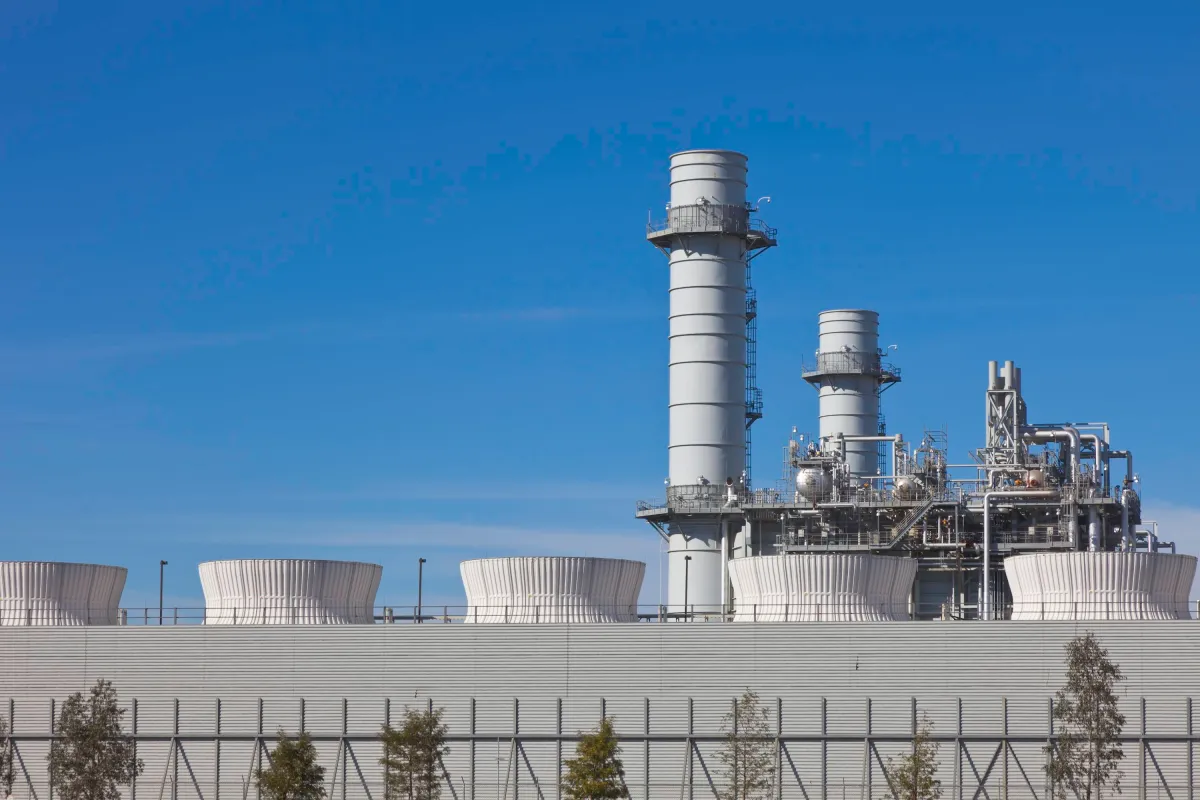
Natural-gas turbines can provide dedicated on-site electricity for large data centers, which is one reason they have become more attractive to AI operators. They can also help companies avoid some of the uncertainty tied to grid availability, especially when power demand is rising faster than utilities can expand infrastructure.
By the numbers
| Metric | Figure | What it refers to |
|---|---|---|
| Anthropic turbine purchase | $3.4 billion | Planned spend on Caterpillar natural-gas turbines |
| Potential power output | 1.7 gigawatts | Electricity the generators can produce |
| xAI compute payment | $1.25 billion per month | Anthropic payment disclosed in its S-1 |
| Compute contract end date | May 2029 | End of the disclosed xAI payment period |
| Turbine backlog horizon | Early 2030s | Timeframe cited for long turbine queues |
| Data-center gas demand comparison | 2035 | Year by which demand could exceed Germany and Japan combined, per cited analysis |
How is the wider AI industry responding?
The answer is by locking in energy in whatever form it can get. TechCrunch reported that Google, Amazon, Microsoft and Meta have announced on-site natural-gas power plans for data centers, a sign that this is not an isolated Anthropic decision but part of a broader shift in the sector.
That broader trend is being driven by the same pressure point: AI training and inference have sharply increased demand for compute and the electricity that powers it. For operators that are racing to deploy new models and services, the ability to secure power can determine whether a project starts on time or remains stuck in planning.
The scale of the problem is expected to grow. A cited analysis says data-center gas demand could exceed Germany and Japan combined by 2035, a striking forecast that helps explain why companies are moving early to secure supply. If that projection proves directionally correct, energy procurement may become one of the most important strategic functions in AI.
What the deal says about Anthropic’s strategy
Anthropic’s turbine purchase suggests the company is willing to be selective about which parts of the stack it owns and which parts it leases. Compute access can still be rented, as the xAI payments show, but electricity may be too strategic, too scarce or too costly to leave entirely to external providers.
That distinction could matter to competitors watching the market. Owning power assets may help Anthropic reduce some exposure to infrastructure shortages, but it also introduces new operational complexity and a different kind of financial risk. Natural-gas dependence means exposure to fuel prices, maintenance and the realities of operating industrial-grade equipment.
The move also hints at a more mature phase of AI expansion, in which the winners may be the companies that can assemble the most reliable combination of chips, compute, power and capital. The technology may be digital, but the bottlenecks are increasingly physical.
What is Anthropic still relying on outside providers for?
Anthropic is still relying on outside providers for a major share of its compute needs. Its S-1 disclosed $1.25 billion per month paid to xAI through May 2029 for compute access, and the company said it expects more similar services contracts.
What happens next
The biggest immediate question is delivery. TechCrunch noted that one open issue is how quickly the turbines can be delivered and deployed. In a market with long backlog times, that timetable could shape when Anthropic is actually able to bring the power online.
Another question is whether this is a one-off purchase or the start of more physical power deals. If Anthropic follows through with additional similar services contracts and more infrastructure ownership, the company could be signaling that it plans to build a more durable energy base around its AI operations.
Watch also for any evidence that the purchase changes Anthropic’s dependence on rented compute. The company’s existing spending on external capacity shows that renting will remain important, but the turbine deal may reduce some pressure if it gives Anthropic greater control over the electricity feeding its data-center footprint.
For the industry more broadly, the deal is another marker that the AI power crunch is no longer theoretical. It is shaping real procurement decisions, real capital allocation and, increasingly, the physical layout of the infrastructure behind frontier AI.
Timeline
- A couple of years ago: OnePWR ordered the turbines.
- May: Anthropic’s S-1 disclosed monthly xAI compute payments through May 2029.
- Nov. 9, 2026: TechCrunch reported Anthropic’s $3.4 billion turbine purchase.
How big is 1.7 gigawatts?
It is big enough to explain why this deal stands out. At that scale, the generators are not just supporting a single server room or modest campus; they are part of the energy architecture for a major AI expansion. TechCrunch said the turbines could produce as much as 1.7 gigawatts of electricity, which puts the purchase in the category of industrial-scale power planning.
That scale also helps explain why Anthropic may have been willing to buy equipment already sitting in the market pipeline. In a sector where speed matters, waiting for new supply can be more expensive than paying up for equipment that is already available, even if that means stepping into a complex transaction.
The bigger picture
Anthropic’s decision is a reminder that the AI race is no longer just about model quality or clever software design. It is also about who can secure the energy to run those models at scale, and who can do it fast enough to keep pace with competitors.
As AI demand continues to rise, power procurement may become one of the defining strategic questions for the industry. Anthropic’s $3.4 billion turbine purchase suggests the answer may increasingly involve not just renting cloud capacity, but owning the machinery that keeps the lights on.
Frequently asked questions
Why did Anthropic buy natural-gas turbines?
Anthropic bought the turbines to secure power for its AI buildout in a tight electricity market. TechCrunch reported that long turbine queues and grid constraints likely pushed the company to buy rather than keep relying only on rented infrastructure.
How much power could the turbines provide?
The turbines could produce as much as 1.7 gigawatts of electricity. That scale makes the purchase suitable for a large AI and data-center expansion rather than a small-site deployment.
How much is Anthropic paying for the turbine deal?
Anthropic is spending about $3.4 billion on the Caterpillar natural-gas turbines. TechCrunch said the deal involves generators originally ordered by OnePWR.
Is Anthropic still using rented compute?
Yes. Anthropic’s S-1 disclosed $1.25 billion per month paid to xAI for compute access through May 2029, and the company said it expects more similar services contracts.
Are other AI companies doing the same thing?
Yes. TechCrunch reported that Google, Amazon, Microsoft and Meta have all announced on-site natural-gas power plans for data centers, showing that Anthropic is part of a wider industry move toward securing dedicated energy.