In short
Anthropic CEO Dario Amodei is scheduled to have dinner with President Trump at the White House, marking their first one-on-one meeting amid a sharp AI safety disagreement. The visit highlights growing tensions between safety-focused AI companies and an administration pushing a more aggressive AI agenda.
- Dario Amodei is expected to meet President Trump for dinner at the White House on Sunday.
- It will be the first known one-on-one meeting between the Anthropic CEO and Trump.
- The two have publicly disagreed over AI safety and the pace of AI development.
- Anthropic has already had tensions with the administration, including a Pentagon supply-chain risk designation.
- The dinner could shape how the White House approaches AI policy and industry relations.
Anthropic CEO Dario Amodei is expected to meet President Donald Trump for dinner at the White House on Sunday, marking the first known one-on-one encounter between the two men and underscoring how central AI policy has become to the Trump administration’s agenda. The meeting comes as Amodei and Trump have clashed publicly over the pace and direction of artificial intelligence development, as well as over the politics surrounding AI safety.
The dinner is notable not just because it brings together one of the most prominent figures in frontier AI and the U.S. president, but because it arrives at a moment when the debate over AI regulation, national competitiveness and safety is intensifying. Anthropic has positioned itself as a company that wants stronger guardrails around advanced AI, while Trump has dismissed AI safety criticism as politically motivated and has promoted a more aggressive framing of the technology.
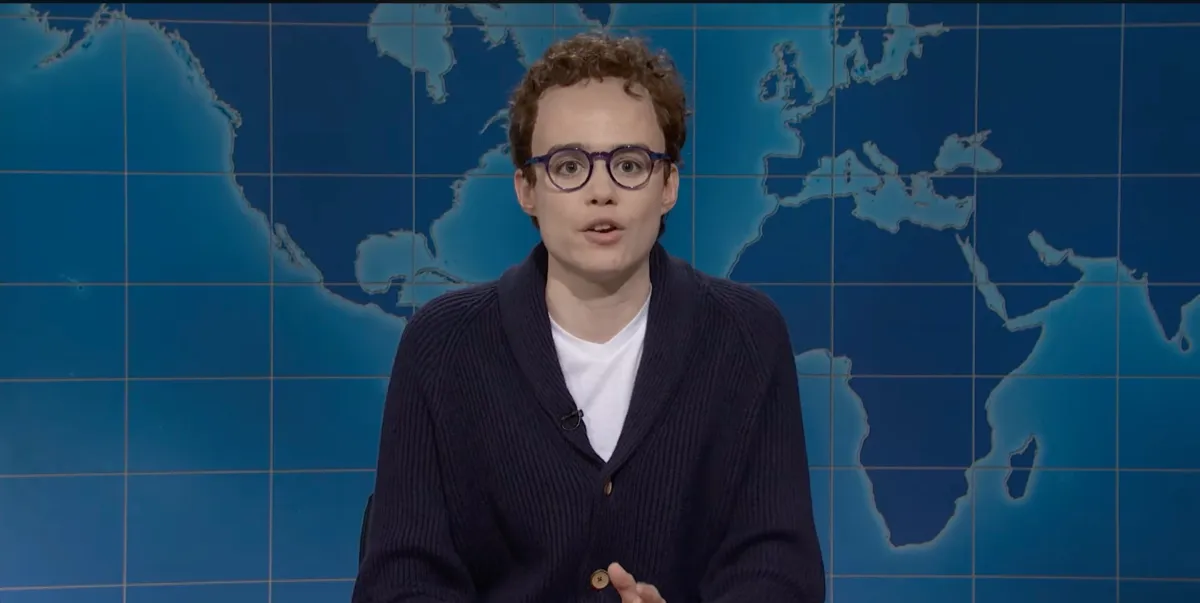
Axios first reported the dinner plans, and a source familiar with Amodei’s schedule later confirmed them. The White House meeting follows a weekend in which Amodei drew attention in a very different arena: he was also lampooned on the season premiere of Saturday Night Live, a sign that the Anthropic chief has become a recognizable public face of the AI boom.
Why this dinner matters
The meeting matters because it places one of Silicon Valley’s most outspoken AI executives directly across the table from a president who has made artificial intelligence a political and strategic priority. A private dinner does not guarantee agreement, but it creates an opening for discussions about safety standards, competition with China, government procurement and the broader direction of U.S. AI policy.
For Anthropic, the optics are especially significant. The company has spent much of the last two years arguing that powerful AI systems should be deployed carefully and with more oversight than many rivals favor. A White House dinner could help the company explain that position to the administration while also testing whether there is room for a more constructive relationship after earlier tensions.
For the Trump administration, the conversation is likely to be about influence as much as policy. The White House has shown it wants to work closely with leading AI firms, but it has also been willing to use public criticism and regulatory pressure when it believes companies are not aligned with national interests.
What is driving the clash between Amodei and Trump?
The core disagreement is over how quickly artificial intelligence should advance and how much caution should slow that progress. Amodei has argued that the industry needs a more restrained approach, warning that the most capable systems could outpace society’s ability to manage them. Trump, by contrast, has repeatedly minimized concerns about AI safety and framed skepticism about the technology as politically driven.
Trump has also tried to recast the conversation in his own terms, describing the technology as “super intelligence” rather than dwelling on risk. That language reflects a broader effort to make AI sound like a source of U.S. strength and strategic dominance rather than a policy problem requiring heavy restraint.
The public disagreement has been sharpened by the way each side talks about the other. Amodei and other safety-minded executives often stress the importance of careful deployment, red-teaming, evaluations and governance. Trump and his allies have tended to treat those arguments as part of a broader ideological fight, suggesting that overregulation could slow U.S. innovation and hand an advantage to rivals.
How did Anthropic end up in the administration’s crosshairs?
Anthropic’s relationship with the Trump administration has been uneasy for months, even before the latest public debate over AI safety. Earlier this year, the Pentagon labeled Anthropic a supply-chain risk after the company attempted to impose limits and guardrails on how its technology could be used. Anthropic has challenged that designation in court.
That dispute illustrates a deeper tension facing the AI industry: companies that market themselves as responsible stewards of powerful systems can still run into conflict with government customers when their safeguards are seen as too restrictive or too hard to manage operationally. The Pentagon episode also showed that Anthropic’s safety-first posture can have direct business and political consequences.
At the same time, the company has not been frozen out entirely. Other parts of the administration have been more receptive, suggesting that Anthropic’s future relationship with Washington may depend on which agency or official is involved and what the immediate policy issue happens to be.
What happened before the White House dinner?
Amodei’s Washington dinner was preceded by an unusual weekend spotlight that mixed politics, culture and tech celebrity. He was mocked on the season premiere of Saturday Night Live, reflecting how AI leaders are increasingly becoming public figures beyond the confines of the tech press and boardroom.
The juxtaposition is revealing. On one side, Amodei is part of an elite policy conversation involving national security and the future of the economy. On the other, he is now recognizable enough to be the subject of satire on a major network comedy show. That dual visibility is a sign of how much attention AI has drawn from both policymakers and the wider public.
It also highlights the pressure on Anthropic to present itself not just as a technology company, but as a serious institutional actor capable of engaging with government at the highest levels. A White House dinner with Trump is one more step in that evolution.
How does this fit into the broader AI policy fight?
The dinner is part of a broader national struggle over who gets to define the rules of the AI era. The stakes include not only consumer products and enterprise software, but also jobs, security, election integrity, military applications and international competition. Federal policymakers are trying to balance innovation with risk, while companies are trying to shape that balance in ways that protect their business models and public reputations.
In that context, Amodei’s meeting with Trump is more than a symbolic gesture. It may be a chance to explain Anthropic’s views on model safety, deployment standards and oversight directly to the Oval Office circle. It may also give Trump an opportunity to hear from a company that has often framed itself as a sober counterweight to the industry’s more aggressive players.
There is also a political layer. Trump’s team has been attentive to the economic and strategic importance of AI, and it has reason to hear from multiple industry leaders. Meeting with Amodei allows the president to show that he is engaging with leading companies while maintaining his own posture as a champion of U.S. technological strength.
What Anthropic is signaling by going to dinner
Anthropic’s willingness to attend suggests the company sees value in direct access, even amid disagreement. In Washington, private conversations often matter as much as public statements, especially when a technology is evolving faster than the regulatory system can respond.
The dinner also suggests Anthropic is trying to avoid being defined only by conflict. By entering the room, the company can advocate for its principles, defend itself against criticisms and potentially preserve influence over future policy decisions. Refusing to engage would likely leave those decisions to others.
For a company that has argued AI should be developed cautiously, the challenge is to remain credible on safety without becoming isolated from the institutions that will shape the industry’s future.
Timeline: the recent sequence of events
| Timeframe | Event | Why it matters |
|---|---|---|
| Earlier this year | The Pentagon designated Anthropic a supply-chain risk. | It showed that the company’s safety measures could create friction with government users. |
| Recent weeks | Amodei publicly weighed in on the need for more caution in AI development. | He sharpened the contrast with Trump’s more aggressive pro-AI stance. |
| Weekend before the dinner | Amodei was mocked on the Saturday Night Live season premiere. | It reflected his rising profile as a public-facing AI leader. |
| Sunday | Amodei is scheduled to dine with President Trump at the White House. | It is the first known one-on-one meeting between the two. |
Key issues likely to come up at the White House
While the dinner is private, the likely topics are easy to identify. Any serious discussion between the Anthropic chief and the president would probably center on the future of frontier model development, the role of government in setting standards and the extent to which AI policy should be tied to national security and economic competition.
- AI safety: whether companies should slow deployment until stronger safeguards are in place.
- National competitiveness: how the U.S. can keep pace with China and other global rivals.
- Defense and procurement: how advanced AI systems are evaluated for government use.
- Regulatory approach: whether voluntary standards or formal rules should dominate.
- Public messaging: how the administration chooses to describe and sell AI to voters.
Each of those questions has practical implications. They affect which companies win contracts, how much transparency the public gets and how much freedom developers have to push the boundaries of model capability.
Why Anthropic’s position is different from some rivals
Anthropic has cultivated a reputation for emphasizing safety, interpretability and responsible deployment more aggressively than some competitors. That stance has won it credibility among policymakers and researchers who worry that the fastest route to market is not always the safest.
But safety-first branding can also create headaches. When a company argues for limits on how its own systems are used, it can be accused of slowing innovation, undermining users or creating burdens that make deployment harder. That tension is especially acute when the customer is the U.S. government, which may want the benefits of powerful AI without constraints that complicate procurement or operational use.
Amodei’s dinner with Trump therefore serves as a stress test for Anthropic’s broader strategy. Can a company built around caution still win a hearing in an administration that wants speed, scale and national advantage? The answer may shape how Anthropic is perceived in Washington for the rest of Trump’s term.
What happens next?
Nothing about a dinner guarantees a policy breakthrough, but the meeting could influence how the White House thinks about Anthropic and the wider AI industry. If the conversation goes well, it may reduce tensions and open the door to future talks. If it goes poorly, it could reinforce the perception that Anthropic and the Trump administration are operating from fundamentally different assumptions about risk and innovation.
Either way, the dinner is a reminder that the AI debate is no longer confined to research labs, conference stages or company blog posts. It now reaches the White House, where the future of the technology is being negotiated at the highest political level.
For Amodei, the evening represents both a challenge and an opportunity: a chance to explain why caution matters, and a chance to make sure Anthropic’s voice is heard in a room where the rules of the AI age may increasingly be written.
Anthropic and the Trump administration have already clashed over the meaning of responsible AI, but the dinner offers a rare direct conversation between a leading safety-focused executive and a president who wants to define the technology on his own terms.
In a year when artificial intelligence has become both a business race and a political battleground, that alone makes the meeting worth watching closely.
Frequently asked questions
Why is Dario Amodei meeting President Trump?
Dario Amodei is meeting President Trump for dinner at the White House to discuss artificial intelligence, a subject where Anthropic and the administration have sharply different views. The meeting gives both sides a chance to address AI safety, government use and the broader policy direction of the technology.
Has Dario Amodei met Trump before?
No, this is expected to be the first known one-on-one meeting between Dario Amodei and Donald Trump. That makes the dinner especially notable because it brings together a leading AI executive and a president who has publicly taken a very different stance on AI safety concerns.
What is the disagreement between Anthropic and Trump?
The disagreement centers on AI safety and how fast the technology should advance. Amodei has urged more caution and stronger guardrails, while Trump has dismissed AI safety criticism as politically motivated and has pushed a more aggressive, pro-growth framing of the technology.
Has Anthropic had other problems with the Trump administration?
Yes. Earlier this year, the Pentagon designated Anthropic a supply-chain risk after the company tried to restrict how its technology could be used. Anthropic has challenged that designation in court, although some other administration officials have been more receptive to the company.