In short
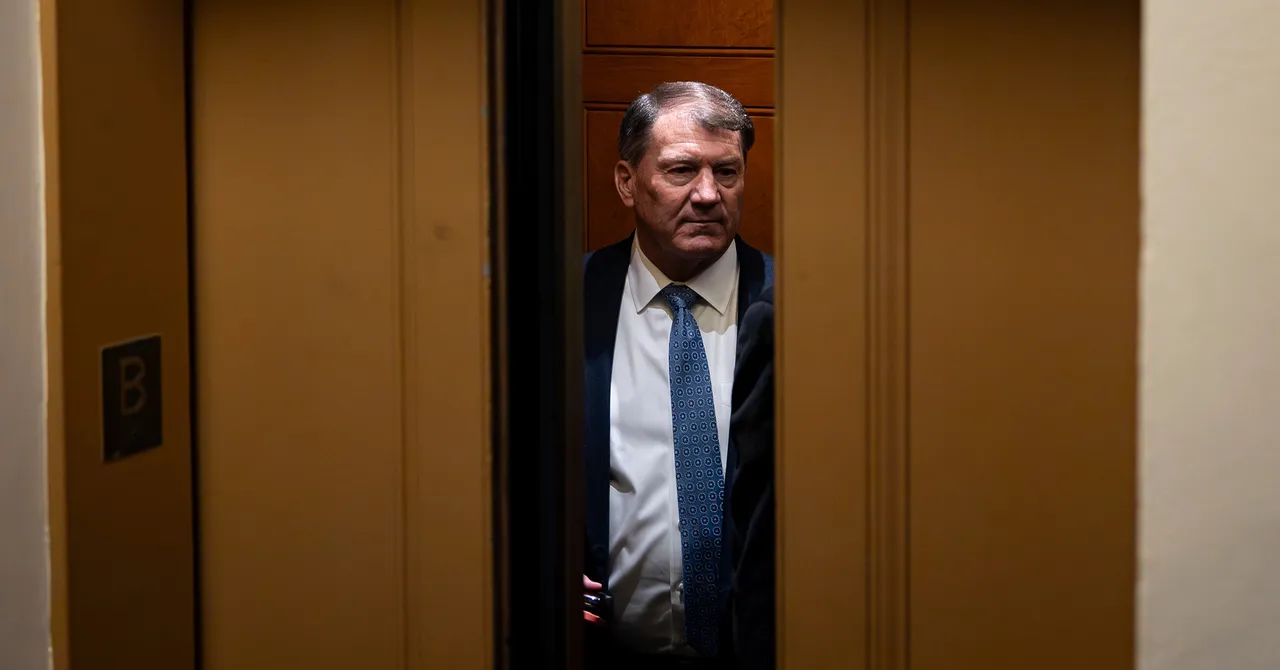
AI-linked super PACs and tech donors have spent nearly $1 million to support Sen. Mike Rounds in South Dakota, turning a quiet reelection race into an early fight over AI regulation and data center policy. The money underscores how Silicon Valley is trying to protect friendly senators before Congress takes up major AI rules.
- AI-linked groups have poured nearly $1 million into Mike Rounds’s South Dakota Senate race.
- The spending is meant to preserve a Senate ally ahead of expected AI regulation fights in Congress.
- South Dakota’s debate over data center water and energy costs has become part of the broader AI policy battle.
- A new PAC, Leading the Future, plans to spend $2 million on supportive Senate Republicans, including Rounds.
Major AI-backed political groups and tech industry donors have poured nearly $1 million into South Dakota Sen. Mike Rounds’s reelection campaign, turning an otherwise low-profile Senate contest into an early proxy battle over the future of AI regulation and data center policy. The spending matters because Rounds is widely seen inside the industry as a reliable ally at a moment when Congress is preparing for a major push on AI rules.
The unusual flood of money is landing in a race that had not been expected to draw much national attention. But with fewer than 50 days left before the November election, the contest is now drawing outside spending from AI interests eager to preserve friends in the Senate as lawmakers weigh everything from safety rules to the water and power demands of the data centers that underpin modern AI systems.
Why is AI money targeting Mike Rounds?
AI companies and their backers are trying to protect one of the few senators they believe has been broadly supportive of the sector. Rounds has taken in roughly $600,000 in outside spending this cycle, with most of it coming through a political network tied to venture capital giant Andreessen Horowitz.
He has also received about $215,000 from employees and affiliated super PACs linked to AI labs and major tech firms, including Anthropic, Google, and Microsoft, according to Federal Election Commission filings. In total, the AI and tech money approaching his race is close to the $1 million mark.
For companies building or financing AI systems, that support is not simply about one Senate seat. It is part of a broader strategy to keep industry-friendly lawmakers in office before next year’s Congress, where AI legislation is expected to rise near the top of the agenda.
Industry aides and congressional staffers familiar with the issue say AI executives view allies like Rounds as increasingly important because Congress has become more active on AI safety, transparency, and infrastructure questions.
What makes this race unusual?
This is not a classic battleground Senate contest. South Dakota is deeply Republican, and early polling shows Rounds ahead after Democratic candidate Julian Beaudion dropped out last month, leaving independent Brian Beng as the main challenger. Even so, national money has poured in because the race has become a relatively inexpensive place to buy influence.
In practical terms, a safe seat in a red state can be more valuable to donors than a competitive race in a media-heavy swing state. The cost of helping an incumbent senator is lower, and the political return may be higher if that senator becomes a key vote on AI, data centers, or related tech policy.
Rounds has also raised more from tech interests than from donors inside South Dakota, underscoring how national the race has become despite its small-state setting.
How the spending is being organized
The largest chunk of outside money has come from Defend American Jobs, a super PAC that receives backing from another PAC funded by Andreessen Horowitz. That arrangement has allowed tech money to flow into the race through a layered network of committees rather than a single direct source.
Separately, a new super PAC called Leading the Future announced on Thursday that it will spend $2 million on Senate Republicans who have been receptive to AI or crypto interests, including Rounds. The group is backed in part by OpenAI president Greg Brockman, along with investors Ben Horowitz and Marc Andreessen.
The structure reflects a familiar Washington pattern: when a policy fight is still forming, outside groups often move early to support lawmakers they believe will matter later. In this case, the target is not just election-year survival but the shape of future regulatory debates.
| Funding source | Approximate amount | Connection to AI industry |
|---|---|---|
| Defend American Jobs and related network | $600,000 | Backed by a PAC funded by Andreessen Horowitz |
| AI lab employees and affiliated PACs | $215,000 | Includes Anthropic, Google, Microsoft |
| Leading the Future planned spending | $2 million | Backed in part by Greg Brockman, Ben Horowitz, Marc Andreessen |
What does South Dakota’s data center debate have to do with AI politics?
South Dakota’s local fight over data centers has become a stand-in for broader national anxieties about the physical costs of AI. The state legislature passed a bill earlier this year requiring hyperscale data center operators to pay a larger share of the water and energy costs tied to their facilities.
Republicans in the state legislature also blocked tax breaks for the equipment and software used in data centers, a decision that slowed a planned Applied Digital development. The company builds and designs data center facilities, and the dispute exposed how contentious the issue has become even in states eager for investment.
These arguments are closely linked to AI expansion because advanced models require enormous computing infrastructure. As companies race to build more capable systems, they also need more server farms, more electricity, and more cooling capacity — all of which can shift costs onto local communities if not carefully managed.
Why are data centers such a political flashpoint?
Data centers are becoming politically sensitive because they consume large amounts of water and electricity while often receiving public subsidies or tax incentives. Local residents and lawmakers increasingly question whether the promised jobs and investment are worth the strain on utilities and infrastructure.
That concern is not confined to South Dakota. Across the country, communities are debating whether the rapid growth of AI infrastructure is happening too quickly and whether the public is carrying too much of the burden.
How broad is the backlash against data centers?
The skepticism is stronger than many industry advocates would like. A recent Gallup survey found that seven in 10 Americans oppose data center development, largely because of the heavy demands on water and energy. That is a striking figure for an infrastructure category that has become central to cloud computing, streaming, and AI.
For elected officials, that opposition creates a political squeeze. They are being asked to welcome investment and jobs while also defending ratepayers, farmers, and municipal systems from rising utility costs.
In South Dakota, those tensions have already reached the legislature. The state’s debate over data centers has not been abstract policy theater; it has had direct consequences for proposed projects and for the tax treatment of the hardware and software that power them.
What role is Rounds playing in the wider AI fight?
Rounds has come to be viewed by tech leaders as one of the more dependable Republican voices on the industry’s side. That matters because next year’s Congress is expected to consider major questions about AI regulation, including safety standards, liability, data usage, and the treatment of the infrastructure needed to support the technology.
AI companies have increasingly worried that they do not have enough allies on Capitol Hill. As public concern grows about AI safety, lawmakers from both parties have been introducing or discussing more bills. From the industry’s perspective, the political environment has shifted from permissionless growth to active scrutiny.
That is why a relatively small Senate race in a low-population state can attract national attention. One senator may not decide the entire debate, but reliable votes can matter a great deal when margins are tight in a closely divided chamber.
What makes Rounds especially important to donors?
Rounds is important to donors because he sits at the intersection of two fights: the federal debate over AI rules and the local fight over the costs of the infrastructure that powers AI. A senator who is favorable on both questions can become strategically valuable to companies seeking regulatory certainty.
He has also already signaled support for tighter rules around data center development in his state, a position that suggests he is not simply echoing every industry preference. That mix of pragmatism and openness to industry makes him a useful, and potentially persuasive, target for AI donors.
How did South Dakota’s local politics become connected to Silicon Valley?
South Dakota’s local policy choices have made the state attractive to national tech attention because they reveal the pressures AI infrastructure can create at the community level. The more contentious the local debate becomes, the more likely it is that outside actors will try to shape the outcome.
Rounds’s senior aide and former chief of staff, Robert Skjonsberg, is also registered as a lobbyist for Meta on matters before the South Dakota legislature. Meta operates a large network of data centers, though it does not currently have a Meta-linked facility in South Dakota.
According to reporting by Politico, the senator’s office said its general counsel consulted the Senate ethics committee about the arrangement and was told there was no conflict. Even so, the overlapping relationships underscore how closely connected state policy, federal politics, and big tech lobbying have become.
| Issue | South Dakota development | Political significance |
|---|---|---|
| Data center utilities | Lawmakers shifted more water and energy costs to operators | Signals resistance to subsidizing AI infrastructure |
| Tax incentives | Republicans blocked breaks for data center equipment and software | Slowed a planned Applied Digital project |
| Federal politics | AI donors back Rounds | Aims to keep an industry-friendly voice in the Senate |
Who is backing the new pro-AI effort?
Leading the Future is the newest major player in the race, and its launch shows how quickly the industry is escalating its political spending. The PAC said it plans to deploy $2 million to help Senate Republicans seen as supportive of AI or crypto, placing Rounds on its target list from the start.
Its backers include people with deep influence in Silicon Valley and the broader venture capital ecosystem, which gives the effort both money and credibility inside tech circles. That combination can be especially effective in races where traditional party committees may not feel much urgency.
For AI companies, these new PACs are likely to become a core part of the Washington playbook. They provide a way to reward allies, signal priorities, and establish a political infrastructure before legislation hardens into law.
People familiar with the industry’s thinking say the goal is less about winning a dramatic election than about preserving access and leverage ahead of a Congress that could become much more aggressive on AI oversight.
What happens next?
The immediate question is whether the outside money changes anything in a race Rounds already appears positioned to win. But the larger significance is that AI interests are now spending like a mature Washington industry, not a nascent technology sector hoping to avoid scrutiny.
That shift is important. It suggests the debate over AI is moving from abstract concern to direct political investment, with companies trying to shape the lawmakers who will write the next generation of rules.
If the Senate returns after the election with more pressure to regulate AI, the value of the relationships being built in races like South Dakota may become clear. The money going into Rounds’s campaign is not just about one seat. It is about where the industry expects the balance of power to land when the next round of AI legislation arrives.
Timeline of the South Dakota AI money story
The campaign finance surge has built gradually, but the key moments came in quick succession as the election neared.
- Earlier this year: South Dakota lawmakers passed a bill shifting more water and energy costs for data centers onto hyperscalers.
- Earlier this year: Republicans in the state legislature opposed tax breaks for data center equipment and software, slowing an Applied Digital project.
- Last month: Democratic Senate candidate Julian Beaudion dropped out, narrowing the race.
- This cycle: Rounds accumulated roughly $600,000 from outside groups, mainly through the Defend American Jobs network.
- This cycle: He also received about $215,000 from AI lab-linked employees and PACs, including Anthropic, Google, and Microsoft.
- Thursday: Leading the Future announced a $2 million push for Senate Republicans including Rounds.
- Less than 50 days before the election: Tech and AI money has made the race a test case for how the sector plans to defend its interests in Washington.
Bottom line
South Dakota’s Senate race is no longer just a local contest between an incumbent Republican and a weaker opposition field. It has become a strategic investment opportunity for AI companies and their backers, who are using political spending to shape the debate over regulation, infrastructure, and the cost of building the data centers that power the industry.
That makes Mike Rounds a useful barometer for a broader question: as AI becomes a more regulated and politically contested industry, how aggressively will its biggest players try to buy influence before the rules are written?
Frequently asked questions
How much money have AI groups put into Mike Rounds’s race?
AI-related outside groups and donors have directed roughly $815,000 to Mike Rounds through reported spending so far, with total support approaching $1 million once the newest PAC commitments are included. Most of the money has come from tech-linked super PAC networks and AI lab affiliates.
Why are AI companies supporting Mike Rounds?
AI companies are supporting Mike Rounds because they view him as a reliable Senate ally ahead of expected fights over AI regulation. Backing a friendly incumbent in a relatively safe race is a cost-effective way to preserve influence before Congress debates new rules.
What role do data centers play in this story?
Data centers are central because they are the physical infrastructure behind AI, and South Dakota has already moved to make operators pay more of the water and energy costs. That local dispute mirrors national concerns about subsidies, utilities, and the environmental burden of AI growth.
Who is funding the new pro-AI PAC?
Leading the Future is backed in part by OpenAI president Greg Brockman, venture capitalists Ben Horowitz and Marc Andreessen, and it has announced plans to spend $2 million on Senate Republicans it sees as supportive of AI and crypto interests.