In short
Sam Altman said the AI industry would be fine without Jensen Huang leading Nvidia, but declined to say whether Huang should return after his resignation. The episode highlights how closely Nvidia, OpenAI and the wider AI boom are financially and strategically intertwined.
- Altman said he would not judge whether Huang should return to Nvidia.
- He argued the AI industry is strong enough to absorb Huang’s exit.
- TechCrunch says OpenAI and Nvidia have had a close relationship for about a decade.
- WIRED reported Colette Kress is serving as Nvidia’s interim CEO.
- Nvidia’s $105 billion backing of OpenAI’s Ohio project underscores the scale of AI financing.
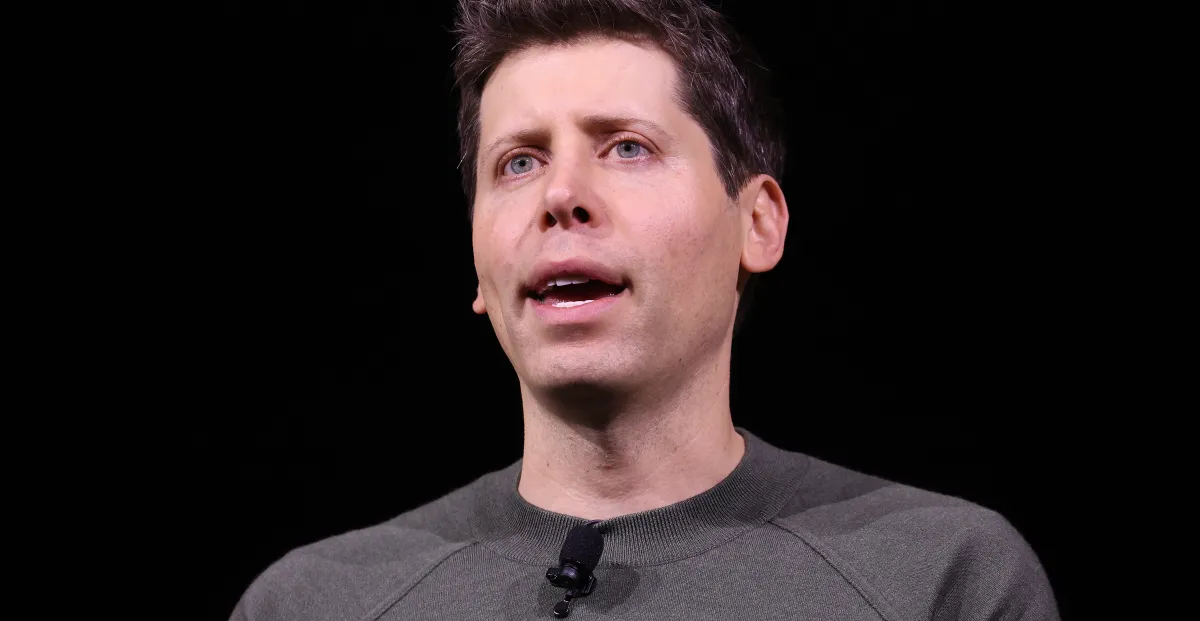
OpenAI chief Sam Altman said the AI industry would survive without Jensen Huang leading Nvidia, but he stopped short of saying whether Huang should return after his resignation last week. The remarks came Monday at Semafor’s Silicon Valley and the World event and landed in the middle of a widening debate over Nvidia’s leadership, its ties to OpenAI, and how much the AI boom depends on one company’s chief executive.
What Altman said
Altman did not offer a clean endorsement of Huang’s return. According to TechCrunch, he said,
“I don’t think I know enough to answer that question.”
when asked whether Huang should come back.
He also described Huang in human terms rather than corporate ones, saying he sees him as a hero with flaws. TechCrunch reported that Altman added,
“heroes have flaws”
and said he feels empathy for Huang, pointing to his own ouster from OpenAI in 2023 as a reason he understands how public reversals can feel.
Altman’s broader message was that the AI sector is large and profitable enough to absorb the loss of one executive, even one as influential as Nvidia’s founder. He said demand and revenues are still growing strongly, and that the industry will be fine. The Cryptonomist dated those remarks to Monday, Nov. 16, 2026, while TechCrunch identified the same event as Semafor’s Silicon Valley and the World gathering.
Why it matters
Huang’s exit matters because Nvidia is one of the central pillars of the AI buildout. Its chips are used for training and running large AI models, and its influence extends well beyond its own balance sheet. If Nvidia’s leadership were shaken, the effects could ripple through the broader market for AI infrastructure, where customers, suppliers and investors are tightly linked.
Altman’s comments suggest a different reading: that the AI boom is no longer dependent on a single leader, even if that leader helped shape the industry. In his view, strong demand and strong revenues give the ecosystem enough momentum to withstand a boardroom shock at Nvidia. That is a meaningful claim because it goes to the heart of a larger market question: whether AI growth is now self-sustaining or still held together by a small group of founders and financiers.
The remarks also matter because they came from OpenAI, one of Nvidia’s most important partners. TechCrunch said the two companies have had a close relationship for about a decade, and that the tie has expanded into circular financing-style arrangements, including Nvidia-backed funding for OpenAI purchases. That history makes Altman’s refusal to condemn or defend Huang more notable. He was not speaking as an outside observer; he was speaking as someone whose company sits inside the same infrastructure web.
How did Nvidia and OpenAI get here?
The OpenAI-Nvidia relationship has been building for years and is now central to the AI industry’s supply chain, according to TechCrunch. Nvidia supplies the chips that power the training and inference workloads behind modern AI systems. OpenAI, meanwhile, is among the most visible customers in the market for that compute.
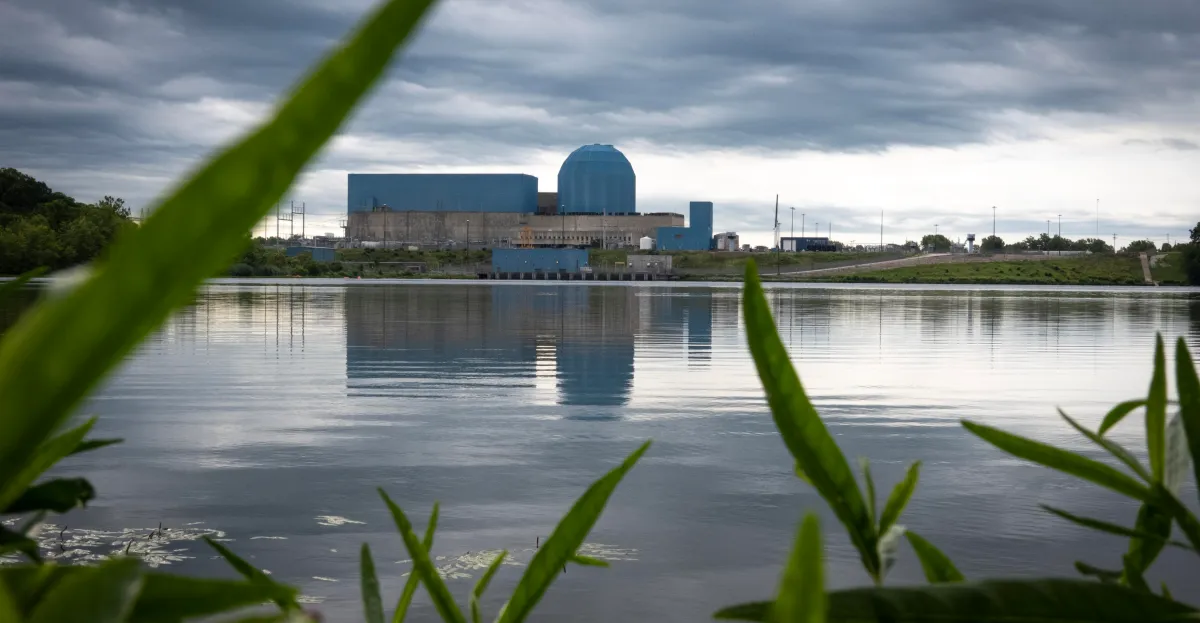
That interdependence has grown into a financing structure that has drawn scrutiny. TechCrunch reported that the relationship has expanded into circular financing-style deals, including Nvidia-backed funding for OpenAI purchases. The most striking example in the fact sheet is Nvidia’s agreement to back up to $105 billion for OpenAI’s Ohio data center project.
This kind of arrangement matters because it blurs the line between supplier and backer. If a chip vendor helps support the customer’s expansion, the customer may then buy more chips, which can reinforce demand on both sides. Supporters see a practical way to accelerate infrastructure buildout. Skeptics see a loop that can exaggerate market strength and concentrate power in a small cluster of companies.
What “circular financing” means in this context
Circular financing-style deals in AI refer to arrangements in which a supplier helps fund a customer that then buys more of the supplier’s products. In this case, the concern is not a formal accounting trick but a strategic dependence: capital, compute and growth are increasingly reinforcing one another.
- Nvidia provides chips essential to AI training and deployment.
- OpenAI is a major buyer and strategic partner.
- Funding support can help accelerate purchases and data center expansion.
Altman said he is not worried that Nvidia’s financing support will dry up, and he described Nvidia as a behemoth whose guarantees people trust. That is a strong endorsement of the company’s ability to keep supporting the ecosystem even if its leadership changes.
What exactly happened to Jensen Huang?
Huang resigned last week after admitting to an affair with an alleged Chinese spy, according to TechCrunch. WIRED described the resignation in similar terms, saying Huang officially stepped down after admitting to an affair with an alleged Chinese intelligence asset.
WIRED added another layer to the story, reporting that there were allegations of at least two more affairs with Nvidia employees. Those claims were not presented in the fact sheet as confirmed facts, but they are part of the broader reporting landscape surrounding Huang’s departure.
WIRED also said Colette Kress is Nvidia’s interim CEO. That detail is important because it marks the company’s immediate leadership structure while the debate over Huang’s future unfolds.
| Key event | Date / timing | What happened | Source note |
|---|---|---|---|
| Altman ousted from OpenAI | 2023 | Sam Altman was removed from OpenAI, then later returned | Fact sheet background |
| Huang resignation | Last week | Jensen Huang resigned after admitting an affair with an alleged Chinese spy | TechCrunch / WIRED |
| Altman remarks | Monday, Nov. 16, 2026 | Altman addressed Huang’s departure at Semafor’s Silicon Valley and the World event | TechCrunch / The Cryptonomist |
How did other executives react?
According to TechCrunch, Huang’s departure has drawn public calls for reinstatement from other technology and AI executives, including Elon Musk and Tim Sweeney. The fact sheet also says a reported “war room” of Silicon Valley executives is lobbying for Huang’s return.
Those reactions suggest that some leaders see Huang as more than a corporate chief. For them, he is a strategic figure whose presence has helped organize the AI hardware market, maintain investor confidence and keep the supply side moving. Altman acknowledged that kind of importance without saying it should lead to reinstatement.
His position was carefully balanced: he praised Huang’s role in pushing the AI industry forward, but did not back the idea that any one executive should be treated as irreplaceable. That tension sits at the center of the current story. The industry may depend heavily on Nvidia, but Altman’s comments imply it does not depend on Huang personally in the way a fragile startup might depend on its founder.
Background: why Huang became such a central figure
Nvidia’s rise in the AI era has made Jensen Huang one of the most consequential executives in tech. The company’s chips sit at the center of the hardware race that underpins modern AI models, and its role has expanded as more companies compete for compute. That is why any change in leadership at Nvidia gets treated as an industry event, not just a corporate one.
OpenAI’s rise has mirrored that shift. The company is one of the best-known buyers of AI compute, and its relationship with Nvidia has become a model for the way the AI economy now works: chips, capital, data centers and model development are all intertwined. TechCrunch said the two companies have been close for about a decade, which helps explain why Altman’s response to Huang’s resignation carried so much weight.
The comparison to Altman’s own history is also part of the story. In 2023, he was ousted from OpenAI before returning, a public episode that he referenced in expressing empathy for Huang. That experience likely shapes his reluctance to comment on whether Huang should return. He knows from direct experience how quickly a power struggle can become a defining industry event.
What Altman is really arguing
Altman’s comments can be read as both sympathy and strategy. Sympathetically, he framed Huang as a flawed hero and said he understands how a sudden ouster can feel. Strategically, he made the case that the AI market is resilient enough to survive the loss of a prominent executive.
That second point is the more consequential one. If Altman is right, then AI’s current momentum is broader than any one person. The field is driven by demand for compute, by massive spending plans, and by a network of companies that need each other to keep growing. Under that view, Huang’s resignation is a serious leadership story, but not an existential threat to the sector.
Altman’s confidence in Nvidia’s financial role reinforces that view. He said he is not worried the company’s support will dry up, and he called Nvidia a behemoth. That language suggests he sees the company as institutionally durable, even if its founder is temporarily out of the picture.
Where outlets differ
The core facts across the coverage are consistent, but the emphasis differs. TechCrunch focused on Altman’s remarks, the OpenAI-Nvidia relationship and the market question around Huang’s departure. WIRED added more detail about the resignation itself, including the allegation of at least two more affairs with Nvidia employees and the note that Colette Kress is serving as interim CEO. The Cryptonomist mainly fixed the timing of Altman’s comments to Monday, Nov. 16, 2026.
Those differences matter because they shape the reader’s understanding of the story. TechCrunch’s framing is about industry structure and market resilience. WIRED’s reporting broadens the personnel and internal-company angle. Together, they show why this is not just a salacious executive-ethics story; it is also a test of how concentrated the AI infrastructure economy has become.
What happens next?
Several questions remain open, and they will determine whether this episode becomes a short-lived leadership shake-up or a deeper turning point for Nvidia and the AI supply chain.
- Whether Huang will actually seek a return to Nvidia.
- Whether Nvidia’s board will support any reinstatement effort.
- Whether additional allegations about Huang emerge.
- How Nvidia’s leadership and China strategy change under interim management.
Those questions are especially important because Nvidia sits at the center of both technological and geopolitical pressure. Any change in leadership could affect how the company manages customers, partners and policy-sensitive business. If Huang does not return, the burden will fall on interim leadership to reassure investors and preserve trust in the company’s role as the AI industry’s hardware backbone.
For now, the market signal from Altman is cautiously stabilizing. He did not defend Huang’s conduct, and he did not endorse his reinstatement. But he did argue that the AI industry has grown strong enough to absorb the shock. Whether that belief holds will depend on what Nvidia’s board does next, and on whether the controversy expands beyond the resignation already on the record.
By the numbers
The scale of the relationships at the center of this story helps explain why the reaction has been so intense.
| Figure | What it refers to | Why it matters |
|---|---|---|
| About a decade | Length of the OpenAI-Nvidia relationship | Shows how long the companies have been intertwined |
| $105 billion | Nvidia guarantee backing OpenAI’s Ohio data center project | Highlights the scale of infrastructure financing in AI |
| 2023 | Year Altman was ousted from OpenAI | Explains why he said he empathizes with Huang |
| At least two | Additional alleged affairs reported by WIRED | Shows there may be more to the personnel story |
Bottom line
Altman’s message was simple even if the backdrop was messy: Nvidia’s business and the broader AI market are large enough to keep moving without Jensen Huang at the helm. But by refusing to say whether Huang should return, he left open the bigger question hanging over the industry — whether the AI boom is strong enough to withstand the loss of one of its most recognizable architects, or whether its dependence on a handful of people is still deeper than anyone wants to admit.
Frequently asked questions
Why did Sam Altman say the AI industry would be fine without Jensen Huang?
Altman said the AI market is growing strongly enough in demand and revenue to absorb Huang’s exit. He framed Nvidia as a major company with durable trust and said the industry is not dependent on one executive, even one as influential as Huang.
Did Sam Altman say Jensen Huang should return to Nvidia?
No. Altman declined to judge whether Huang should come back, saying he did not think he knew enough to answer that question. He praised Huang’s role in advancing AI, but stopped short of endorsing reinstatement.
How close are OpenAI and Nvidia?
They are very close, according to TechCrunch, which said the companies have worked together for about a decade. Their relationship has also expanded into financing-style arrangements, including Nvidia-backed support for OpenAI purchases and the $105 billion Ohio project.
Who is running Nvidia after Jensen Huang’s resignation?
WIRED said Colette Kress is Nvidia’s interim CEO. That makes her the public face of the company while the board and other executives manage the fallout from Huang’s resignation.
What is the biggest question now for Nvidia and the AI market?
The biggest question is whether Huang will seek a return and whether Nvidia’s board would support it. More broadly, investors are watching to see if the company’s leadership change alters its financing relationships, its China strategy and confidence in the AI infrastructure buildout.