Updated August 30, 2026 6:24 pm
In short
Vijay Pande is running a far smaller, AI-assisted biotech venture after leaving a16z, while arguing that AI, proteomics and broader data sharing could reshape precision medicine and clinical trials.
- Pande left a large a16z healthcare platform to build a much smaller, highly concentrated venture firm.
- VZVC is designed to make roughly five investments a year and uses AI to reduce the need for a larger staff.
- Pande believes AI will matter most in drug discovery, precision medicine and clinical trials.
- He says biology is harder for AI than language because data is fragmented, proprietary and not easily scraped.
- He expects open-source biological foundation models to become increasingly influential.
Update — August 30, 2026 6:24 pm
Pande also said precision medicine is moving beyond genomics alone. He pointed to proteomics and automated lab systems as increasingly important inputs that can be tied directly into AI tools.
He added that biology may be headed toward more open model sharing. In his view, the field is starting to build larger biological “atlases,” and open-source foundation models could end up having a wider impact than closed systems.
He also argued that AI could help bridge gaps between specialties, especially in cases where different doctors treat related parts of the same problem but do not always coordinate well.
Update — August 29, 2026 9:23 pm
Pande also pointed to a few newer trends shaping how AI in biotech may evolve. He said precision medicine is no longer being driven by genomics alone, but increasingly by other measurements such as proteomics and by automated lab systems that feed directly into AI tools.
He added that biology may ultimately see more open model sharing than it does today. In his view, companies are now starting to build larger “atlases” of biological data, and open-source foundation models could end up having a wider impact than closed systems.
One other notable detail: Pande said the field is beginning to bring together insights from different specialties more effectively, with AI potentially acting like a cross-disciplinary expert that can spot connections human doctors working in separate silos may miss.
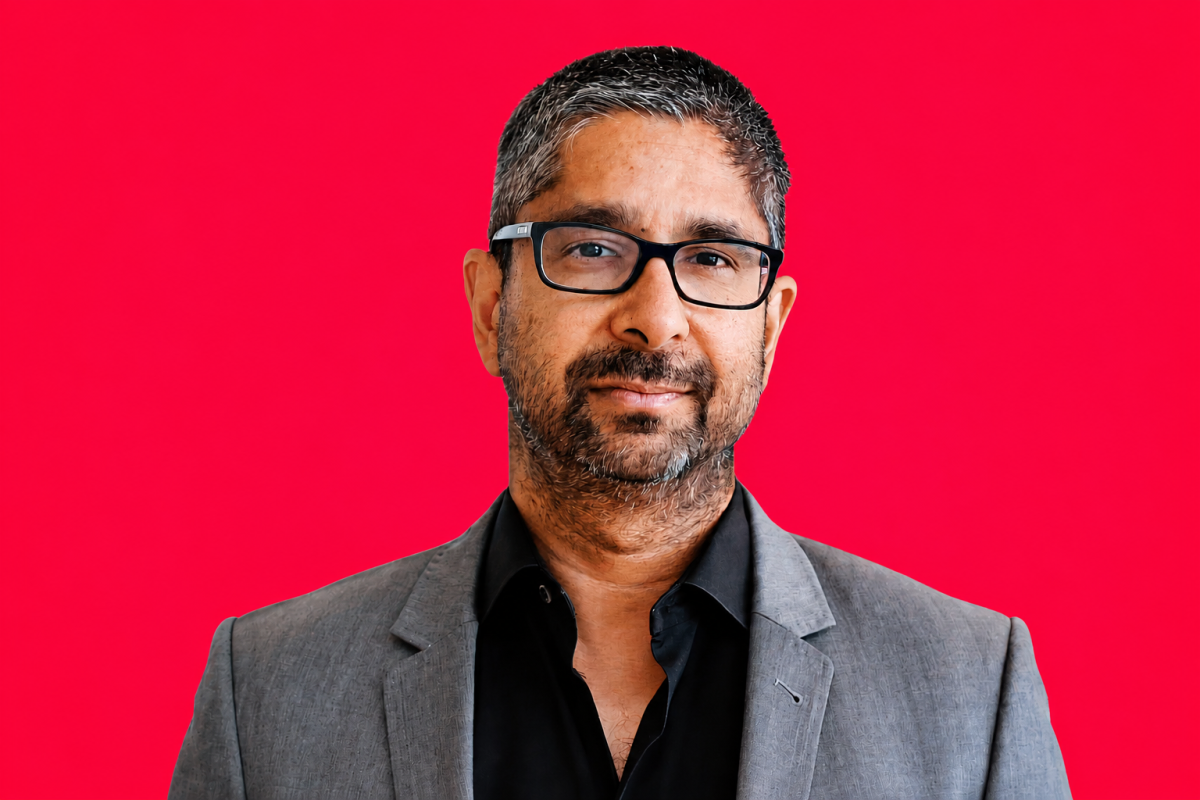
Vijay Pande has gone from running one of venture capital’s largest healthcare and life sciences practices to launching a much smaller firm built on a radically different model: a handful of highly selective investments each year, minimal staff and heavy use of AI to run the business. The shift matters because Pande is one of the best-known bridges between academia, biotech and venture investing, and his new approach reflects a broader debate over whether the future of AI in medicine will be won by scale or focus.
After more than a decade leading Andreessen Horowitz’s healthcare and biotech push and helping grow it into a practice managing close to $4 billion, Pande left in 2025 to co-found VZVC with longtime investor Zach Werner. In a recent conversation, he said the firm is intentionally designed to avoid the classic venture pattern of making dozens of bets a year, instead prioritizing a small number of concentrated, hands-on positions in AI, healthcare delivery and clinical trials.
His new strategy arrives at a moment when AI in medicine is moving from hype toward practical deployment, but still runs into a major limitation: unlike internet text, biological data is not broadly available to scrape, and much of it remains trapped inside private datasets. That means the promise of AI-powered drug discovery and precision medicine may depend less on generic models and more on who controls the underlying data, how it is shared and whether enough high-quality evidence exists to make the systems clinically useful.
Why Vijay Pande left a large platform for a smaller one
Pande’s move is striking because it reverses the logic of much of modern venture capital. Instead of scaling up, VZVC is scaling down. The firm has just two founders at the investment level, no associate bench and a workflow that leans on AI agents to handle tasks that smaller firms would normally assign to junior staff.
Pande said the decision was not about doing more with less for its own sake. It was about building an investment model that fits the type of businesses he wants to support, especially companies working on long-horizon problems in healthcare and biotech where deep technical understanding and sustained engagement matter more than rapid portfolio expansion.
Pande has described the firm as a deliberately concentrated platform, saying the goal is not to make 30 bets a year but only about five highly considered investments.
That philosophy reflects a broader shift in parts of venture capital toward conviction investing. Some firms have been moving away from broad diversification and toward deeper support for fewer companies, especially in areas where regulation, scientific validation and commercialization timelines can stretch for years.
What is VZVC and how is it different from a16z?
VZVC is a compact venture firm co-founded by Pande and Werner that uses AI internally and focuses on a narrow set of investments. Unlike a16z’s platform style, which was built to support a large and active portfolio, VZVC is meant to behave more like a specialist shop with limited deal volume and a hands-on operating cadence.
The contrast is important. At Andreessen Horowitz, Pande helped build one of the most visible healthcare investing franchises in Silicon Valley, working alongside a broader institutional team and backing a wide range of startups. At VZVC, the structure is intentionally lighter and more personal. Pande compared adding a company to the portfolio to a major life decision rather than a routine transaction, underscoring how selective he intends to be.
| Factor | Andreessen Horowitz healthcare practice | VZVC |
|---|---|---|
| Scale | Built into a large platform managing close to $4 billion | Small, founder-led firm |
| Investment volume | Broader, portfolio-style deployment | About five deals a year |
| Team structure | Institutional platform with associates and support staff | Two investment partners, no associates |
| Operating style | Platform model with broader coverage | Concentrated, hands-on, AI-assisted |
| Main focus | Healthcare and life sciences broadly | AI for healthcare delivery and AI for clinical trials |
How AI is changing drug discovery and medicine
AI is changing medicine by making biology more engineerable, according to Pande, who argues that the field is moving from discovery driven largely by intuition and chance toward a more systematic process of identifying targets, designing molecules and improving clinical trial selection.
That does not mean the science has become easy. It means that machine learning systems can now help researchers make sense of highly complex biological problems that once depended more heavily on trial and error. In drug discovery, AI can assist with finding disease targets and designing candidate compounds. In the clinical stage, it can potentially help improve the odds that the right patients are chosen for the right trials.
Pande said this progress is especially important because the most expensive part of drug development is often the clinical trial process itself. Even as AI and automation shorten parts of the pipeline, a single large trial can still cost hundreds of millions of dollars. The fact that only a fraction of drugs successfully make it from the first stage of testing through the third means every failure becomes extremely costly.
Why clinical trials remain the biggest bottleneck
Clinical trials remain the biggest bottleneck because most candidate drugs never make it to approval. Pande said the success rate from initial testing through late-stage trials is roughly 20%, which means eight out of ten drugs fail somewhere along the way.
He argued that one reason for those failures is the poor predictive value of animal models, especially mice, which still underpin much of preclinical research. Those models can help scientists move a program forward, but they do not always reflect how human bodies behave. AI is not a perfect substitute, but Pande sees it as a better option than relying on animal experiments alone.
For investors, that distinction matters because better prediction upstream could reduce wasted capital and improve the economics of drug development. For patients, it could shorten the path from laboratory idea to approved treatment.
What does precision medicine actually mean?
Precision medicine means using a patient’s specific biology, not just population averages, to decide which treatment is most likely to work. Pande said the goal is to move away from the common pattern in which doctors try one therapy, then another, then another, because the first choice was only a guess.
In his view, too much medicine still relies on comparing a person’s results against broad averages rather than asking whether a result is unusual for that individual. The emerging promise of AI is to make care more personalized by integrating a wider set of data points and helping physicians determine what is right for a specific patient at a specific moment.
This is a big shift from the older genomics-first vision of personalized medicine. DNA remains important, but Pande suggested it is only the starting point. A genome may be the blueprint, he said, but it does not fully capture the state of a living, changing human being.
Why genomics alone is not enough
Genomics alone is not enough because a person’s current biological state is shaped by much more than inherited code. Pande pointed to proteomics and other measurement tools that can track what is happening in the body now, not only what was written at birth.
That idea has become more persuasive as tools for measuring biological signals have improved. Researchers can now collect richer, more dynamic data from human samples, and robotics is helping automate those measurements at scale. Those changes make AI more useful, because machine learning systems generally perform better when they can ingest larger and more varied data sets.
- Genomics shows the inherited baseline.
- Proteomics helps reveal active biological processes.
- Robotic automation increases the amount of data that can be collected.
- AI helps make sense of the resulting complexity.
Why biology is harder for AI than language
Biology is harder for AI than language because the data is not open, abundant or standardized in the way internet text is. That makes one of AI’s core strengths — training on huge public corpora — much less available in life sciences.
Pande emphasized that, in biology, data is often proprietary, fragmented or generated inside one company’s lab. That means a model trained on one set of experiments does not automatically transfer to another, and the field cannot simply assume that a universal dataset will emerge the way web text did for large language models.
Pande’s view is that biology presents an unusual AI problem: the data cannot be easily scraped, and it cannot be distilled from one model into another in the same way language data can.
This limitation cuts both ways. On one hand, it slows broad model building. On the other, it creates competitive moats for companies that own unique datasets. The result is a field where the value of data curation, access and exclusivity may be as important as algorithm design.
How does data sharing shape the future of AI in medicine?
Data sharing will likely determine how far AI can go in medicine because the best models depend on access to rich, high-quality biological information. Pande suggested the industry is starting to build “atlases” of biology, which function like foundation models for life sciences.
In his view, these biological foundation models may eventually mirror what happened with open-source large language models, which have forced even major proprietary vendors to compete on usability, specialization and cost. He expects open-source biology models to have a similarly broad effect over time, especially if they become good enough to support experimentation across multiple therapeutic areas.
That possibility matters for founders and investors because it raises a strategic question: will competitive advantage come from the model itself, from the data behind it, or from the product layer that turns insights into clinical action?
What is the risk of walled-off datasets?
The risk of walled-off datasets is that innovation becomes slower, less reproducible and more dependent on a handful of private players. If every company builds its own isolated biological database, the field may generate many narrow solutions rather than a shared infrastructure for medicine.
At the same time, those private datasets can be commercially valuable, so companies have strong incentives to keep them closed. That tension between scientific progress and business protection is one of the defining challenges for AI in biotech.
Which parts of healthcare is Pande betting on now?
Pande said he is focusing most of his attention on AI for healthcare delivery and AI for clinical trials. Those areas sit closer to real-world adoption than purely theoretical drug-discovery tools, and they may offer clearer paths to commercial traction.
Healthcare delivery includes workflow, decision support and tools that help clinicians operate more efficiently. Clinical-trial technology, meanwhile, can improve patient selection, trial design and evidence generation. Both areas are attractive because they address cost, speed and quality — three problems the healthcare system struggles to solve simultaneously.
His interest in these categories also reflects a practical lesson from years of investing: even the most impressive technology will fail if it cannot be sold, deployed and adopted inside complex healthcare organizations.
Why go-to-market matters as much as the science
Go-to-market matters as much as the science because healthcare technology is not adopted on technical merit alone. Pande said one of the biggest lessons of his investing career is that brilliant founders often underestimate how hard it is to build distribution, persuade buyers and integrate into real workflows.
He described the commercialization challenge as at least as difficult as the underlying technology problem. That is especially true in medicine, where products must fit into regulatory systems, reimbursement structures, hospital procurement and clinician behavior.
For startups, that means a superb model or algorithm is only the beginning. The harder question is whether the product can survive contact with the real-world institutions that control access to patients and data.
What does Pande look for in founders?
Pande looks for founders he can trust over the long term, especially those who are honest, dependable and willing to build durable relationships. He said he wants to work with people who think in five- to ten-year arcs rather than short-term wins.
That preference fits the nature of biotech and healthcare, where product cycles are slow and setbacks are common. He said he is drawn to founders who want to create value together rather than simply outcompete everyone else in the room.
Pande has stressed that integrity, reliability and a shared long-term mindset matter more to him than short-term hustle alone.
In practice, that means he is likely to favor founders who can explain not only their scientific vision but also how they will work with clinicians, data holders, regulators and customers over many years.
How much has the field changed since Pande first started talking about AI in medicine?
The field has changed dramatically since Pande began arguing more than a decade ago that AI and machine learning would matter in medicine. At the time, he said, many people dismissed the idea as unrealistic or overhyped.
Today, that skepticism has faded. AI is now embedded in a wide range of health and life sciences startups, and investors increasingly treat computational biology as a serious category rather than a novelty. Pande said watching that shift has been satisfying, not just commercially but intellectually.
Still, he warned against the idea that AI will magically cure every disease or solve every medical workflow problem. The technology is only as good as the data and the problem definition behind it. In his view, the biggest near-term wins will come where the data is strong enough to support meaningful prediction and where a practical commercial path exists.
Timeline: from academic scientist to biotech investor
Pande’s career arc helps explain why his latest move has drawn attention. He is one of the rare people who has been deeply involved in science, computation and investing at each stage of the AI-in-biology conversation.
| Year / period | Milestone | Why it mattered |
|---|---|---|
| Stanford years | Built Folding@home and worked as a chemistry professor | Helped establish his credibility in distributed computing and biology |
| About 12 years ago | Joined a16z’s healthcare and life sciences effort | Brought academic and technical expertise into venture capital |
| Over the next decade-plus | Helped grow the practice to nearly $4 billion in assets | Built one of the largest healthcare investing platforms in the industry |
| June 2025 | Left a16z to found VZVC | Signaled a move from scale to selectivity |
| 2026 | Outlined the new firm’s AI-first, concentrated model | Highlighted a different vision for venture in biotech |
What this means for biotech investors and founders
Pande’s move suggests that some of the smartest money in biotech now sees advantage in depth rather than breadth. In a market crowded with AI startups, a smaller fund that can offer intense operational support and domain expertise may be more appealing than a larger platform that spreads attention across too many companies.
It also suggests a more disciplined view of AI’s limits. The technology can accelerate discovery and improve clinical decision-making, but it cannot compensate for poor data, weak experimental design or an unclear path to market.
For founders, that may be the real lesson. The winners may not be the companies with the flashiest model demos, but the ones that own unique biological data, solve a concrete workflow problem and can demonstrate a path to real adoption.
For the broader industry, Pande’s pivot reinforces a familiar theme in the AI era: the most durable opportunities often appear where technical ambition meets operational friction. In healthcare, that friction is still everywhere — and that is exactly why the sector remains so attractive to investors who are willing to be patient.
Key questions the industry is asking now
The conversation around AI in medicine is no longer about whether the technology can be useful. It is about where the evidence is strongest, which business models can survive and who will control the data pipelines that make advanced models possible.
Pande’s career, and his new firm, sit squarely inside that debate. His bet is that the future will reward smaller, more focused, deeply informed investors backing startups that can turn AI into clinical and commercial reality — not just scientific promise.
Frequently asked questions
What is Vijay Pande doing now?
Vijay Pande is now co-founding and running VZVC, a small venture firm focused on AI in healthcare, biology and clinical trials. The firm is built around a highly selective investment approach rather than the broad portfolio style common at larger venture platforms.
Why did Vijay Pande leave Andreessen Horowitz?
Vijay Pande left Andreessen Horowitz to build a smaller, more concentrated firm that matches his preference for deep involvement and fewer bets. He has said he wants a structure that allows more hands-on work with founders over a long time horizon.
How many investments will VZVC make each year?
VZVC plans to make only about five investments a year. Pande has said the firm is intentionally not designed to chase a large number of deals, and instead focuses on concentrated conviction investing.
Why is AI harder to apply in biology than in language models?
AI is harder to apply in biology because the underlying data is not as abundant, open or standardized as internet text. Much of it is proprietary, fragmented or generated in separate lab environments, which makes broad model training and data sharing much more difficult.
What areas of AI in healthcare interest Pande most?
Pande is most interested in AI for healthcare delivery and AI for clinical trials. He sees both as practical areas where AI can improve workflow, reduce costs and help bring better treatments to patients faster.