In short
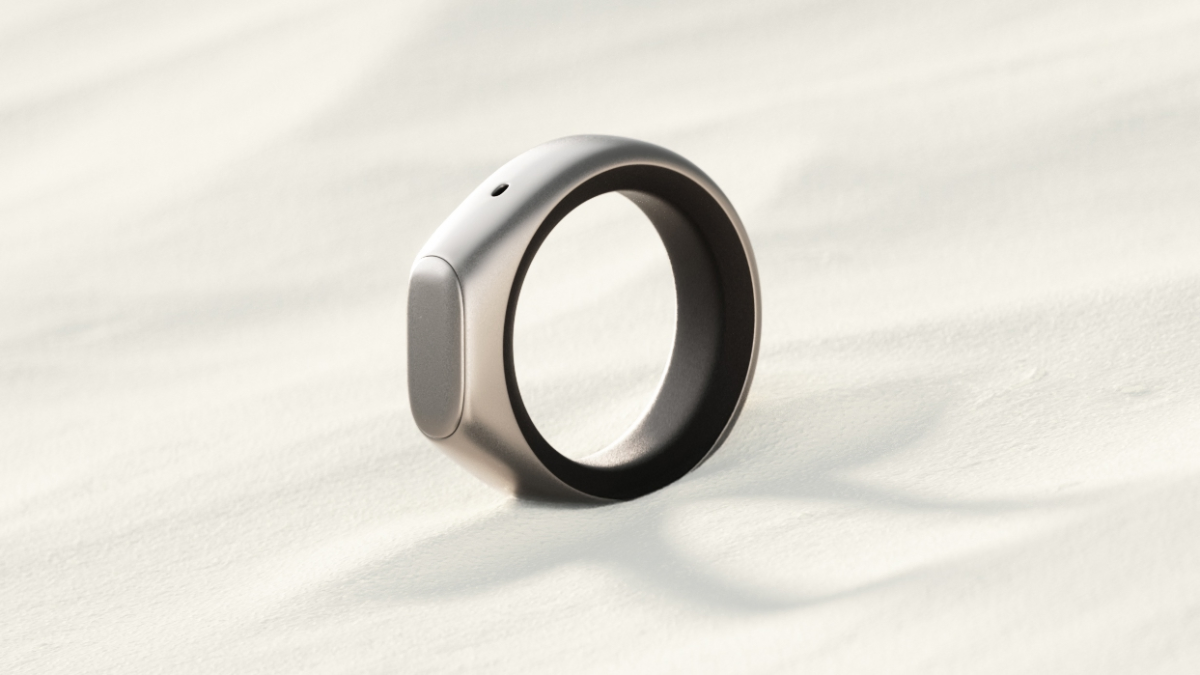
Sandbar has raised $36 million to build Stream, a voice-enabled ring that uses push-to-talk instead of always-on listening. The startup says that user control and social acceptability will help it avoid the fate of many AI hardware gadgets.
- Sandbar has raised $36 million, including a $23 million Series A, to develop Stream.
- The Stream ring is built around push-to-talk voice capture rather than always-on recording.
- The company believes user control and social acceptability are key to making AI wearables mainstream.
- Sandbar is betting that a custom ring can succeed where other AI hardware gadgets have stalled.
Sandbar is trying to do what many AI hardware startups have failed to do: turn voice interaction into a consumer product people will actually wear every day. The New York-based company has raised $36 million to build Stream, a voice-enabled ring designed for private, push-to-talk note capture rather than the always-listening gadgets that have struggled to win trust.
That bet matters because the market for AI note-taking devices is getting crowded fast, while consumer patience for noisy, intrusive, or awkward wearables remains limited. Sandbar’s answer is to make the user, not the machine, decide when to listen.
In a recent conversation on TechCrunch’s Equity podcast, co-founder and CEO Mina Fahmi laid out the company’s theory: AI hardware fails when it asks too much of people at once. Stream, he argued, is built to avoid that trap by making voice input deliberate, socially acceptable, and tightly controlled.
What is Sandbar building, and why does it think a ring can win?
Sandbar is building Stream, a ring that captures voice when the wearer chooses to activate it. The startup’s central claim is that a voice-first wearable can be useful without behaving like a surveillance device.
The ring sits within a broader wave of AI hardware experiments that includes pins, pendants, transcribing earbuds, and other devices pitched as effortless personal assistants. Yet the category has already seen high-profile disappointment, with many products drawing attention from tech enthusiasts but failing to become everyday consumer habits.
Sandbar believes the ring form factor offers a more discreet and natural way to capture fleeting ideas. In practice, that means the device is meant for quick thoughts, reminders, and personal notes rather than passive recording of everything around the user.
Fahmi’s core argument is that wearable AI needs to feel intentional rather than invasive, and that people are more likely to adopt a device they control moment by moment than one that is always on.
How does Stream differ from always-on voice gadgets?
Stream is designed around push-to-talk behavior, not constant listening. That choice is central to Sandbar’s product philosophy and to its pitch that the device can avoid the privacy and social friction that have dogged earlier AI wearables.
Instead of assuming users want their surroundings monitored at all times, Sandbar wants each interaction to be explicit. The company says that matters not only for privacy, but also for how comfortable the device feels in public, at work, or around other people.
For consumers, the distinction is important. Always-on devices may promise convenience, but they also raise immediate questions: Who is being recorded? When is audio stored? Who can hear it? Stream attempts to reduce that unease by narrowing when the microphone is active.
Why the AI hardware market keeps stumbling
The current wave of AI wearables is arriving after several earlier attempts at consumer hardware failed to create durable demand. The common pattern has been easy to spot: ambitious demos, strong launch buzz, then weak long-term adoption.
Many devices in this category have been criticized for one or more of the following problems:
- they are awkward to wear for long periods;
- they create privacy discomfort in public spaces;
- their software experience is too limited to justify the hardware;
- they rely on cloud services that can feel slow or inconsistent;
- they target curious early adopters rather than mainstream buyers.
Sandbar’s pitch is that a smaller, more purposeful interaction model can change that equation. By constraining when the device listens and focusing on personal capture rather than ambient surveillance, the company hopes to offer a more believable everyday use case.
What makes social acceptability such a big issue?
Social acceptability is the idea that a device has to feel normal in public, not just powerful in a lab demo. For Sandbar, that means the ring must be subtle, understandable, and not make the wearer—or the people around them—feel exposed.
This is one of the main reasons the startup is leaning into push-to-talk. A user-activated device is easier to explain to strangers, coworkers, or friends than one that appears to be recording continuously.
That concern goes beyond manners. As AI hardware becomes more common, the industry is running into a practical reality: consumers may want help capturing ideas, but they do not want to appear as though they are documenting every interaction around them.
How did Mina Fahmi’s background shape Sandbar?
Fahmi’s experience at CTRL-labs, the neural interface company Meta bought in 2019, appears to have strongly influenced Sandbar’s product thinking. His time there helped shape a view that human intent should remain central to the way computers receive input.
CTRL-labs explored new kinds of interfaces built around the body’s natural signals. That work appears to have informed Sandbar’s emphasis on input that feels direct, immediate, and controlled by the user rather than by ambient automation.
The lesson Fahmi seems to have carried forward is straightforward: if a device is going to live on the body, the interaction model must feel intuitive enough to become habitual, but not so intrusive that it alienates the user.
Fahmi has framed his design philosophy around preserving human control, arguing that wearable AI works best when the person decides exactly when and how the system should respond.
Why build custom hardware instead of adapting an existing device?
Sandbar chose to develop fully custom hardware rather than repurpose an off-the-shelf product, a decision Fahmi described as extremely difficult. That choice suggests the company believes hardware design itself is part of the product, not just the shell around the software.
For many startups, the temptation is to prototype quickly using existing components and repackage them. Sandbar appears to have decided that approach would not be enough for a category where fit, feel, microphone placement, battery life, and visibility all affect adoption.
A ring leaves little margin for error. It has to be comfortable, durable, and subtle, while still housing enough tech to make the voice experience useful. That combination helps explain why the company is betting on custom engineering rather than a faster, cheaper shortcut.
| Topic | Sandbar’s approach | Why it matters |
|---|---|---|
| Product | Stream voice ring | Targets personal note capture in a wearable form factor |
| Listening mode | Push-to-talk | Reduces privacy concerns and improves social acceptability |
| Hardware strategy | Fully custom device | Allows the company to tune comfort, controls, and interaction design |
| Funding | $36 million total | Gives the startup resources to keep iterating in a capital-intensive category |
What does the funding tell us about investor expectations?
Sandbar has raised $36 million so far, including a $23 million Series A led by Adjacent and Kindred Ventures. That level of backing indicates that investors are still willing to fund AI hardware experiments, but likely only if the product thesis is distinct from the crowd.
The round also underscores how expensive it is to build consumer hardware correctly. Unlike pure software companies, hardware startups must deal with design, manufacturing, supply chains, and long development cycles before they can prove demand.
Investors backing Sandbar are effectively betting that the next durable AI consumer product will not look like a chatbot app. It may instead be something users wear, touch, and activate for very specific moments.
Why are investors still funding this category?
Investors are still funding AI hardware because the category could become a major interface layer for artificial intelligence if someone solves the usability problem. The logic is that voice, sensors, and wearables may eventually make AI more natural than keyboards or screens for certain tasks.
But the financing also reflects a more selective market than the one that fueled earlier waves of consumer gadgets. Backers now seem to want sharper product discipline, clearer user control, and stronger evidence that the device solves a real habit, not just an interesting demo problem.
How does Stream fit into the wider AI note-taking boom?
Stream is part of a fast-growing market for devices that promise to record conversations, capture ideas, and turn spoken words into useful output. The broader category includes credit-card-style gadgets, pins, pendants, and earbuds that transcribe speech or summarize discussions.
What makes this moment different is not just the hardware variety, but the software expectation behind it. Users increasingly expect devices to do something with the voice data after capture, whether that means sorting, summarizing, or generating reminders.
That is both an opportunity and a challenge. The more a device promises to “understand” the user, the more scrutiny it faces around accuracy, privacy, data handling, and whether the value is strong enough to justify wearing another gadget.
How mainstream could voice wearables become?
Voice wearables could become mainstream if they solve three problems at the same time: convenience, trust, and design. Sandbar’s theory is that people may embrace the category if it feels as normal as wearing a watch or ring and if they know exactly when the device is listening.
Mainstream adoption will likely require more than novelty. The product must become useful enough that people reach for it repeatedly, yet invisible enough that it does not become a social burden.
That is a high bar. But it is also the basic test for any wearable that wants to move beyond gadget status and into daily routine.
What are the biggest risks ahead for Sandbar?
Sandbar faces the same challenges that have tripped up many hardware startups, plus a few unique to AI wearables. The company must prove that people really want this kind of interaction, that the hardware is comfortable and reliable, and that the software is helpful enough to keep users engaged.
It also has to convince buyers that the ring is worth wearing over time. That means competing not just with other AI gadgets, but with established habits, including smartphones, smartwatches, voice assistants, and simple note apps.
There is also a branding challenge. Consumers may be intrigued by the idea of a voice ring, but they will likely need a clear, repeated reason to adopt it. The company cannot rely on the novelty of the form factor alone.
- Hardware execution: The ring must feel comfortable and durable enough for daily wear.
- Product-market fit: Users need a compelling reason to keep using voice capture.
- Privacy confidence: Buyers must trust the device’s listening model.
- Cost discipline: Custom hardware can burn cash quickly if adoption is slow.
Why the device may still stand out
Even with all those risks, Sandbar’s approach has a logic that many competitors lack. By narrowing the use case to deliberate voice capture, the company is trying to avoid the biggest mistake in AI hardware: doing too much, too soon, for too little benefit.
The ring’s appeal may ultimately come from restraint. If it helps a person capture a thought in one motion, without demanding that they trust an always-on microphone or learn a complicated interface, it could have a better chance than more ambitious devices that try to replace several tools at once.
That philosophy places Stream in a familiar Silicon Valley pattern: a startup identifying a pain point created by the last generation of products and trying to solve it with a narrower, more elegant one. Whether that is enough to win consumers remains unknown, but the reasoning is clear.
What happens next?
The next phase for Sandbar will likely determine whether Stream remains a compelling prototype idea or becomes a real consumer hardware business. The company now has funding, a defined product thesis, and a public argument about why voice wearables should work differently.
The harder part is execution. Sandbar must show that users will wear the ring, activate it regularly, and find the results useful enough to keep going. If it can do that, it may prove that AI hardware does not have to live in the graveyard of overhyped gadgets.
For now, the startup is making a simple but ambitious claim: the future of wearable AI may belong not to the device that listens the most, but to the one that knows when to stay quiet.
Key facts at a glance
| Item | Detail |
|---|---|
| Company | Sandbar |
| Product | Stream voice ring |
| Total funding | $36 million |
| Latest round | $23 million Series A |
| Lead investors | Adjacent and Kindred Ventures |
| Core product idea | Push-to-talk voice capture on a wearable ring |
| Primary advantage claimed | Better social acceptability and user control |
As AI hardware continues to search for a winning consumer formula, Sandbar is placing its chips on a simple proposition: the safest way to make voice wearables useful is to make them unmistakably human-led.
Frequently asked questions
What is Sandbar’s Stream ring?
Sandbar’s Stream ring is a voice-enabled wearable designed to capture notes and thoughts when the user activates it. Unlike always-on devices, it relies on push-to-talk input, which the company says makes the product more private and socially acceptable.
How much funding has Sandbar raised?
Sandbar has raised $36 million in total. That includes a $23 million Series A led by Adjacent and Kindred Ventures, giving the startup the capital needed to keep building and refining its custom hardware.
Why does Sandbar think always-on AI wearables fail?
Sandbar thinks always-on AI wearables fail because they can feel intrusive, awkward, and hard to trust. The company argues that users are more comfortable with devices they control directly, especially in public or professional settings.
What makes the Stream ring different from other AI gadgets?
The Stream ring is different because it is built around deliberate voice capture rather than passive recording. Sandbar is also developing custom hardware instead of reusing an off-the-shelf product, which it believes is necessary for comfort and usability.