Updated July 31, 2026 9:53 am
In short
Shift is expanding its recorded-household-services model as its CEO predicts useful, affordable home robots could arrive soon, even as the company keeps gathering first-person footage from real kitchens and chores.
- Shift trades free home services for first-person training footage.
- The company is targeting scarce robot training data from real kitchens and homes.
- The model could help train future humanoid household robots.
- The approach raises privacy, safety and inequality concerns.
- Microagi says the broader goal is to bring more people into the AI economy.
Update — July 31, 2026 9:53 am
Shift’s CEO is now making a more specific near-term claim about where the market is headed: he says home robots could be widely available at relatively affordable prices as soon as next year, though they still would not handle every household task.
The updated source also adds that the company plans to expand beyond free meals and cleaning to other services, including discounted ones, if customers agree to have the work recorded for training data.
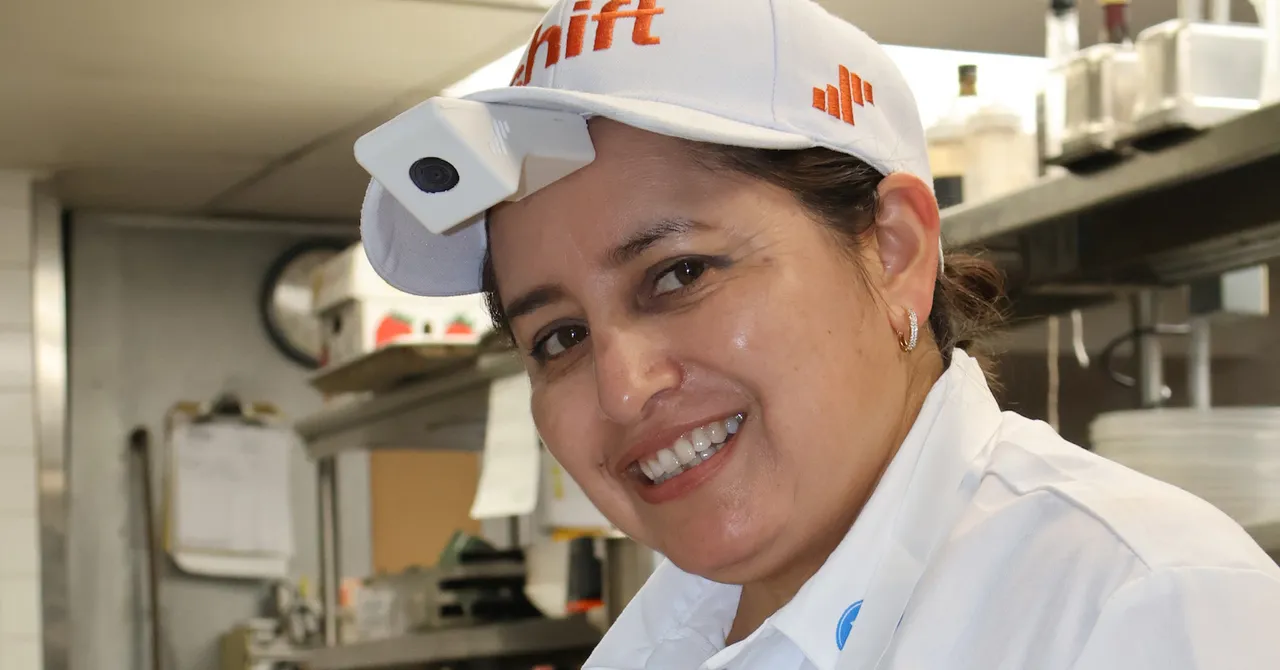
The reporter’s hands-on account adds fresh detail about the setup, including that the chef used a baseball cap-mounted camera and that the lunch footage was uploaded as egocentric training data.
Shift, a division of German startup Microagi, is using free chef and cleaning services to collect first-person video that can train future household robots, highlighting both the promise and the risks of the fast-growing market for egocentric AI data. The model turns ordinary homes into robotics training labs, raising questions about safety, privacy, labor and whether home humanoids will arrive as quickly as their backers expect.
When a private chef arrived at a New York apartment to cook a complimentary three-course meal, the real product was not the food. The point was the footage: a camera fixed to his hat captured every chop, stir and plate of the lunch so that those motions could later be fed into robot training systems.
The encounter was part dinner party, part pilot program for the next phase of artificial intelligence. Instead of mining the internet for text, companies like Shift are paying people with free services to let them record how humans move through real kitchens, bathrooms and living rooms. The wager is simple: if robots are going to work in homes, they need to see how homes actually work.
That idea may sound futuristic, but the business model is already here. Shift has previously offered free cleaning in New York and has expanded to San Francisco with free home-cooked meals. The company says the recordings are meant to help build better robots and, in the meantime, create a marketplace where contractors can earn money by contributing to AI development.
The story is bigger than one meal. It reflects a broader scramble in robotics to gather the kind of data that helped large language models scale up so rapidly. Text was plentiful and relatively easy to scrape. Detailed, first-person video of human hands performing useful tasks is much rarer, and that scarcity is giving a new class of data collectors real leverage.
What happened during the free meal?
A chef named Ollie walked into the apartment already equipped to film. He wore a white hat with a compact, blocky camera attached to the brim, plus a wire running down to a phone that stored the recordings. The setup was designed to capture his movements from the worker’s point of view as he prepared lunch.
Over the course of the meal, the camera recorded a gazpacho starter, a main course of baked salmon with a creamy zucchini sauce and a dessert tiramisu. The cleanup afterward was part of the data collection too, because a useful home robot would need to do more than cook. It would also need to wash pans, clear counters and reset the kitchen for the next task.
The experience felt unusual for the host, who was suddenly aware that the kitchen, its mess and every human gesture inside it were being turned into data. That discomfort points to the central tension in egocentric recording: the act is ordinary, but the result is highly valuable to companies trying to teach machines how to behave in domestic spaces.
Why are robotics companies so interested in egocentric data?
Robotics firms want egocentric data because it shows tasks from the perspective a robot may eventually need to imitate. In the first-person view, a system can study how hands grip a knife, how eyes and hands coordinate while chopping vegetables and how a person adapts when a pan is too hot, a counter is crowded or an ingredient needs to be moved quickly.
That is different from conventional video or surveillance footage. Instead of watching from across the room, a first-person recording captures the intent and sequence behind a task, making it more useful for training models that must act in the physical world.
For years, the biggest AI progress came from massive text datasets assembled from the public internet. Robotics does not have an equivalent archive of everyday human behavior. That gap has become a business opportunity for startups willing to trade convenience, money or free services for data generated inside people’s homes.
How does the Shift model work?
Shift’s setup is straightforward: a homeowner or renter receives a free or discounted service, and in exchange the company records the task from a first-person perspective. The resulting footage can then be used to train AI systems that may someday power household robots.
In practice, this means a chef, cleaner or other contractor enters a home wearing recording equipment and carries out the task as usual. The labor is real, but it is also instrumented. Every movement becomes part of a growing library of demonstrations for machines.
The approach resembles a gig platform crossed with an AI data operation. Rather than paying only for completed chores, the company is also paying for the training value of the work itself.
Why is the kitchen especially valuable data?
The kitchen is especially valuable because it combines a range of fine motor skills, spatial judgment and improvisation. Cooking requires opening packages, selecting tools, maintaining cleanliness, handling fragile objects and responding to changing conditions in real time.
Those are exactly the kinds of tasks robotics companies struggle to automate. A robot that can navigate a kitchen well is closer to a robot that can handle broader home chores, from meal preparation to cleanup and organization.
Even something as basic as scraping a pan or arranging leftovers involves a series of judgments that remain difficult for machines. The value of the footage lies in capturing how people make those judgments without thinking about them.
How does Shift fit into the larger AI labor economy?
Shift is part of a broader wave of companies using human activity as a source of training data. Some platforms recruit workers to label images, narrate scenes or perform repeated household motions for recording. Others package the process as a perk: a free service in exchange for consent to be filmed.
This new labor market sits at the edge of AI development and consumer convenience. For companies, it is a way to gather scarce data. For participants, it is a chance to get something useful at little or no cost. For workers, though, it can mean being both service provider and dataset.
The company is a division of Microagi, a German startup focused on deploying robots in the real world. Its leadership frames the project as both an economic opportunity and a long-term social transition.
Microagi chief executive Bercan Kilic has said the company’s aim is to bring people into the AI economy while also helping society and governments navigate the road toward a future of abundance.
That language reflects the lofty ambitions common in robotics and frontier AI. But the practical near-term goal is more grounded: build a marketplace around video data that can teach machines to do useful things in domestic spaces.
What makes this business model different from conventional gig work?
What makes this model different is that the value is not just the task itself, but the recording of the task. A cleaner normally sells labor. A Shift contractor is also selling a dataset.
That changes the economics in several ways:
- The customer receives a service and contributes training data at the same time.
- The company can potentially reuse the recordings multiple times for model development.
- The home becomes a controlled environment for collecting rare examples of human skill.
- The contractor’s movements have value beyond the hour spent working.
It is a clever fit for a market where data, not just labor, is the scarce asset. And because the footage is recorded in real homes, the data may prove more useful than staged demonstrations in a lab.
How close are home robots to becoming useful?
Supporters of the technology believe home robots are getting much closer. Kilic has argued that relatively capable household machines could arrive within a year and, at least at first, cost enough to appeal mainly to early adopters willing to pay for novelty and convenience.
He has suggested these machines may resemble robotic vacuums in their early stage of adoption: limited at first, but increasingly common as they improve and fall in price.
That forecast is ambitious, and robotics history counsels caution. Home environments are unpredictable, cluttered and full of exceptions. Unlike a factory, a home is not standardized. A robot must handle varied layouts, pets, children, loose objects, breakable items and human surprises.
Still, the industry’s optimism is rooted in real progress. Better machine learning models, cheaper sensors and improved dexterity systems have pushed home robotics farther than it was just a few years ago. Data collection is the next bottleneck.
| Shift / Microagi data model | What it collects | Why it matters | Near-term benefit |
|---|---|---|---|
| Free private chef meal | First-person video of cooking and cleanup | Trains robots on kitchen tasks | Users get a no-cost meal |
| Free cleaning service | Recording of household cleaning work | Teaches robots how to navigate homes | Users get a free or discounted clean |
| Egocentric training data | Human hand movements from the worker’s view | Useful for imitation learning | Builds a dataset that is hard to source elsewhere |
What are the risks of filming work inside people’s homes?
The biggest risks are privacy, safety and the possibility of normalizing surveillance as part of everyday convenience. When a worker wears a camera in a private residence, every object, habit and condition in that environment becomes part of a dataset unless carefully limited.
That creates obvious sensitivity around who can access the footage, how long it is retained and whether it could be repurposed. Even if participants consent, home recordings can contain much more than the intended task: family photos, personal items, addresses, routines and other identifying details.
There is also a physical safety dimension. A future robot trained on kitchen data might eventually handle sharp tools, hot surfaces and fragile objects. If the training is incomplete or the deployment is rushed, the consequences could be serious.
That concern is not hypothetical. Household robots must operate near pets, children and the people who live with them. A machine that misjudges a movement in the kitchen could do more than spill food.
Why the “abundance” narrative is controversial
The abundance argument holds that automation can lower costs, expand access to services and eventually raise living standards. In this view, more capable robots should mean more convenience for more people.
But critics point out that technological progress does not automatically produce broad prosperity. Productivity gains can be unevenly distributed, and new wealth often accumulates at the top before it reaches workers or renters.
That tension matters here because the business is being framed not only as a commercial product but as a step toward a better social order. The challenge is that the same systems that promise convenience can also deepen inequality if the gains are captured by a narrow slice of consumers and investors.
Why does the apartment view matter in a robot data story?
The apartment matters because it shows the real-world messiness robots have to learn. A lab kitchen can be arranged for ideal conditions. A person’s home cannot.
In the reported meal, the chef worked in a cramped space while the host watched from nearby. The camera recorded cabinet reaches, chopping angles, dish placement and cleanup in an environment that looked lived-in rather than staged. That kind of footage may be far more useful than polished demo clips.
It also reveals a cultural shift. Homes are becoming part of the AI supply chain, not just places where AI products are used. The kitchen table is no longer simply a site of consumption; it can also be a source of machine learning material.
How big could the market for robot training data become?
The market could grow quickly if robots begin moving from experimental prototypes into premium consumer products. The more tasks those machines can perform, the more data developers will need to teach them edge cases, routines and home-specific behaviors.
That suggests a layered ecosystem may emerge:
- Companies gather first-person demonstration videos from workers in real homes.
- Engineers use those recordings to improve manipulation, navigation and task planning.
- Robots become more useful in common domestic jobs such as cleaning, cooking and tidying.
- Faster adoption creates fresh demand for even more training data.
If that loop holds, the value of everyday chores as machine training material could rise sharply. A service that now feels gimmicky might become foundational infrastructure for home automation.
What happens next for Shift and companies like it?
What happens next is likely to depend on whether the market accepts the tradeoff between convenience and being recorded. If enough people are willing to exchange privacy for free services, the model can scale. If not, the economics may prove harder.
Shift has indicated it wants to expand beyond cooking and cleaning into other services, potentially offered at discounted prices in exchange for data capture. That would widen the company’s reach and increase the variety of motion examples it can collect.
For now, the company is betting that people will tolerate a camera on the brim of a chef’s hat if the meal is good enough. In the short term, that may be true. In the long term, the bigger question is whether people will accept the idea that the most intimate spaces in the home can also serve as raw material for AI.
Why this story matters now
This is not just a quirky meal in a New York apartment. It is a glimpse of where AI may be headed next: away from the screen and into the physical world, powered by the ordinary gestures of human beings at work.
For years, the AI story was dominated by text, chatbots and cloud-scale model training. The next chapter may be about embodied systems that need to watch, imitate and eventually perform practical tasks in homes, offices and public spaces.
That shift raises the stakes. A chatbot can produce a bad answer. A robot in a kitchen can do something much more consequential. The race to train those robots is therefore not only about convenience and cost; it is also about how safely and ethically society wants machines to enter domestic life.
For now, one private chef, one hat camera and one complimentary dinner offer a small but revealing preview of that future. The robot may not be in the room yet, but the training data already is.
| Timeline | Event | Significance |
|---|---|---|
| Earlier this year | Shift gained attention with free cleaning services in New York | Showed the company’s data-for-service model could attract users |
| Later expansion | Shift moved into San Francisco with free cooked meals | Extended the same approach into kitchen task collection |
| Now | Private chef footage is being used as robot training data | Illustrates how home environments are becoming valuable AI datasets |
Bottom line
The free meal was not just a perk; it was a transaction in the emerging economy of robot training data. As companies race to build household machines that can cook, clean and navigate domestic spaces, the people inside those homes are increasingly becoming part of the data supply chain.
Whether that future looks efficient, invasive or both will depend on how the industry handles consent, privacy, safety and the distribution of its gains. For now, the first course has been served.
Frequently asked questions
What is Shift collecting from people’s homes?
Shift is collecting first-person video of everyday tasks such as cooking and cleaning. The footage captures hand movements, object handling and cleanup routines, which can be used as robot training data for future household automation systems.
Why is robot training data so valuable?
Robot training data is valuable because it shows machines how real people complete physical tasks in messy, unpredictable home environments. That kind of footage is rare, and it can help improve robotics systems that need to cook, clean or navigate around obstacles.
Is Shift only offering free meals?
No. Shift has also offered free cleaning services and says it plans to expand into additional discounted or free services in exchange for recordings. The goal is to gather more examples of real-world domestic work for AI training.
What are the main privacy concerns with this model?
The main privacy concerns are that recordings inside homes may capture personal items, routines and sensitive details beyond the intended task. Even when participants consent, the footage could reveal much more about their private lives than they expect.
Could this lead to home robots soon?
Yes, that is the company’s expectation, but the timeline is uncertain. Supporters think capable home robots could become more common soon, while critics note that home environments are difficult, unpredictable and potentially risky for undertrained machines.