Updated September 1, 2026 1:53 pm
In short
Instagram is renaming its label for synthetic personas, requiring disclosure from AI profiles that pose as real people, and limiting their reach in Reels and Explore if they do not comply.
- Instagram will rename its label to “AI-generated profile” for synthetic personas.
- Accounts that fail to self-label may be restricted from Reels and Explore recommendations.
- The policy targets human-like AI identities, not every form of AI-assisted content.
- Profile owners will be able to appeal if they think they were flagged by mistake.
Update — September 1, 2026 1:53 pm
Instagram also clarified that people who use AI tools to make or edit content won’t have to add the new label. The change is aimed at profiles built around a fabricated, human-like identity, not every post touched by AI.
The company said accounts that miss the disclosure requirement can be penalized by losing recommendation traffic in Reels and Explore. Profile owners will still be able to appeal if they believe they were flagged by mistake.
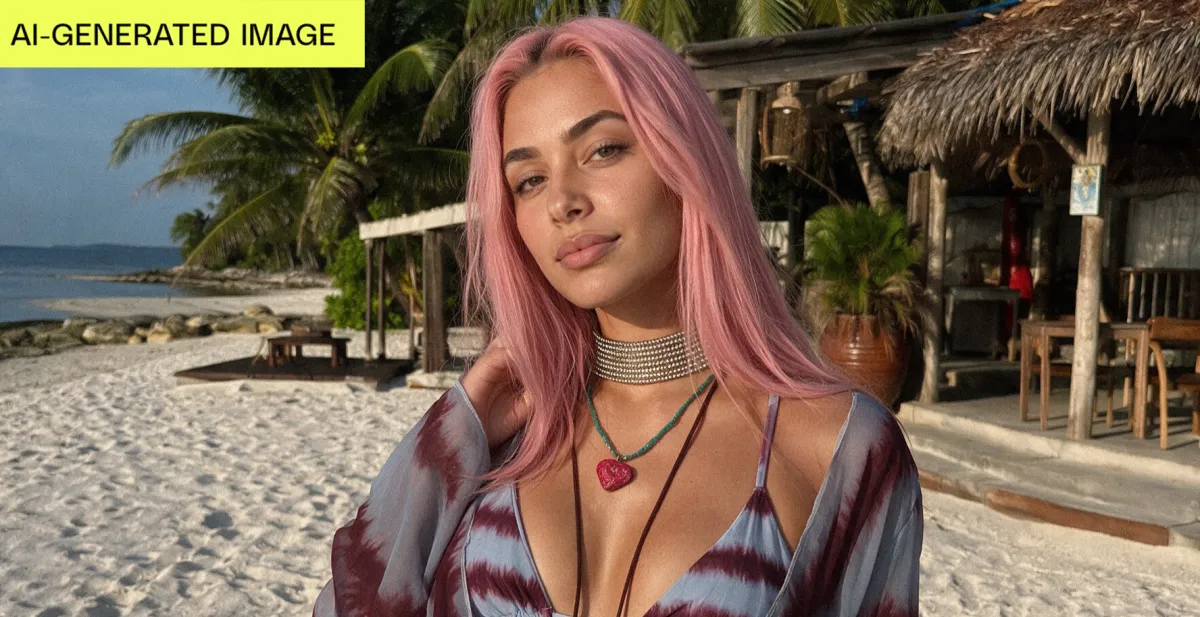
Instagram is tightening its rules on synthetic personas, saying AI-generated profiles that try to pass as real people will be labeled more clearly and may lose distribution if they do not self-identify. The change matters because it targets a fast-growing category of deceptive accounts that has become harder for users to recognize at a glance.
The Meta-owned platform is also changing its terminology from “AI creator” to “AI-generated profile,” a shift designed to leave less room for confusion. According to Instagram, the company is responding to users who said they were uncomfortable encountering what looked like a human profile only to later discover the person behind it was generated by artificial intelligence.
What Instagram is changing
Instagram says it will begin identifying synthetic profiles more clearly and will penalize accounts that fail to disclose that they are AI-generated. The platform’s main enforcement tool will be reach reduction, which means these profiles will be less likely to appear in recommendations on Reels and Explore.
In practice, the policy is aimed at profiles built around a believable, human-like face or identity rather than ordinary AI-assisted posts. Instagram is not introducing a blanket label for every piece of AI-assisted content. Instead, the company is focusing on accounts that present an AI-generated person as if that person were real.
The company also says account owners will be able to appeal if they believe their profile has been incorrectly flagged. That suggests Instagram expects some edge cases, especially as AI tools become more common in photo editing, avatar creation, and influencer-style content production.
Why the change matters now
Instagram’s move reflects a broader problem across social media: synthetic personas have become increasingly convincing, while platform enforcement has lagged behind the technology. AI-generated influencers can attract followers, sell products, and shape public perception in ways that resemble ordinary creator accounts, even when there is no real person behind the screen.
That blurring of the line between human and machine has created a trust issue for users. People may follow what they think is a real creator, only to learn later that the profile image, voice, and sometimes even the personality are fabricated. Instagram’s new labeling push is an attempt to restore some clarity before that deception becomes the default user experience.
The change also signals that Meta is willing to take a more visible stance on synthetic identity, but only up to a point. The company is addressing AI accounts that impersonate humans, while stopping short of giving users a broad way to remove all AI-generated material from their feeds.
How the ranking penalty works
Accounts that do not self-label their AI-generated profiles may be shown less often outside their existing audience. Instagram says the posts will not be recommended to people who do not already follow the account in Reels and Explore, two of the platform’s most important discovery surfaces.
That matters because recommendation systems are the engine of growth for most creator accounts. Limiting access to those channels can sharply reduce the visibility of a profile, especially for new or rapidly growing accounts that rely on algorithmic discovery rather than a built-in audience.
The punishment is less severe than removal, but it is still meaningful. For creators and operators of synthetic identities, reduced recommendation traffic can mean lower follower growth, weaker engagement, and less commercial value.
What will not be covered
Instagram says the new rules are not meant to capture every use of AI on the platform. Users who employ AI tools to edit images, generate captions, or assist with content production do not necessarily need to label those posts under this change.
That distinction is important. It means the company is trying to separate AI as a creative tool from AI as an identity mask. In other words, an edited selfie or AI-assisted video is treated differently from a profile that is itself built around a fabricated person.
This approach may frustrate people who want a stronger filter for “AI slop” broadly defined, but it gives Instagram a narrower and more enforceable standard. It is easier to police a profile that claims to be a human than to audit every post for some degree of machine assistance.
How Instagram’s new label works
The platform is replacing the older “AI creator” wording with “AI-generated profile.” That phrasing is more explicit and leaves less ambiguity about what the account represents.
Instagram’s language shift is designed to answer a simple user complaint: if a profile features an AI-generated person, people want that fact to be obvious immediately rather than discoverable only after a deeper look at the account.
Instagram said it has heard from users who do not want to be misled by a profile that appears human at first glance but later turns out to feature an AI-generated person. The company said users want clear disclosure when a profile is synthetic.
The emphasis on disclosure suggests Instagram is leaning on transparency rather than pure prohibition. That may be the most practical route for a platform trying to manage a flood of synthetic content without shutting down legitimate creative experimentation.
Table: What Instagram’s policy changes mean
| Policy element | What Instagram is doing | Why it matters |
|---|---|---|
| Label wording | Changing “AI creator” to “AI-generated profile” | Makes synthetic identity more explicit |
| Disclosure requirement | Targeting profiles that do not self-label | Pushes transparency for human-like accounts |
| Penalty | Limiting reach in Reels and Explore | Reduces discovery for non-compliant accounts |
| Appeals | Allowing owners to contest mistaken flags | Creates a correction path for false positives |
| Scope | Does not broadly label all AI-assisted content | Focuses on deceptive personas rather than every AI use |
What is Instagram trying to solve?
Instagram is trying to solve a trust problem created by increasingly realistic synthetic media. As AI-generated faces, voices, and personalities improve, the old visual cues people used to identify fake accounts no longer work reliably.
That creates risk not only for users, but for brands and creators as well. If synthetic profiles can blend into the social graph, they can mimic real influencers, compete for attention, and possibly mislead followers in commercial or political contexts.
By making non-disclosure costly, Instagram is betting that many operators will choose to label themselves rather than lose distribution. The strategy is classic platform governance: nudge behavior through algorithmic incentives instead of relying only on manual moderation.
Why reach limits are a powerful tool
Reach limits are powerful because they attack the economics of attention. For social platforms, visibility is currency. If a profile cannot surface to new audiences, it becomes harder to grow, monetize, and influence.
Instagram is applying that pressure specifically to non-compliant AI profiles. The company is not announcing a blanket ban on synthetic personas, which would be difficult to enforce and likely controversial. Instead, it is making deception less rewarding.
That distinction suggests a measured policy response. Instagram appears to accept that AI-generated personas will exist on the platform, but wants them to be identifiable and less capable of misleading users.
How does this fit into Meta’s broader AI policy?
Meta has spent the past several years balancing AI innovation with moderation demands across its apps. The company wants to encourage legitimate experimentation with AI tools while limiting abuse, impersonation, and spammy synthetic content.
Instagram’s latest move fits that pattern. It does not reject AI content outright. Instead, it introduces a disclosure standard for synthetic identity and a recommendation penalty for accounts that ignore it.
That may also reflect a wider industry trend. Platforms are increasingly moving from content-only moderation toward identity-based rules, where the central question is not just what was posted, but who or what is behind the profile.
Who will be affected most?
The accounts most affected are likely to be AI influencer profiles, synthetic models, and other human-like personas built to attract followers. These accounts often rely on visual realism and social proof, making them especially vulnerable to labeling and reach limits.
Brands experimenting with virtual mascots or AI ambassadors may also need to pay closer attention. If a profile is intended to appear as a person rather than a character or clearly branded avatar, it may fall into Instagram’s enforcement focus.
At the same time, everyday users who use AI for creative enhancement are unlikely to be the main target. Instagram’s wording suggests the company is drawing a line between transparent AI-assisted expression and deceptive synthetic identity.
Timeline of the policy shift
The following table summarizes the policy update and its immediate implications.
| Stage | What happened | Implication |
|---|---|---|
| Before the update | AI-generated profiles could be difficult to distinguish from human accounts | Users risked being misled by realistic synthetic identities |
| Announcement | Instagram said it would rename and more clearly label synthetic profiles | Disclosure becomes more explicit |
| Enforcement | Non-labeled accounts face reduced recommendation reach | Visibility penalties encourage compliance |
| Appeals | Flagged profiles can challenge mistakes | Provides a safeguard for false positives |
Why users are pushing platforms for this kind of label
Users want to know whether they are interacting with a real person because authenticity is part of the value proposition on social media. A profile that appears human can trigger trust, emotional connection, and engagement in ways that a clearly synthetic account does not.
When that trust is undermined, users feel misled not just by the content, but by the identity itself. Instagram’s updated label reflects that concern by making identity disclosure the center of the policy.
The move also addresses a practical frustration: AI-generated personas can be effective enough to fool casual viewers. Requiring clearer labeling reduces the burden on users to detect what is fake through reverse image searches, close scrutiny, or outside fact-checking.
What this does not solve
Instagram’s action is meaningful, but it does not fully solve the larger problem of AI-generated content flooding social networks. The company is still allowing AI tools to be used widely, and the platform will likely continue to host huge volumes of machine-assisted posts.
It also does not eliminate the possibility that synthetic accounts will be mislabeled, evade detection, or reappear under new identities. Enforcement at the scale of Instagram is always partial, especially when the underlying technology can rapidly change formats and styles.
And because the policy focuses on AI-generated people rather than all AI-generated media, users who want a cleaner separation between real and synthetic content may find the change too limited. Still, it is one of the clearer signposts yet from a major platform that synthetic identity is becoming a moderation category in its own right.
What happens next?
Instagram will now have to prove it can apply the policy consistently and transparently. That means detecting synthetic personas accurately, notifying affected users, and handling appeals without confusing ordinary creators or legitimate brands.
The bigger test may be whether the label changes user behavior. If synthetic profile operators decide that disclosure is better than invisibility, Instagram could gradually make its ecosystem more legible without dramatically shrinking the use of AI avatars.
If, however, account owners keep trying to evade the system, the platform may need to expand enforcement or refine the rules further. For now, Instagram has taken a first step: it is acknowledging that AI personas are no longer an edge case, but a mainstream moderation problem.
Key points at a glance
- Instagram is renaming its label for synthetic personas to “AI-generated profile.”
- Accounts that do not self-identify as AI-generated may have their reach limited.
- Those penalties apply mainly to recommendation surfaces like Reels and Explore.
- Instagram says AI-assisted content does not automatically need the label.
- Profile owners can appeal if they believe they were flagged in error.
For Instagram, the change is less about eliminating AI from the app than about drawing a sharper line between real people and synthetic ones. That line has become harder to see, and the platform is now trying to make it visible again.
Frequently asked questions
What is Instagram changing about AI profiles?
Instagram is changing its labeling policy for synthetic personas by renaming the tag to “AI-generated profile” and limiting the reach of accounts that do not clearly disclose that they feature AI-generated people.
Will Instagram ban AI-generated accounts?
No, Instagram is not announcing a blanket ban on AI-generated accounts. Instead, it is focusing on disclosure and reducing distribution for profiles that appear human but fail to self-label.
Does the new rule apply to all AI content?
No, the rule does not apply to all AI-assisted content. Instagram says users who simply use AI tools for editing, captions, or other creative help do not automatically need the label.
What happens if an account is wrongly flagged?
Account owners can appeal if they believe Instagram has incorrectly identified their profile as AI-generated or applied the reach penalty by mistake.