In short
Prosecutors used ChatGPT logs, phone data and surveillance footage in an arson case tied to the Palisades fire, but jurors deadlocked 10-2 for the defense. The judge declared a mistrial, raising new questions about how AI conversations should be treated as evidence.
- Prosecutors introduced ChatGPT logs as part of an arson case tied to a deadly Los Angeles wildfire.
- Jurors were not persuaded and split 10-2 for the defense, leading to a mistrial.
- The case highlights the growing legal challenge of interpreting AI chat histories in court.
- Ordinary chatbot use may look suspicious to investigators but familiar to jurors who use AI themselves.
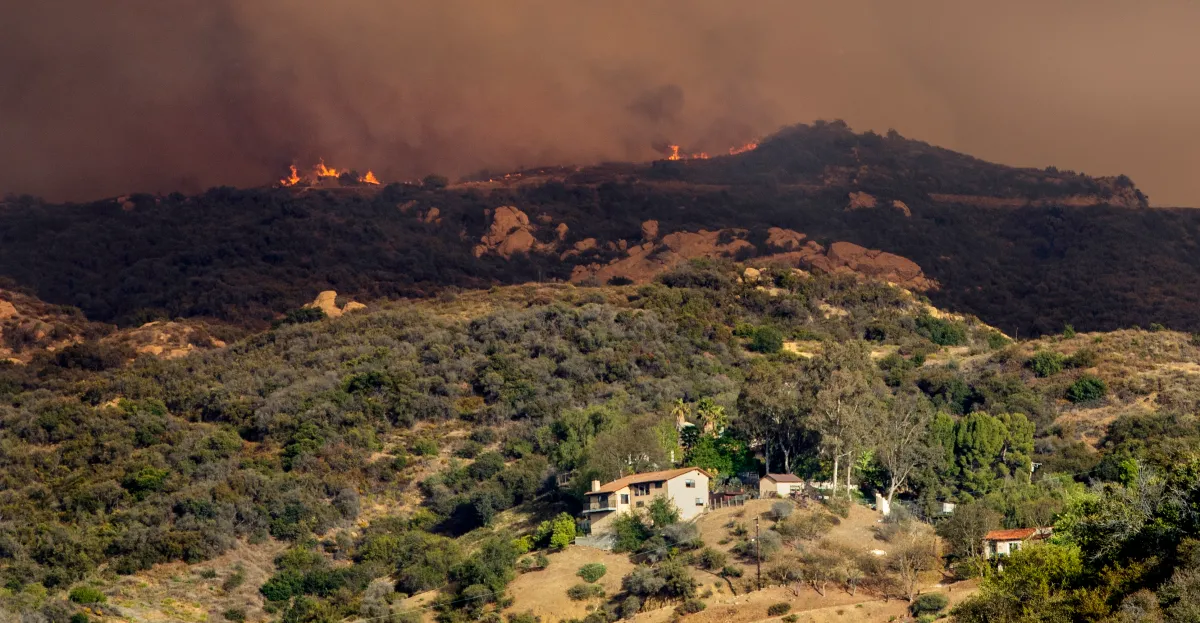
Prosecutors in a Southern California arson case tried to do something increasingly common in the digital age: build a timeline from the traces a suspect left behind on his phone, in security footage, and inside a chatbot. But in the end, the jury would not connect those dots. A case involving Jonathan Rinderknecht, who was accused of setting a New Year’s Day fire in 2025 that prosecutors say helped trigger one of Los Angeles’ deadliest wildfire disasters, ended in a mistrial after jurors split 10-2 in favor of the defense.
The trial is drawing attention not only because of the scale of the fire, but because of the unusual role played by ChatGPT logs. Prosecutors argued that the defendant’s interactions with the chatbot revealed his anger, his preoccupation with fire, and even a disturbing curiosity about blame if a cigarette started a blaze. Jurors, however, were not persuaded that the chat history proved criminal intent. One juror told CBS Los Angeles that the chatbot exchanges did not strike her as incriminating, adding that she uses ChatGPT regularly and was upset by the implication that ordinary chatbot use reflected a bad character.
The outcome underscores a growing legal question: when does AI-generated or AI-logged material become meaningful evidence, and when is it just the messy residue of everyday digital life?
How prosecutors tried to build the arson case
According to the reporting on the case, prosecutors did not rely on a single source of evidence. Instead, they presented a wider digital and testimonial picture. That included location data pulled from Rinderknecht’s iPhone, security camera footage, witness accounts, and records from ChatGPT. The case was not built on the chatbot material alone, but prosecutors clearly believed it helped establish motive and state of mind.
The central allegation was serious: that Rinderknecht set a fire on January 1, 2025, and that the blaze later became part of a catastrophic wildfire event in the Los Angeles area. In cases like this, prosecutors often try to show not just that a fire happened, but that the accused acted intentionally, or at least with reckless disregard. Digital records can help fill gaps where direct evidence is scarce.
In this trial, prosecutors highlighted several ChatGPT interactions they believed were relevant. They said Rinderknecht had used the chatbot to generate fire-related images. They also pointed to a message asking, “Why am I so angry all the time?” and to prompts in which he complained about the wealthy destroying the world. One of the more striking pieces of evidence was a screen recording showing him asking whether a person could be blamed for a fire if the fire had been started by a cigarette.
From the prosecution’s perspective, these logs appeared to support a narrative of anger, fixation, and possible consciousness of guilt. From the defense’s perspective, they were at best ambiguous and at worst misleading. ChatGPT conversations, after all, are not confessions. People use AI tools for brainstorming, emotional venting, curiosity, hypothetical questions, and all kinds of idiosyncratic prompts that do not necessarily signal intent to commit a crime.
Why the jury was unconvinced
Despite the breadth of evidence prosecutors presented, the jurors did not reach unanimity. The jury reportedly voted 10-2 in favor of the defense, a margin strong enough to show that prosecutors had failed to persuade the room, but not strong enough to deliver acquittal. That division led the judge to declare a hung jury and a mistrial.
The most revealing reaction may have come from one juror who spoke afterward to CBS Los Angeles. She said she did not view the ChatGPT logs as proof of wrongdoing, explaining that she talks to ChatGPT frequently herself. Her point was simple: common use of an AI chatbot does not automatically indicate troubling behavior. She said it even bothered her that prosecutors seemed to frame chatbot use as a sign of some deeper moral problem.
That reaction hints at a broader cultural shift. As AI tools become more mainstream, many people have developed a sense that conversations with a chatbot are not inherently unusual or sinister. People ask language models for jokes, therapy-style reflections, drafting help, research assistance, and speculative scenarios. What once may have looked like a strange digital paper trail can now appear, to a modern juror, more like the digital equivalent of a search history or a private notebook.
That does not mean AI logs are irrelevant. In some cases, they may be highly probative. But prosecutors face a new challenge: they must explain not only what the evidence says, but why an ordinary user’s chatbot history should be interpreted as meaningful and not just incidental.
The evidentiary challenge of AI conversations
AI systems create a new type of record that sits somewhere between search queries, private journaling, and conversation. Unlike a web search, a chatbot exchange can be more open-ended and intimate. Unlike a text message, it may be framed as exploratory or hypothetical. That ambiguity makes it useful for users—and difficult for investigators and jurors to interpret.
In legal settings, context is everything. A person asking a chatbot how fire spreads could be conducting innocent research, writing fiction, or, in the worst case, planning a crime. The same prompt can mean very different things depending on surrounding evidence. Without a strong contextual chain, the logs risk looking suggestive rather than decisive.
This case also illustrates a practical reality for the justice system: AI records are only as compelling as the story woven around them. A prosecutor can show that a defendant asked a chatbot about anger or fire, but that does not automatically establish intent, premeditation, or direct involvement in an arson. Jurors still have to decide whether the digital evidence fits a coherent narrative of guilt.
What makes chatbot evidence different
There are several reasons AI chat logs can be harder to interpret than traditional digital evidence:
- They often include hypothetical, exploratory, or casual questions.
- Users may anthropomorphize chatbots and use them as sounding boards.
- Prompts can reflect curiosity rather than intent.
- AI tools encourage free-form language that can sound alarming out of context.
- Logs may capture fragmented thoughts, not final decisions.
That creates a risk for prosecutors: a jury may hear a bizarre-sounding prompt and conclude it reveals character, when in reality it may only show that the user was venting, experimenting, or thinking aloud.
Why this case matters beyond one mistrial
The mistrial does not settle the underlying arson allegation, and it certainly does not decide whether ChatGPT logs are good evidence in future criminal cases. But it may prove important for how law enforcement and prosecutors approach AI data going forward.
As generative AI tools become more deeply integrated into daily life, they are likely to show up more often in criminal investigations, custody disputes, employment cases, civil litigation, and insurance claims. Any system that records user prompts can become a source of evidence. That may include not just chatbots but voice assistants, productivity tools, and AI features embedded in phones and apps.
For prosecutors, the challenge is to distinguish between data that corroborates a narrative and data that merely sounds suspicious. For defense attorneys, the challenge is to explain how ordinary interactions with AI can be misread. And for judges, the issue may become one of evidentiary gatekeeping: how to balance the relevance of AI logs against the danger of unfair prejudice.
This is especially tricky because many jurors may already have personal experience with AI tools. As the CBS Los Angeles juror’s comments suggest, familiarity can cut both ways. It can make AI logs seem less alien and less damning, but it can also make them seem more ordinary than prosecutors might want.
From digital traces to courtroom narratives
The Palisades fire case reflects a larger trend in modern prosecutions: digital footprints are often as important as eyewitnesses. Phones, cameras, apps, cloud services, and location records can help investigators reconstruct movements and motives with remarkable precision. Yet even a rich digital record does not speak for itself. It must still be interpreted, challenged, and explained.
That is particularly true when the evidence involves generative AI. A text message is usually a direct communication between people. A chatbot exchange is different. It can look like dialogue while functioning more like a working note pad, a brainstorming partner, or a private sounding board. Those distinctions matter in a courtroom, where words carry legal weight.
In this case, prosecutors seemingly hoped the ChatGPT logs would help transform a collection of circumstantial evidence into a picture of intent. The jury’s deadlock suggests that strategy fell short. Even if the logs raised eyebrows, they did not carry enough force to overcome doubt.
The broader legal question
The deeper question may be whether the law is ready for AI-native evidence. Courts have spent years adapting to the rise of text messages, geolocation records, encrypted chats, and social media posts. AI chat logs may be the next frontier.
Some of the issues likely to shape future disputes include:
- Authenticity: Can the record be reliably tied to the defendant?
- Context: Do the prompts and responses reflect genuine intent or just exploratory language?
- Prejudice: Will jurors overreact to unusual AI conversations?
- Expertise: Do judges and juries understand how these tools are used?
- Privacy: How should highly personal chatbot records be handled?
Those questions will not be answered by a single mistrial. But cases like this are already shaping the contours of the debate.
What prosecutors said the logs showed
Based on the allegations reported in the case, prosecutors viewed the chatbot history as part of a pattern. They said the logs showed Rinderknecht generating fire imagery, expressing anger, and raising questions about responsibility in the event a cigarette caused a blaze. They also emphasized his complaints about the wealthy and the world around him.
In isolation, each of those elements could be explained in multiple ways. Together, prosecutors argued, they suggested agitation and fixation. That is a common prosecutorial tactic in circumstantial cases: assemble several pieces that may seem innocuous on their own and argue that, in the aggregate, they point to a guilty mind.
But the defense appears to have succeeded in framing those same materials as something much less dramatic: ordinary, if perhaps emotionally charged, interactions with an AI assistant. That framing seems to have resonated with enough jurors to prevent a verdict.
A juror told CBS Los Angeles that she regularly uses ChatGPT herself and did not see the chatbot records as evidence of wrongdoing, arguing that the prosecution’s interpretation felt unfair and overreaching.
Timeline of the case
The case can be understood more clearly when broken into its major points of development. Here is a simplified timeline based on the reported facts:
| Event | Timing | Significance |
|---|---|---|
| Fire allegedly set | January 1, 2025 | Prosecutors say Jonathan Rinderknecht started the blaze at the center of the case. |
| Investigation builds | Following the fire | Authorities examine iPhone location data, security footage, witness testimony, and ChatGPT logs. |
| Trial unfolds | Before June 28, 2026 | Prosecutors present chatbot records as part of the evidence showing motive and mindset. |
| Jury deadlocks | At trial’s end | Jurors vote 10-2 for the defense, preventing a unanimous verdict. |
| Mistrial declared | After deadlock | The judge ends the proceeding without a final ruling on guilt or innocence. |
Why this was always likely to be a hard sell
Even before the jury split, the prosecution faced an uphill climb. Arson cases are often difficult because prosecutors must prove more than the fact of a fire. They need to persuade a jury about origin, opportunity, motive, and intent—often with incomplete physical evidence and competing explanations.
Adding ChatGPT logs may have complicated the story rather than strengthened it. Digital records can be persuasive when they directly show planning or admission. But when they are layered with ambiguity, they can create more questions than answers. In this instance, the jury seems to have concluded that the chatbot history did not bridge the gap between suspicion and proof.
That is an important lesson for prosecutors and defense lawyers alike. Evidence that feels revealing to investigators may not land the same way with a jury, especially when it concerns a technology that many people use casually and routinely.
What happens next
A mistrial means the case is unresolved. Prosecutors can often seek a retrial, depending on the circumstances and their assessment of the evidence. Whether they do so here will depend on legal strategy, the strength of the remaining evidence, and their willingness to revisit the case in a second proceeding.
If there is another trial, prosecutors may refine how they present the AI evidence, or they may choose to rely more heavily on the iPhone data, surveillance footage, and witness statements. Defense lawyers, meanwhile, will likely continue to emphasize the ordinary nature of chatbot use and the danger of reading too much into isolated prompts.
Whatever happens next, the case has already become a useful marker in the evolving relationship between AI and the legal system. It shows that generative AI records can be introduced in court, but it also shows that their persuasive power is far from guaranteed.
The bottom line
The Palisades fire trial is a reminder that digital evidence does not automatically equal digital certainty. Prosecutors attempted to use ChatGPT logs to help prove an arson case tied to a deadly Los Angeles wildfire. The jury heard the evidence and still could not reach a verdict, ultimately deadlocking 10-2 for the defense and forcing a mistrial.
For now, the case stands as a cautionary tale for anyone who assumes that AI chat histories will carry obvious meaning in court. As more of life moves into conversations with machines, lawyers and jurors alike will have to decide what those conversations actually prove.
In this instance, the answer was not enough to convict.