Updated September 5, 2026 4:53 pm
In short
Tim Cook has formally handed Apple’s CEO role to John Ternus, while Nvidia is broadening its AI ambitions across the full stack and Andreessen Horowitz has launched a $1.1 billion AI hardware fund.
- John Ternus becomes Apple CEO with an immediate product launch test ahead of him.
- Nvidia is expanding beyond chips into more of the AI ecosystem and supply chain.
- Robotaxi competition is moving from hype to real commercial rivalry.
- Andreessen Horowitz’s new $1.1 billion fund highlights renewed interest in AI hardware.
- GoPro’s sale underscores how hard it is to stay relevant in consumer hardware.
Update — September 5, 2026 4:53 pm
Apple’s leadership handoff is now fully in place, with Tim Cook officially stepping down as CEO and John Ternus taking over. Cook will remain involved as executive chairman, but the updated source sharpens his remit, saying he’ll focus on policy relationships and delicate public-facing issues.
The Nvidia angle is also more explicit: the company is no longer being described just as a chip seller, but as a player trying to control the broader AI stack. The new source points to Hugging Face, MediaTek and deeper compute deals as examples of that wider push.
The week’s Equity discussion also adds Andreessen Horowitz’s new $1.1 billion “Machine Age” fund, which is aimed at early-stage bets on AI hardware.
Update — September 4, 2026 7:54 pm
Apple’s leadership change is now official, with Tim Cook stepping down as CEO and John Ternus taking over this week.
The updated source also adds a sharper detail on Cook’s new role: as executive chairman, he’ll stay involved in policy and relationship management, including issues that can spill into public controversy.
On Nvidia, the source now explicitly frames the company’s push as a bid to own the full AI stack, citing Hugging Face, MediaTek and deeper compute deals as examples of that broader strategy.
It also adds a new item to the week’s Equity discussion: Andreessen Horowitz’s new $1.1 billion “Machine Age” fund, aimed at early-stage AI hardware bets.
Apple has entered a new leadership phase with John Ternus stepping in as CEO this week, while Nvidia is pushing deeper into the full artificial intelligence supply chain with moves that go far beyond selling chips. The changes matter because they could shape the next wave of consumer devices, AI infrastructure and self-driving competition.
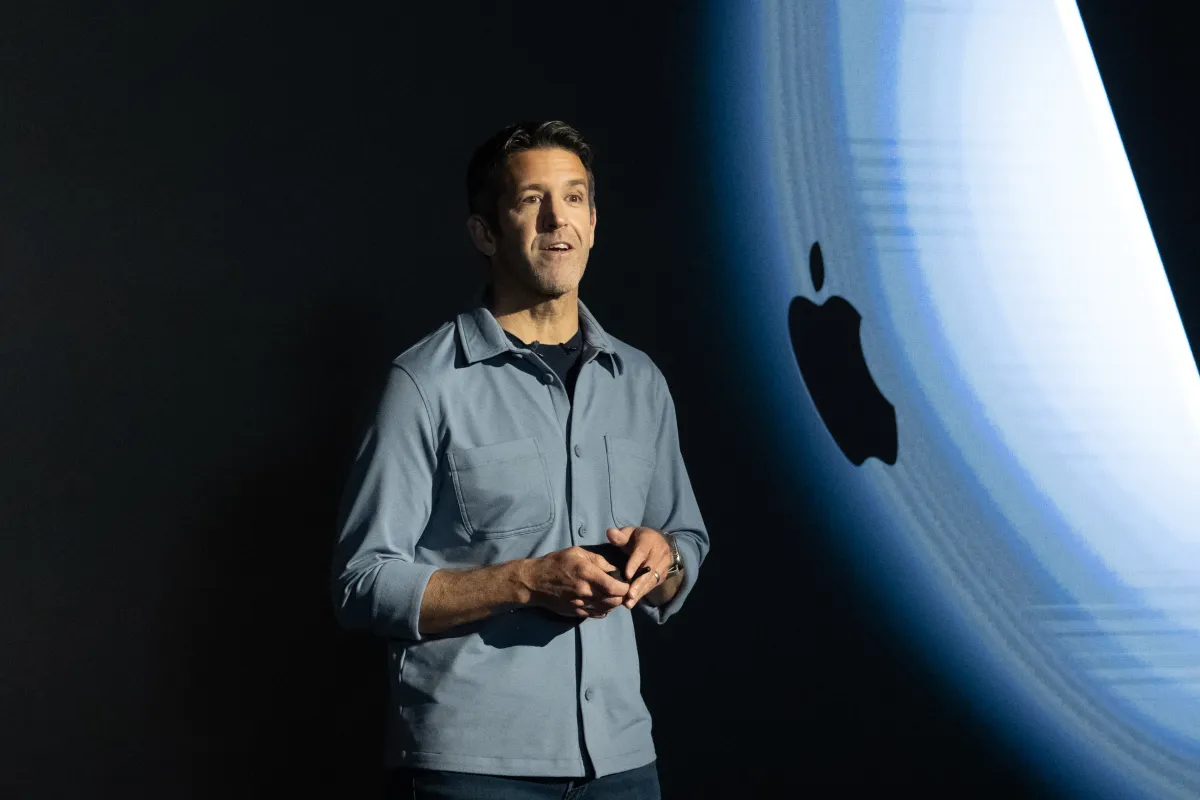
Ternus, the longtime hardware executive who now takes the top job, immediately signaled urgency by telling staff to expect a “huge launch next week,” setting up his first major product moment before he has fully settled into the role. At the same time, Apple’s former chief executive Tim Cook is not leaving the company entirely; he is moving into an executive chairman role that keeps him involved in high-level policy and relationship management.
The leadership transition and Nvidia’s expanding ambitions were among the biggest topics discussed on TechCrunch’s Equity podcast, where hosts Kirsten Korosec and Sean O’Kane examined what the changes could mean for Apple’s AI strategy, the increasingly crowded robotaxi market, Andreessen Horowitz’s latest fund and GoPro’s sale. Together, the stories point to a tech industry that is still reorganizing itself around artificial intelligence, autonomy and a narrower group of companies capable of funding and controlling the underlying infrastructure.
Apple’s Ternus era begins with a test of execution
John Ternus is stepping into one of the most visible and pressured jobs in global technology at a moment when Apple faces a different kind of competition than it did during the smartphone era. The company still sells world-leading hardware, but its next growth phase depends increasingly on how well it blends devices, software and AI features into a cohesive product experience.
The timing of his promotion adds an extra layer of scrutiny. His first internal message reportedly pointed to a major product unveiling within days, placing his debut at the center of the company’s autumn hardware cycle. That means the market will not give him a long adjustment period before judging whether he can maintain Apple’s reputation for polished launches while also navigating a much more complex AI landscape.
Why Ternus may matter more on software than hardware
Ternus’s background in hardware could seem, on the surface, like a traditional Apple appointment. But the bigger question is whether a hardware executive can accelerate the software and AI integration that investors now expect from the company.
That is where his experience may actually help. Apple’s challenge is no longer just making devices thinner, faster or more elegant. It is making them useful in an AI era where the most valuable features may live in the operating system, the assistant layer and the services that keep users inside the ecosystem.
In practical terms, that means the new CEO inherits several overlapping tasks:
- protect Apple’s premium hardware position;
- deliver meaningful AI improvements without sacrificing privacy or battery life;
- keep the product cycle moving at a pace Wall Street trusts;
- manage geopolitical and regulatory pressure more actively than in earlier years.
Cook’s shift to executive chairman preserves continuity, but it also signals a transition in where the company’s day-to-day emphasis may now lie. Cook has been widely associated with supply chain discipline and operational scale. Ternus is expected to define the next phase through product choices, including how Apple responds to AI-native expectations across phones, tablets, wearables and laptops.
According to the podcast discussion, the central issue for Apple is not whether the company can keep shipping good hardware, but whether it can make software feel newly essential again in an AI-driven market.
What exactly is Nvidia trying to become?
Nvidia is increasingly behaving like a company that wants influence over the entire AI stack, not merely the semiconductor layer underneath it. Its strategy appears to be shifting from supplying the picks and shovels of the AI gold rush to shaping the tools, partnerships and platforms that determine who wins the broader market.
That distinction matters because the AI industry is no longer defined only by model training. It now includes the data pipelines, networking, inference systems, edge devices and developer ecosystems that turn raw compute into commercial products. Nvidia’s recent activity suggests it wants a stake in all of those layers.
From chip supplier to platform orchestrator
The company’s moves around Hugging Face, MediaTek and deeper compute relationships point to a simple but ambitious goal: reduce the number of places where a customer can build an AI stack without relying on Nvidia infrastructure.
If that sounds familiar, it should. The playbook resembles what dominant platform companies have long tried to do in other eras: own the core layer, then build or influence adjacent layers so developers and customers stay inside the ecosystem.
For Nvidia, that could mean more leverage over how AI is deployed in consumer devices, edge computing and enterprise systems. It also means competing not just against AMD or Intel in silicon, but against the broader logic of vertical integration that could eventually pull in handset makers, cloud vendors and model developers.
Why the whole-stack strategy matters
The implication for the market is significant. If Nvidia can extend its reach across hardware, software and partner ecosystems, it may become less dependent on any single class of buyer. That would make the company more resilient if AI spending becomes more selective or if customers begin looking for alternatives to the most expensive compute paths.
But the strategy also raises risks. The more Nvidia stretches into adjacent layers, the more it could attract competition, scrutiny and pressure from companies that do not want a single supplier to become too embedded in the architecture of AI.
| Company | Recent move | Why it matters |
|---|---|---|
| Apple | John Ternus becomes CEO; Cook shifts to executive chairman | Signals a new phase for product and AI strategy |
| Nvidia | Expands partnerships and investments across the AI ecosystem | Suggests a push to influence the full AI stack |
| Tesla | Cybercab event adds pressure in robotaxi race | Highlights competition in autonomy |
| Waymo | Enters additional cities | Shows commercialization momentum in self-driving |
| Zoox | Begins offering paid rides | Marks a new phase in robotaxi deployment |
How is the robotaxi race changing?
The robotaxi market is entering a more direct, commercial phase, with multiple companies now trying to prove they can operate beyond demo videos and press events. That is making the sector feel less like a futuristic promise and more like a real transportation business with competing models.
In the same week discussed on Equity, Tesla hosted a Cybercab event, Waymo broadened its geographic footprint and Zoox began offering paid rides. The significance of these moves is not just that autonomous vehicles are progressing, but that several players are now trying to claim real-world relevance at the same time.
Why competition is becoming harder to ignore
For years, the self-driving industry could be framed as a collection of isolated experiments. That is changing. When more than one company is offering service, expanding into new cities or presenting vehicle concepts designed for commercial deployment, the sector starts to look less theoretical and more like an emerging transport category.
This also changes investor expectations. Companies can no longer rely solely on future-facing narratives. They have to show that each ride, route expansion and vehicle platform can scale economically and safely.
That puts pressure on every participant in the race:
- Tesla must prove that its autonomy story can move beyond vision and branding.
- Waymo must continue showing that the safest system can also expand commercially.
- Zoox has to demonstrate that it can convert a unique vehicle design into a service business.
There is also a broader industry implication. As robotaxis move from hype cycles into direct competition, success may depend less on who has the boldest presentation and more on who can operate reliably in dense urban environments, navigate regulation and build public trust.
What does Andreessen Horowitz’s new fund signal?
Andreessen Horowitz’s new $1.1 billion “Machine Age” fund suggests that major venture firms still see enormous opportunity in early-stage hardware and AI infrastructure, even as much of the public conversation remains focused on software and models. The size and branding of the fund indicate conviction that the next wave of value creation could come from machines, not just applications.
That matters because capital follows narratives. When large firms build specialized funds around a theme, they are often signaling where they believe the next generation of startups will emerge. In this case, the message is that AI infrastructure, robotics and hardware-adjacent bets may be entering a new investment cycle.
Why hardware bets are getting attention again
For much of the last decade, software businesses were the preferred destination for venture capital because they scaled cheaply and quickly. AI has complicated that view. Training and deploying advanced systems requires more compute, more physical infrastructure and, in many cases, more specialized devices.
A dedicated fund at this scale suggests investors expect a broader shift in what kinds of startups can become category-defining. Instead of only backing model companies or consumer apps, they may increasingly look at physical systems, factory automation, edge devices and the tools that make AI useful in the real world.
That can include:
- robotics platforms;
- AI-enabled industrial hardware;
- specialized compute systems;
- consumer devices built around on-device AI;
- software-hardware hybrid products.
Why GoPro’s sale marks more than a deal
GoPro’s $285 million acquisition reflects the end of a long chapter for one of the original consumer hardware stars of Silicon Valley. The company once symbolized a new era of portable, shareable content creation, but the market it helped define has since been absorbed by smartphones, drones and integrated camera systems.
The sale is notable not only for its price, but for what it says about the difficulty of staying relevant in consumer electronics after the initial product wave fades. GoPro had brand power and a clear identity, yet it still struggled to maintain momentum as the market shifted around it.
That outcome offers a useful contrast with Apple’s current transition. Apple remains far larger and more durable, but it too is trying to avoid becoming merely a hardware company in a market where consumers expect software intelligence and seamless ecosystem value.
How the Apple and Nvidia stories connect
The Apple and Nvidia stories intersect because both companies are dealing with the same central force: AI is changing what users value and what infrastructure companies control. Apple must decide how AI becomes useful inside consumer products. Nvidia is trying to make sure the underlying AI economy continues to depend on its platform.
They are not identical businesses, but they are linked by the same market reality. In an AI era, hardware is no longer just about physical design, and software is no longer enough on its own. The winning companies may be those that can coordinate both at once.
That dynamic gives Apple a strategic opening and Nvidia a strategic advantage. Apple can potentially translate AI into mainstream consumer behavior at scale. Nvidia can monetize the machinery that powers the AI boom across data centers, devices and partners.
Why this moment matters for investors
Investors are watching for signs that the AI boom is maturing from headline hype into durable business models. Apple’s leadership change will be judged on whether it can produce visible product improvements. Nvidia’s expansion will be assessed on whether it can maintain dominance as more customers seek alternatives or negotiate harder on price.
Meanwhile, the robotaxi race and the rise of hardware-focused venture funding show that the AI economy is broadening. It is no longer confined to large language models and chatbot launches. It is spreading into transportation, consumer devices, industrial tools and autonomous systems.
What happens next for Apple, Nvidia and the rest of the stack?
The next few quarters could determine whether these shifts become long-term turning points or just another busy season in tech. Apple will need to prove that Ternus can lead with authority while keeping the company’s hardware and software roadmap coherent. Nvidia will need to show that its broader ecosystem strategy can deepen loyalty without inviting backlash. And the autonomous vehicle industry will need to demonstrate that commercial service can grow safely and profitably.
For now, the biggest takeaway is that the center of gravity in tech is still moving. The most valuable companies are no longer just making products; they are trying to own the systems that define how those products work, how they are distributed and how they earn money.
That is the real significance of this week’s developments. Apple’s succession plan, Nvidia’s ecosystem ambitions and the latest robotaxi milestones all point to the same conclusion: the next phase of the AI era will be decided not by who has the loudest launch, but by who controls the layers underneath it.
Key developments at a glance
| Topic | Details | Why it matters |
|---|---|---|
| Apple leadership | John Ternus becomes CEO; Tim Cook becomes executive chairman | Begins a new era for product and AI strategy |
| First Ternus moment | Internal note points to a major launch next week | Sets an immediate test for the new CEO |
| Nvidia strategy | More activity across partnerships and infrastructure | Suggests a move to dominate the AI stack |
| Robotaxis | Tesla, Waymo and Zoox all made notable moves | Shows the market is shifting toward direct competition |
| Venture funding | a16z launches a $1.1 billion Machine Age fund | Signals continued investor appetite for AI hardware |
| GoPro | Acquired for $285 million | Underscores the difficulty of lasting in consumer hardware |
Listenership and media context
The TechCrunch Equity podcast episode that framed these topics is part of the broader startup and tech news cycle, where audio coverage often helps connect separate headlines into one market narrative. In this case, the thread running through all the stories is the reordering of power in AI and mobility.
From Apple’s succession to Nvidia’s platform ambitions, the message is consistent: the companies best positioned for the next chapter are those that can build across multiple layers of the stack, not just one product category.
That is likely to make the coming months especially important for executives, investors and rivals trying to understand where the next durable moats will come from.
The podcast’s central framing is that the AI era is no longer only about model quality. It is about distribution, compute, device integration and who gets to define the rules of the system.
Bottom line
Apple’s leadership change gives John Ternus an immediate chance to define the company’s role in the AI era, while Nvidia’s latest moves show a company trying to shape the entire market rather than simply supply it. Add in the robotaxi scramble, new venture funding and GoPro’s sale, and the week’s news paints a clear picture of an industry moving quickly from experimentation to consolidation and competition.
Frequently asked questions
Who is the new CEO of Apple?
John Ternus is Apple’s new CEO. He is taking over after Tim Cook stepped down, marking the start of a new leadership era for the company as it tries to define its AI and product strategy.
Why is Nvidia being described as betting on the whole AI stack?
Nvidia is being described that way because its recent moves go beyond selling chips. The company is building influence across partnerships, compute deals and ecosystem layers that shape how AI is developed and deployed.
What does the new Apple leadership change mean for investors?
The leadership change means investors will watch closely to see whether Ternus can keep Apple’s hardware business strong while delivering more convincing AI-powered software features. His first major launch will be an early test.
What happened in the robotaxi market this week?
The robotaxi market became more competitive this week, with Tesla holding a Cybercab event, Waymo expanding into more cities and Zoox beginning paid rides. Those moves show the sector moving closer to real commercial competition.
Why is GoPro’s acquisition important?
GoPro’s $285 million acquisition is important because it highlights the difficulty of staying relevant in consumer electronics after the initial product boom fades. It also shows how quickly category-defining hardware brands can lose momentum.