In short
Amazon’s Alexa Plus is now much better at controlling smart homes, following natural commands and helping in the kitchen. But it still struggles with memory, complex agent tasks and intrusive ads, keeping it from becoming a truly dependable personal assistant.
- Alexa Plus is far more capable than the old Alexa for smart-home control and cooking help.
- The assistant is still unreliable at memory, timing and more complex personal-assistant tasks.
- Echo Show ads remain a major annoyance, with a paid option to reduce them.
- Amazon’s biggest advantage is its smart-home reach, but Google and Apple appear stronger on personal context.
Amazon’s Alexa Plus is now noticeably better at running a smart home, handling routines, timers, recipes and device controls with far more speed and flexibility than the old Alexa ever managed. But after a year of testing, it still struggles with personal context, dependable memory and some agent-style tasks, which means it is useful for the house while remaining unready to manage a person’s life.
The biggest takeaway from a year with Amazon’s generative AI assistant is simple: Alexa Plus can now feel like the brain of a home, but not yet the brain of the person who lives in it. That distinction matters as Amazon pushes Echo devices into a new era of paid AI features, expanding both what Alexa can do and what it costs to use it well.
Amazon’s revamped assistant has improved enough to make smart homes more natural to control, but it is still inconsistent, sometimes confusing, and increasingly cluttered with ads on Echo Show displays. For households weighing whether to rely on Alexa Plus, the result is a mixed verdict: better at the kitchen, lights and routines, but not ready to act as a dependable personal aide.
Why Alexa Plus matters now
Alexa Plus matters now because Amazon is trying to turn its most familiar product into a premium AI service at a moment when rivals are also upgrading their home assistants. Google has begun rolling out Gemini for Home, and Apple is widely expected to deepen its own smart-home AI ambitions. That makes Amazon’s progress, limitations and pricing strategy especially important.
What Amazon is selling is not just a better voice interface. It is a broader idea of ambient computing: an assistant that can understand natural language, interpret intent, automate chores and eventually anticipate needs without the rigid commands that defined the old Alexa.
That ambition is visible in the current product strategy. Alexa Plus is available across Echo devices, in the Alexa app, on the web and on Fire TV. But the service is only free in some places and only on some surfaces. On compatible Echo devices in the U.S., it requires either an Amazon Prime membership or a separate $19.99 monthly subscription. In other words, Amazon has moved from a free utility to a paid AI layer that sits on top of the home it helped create.
What has changed since the old Alexa?
Alexa Plus is better because it understands people better. Instead of requiring exact phrasing, it can respond to broader requests like asking for more light, a warmer room or a general household action without the user memorizing command syntax. That one change alone makes the assistant feel much closer to what consumers have long imagined a smart speaker should be.
It is also faster. In testing, routine questions and simple commands that once took up to 10 to 15 seconds now often finish in three to five seconds. Follow-up corrections are more likely to succeed, which is an important sign that the assistant can maintain a conversation rather than collapsing after the first misfire.
For the home, that translates into real value. A single voice request can now trigger several actions at once: locking doors, switching off lights, adjusting temperature and sending cleaning instructions to a robot vacuum. That kind of chaining is the practical advantage of a generative interface layered onto the existing smart-home stack.
How did the smart-home experience improve?
Alexa Plus is more useful because it handles everyday home control with fewer rigid rules and more contextual understanding. It can now interpret casual speech, carry out multi-step requests and adapt routines on the fly, which makes it feel less like a remote control and more like a flexible interface for the home.
That is especially valuable in households with multiple people. In the reported testing, family members used Alexa more often than before because they did not have to remember precise phrasing. The assistant can respond to natural statements and common-sense directions, which lowers friction and encourages use.
One of the strongest examples is routine creation. Instead of digging through menus in the Alexa app, a user can simply describe a desired behavior and let the assistant build the automation. That matters because smart homes are often limited less by device quality than by the frustration of setting them up.
| Area | Older Alexa | Alexa Plus | Practical impact |
|---|---|---|---|
| Voice commands | Rigid phrasing required | Natural, conversational requests | Less friction for everyday use |
| Response speed | Often 10–15 seconds | Usually 3–5 seconds | More usable for quick tasks |
| Routines | Harder to create and edit | Can be built and changed by voice | Automation becomes more accessible |
| Kitchen help | Basic timers and lookups | Context-aware recipe support | Better hands-free cooking experience |
| Personal memory | Limited | Promised but unreliable | Weakens the case for personal-assistant use |
How good is Alexa Plus in the kitchen?
Alexa Plus is at its best in the kitchen because it can sustain a back-and-forth conversation around food preparation while keeping track of what the user is making. In testing, it was able to pull up a reformatted recipe from a photo sent through the app, then answer follow-up questions about temperature, measurements and substitutions without losing the thread immediately.
That might sound small, but it is one of the clearest examples of how generative AI can improve everyday technology. Traditional assistants are fine for timers and weather. A conversational assistant can stay with you through an entire cooking session, which is exactly the sort of multi-turn task people want a voice assistant to handle.
There are still limits. Alexa can sometimes lose context and require the user to steer it back to the recipe or task. Even so, the cooking experience is substantially ahead of the original Alexa and is among the most convincing uses of AI in the home to date.
Amazon executives argue that the assistant should provide the right help at the right moment, but in practice the user experience still depends heavily on whether Alexa understands the situation correctly.
What still frustrates users?
The frustrations fall into three broad categories: unreliable personal memory, incomplete agentic tasks and aggressive advertising on Echo Show devices. Each one chips away at the promise of a truly helpful assistant.
The memory problem is especially damaging because a personal assistant is supposed to know who you are, what matters to you and how your household works. Alexa Plus can sometimes store and recall details, such as a child’s school, but those recalls are not always stable. A detail remembered one day may be mixed up the next, which makes the feature feel experimental rather than trustworthy.
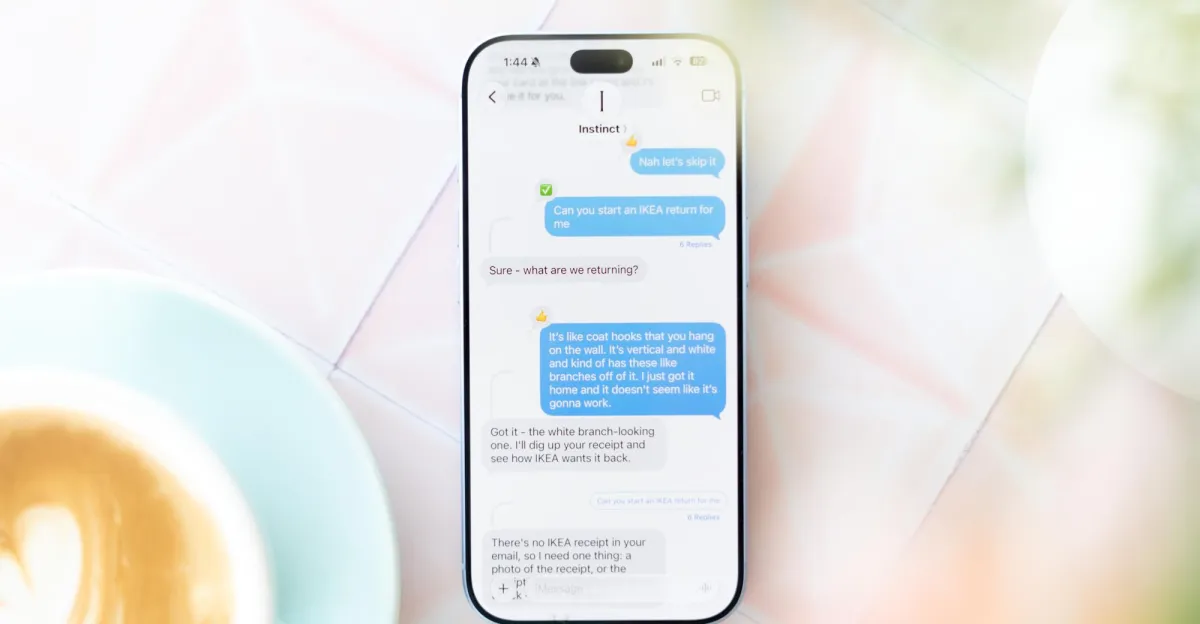
Agentic features are another weak point. Amazon has added integrations for services such as Thumbtack, OpenTable and Ticketmaster, but they often feel more like demos than polished consumer tools. In practice, the user may spend more time describing a task than they would spend completing it manually.
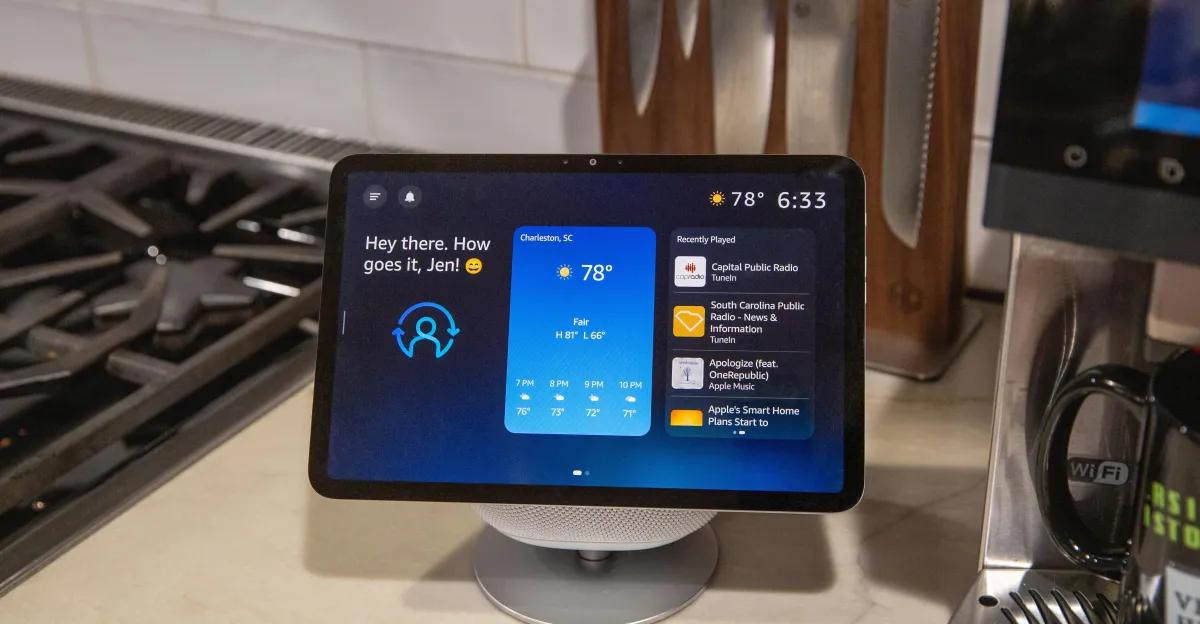
Ads are perhaps the most visible annoyance. Echo Show smart displays now frequently surface Amazon shopping promotions, sometimes even when users have opted out of the homescreen’s rotating content. A paid add-on can remove some of that clutter, but only by charging another monthly fee per device. That turns what should be a helpful household screen into a subscription-driven billboard.
Why do the ads matter so much?
The ads matter because they change the emotional tone of the product. Smart displays sit in kitchens, bedrooms and offices, where people expect utility and calm, not retail interruption. When a digital photo frame suddenly shifts to a product promotion, it undercuts the idea of a home-centered assistant.
Amazon says the ads are meant to be relevant and well timed. The company’s view is that a useful suggestion can feel like part of the service rather than an interruption. But relevance is hard to prove from the user side when the ads do not clearly match current needs or preferences.
The broader strategic issue is that ad clutter makes Alexa feel less like a neutral assistant and more like a commerce surface. That may help Amazon’s retail business, but it risks alienating users who want a home tool rather than a sales channel.
What is going wrong with personal assistance?
Alexa Plus is stumbling because personal assistance requires reliable memory, context awareness and timing, and those are still uneven. The assistant may know how to execute a task, but not always why it matters or whether it makes sense at the moment it is asked to do it.
That became clear in situations where the assistant misidentified a child’s school, forgot prior instructions or failed to recognize that a game had already begun before offering to set a reminder. These are not trivial mistakes when the user is asking for help with the kind of information people trust an assistant to remember.
A personal assistant also needs judgment. It should know when not to interrupt, when to recall a household preference and when to simply complete a request without forcing the user through extra screens or sign-up steps. Alexa Plus is not there yet.
According to Amazon’s Alexa and Echo leadership, the company views the ads as curated recommendations, but the user-facing experience often feels less selective than Amazon suggests.
How much of a setup problem is this?
Quite a lot of Alexa Plus’s success depends on a clean smart-home foundation. In testing, the system performed best after the household setup was effectively rebuilt from scratch, with old skills removed, duplicate devices deleted and stale routines cleared away. That is a major burden for ordinary consumers.
The problem is not only in Alexa Plus itself but also in the long history of devices, automations and half-finished integrations that many users have accumulated over the years. Amazon’s own ecosystem can become messy over time, and generative AI does not magically solve that complexity.
The app remains one of the weakest parts of the experience. Even as Alexa becomes more capable by voice, device management inside the app remains awkward, especially when adding, deleting or moving several devices at once. If Amazon wants Alexa Plus to feel effortless, the software that manages the home still needs serious work.
- Better voice control does not erase messy device setup.
- Smart homes with old routines can require major cleanup.
- The app is still a bottleneck for adding and organizing devices.
- Users want Alexa to handle setup, not just execute commands.
What does Alexa Plus get right in the real home?
Alexa Plus gets the basics right more often than before, and that is enough to change daily habits. It can handle lights, locks, thermostats, cameras, timers and shopping tasks more smoothly, which means the assistant is finally useful in ways that feel ordinary instead of theoretical.
The ability to create or modify routines by voice is particularly powerful. A person can describe a desired behavior, have Alexa build it and then refine it later without opening a maze of settings. That is the kind of convenience that can make a smart home feel truly smart.
It also performs well as a home dashboard. The Echo Show screens can serve as photo displays, camera monitors and control panels, while Alexa Plus lets the user move between those functions more naturally. For households already embedded in Amazon’s ecosystem, the upgrade is meaningful.
Why does memory still matter so much?
Memory matters because a household assistant should not behave like a stranger every day. If it cannot remember a child’s school, a repeat preference or a routine household detail, then it cannot be trusted with tasks that depend on stable context.
This is one area where Amazon faces a sharper challenge than many users may realize. Smart-home control is about devices, but personal assistance is about relationships: who lives in the home, how they move through the day and what matters to them. That is a harder problem than turning on a lamp.
Amazon’s “Remember This” feature is supposed to help, but the reported results suggest the company still has work to do before memory becomes dependable enough to rely on without checking. In the context of a family home, mistakes are more than inconvenient; they can be disruptive.
How does Alexa Plus compare with Google and Apple?
Alexa Plus is ahead in breadth but behind in depth. Amazon has the widest smart-home footprint, broad third-party support and deep device compatibility, including Matter and Thread. That gives Alexa a major advantage when it comes to controlling the house itself.
Google and Apple, however, appear stronger on personal context. Google’s home AI and Apple’s ecosystem both benefit from tighter ties to calendars, communication, location and user identity. That helps them when the task involves the person rather than the room.
For now, Alexa Plus looks like the best assistant for living inside a smart home, while rivals may be better suited for things like messages, directions and personal reminders. Amazon’s challenge is to bridge that gap without losing what made Alexa useful in the first place.
- Amazon has the strongest smart-home platform reach.
- Google and Apple appear stronger on personal context.
- The next competitive battleground is agentic help that actually finishes tasks.
The road ahead for Amazon
Amazon’s best path may not be to turn Alexa Plus into a general-purpose chatbot at all. The more durable opportunity is to make it the operating system for the home: aware of devices, routines, rooms and patterns, and capable of taking action without constant supervision.
That would require Alexa to become more open again. In its earlier years, the platform was defined by broad compatibility and an ambition to work across devices and services. Over time, it has become more curated and more tied to Amazon-branded products and selected partners. If Amazon wants the assistant to feel indispensable, it may need to loosen that grip.
The company also has an opportunity to go deeper rather than wider. Instead of supporting only basic device on/off commands, Alexa Plus should be able to use richer device features, understand household patterns over time and act proactively when something is likely needed. Amazon’s Omnisense sensor platform could help here if it is used to build genuine household intelligence rather than more surface-level automation.
That future would be more valuable than a flashy assistant that can book dinner or draft messages but still cannot manage the lights, temperature and routines reliably. In the long run, the strongest smart assistant may not be the one that sounds the smartest. It may be the one that understands the home best.
Bottom line
Alexa Plus is the best smart-home assistant Amazon has built, and in some respects the best one available from any major platform. It is faster, more conversational and much easier to use than the original Alexa, especially for everyday household control and kitchen help.
But it is still not ready to replace a human personal assistant. Its memory is inconsistent, its agentic features are hit-or-miss, and the increasing presence of ads makes the experience feel less like a premium upgrade than it should. Amazon has made real progress, but the assistant that can run your home is still not the assistant that can run your life.
| Launch milestone | Approximate timing | What it means |
|---|---|---|
| Early access rollout | July 2025 | Users began testing the new AI-powered Alexa before full release |
| Full launch | February 2026 | Alexa Plus expanded as Amazon’s mainstream assistant upgrade |
| Competing home AI updates | 2026 | Google and Apple intensified pressure in the smart-home market |
| Ad-free display option | After launch | Amazon introduced a paid way to reduce homescreen ad clutter |
Frequently asked questions
What is Alexa Plus?
Alexa Plus is Amazon’s generative AI version of Alexa, designed to make voice control more natural and capable. It works across Echo devices, the Alexa app, Fire TV and the web, and it adds more conversational help for routines, shopping, calendars and smart-home control.
Is Alexa Plus worth paying for?
Alexa Plus may be worth it if you use Alexa heavily to control lights, thermostats, routines and kitchen tasks. It is less compelling if you want a dependable personal assistant, because its memory, timing and task completion are still inconsistent.
Does Alexa Plus work with smart home routines?
Yes, Alexa Plus is significantly better at creating and editing routines. Users can describe what they want in natural language, and the assistant can build automations, adjust schedules and trigger multiple devices with less manual setup than the older Alexa.
Why are Echo Show ads a problem?
Echo Show ads are a problem because they turn a home device into a rotating retail surface, even in spaces like kitchens and bedrooms. Amazon offers a paid add-on to reduce some ad clutter, but many users will see that as an extra cost just to restore a cleaner experience.
How does Alexa Plus compare with Google and Apple?
Alexa Plus is stronger for controlling the smart home because Amazon has the broadest device support and ecosystem reach. Google and Apple appear better at personal context, such as identity, communication and location-based help, which makes them more useful for life outside the home.