In short
Friend, the AI wearable from Avi Schiffmann, has returned with a built-in speaker, a more personal voice and a $249 price tag. The relaunch underscores both the promise and uncertainty of AI companionship devices.
- Friend 2.0 adds a built-in speaker and a more personality-driven voice experience.
- The wearable’s retail price jumps from $99 to $249.
- Avi Schiffmann says the product is meant to be a confidant, not an assistant or lover.
- Friend is entering a crowded but unproven AI wearable market.
- High-profile failures like Humane have made the category harder to sell.
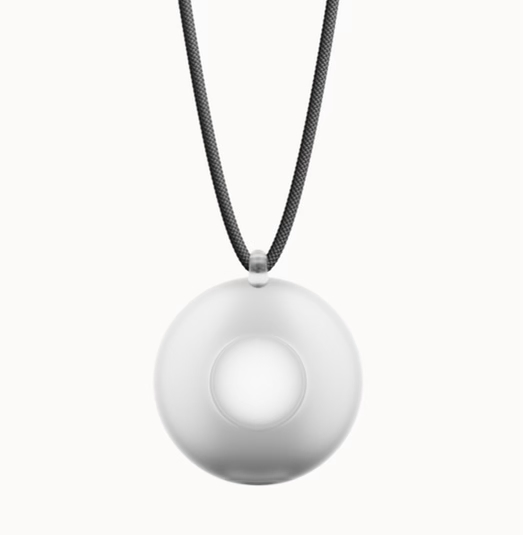
Friend, the AI necklace that once promised to ease loneliness through constant digital companionship, is back with a major redesign: a built-in voice and a far higher price. Founder Avi Schiffmann unveiled “friend 2.0” on Thursday, positioning the device less as a utility and more as a personal companion that can talk back, remember tone and offer a distinct personality.
The update matters because it shows one of the boldest attempts yet to turn consumer AI into a wearable social product, even as the category has already seen one high-profile collapse and continuing skepticism about whether people actually want to wear an algorithm around their neck.
Schiffmann’s latest pitch places Friend at the center of a fast-moving debate over what AI companions should be: assistants, confidants, emotional supports, or something closer to a digital presence that lives with you throughout the day. The company’s answer is to lean harder into personality, raise the retail price to $249 from the original $99, and make the product sound more like a relationship than a gadget.
What changed in Friend 2.0?
Friend 2.0 adds a built-in speaker, which allows the necklace to speak with a consistent voice and personality instead of relying only on text messages. That shift is the headline feature of the product refresh and the clearest sign that the company is trying to make the wearable feel more like a companion than a notification device.
The original Friend launched two years ago with a simple premise: wear a device, talk to it, and receive text-based responses about your day. The new version appears designed to deepen the interaction by letting the product answer out loud, opening the door to a more conversational and immediate experience.
In a new promotional video, the wearable is shown responding in ways that are meant to feel intimate and affirming. In one scene, it speaks to a woman who appears to be discussing an ex-girlfriend; in another, it praises a man’s filmmaking ambitions. The messaging suggests the company is pushing toward emotionally resonant interactions rather than task completion.
How is the new Friend being positioned?
It is being marketed as a personal companion with a stable identity, not as a general-purpose productivity assistant. Schiffmann has repeatedly stressed that the product is meant to be something more ambiguous and relational than a conventional AI tool.
Schiffmann has described the concept as a kind of confidant or friend, while also suggesting he is not fully sure whether the product should be understood as a “God,” and explicitly saying it is neither an assistant nor a lover.
That language is unusual even in an AI market already full of ambitious promises. It frames Friend as a product for emotional presence, but it also raises obvious questions about boundaries, dependency and whether a wearable can safely occupy such an intimate role in someone’s life.
Why is the price increase important?
The price jump is important because it dramatically changes the product’s place in the market. Friend originally sold for $99, which put it in the impulse-buy or novelty range for many consumers. The new $249 price pushes it into a more serious premium category, where buyers will expect more than a viral idea or a clever concept.
For a company trying to sell an unproven AI wearable, the higher cost does more than raise revenue per unit. It also raises the stakes of adoption. Consumers are more likely to compare Friend against actual phones, earbuds, smartwatches and subscription-based AI services when the price moves beyond the level of a fun experiment.
That may be especially challenging in a category that has not yet established a stable consumer use case. Unlike a smartwatch, which tracks health and notifications, or headphones, which solve an obvious everyday problem, Friend is still searching for a clear answer to the question: what does it reliably do better than other devices?
How does Friend fit into the bigger AI wearable race?
Friend is part of a broader wave of AI hardware products that have tried to move artificial intelligence out of the browser and into the physical world. The idea is simple in theory: if AI is meant to be ubiquitous, then it should be available through objects people can carry, wear or keep nearby all day.
But the category has struggled to prove itself. The most well-known cautionary tale is Humane, which tried to replace the smartphone with its AI Pin and ended up shutting down less than a year after launch, following weak sales and intense criticism. That outcome has made investors and consumers alike more cautious about grand claims for wearable AI.
Friend’s approach differs from Humane’s in one important way: it is not trying to kill the phone outright. Instead, it aims to become a more personal layer of interaction, one that sits alongside existing devices and works through emotional familiarity rather than outright replacement.
That strategy may be smarter, but it is still far from proven. The burden is now on Friend to show that people will pay for a wearable whose main appeal is companionship, especially when the same underlying AI can often be accessed through apps and voice assistants already living on their phones.
What makes Friend different from a chatbot?
Friend is trying to feel embodied. Unlike a chatbot that lives in a browser tab or messaging app, it is physically worn, always near the user and designed to project a consistent persona through voice. That physical presence is central to the product’s identity.
In that sense, the company is selling not just software but continuity: a device that is supposed to recognize the rhythm of a person’s day and participate in it. The hardware format is meant to make the AI feel less like a tool and more like a companion that accompanies the user through routine moments.
Still, the distinction may not be enough to overcome market resistance. A wearable can create novelty, but novelty fades quickly. For Friend to become more than a conversation piece, it will need durable reasons for use, a strong safety framework and enough product polish to justify the premium price.
What do the company’s earlier marketing stunts tell us?
They show that Friend has never been shy about attention-grabbing promotion. Last year, the company’s subway billboard campaign in New York City drew widespread notice after the ads were repeatedly vandalized. The reaction reflected not only curiosity but also public discomfort with the idea of substituting synthetic companionship for human connection.
That response is revealing because it suggests Friend has been controversial from the beginning. The product is not just another AI accessory; it taps into anxiety about loneliness, emotional outsourcing and the growing tendency to ask machines for reassurance.
Schiffmann appears willing to embrace that tension. The company’s branding has consistently leaned into the unsettling edge of the concept, implying that a little discomfort may be part of the sales strategy. Whether that helps long term depends on whether consumers see the product as intriguing or simply strange.
How did the new commercial frame the product?
The new ad campaign emphasizes affirmation, emotional support and personality. Instead of showcasing reminders, scheduling or productivity features, the commercial depicts Friend as a device that responds in a way that feels personally tailored to the wearer’s life.
That is a deliberate choice. Rather than compete directly with mainstream AI tools on speed or efficiency, Friend is trying to occupy a niche built around tone, validation and presence. The ads suggest the company believes the emotional quality of the interaction is the feature that matters most.
This positioning may help the product stand out, but it also invites scrutiny. If a wearable is trained to compliment, reassure or mirror a user’s self-image, buyers and regulators may eventually ask how such systems shape behavior, expectations and mental well-being.
Why are AI companionship products so polarizing?
They are polarizing because they sit at the intersection of technology, emotion and identity. Supporters see them as tools that may reduce isolation or help people feel more heard. Critics worry they can blur the line between genuine human support and simulated care, especially when they are marketed as emotionally meaningful.
Friend’s own messaging makes that ambiguity central to the brand. Schiffmann has not presented the wearable as a conventional assistant designed to optimize calendars or answer trivia. Instead, the pitch is that the device may serve as a companion, confidant or something even more abstract.
That vagueness can be a strength in the early stages of a consumer product, because it leaves room for imagination. But it is also a risk. The more a product implies emotional depth, the more users and observers will demand clarity about what it actually is, how it behaves, and where its limits lie.
What are the biggest questions facing Friend now?
The biggest question is whether enough people will pay for a wearable that is intentionally personal but still somewhat undefined. The product has a distinctive concept, but a distinctive concept is not the same as a sustainable business.
Another major question is whether the voice upgrade makes Friend genuinely more compelling or simply more elaborate. Adding speech can make interactions feel richer, but it also increases expectations around response quality, latency, safety and emotional realism.
Finally, there is the broader question of whether consumers want AI to be this close to them all day. Some users may find that appealing. Others may see it as intrusive, unnecessary or even unsettling.
Timeline of Friend’s evolution
Friend has moved from a text-based AI pendant into a voice-enabled wearable with a substantially higher price. The sequence below shows how the product has evolved and why each step matters.
| Period | Development | Why it matters |
|---|---|---|
| Two years ago | Friend launches as a $99 AI wearable that sends text messages about the wearer’s day | Introduced the idea of AI as an always-near companion rather than a phone app |
| Last year | New York subway billboards for the brand draw attention after repeated vandalism | Showed how controversial the concept had become in public |
| Thursday | Schiffmann announces “friend 2.0” with a built-in speaker and new voice features | Marks the company’s biggest product overhaul so far |
| Now | Retail price rises to $249 | Moves Friend from a novelty-priced gadget to a premium consumer product |
What the return of Friend says about AI hardware in 2026
The return of Friend shows that the AI hardware market is still searching for a winning formula. After years of hype around wearables, the sector continues to oscillate between bold visions and harsh reality. Some products aim to be assistants, others aim to be companions, and a few try to be replacements for existing devices altogether.
Friend’s relaunch suggests there is still a belief among founders that consumers will pay for emotionally styled AI experiences if the packaging is striking enough. But the company’s future will likely depend on whether it can move beyond intrigue and prove that companionship can be a repeatable product category.
There is also a cultural dimension to all of this. Friend is not just selling hardware; it is selling a worldview in which digital entities are present, personable and potentially meaningful in intimate parts of daily life. That is a provocative proposition at any moment, but especially one when the public is increasingly debating the social costs of AI.
For now, Friend remains one of the clearest examples of the industry’s desire to turn AI into an object people can carry on their body and into a voice they hear throughout the day. Whether that feels futuristic, lonely or simply odd will determine how far the product goes.
Bottom line
Friend’s return with voice support and a much higher price is a reminder that AI wearables are still in the experimental stage. The company is betting that a more talkative, more emotionally framed necklace can persuade people to buy into the idea of AI companionship, even after the category’s most famous setback.
That is an ambitious wager. It could still resonate with a niche audience looking for something more personal than a chatbot and less demanding than a human relationship. But the broader market has already made clear that sentiment alone is not enough. Friend now has to prove that its renewed identity is more than a striking concept with a speaker attached.
Frequently asked questions
What is Friend’s new AI wearable update?
Friend’s new update is a voice-enabled overhaul of its AI necklace, adding a built-in speaker and a more consistent personality. The company says the goal is to make the device feel more like a companion than a text-based gadget.
How much does Friend 2.0 cost?
Friend 2.0 costs $249, a sharp increase from the original $99 price. The higher price moves the device into premium consumer territory and raises expectations for performance, utility and product quality.
Is Friend trying to replace a phone or a chatbot?
Friend is not being pitched as a phone replacement. The company frames it as a personal companion that sits alongside existing devices, focusing on emotional presence and conversation rather than core productivity or telecom functions.
Why is Friend controversial?
Friend is controversial because it markets AI as a source of companionship, which raises questions about dependency, emotional manipulation and the boundaries between human relationships and machine-generated interaction. Its public marketing has also drawn strong reactions.
How does Friend compare with Humane’s AI Pin?
Friend is similar to Humane’s AI Pin in that both are AI wearables, but Friend is more focused on emotional companionship. Humane pursued a smartphone-replacement vision and ultimately shut down after poor sales, which has made the category look risky.