Updated July 31, 2026 4:25 pm
In short
Friend’s new AI pendant can now speak responses aloud, costs $249, and Schiffmann says the company is considering skipping the EU for now because privacy compliance would be too costly.
- Friend’s new pendant adds speaker-based voice replies and a bulkier redesign.
- The device now costs $249, up from $129, with a $10 monthly memory subscription.
- Avi Schiffmann is using controversy and stylized marketing to push Friend beyond early adopters.
- The company says it sold 5,000 first-generation units and now wants to reach 50,000.
- Schiffmann may pull the product from the EU over GDPR compliance costs.
Update — July 31, 2026 4:25 pm
Schiffmann now says Friend may not be sold in the European Union for the time being. He says the bloc’s privacy rules would make it too expensive to comply right now.
He also says the company is planning an accessories line later this year.
Update — July 30, 2026 7:24 pm
Schiffmann also says Friend may not be sold in the European Union, at least for now, because he thinks meeting GDPR privacy requirements would make it too expensive to offer there.
He additionally said the company plans to add an accessories line later this year, and clarified that the framed art piece in his apartment cost $5,000, not $500.
The AI wearable startup Friend has launched a second-generation pendant that can now speak answers aloud, raising the price to $249 and doubling down on a product that has become as much a cultural provocation as a consumer gadget. Founder Avi Schiffmann unveiled the device on Thursday, saying the new version is powered by OpenAI’s latest models and is designed to keep users company through extended conversation.
The release matters because Friend is not merely iterating on hardware; it is trying to build a market for a category many people still see as unsettling, performative, or outright dystopian. With a voice, a new personality system, and a sharper marketing push, Schiffmann is attempting to turn the company’s notoriety into sales growth.
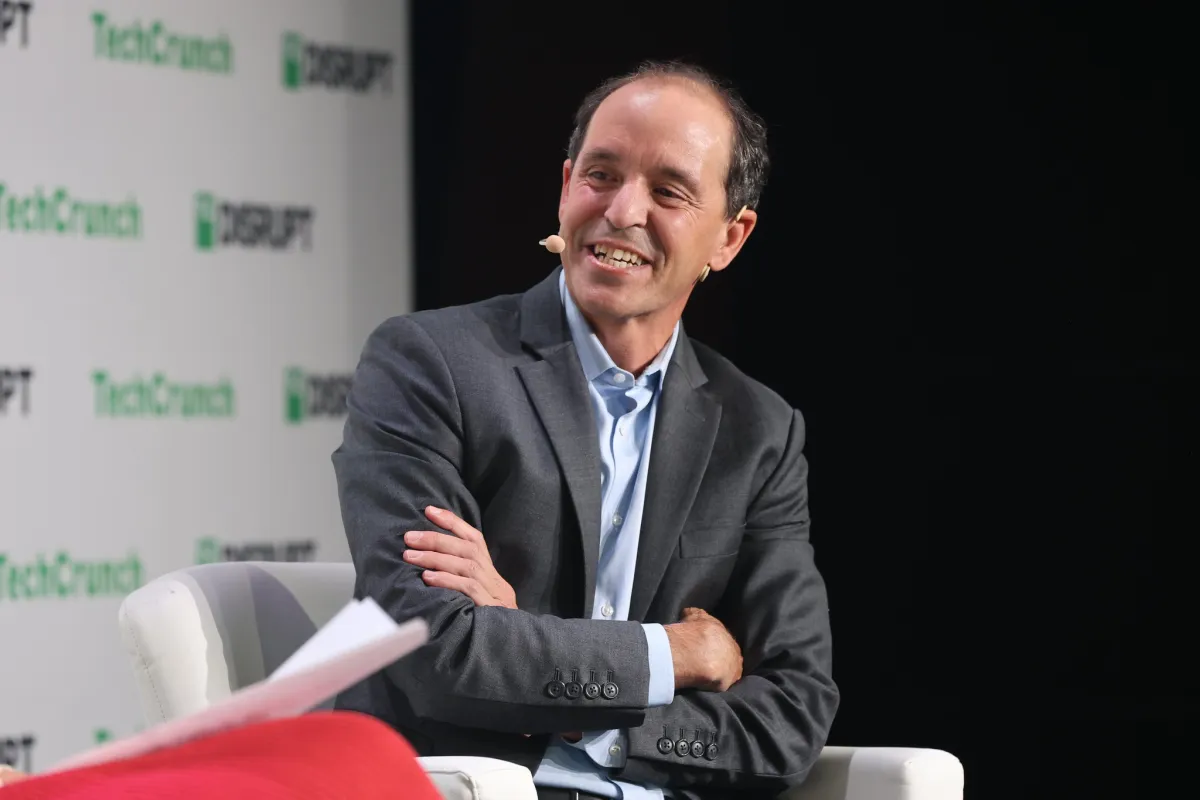
Schiffmann sat in his San Francisco apartment during the rollout, wearing one of the round pendants on a yellow cord. Around him was a carefully staged environment that seemed to mirror the company’s aesthetic: analog objects, personal art, and a cultivated sense that the product is part tech device, part self-portrait, part performance piece.
What is new in Friend’s second pendant?
The biggest change is simple but significant: the pendant can now talk back. The original version of Friend sent responses by text, but the new model includes a speaker on the back, allowing the AI to answer audibly rather than only through a connected phone.
That addition has also altered the physical design. The lower portion of the pendant is bulkier to accommodate the speaker hardware, giving it a noticeably different profile from the first-generation device.
Friend has also upgraded the AI behind the product. Schiffmann says the new pendant runs on OpenAI’s latest models, which should improve the quality and responsiveness of the conversations users have with it.
Another major change is how the product behaves out of the box. Instead of letting buyers pick a voice or assign their own identity, each pendant ships with a preset voice and personality. Users can talk to it, but they cannot rename it or reshape its character. In effect, the company is selling a companion with a fixed temperament.
How does the pricing compare with the first version?
The new pendant is significantly more expensive than the original model. Friend is asking $249 for the second-generation device, up from $129 for the first release. The company is also offering a $10 monthly subscription that extends memory beyond 30 days, which could make the device feel more continuous and personal over time.
The pendant is available now through Friend.com, a domain Schiffmann reportedly acquired for $1.8 million, signaling how seriously he wants the brand to be taken even as the product itself remains polarizing.
| Feature | First Friend pendant | Second Friend pendant |
|---|---|---|
| Price | $129 | $249 |
| Response style | Text-based replies | Voice replies through speaker |
| AI model | Earlier Friend setup | OpenAI’s latest models |
| Voice/personality choice | More flexible experience | Random preset voice and personality |
| Memory option | Limited | $10/month for longer memory |
Why Friend keeps drawing backlash
Friend has attracted intense criticism because many people view the device as a physical symbol of dependency on artificial intelligence. Its always-listening nature, its attempt to mimic companionship, and its uncanny design have all fed a perception that the product is less like a helpful gadget and more like a comment on isolation in modern life.
That reaction has only intensified since the company’s billboard campaign in major cities drew widespread attention and anger. In New York, Los Angeles, Chicago, and later Paris, Friend plastered public spaces with ads that became targets for graffiti and online outrage. The marketing created the biggest wave of attention the brand had received, but much of it was negative.
Schiffmann appears to have accepted, and in some ways embraced, that response. Rather than treating controversy as a problem to solve, he has used it as part of Friend’s identity and publicity strategy.
Schiffmann argues that the company is packaging something futuristic in an intentionally old-fashioned way, saying the brand is presenting a highly digital idea through analog methods.
That framing helps explain why the company leaned heavily on print ads, retro visuals, and physical storytelling rather than a more conventional app-first launch. The result is a brand that feels both engineered and self-consciously theatrical.
Who is Avi Schiffmann, and why does he matter here?
Schiffmann matters because he is the public face, chief strategist, and creative engine behind Friend. He first became widely known as a teenager in 2020 after building a website that tracked Covid-19 case counts during the pandemic. At just 17, he was cast as a precocious internet builder; at 24, he is better known for a device many observers consider bizarre, unsettling, or deliberately provocative.
His self-presentation seems to be part founder story, part art project. He describes himself as having matured, but he also appears to relish being at the center of a debate about what people want from AI and how much emotional weight a machine should be allowed to carry.
In his apartment, Schiffmann has cultivated a look that reinforces this image. He says he keeps no internet at home, plays music on a record player, and is filming a documentary about himself on Kodak Ektachrome. The result is a carefully managed contrast: he is building an AI company while presenting himself as someone suspicious of the fully digital life.
What is Schiffmann trying to sell?
At the most basic level, he is trying to sell hardware subscriptions and a consumer AI companion. But on another level, he is selling an idea: that a person can carry a relationship-like presence in a pendant form without the product becoming a conventional chatbot or voice assistant.
He is also trying to redefine who the device is for. The current user base may skew toward people with obvious interest in novelty, loneliness, or experimental tech, but Schiffmann says he wants Friend to become acceptable to mainstream customers, not just outsiders or early adopters.
How Friend is trying to grow beyond the early adopters
Friend says it sold its initial batch of 5,000 pendants and now wants to reach 50,000 units for the second version. That is an ambitious jump for a product category that still lacks broad social legitimacy.
To reach that target, the company is leaning into storytelling that shows how people actually use the device rather than focusing only on the novelty of the hardware. Schiffmann has released a series of user videos that highlight people interacting with the pendant in deeply personal settings, often while asking it questions about relationships, creative work, or emotional uncertainty.
The clips are visually polished and emotionally charged, but they also underscore the product’s awkwardness. Users seem to be reaching for reassurance, judgment, or companionship from a device that can respond only within the limits of its model and memory. The effect is often poignant, sometimes uncomfortable, and clearly intentional.
Schiffmann says he is more interested in how the pendant affects people in less visible places and in more isolated situations than in small productivity gains for office workers.
That stance reflects a key part of Friend’s pitch. Rather than marketing itself as a premium efficiency tool for professionals, it is positioning itself as a companion product for people who may be looking for something more emotional, less rational, and harder to define.
Why the company’s visuals matter as much as the device
Friend’s image strategy is central to understanding the company. Schiffmann is not simply launching a gadget; he is staging a visual and cultural argument about how AI should look, sound, and feel.
The public ads, the retro photography, the documentary aesthetic, and the physical pendant all serve the same purpose: to make a deeply digital product seem tangible and human-scaled. That approach is unusual in a sector dominated by software interfaces and invisible infrastructure.
Even Schiffmann’s comments about filmmaking point in that direction. He has described the movie industry as tired, but he continues to participate in filming and video production for the company, suggesting that his real interest may be less in product engineering than in narrative control.
He has even suggested that one of the creative challenges is figuring out how to make awkward or lonely people appear appealing on screen. That may be the most revealing clue about Friend’s broader mission: the company is not just selling AI companionship, but trying to aestheticize loneliness itself.
What the Paris ads and social backlash revealed
The ads did more than promote the product; they became part of the product’s identity. When Friend covered subway stations and streets with large-format posters, people reacted as though the campaign were an unwanted public intervention rather than simple advertising.
The result was a wave of criticism about the use of AI in advertising, the social meaning of companion devices, and the ethics of selling emotional attachment. Some critics accused the company of normalizing machine intimacy at the expense of human connection. Others simply saw the campaign as garish and manipulative.
Schiffmann, however, appears to view this reaction as validation that the company has touched a nerve. In the attention economy, outrage can be a useful fuel, and Friend has already shown a willingness to operate in that register.
- Public ads in multiple cities turned the brand into a conversation piece.
- Graffiti and online criticism amplified the campaign far beyond paid media.
- The controversy pushed Friend into the same cultural frame as sci-fi cautionary tales.
How does Friend fit into the wider AI companion market?
Friend fits into a fast-growing but still unsettled part of the AI industry: devices and apps that promise emotional support, everyday conversation, or a sense of companionship. Unlike productivity tools or enterprise AI products, these services operate in a much murkier space where usefulness, dependency, and persuasion overlap.
That makes Friend especially notable. It is not simply a chatbot in a wearable shell. It is a consumer object built around the idea that people may want an always-available voice that feels private, intimate, and distinct from the generic assistants that already exist on phones and speakers.
At the same time, the product’s design choices make it unusual even within that category. The random voice, fixed personality, and physical pendant shape create the sense of a curated relationship rather than an open-ended assistant. Whether that appeals to customers or alienates them is the central question the company is now facing.
What role does memory play in the product?
Memory is one of the most important selling points in companion AI because it creates the illusion of continuity. Friend’s optional $10-per-month subscription extends the period over which the pendant can remember prior exchanges, making conversations feel less disposable and more relationship-like.
That feature also raises the stakes. Longer memory can make the AI feel more personal and more useful, but it can also intensify privacy concerns and make the device seem more invasive. In a product already criticized for being always on, memory becomes both a feature and a liability.
What are the biggest business risks for Friend?
The biggest risks are market fit, public perception, and regulation. Friend is trying to sell a product that many people instinctively distrust, and it must do so in a crowded consumer AI market where users have many alternatives and low patience for novelty that does not quickly prove useful.
There is also the issue of privacy compliance. Schiffmann has said he may withdraw the product from the European Union because meeting GDPR standards would make the device too expensive to sell there. That suggests the company may face serious limits if it wants to operate at scale in privacy-conscious markets.
Finally, there is the question of durability. A product built on personality and conversation must keep improving or it risks becoming a curiosity. The second pendant is a meaningful upgrade, but it does not solve the broader challenge of persuading ordinary consumers that carrying an AI companion is desirable rather than strange.
| Milestone | What happened | Why it matters |
|---|---|---|
| 2020 | Schiffmann gained attention for a Covid-19 tracking website | Established him as a young internet builder |
| 2025 | Friend’s large-scale ad campaign ran across major cities | Made the brand widely known, but also widely criticized |
| Early 2026 | Paris subway ads intensified the backlash | Expanded the company’s cultural footprint internationally |
| Thursday launch | Second-generation pendant introduced with voice replies | Marked Friend’s effort to turn attention into revenue |
What happens next for Friend?
The immediate test is whether the new device can sell beyond the curiosity market. Friend has already demonstrated that it can attract attention; the harder challenge is translating that attention into repeatable consumer demand.
If the company reaches its 50,000-unit goal, it would suggest that there is a real audience for AI wearables that feel personal, eccentric, and emotionally responsive. If it falls short, Friend may remain better known as a cultural artifact than as a scalable business.
Either way, Schiffmann seems committed to making the product part of a broader creative identity. The device, the ads, the videos, and the filmmaking all point toward a brand that is as much about authorship and performance as it is about software.
In that sense, the second Friend pendant is more than just a new gadget. It is a test of whether an AI companion can move from internet spectacle to ordinary consumer object without losing the strange charge that made it famous in the first place.
Key details at a glance
For readers tracking the launch, the most important facts are straightforward: Friend’s new pendant talks out loud, costs more than the original, uses more advanced AI, and comes with a personality the buyer cannot customize.
Those changes may make the product more compelling to some users, but they also sharpen the questions that have followed Friend from the beginning: who wants this, what emotional role should it play, and how far should AI go in simulating companionship?
- Product: Second-generation Friend AI pendant
- Launch date: Thursday
- Price: $249
- Optional subscription: $10 per month for longer memory
- Core upgrade: Built-in speaker for voice replies
- AI engine: OpenAI’s latest models
- Sales target: 50,000 units
Friend’s second act is shaping up as a deliberate bet that the same qualities people find off-putting may also make the device memorable enough to sell. Whether that makes the pendant a breakthrough, a niche curiosity, or a beautifully packaged provocation will depend on whether enough customers are willing to let a tiny voice on a cord become part of their daily lives.
Frequently asked questions
What is the new Friend AI pendant?
It is Friend’s second-generation AI wearable, a necklace-style pendant that can now reply aloud through a built-in speaker. The company says it also runs on OpenAI’s latest models and ships with a preset voice and personality.
How much does the Friend pendant cost now?
The new Friend pendant costs $249, which is a steep increase from the first version’s $129 price. Friend also offers an optional $10 monthly subscription for longer memory beyond 30 days.
Why is Friend so controversial?
Friend is controversial because it is marketed as a companion device that listens constantly and simulates an ongoing relationship with AI. Critics see that as dystopian, invasive, or emotionally manipulative, especially after the company’s high-profile billboard campaign.
Who founded Friend?
Friend was founded and is led by Avi Schiffmann, who first became widely known in 2020 as a teenager who built a website tracking Covid-19 cases. He is now the public face of the AI companion company.
Will Friend be sold in the European Union?
Possibly not. Schiffmann has said the company may pull the product from the EU because complying with GDPR privacy rules could make the device too expensive to sell there.