In short
OpenAI product lead Alexander Embiricos will speak at TechCrunch Disrupt 2026 just days after the company launched Dots, its always-on personal AI agent. The session will focus on what comes after chatbots and whether users will trust AI systems with more autonomy.
- OpenAI has launched Dots, an always-on personal AI agent designed to do more than answer prompts.
- Alexander Embiricos, who leads product for Dots, will discuss the category at TechCrunch Disrupt 2026.
- The biggest questions around agents are trust, privacy, user control and practical usefulness.
- Dots reflects OpenAI’s push beyond chat-first AI toward systems that can act in the background.
- The product could help define whether personal AI agents become mainstream consumer software.
OpenAI’s next major consumer push is arriving just days before one of the startup world’s biggest annual gatherings, and the product leader behind it is heading to San Francisco to explain it. Alexander Embiricos, who leads product for Dots at OpenAI, will appear at TechCrunch Disrupt 2026 on the AI Stage to discuss what comes after chatbots and why always-on agents could reshape everyday digital work.
The appearance comes at a strategically important moment: OpenAI has just unveiled Dots, a personal AI agent designed to act more like a persistent assistant than a prompt-based chatbot. The product represents a broader industry wager that the next phase of AI will involve systems that do not merely answer questions, but also maintain context, connect to apps, and keep working in the background on behalf of users.
That shift is significant because it moves AI from reactive conversation toward delegated action. It also raises a difficult question for the market: how much autonomy people will actually accept from software that can access calendars, documents, messages and other sensitive parts of digital life.
OpenAI’s bet on agents is moving into public view
Dots is OpenAI’s latest attempt to move beyond the familiar chatbot interface. Rather than waiting for a user to type in a request and respond only in the moment, the system is designed to behave more like an ongoing digital helper with its own cloud-based computing environment and connections to the apps people already use.
In practical terms, that means the agent can keep pursuing a task even when the user is not actively engaged. OpenAI’s framing suggests a future in which AI becomes less of a conversational tool and more of a background operator that can search, organize, coordinate and execute with limited human prompting.
That is a major product shift for a company whose most recognizable consumer success has come from ChatGPT, a product still centered on dialogue. Dots signals an ambition to redefine the interface between people and AI, and to make the agent itself the primary product rather than the chat window.
What makes Dots different from a chatbot?
Dots are meant to take actions, not just generate answers. The key distinction is persistence: instead of ending when a response is delivered, the system is built to continue working toward a goal, pulling in data and interacting with connected services along the way.
That capability could be useful for routine but time-consuming tasks such as coordinating schedules, tracking projects, summarizing scattered updates or keeping tabs on an ongoing workflow. It could also allow AI systems to become more deeply embedded in professional and personal routines than any previous consumer product from OpenAI.
- Chatbots respond to a prompt and stop.
- Agents pursue a goal over time.
- Persistent assistants may act even when the user is away.
Why privacy and trust may decide whether personal agents succeed
The promise of a more capable AI agent is also the source of its biggest risk. To be genuinely useful, a system like Dots may need access to personal and professional information that users are not accustomed to sharing with software that operates semi-independently.
That creates a trust problem. A background agent that can connect to apps and continue work without constant supervision could be helpful, but it could also feel intrusive if users do not fully understand what it is doing, what data it can see, or how much control they retain over each step.
OpenAI is entering a market that increasingly rewards convenience while facing growing scrutiny over privacy, safety and data governance. For any product built around autonomy, the company must persuade people that greater capability will not come at the expense of security or control.
At Disrupt, Embiricos is expected to discuss the rationale behind Dots, where OpenAI sees personal agents heading, and why privacy and trust may determine whether the category gains mainstream adoption.
How much control are users willing to give up?
That is the central question behind the new product category. Users may be comfortable allowing an assistant to draft a message or find information, but they may be far less willing to let software act across apps, retain memory, or make decisions that affect work and communications without explicit confirmation.
The answer will likely vary by use case. A limited agent that helps with low-risk tasks could be easy to adopt, while a system that operates across email, documents and meetings may require much stronger safeguards and clearer permission settings.
That means OpenAI’s challenge is not simply technical. It also has to design a product experience that makes autonomy feel helpful rather than unsettling.
TechCrunch Disrupt will be a proving ground for the post-chatbot era
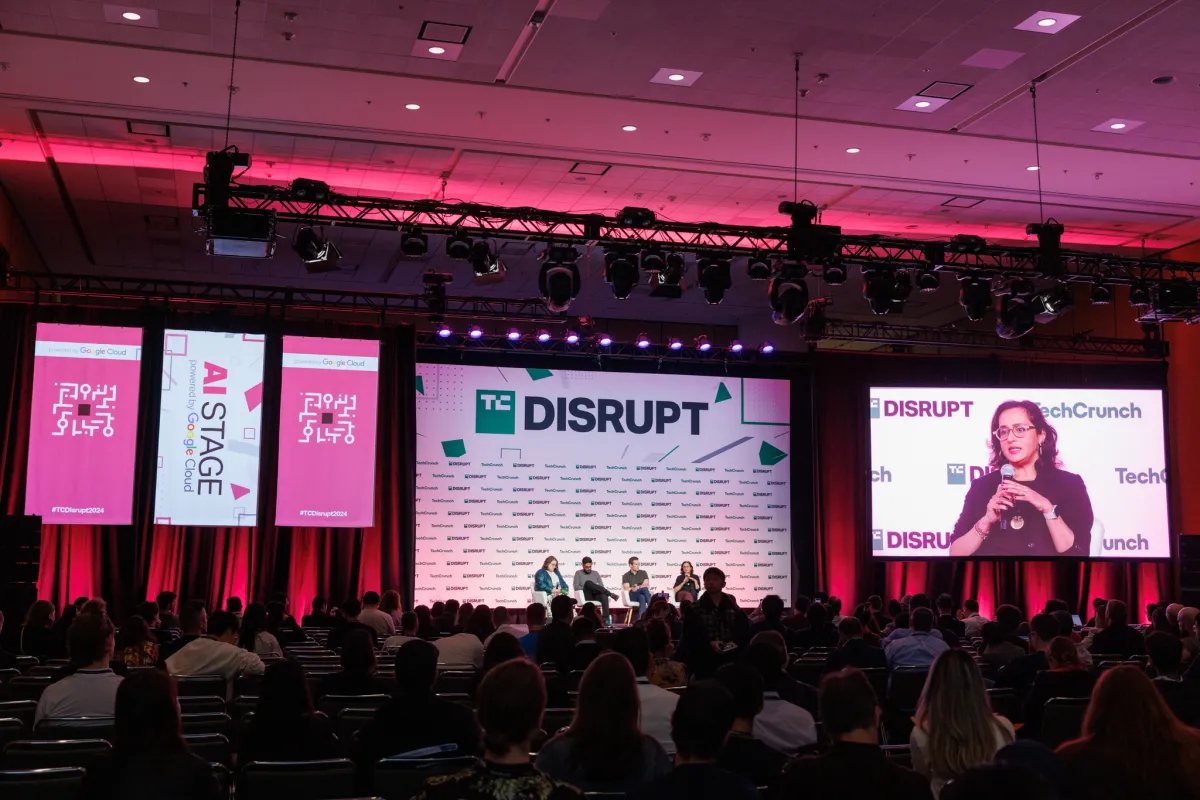
Embiricos’s session comes during TechCrunch Disrupt 2026, scheduled for October 13-15 at Moscone West in San Francisco. The event is one of the startup industry’s largest annual convenings, bringing together founders, investors, operators and product leaders to debate where technology is heading next.
For OpenAI, the conference appearance offers a chance to shape the narrative around personal agents at the very moment the category is still forming. Public explanation matters here: developers, enterprise buyers and consumers are all trying to understand whether autonomous assistants will become a meaningful new product class or remain a niche experiment.
Disrupt is also designed to turn product launches into broader market conversations. A discussion about Dots on the AI Stage will likely resonate beyond OpenAI, because every major AI company is now trying to answer the same question: what comes after the chatbot?
What Embiricos will likely address on stage
Embiricos is expected to focus on three broad issues: the product logic behind Dots, OpenAI’s longer-term view of personal agents, and the trust and privacy barriers that will shape adoption. Those topics map closely to the biggest unresolved issues in consumer AI.
First, there is the question of use value. The market needs a clear reason to adopt agents that goes beyond novelty. Second, there is the question of product design: how to make persistent assistance feel simple, controllable and useful. Third, there is the question of governance: what limits, permissions and protections need to exist before users let an AI act on their behalf.
Those topics are likely to dominate the conversation because they sit at the intersection of product strategy and public confidence.
Why this launch matters for the AI industry
OpenAI is one of the few companies with enough brand recognition to push a new product category into the mainstream. If Dots resonates, it could accelerate a broader industry shift away from chat-first interfaces and toward action-oriented systems that can manage work in the background.
That would have consequences across software. Productivity apps, scheduling tools, messaging platforms and cloud services may increasingly need to account for AI systems acting as intermediaries between users and digital services. In that sense, agents are not just another consumer feature; they could become a new layer in the software stack.
But the upside comes with complexity. The more deeply an AI agent connects into a person’s digital life, the more important transparency, permission controls and reliable behavior become. If a system is to help with real work, it must be both capable and predictable.
| Item | Details | Why it matters |
|---|---|---|
| Product | Dots, OpenAI’s always-on personal AI agent | Represents OpenAI’s push beyond chatbots |
| Speaker | Alexander Embiricos, product lead for Dots | Will explain the product vision at Disrupt |
| Event | TechCrunch Disrupt 2026 | Major startup conference where the category will be debated |
| Date | October 13-15, 2026 | Places the conversation immediately after the launch |
| Location | Moscone West, San Francisco | Hub for founders, investors and product builders |
How Dots fits into the broader shift in AI products
Dots fits into a broader industry move from language models as answer engines to AI systems as digital workers. The first wave of consumer AI proved that people would use natural-language interfaces for research, writing and brainstorming. The next wave is testing whether users want those systems to actually do things.
That evolution is easy to describe but difficult to execute. A product that can take initiative has to understand intent, manage edge cases, ask for clarification when needed and avoid overstepping. In other words, the product must handle ambiguity better than a typical app, while still earning confidence through consistent behavior.
Companies across the sector are trying to solve the same challenge in different ways. Some are focusing on workflow automation, others on enterprise assistants and others on consumer-facing companions. OpenAI’s pitch with Dots appears to be that a personal agent with durable context and app connections can become a daily utility.
What does the launch say about OpenAI’s strategy?
It suggests OpenAI is willing to move aggressively into a new interface paradigm while the market is still forming. Rather than waiting for competitors to define the agent category, the company is putting its own version in front of the public and asking users to imagine a more autonomous relationship with AI.
That strategy mirrors OpenAI’s broader history of product-led market shaping. The company has often helped popularize AI behaviors before the broader industry fully agreed on the direction. Dots looks like the latest attempt to do that at a more ambitious level.
It also shows that OpenAI is betting on utility over spectacle. The real value proposition is not that an agent can chat; it is that it can remain useful over time, across tools and contexts, with less hand-holding from the user.
What to watch at Disrupt 2026
Several signals will matter when Embiricos takes the stage. Observers will want to know how OpenAI thinks about user permissions, what limits it places on agent behavior, how the product handles sensitive data, and whether the company sees Dots as an early experiment or a central piece of its consumer future.
There will also be attention on the language OpenAI uses. If the company emphasizes convenience and productivity, it may be trying to make agents feel like a natural extension of everyday software. If it leans more heavily on trust, safety and user control, that may indicate awareness that the category still has to overcome skepticism before it becomes mainstream.
Either way, the session is likely to serve as a useful snapshot of where the AI industry is heading next. The chatbot era is not over, but it is increasingly clear that the next battle is about what software should do after the conversation starts.
Event context: Disrupt in numbers
TechCrunch says this year’s conference will bring together 250-plus tech leaders across more than 200 sessions, along with 10,000 founders, investors and operators. The event includes multiple stages, roundtables and breakout discussions, giving attendees a wide view of the startup and AI landscape.
For attendees, Embiricos’s talk offers a chance to hear directly from a product leader responsible for one of OpenAI’s most closely watched new bets. For the broader market, it is a signal that the company believes the time is right to introduce personal agents as a serious consumer category rather than a distant concept.
If Dots succeeds, it could become one of the first widely recognized examples of an AI agent built not just to talk, but to act. If it struggles, it may highlight just how much work remains before people are ready to hand real agency to software.
Either way, OpenAI’s move ensures that the debate over AI’s next chapter will be far more than theoretical.
In short: Alexander Embiricos, the OpenAI product lead for Dots, is appearing at TechCrunch Disrupt 2026 days after the launch of the company’s always-on personal AI agent, a product that could help define the post-chatbot era if users are willing to trust it with real autonomy.
Frequently asked questions
What is OpenAI’s Dots?
Dots is OpenAI’s new always-on personal AI agent. Unlike a chatbot that simply answers prompts, it is designed to keep working toward a goal in the background, connect with everyday apps and use cloud-based computing to complete tasks over time.
Who is Alexander Embiricos?
Alexander Embiricos is the product lead for Dots at OpenAI. He is scheduled to speak at TechCrunch Disrupt 2026 about the company’s thinking behind the product and what the next phase of personal AI agents could look like.
Why does Dots matter to the AI industry?
Dots matters because it signals a shift from chat-based AI toward systems that can act on a user’s behalf. If the product gains traction, it could help establish personal AI agents as a major new consumer category and influence how software is built across the industry.
What are the biggest risks with AI agents?
The biggest risks are privacy, trust and control. A system that connects to apps and works in the background may need access to sensitive data, so users and companies will want clear limits, permissions and safeguards before relying on it for important tasks.