In short
WindBorne Systems has won an Air Force contract worth up to $49 million to supply atmospheric data gathered by its autonomous weather balloons. The deal boosts the startup’s AI weather forecasting business and highlights growing government interest in machine-learning weather tools.
- The U.S. Air Force can buy WindBorne balloon data under a contract worth up to $49 million.
- WindBorne operates about 700 autonomous weather balloons and uses the data in its own forecasting model.
- The agreement is the startup’s largest government contract and was awarded without competitive bidding.
- WindBorne says its latest model, WeatherMesh 6, outperforms the ECMWF benchmark in some tests.
- The deal underscores how AI weather forecasting is moving into operational use.
The U.S. Air Force has signed a contract that could be worth nearly $50 million to WindBorne Systems, the Redwood City startup whose autonomous weather balloons collect atmospheric data for forecasting and defense users. The agreement gives the service a new way to buy balloon-derived weather readings on demand, underscoring how AI-driven forecasting is moving from research into operational government use.
The deal marks WindBorne’s largest government contract to date and arrives as the company expands a global fleet of roughly 700 balloons that gather measurements from the atmosphere and feed them both to customers and to WindBorne’s own machine-learning weather model.
What the Air Force is buying
At its core, the contract is for data rather than hardware. The Air Force can request WindBorne’s atmospheric observations for particular regions and time windows, paying only when it needs specific information. The contract ceiling is $49 million, but early orders have been modest so far, with about $1.7 million placed to date.
This structure matters because it turns WindBorne’s balloon network into an on-demand intelligence asset. Instead of buying a fixed service package, the Air Force can tap the constellation when conditions on the ground or in the atmosphere make extra visibility valuable.
WindBorne’s executives say the contract supports continued expansion of the balloon fleet and funds additional research and development aimed at improving the balloons’ hardware and performance.
The company also says the government viewed it as uniquely able to provide this kind of global data collection in the form required for the mission. The award was made without competitive bidding, a sign that officials considered the capability specialized enough to justify a sole-source arrangement.
Why balloon data matters for modern forecasting
Weather balloons may sound old-fashioned, but WindBorne has recast them as part of a new data pipeline for AI forecasting. Each balloon gathers atmospheric sensor readings that are useful not only to WindBorne’s customers, but also to the company’s own forecasting systems.
That approach reflects a broader shift in meteorology. For decades, weather forecasting depended heavily on physics-based simulations running on supercomputers. Those models remain essential, but newer AI systems can ingest huge historical datasets and identify patterns quickly, often producing useful forecasts faster than traditional methods.
WindBorne is among the companies trying to bridge those worlds by feeding real-world atmospheric observations directly into a deep-learning model. That gives it a practical advantage: the model does not rely only on archived data, but also on fresh measurements from its balloon fleet.
How WindBorne’s balloons navigate without engines
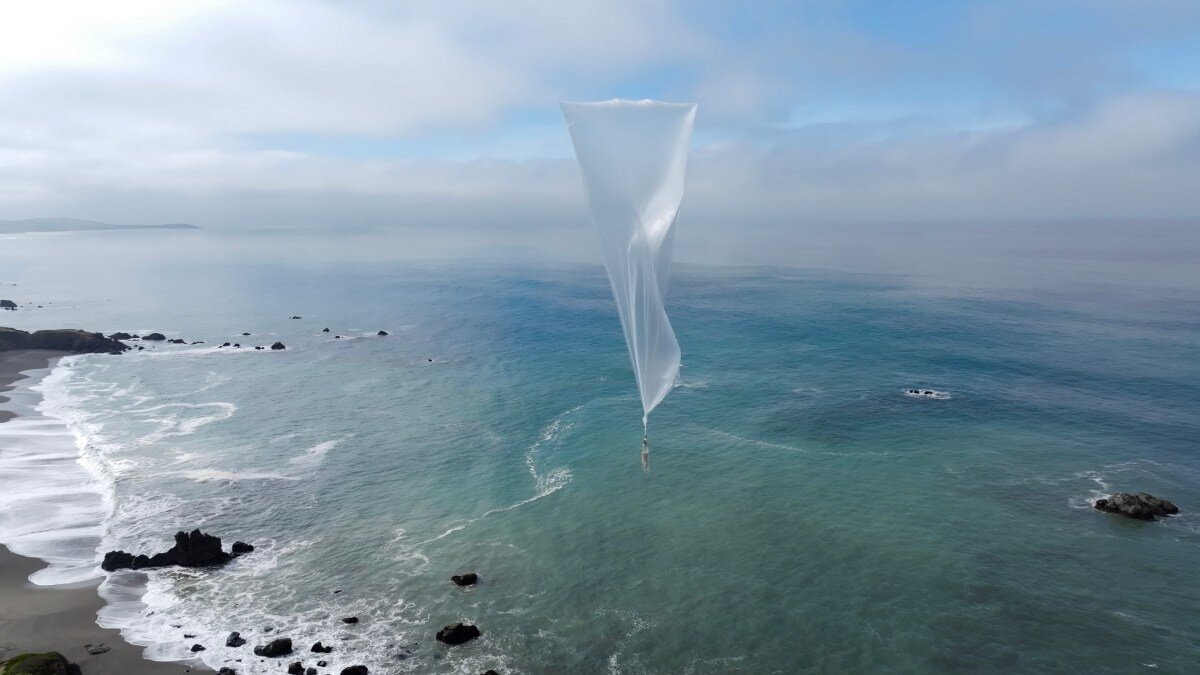
WindBorne’s balloons do not have engines. Instead, they move by changing altitude and using wind currents to drift toward targeted locations. The company can also release air or drop ballast, such as sand, to alter ascent and descent patterns.
That navigation approach allowed WindBorne in August to become the first organization to send an unpowered flight system into the eye of a typhoon to gather data. The milestone highlighted both the technical maturity of the balloon system and the growing value of precise atmospheric intelligence for storm analysis.
The company says the achievement depended on two things: strong wind and weather models that can guide navigation decisions, and enough balloons in enough places to make targeted flight paths feasible.
| Key fact | Details |
|---|---|
| Company | WindBorne Systems |
| Founded | 2015 |
| Headquarters | Redwood City, California |
| Fleet size | About 700 autonomous weather balloons |
| Air Force contract value | Up to $49 million |
| Amount ordered so far | About $1.7 million |
| Recent financing | $37 million Series B |
| Latest model | WeatherMesh 6 |
How this fits into the rise of AI weather forecasting
The contract lands at a moment when AI weather prediction is becoming one of the most commercially meaningful applications of machine learning. The field has accelerated since transformer architectures matured and public weather datasets expanded, making it easier to train end-to-end models on massive historical records.
Traditional weather forecasting still leans on physics-heavy numerical models, which simulate atmospheric behavior using equations and supercomputing. Those systems remain foundational, but AI systems have started to match or exceed them in some tasks, especially when paired with the right observational data.
In practice, the best results still come from using both methods together. Physics-based systems offer structure and interpretability, while AI can add speed, pattern recognition, and improved handling of enormous datasets. That mixed approach is now influencing how governments, researchers, and private firms plan for storms and other high-impact weather events.
What makes WindBorne different from software-only weather labs?
WindBorne is different because it owns the data collection layer as well as the forecasting model. Many AI weather efforts focus on the software side, but WindBorne operates balloons that capture fresh measurements around the globe and feed those readings into its model and customer products.
That gives the startup a vertically integrated position in a crowded field. It is not just interpreting weather data from third parties; it is helping generate the data itself. For defense and emergency-response users, that can matter as much as the model output.
WindBorne co-founder and CTO Andrey Sushko said the contract is helping support the growth of the company’s balloon network while also funding engineering work to improve the balloons’ capabilities.
He also argued that the government chose WindBorne because it was the only provider able to deliver this particular global collection capability in the form needed for those operations.
Why the U.S. government is paying attention
The U.S. government has already been working with WindBorne through agencies including the National Weather Service, the Air Force and the Navy. The new contract is important because it expands that relationship and signals stronger confidence in the company’s ability to serve operational needs.
For military planners, better atmospheric data can improve mission timing, route planning, and overall situational awareness. For forecasters, it can refine initial conditions that feed into prediction models. For a startup, a government commitment of this scale can help finance expansion, hardware iteration, and future commercial sales.
The timing also aligns with a broader defense interest in resilient, distributed sensing systems. Balloons are relatively low-cost compared with satellites or other high-end platforms, yet they can still provide valuable information in places where weather data is sparse or changing quickly.
WindBorne’s recent momentum
The Air Force contract adds to a strong year for the startup. In August, WindBorne CEO John Dean said the company had raised a $37 million Series B round to keep scaling its business. Around the same period, the company unveiled WeatherMesh 6, the latest version of its forecasting model.
WindBorne says WeatherMesh 6 outperforms the long-established forecasting model run by the European Centre for Medium-Range Weather Forecasts, or ECMWF, a major benchmark in global weather prediction. That is a bold claim, but one that reflects how rapidly AI forecasting tools are advancing.
Still, this remains a challenging field. Even the strongest AI models do not eliminate uncertainty, and weather forecasting continues to require layered approaches. Global atmospheric systems are noisy, dynamic and occasionally chaotic, which is why both classical models and machine-learning systems are likely to remain important for years.
What the deal means for the market
For WindBorne, the contract validates a business model built on collecting data in hard-to-reach parts of the atmosphere and selling it to entities that need better weather intelligence. The Air Force deal provides not only revenue, but also a high-profile endorsement that could help attract additional customers and partners.
For the broader market, it signals that AI weather companies may have a real path to monetization beyond software subscriptions and research grants. If government buyers are willing to pay for specialized atmospheric data tied to AI forecasting, other agencies and commercial users may follow.
It also highlights a subtle but important shift in the AI economy: the companies with the most value may not be those that simply build models, but those that control the underlying data pipelines those models need to stay accurate and useful.
Timeline of WindBorne’s recent progress
- 2015: WindBorne is founded in Redwood City, California.
- Past few years: The company works with U.S. agencies including the National Weather Service, Air Force and Navy.
- Earlier this summer: WindBorne releases WeatherMesh 6.
- August: The company says it is the first to send an unpowered flight system into the eye of a typhoon.
- August: CEO John Dean says WindBorne raised a $37 million Series B.
- October 12, 2026: The Air Force contract becomes public.
What happens next?
The immediate question is whether the Air Force increases its purchasing rate under the contract. The ceiling is large, but the service will continue to buy only the data it needs, when it needs it. If operational demand rises, the contract could become a major revenue stream.
Longer term, WindBorne will need to prove that its balloon network can scale reliably, withstand harsh environments, and continue producing high-value data that improves both defense operations and forecast quality. If it succeeds, the company could become an important example of how AI and physical sensing systems can reinforce one another.
For now, the headline is clear: a startup that began with autonomous weather balloons has turned that fleet into a strategic asset strong enough to win a substantial U.S. military contract, and that may say as much about the future of forecasting as it does about the future of defense procurement.
Frequently asked questions
What did the U.S. Air Force buy from WindBorne?
The U.S. Air Force bought access to atmospheric data collected by WindBorne’s fleet of autonomous weather balloons. The contract lets the service request information for specific regions and times, paying only when it needs the data rather than buying a fixed service package.
How much is the WindBorne Air Force contract worth?
The WindBorne Air Force contract is worth up to $49 million. So far, the service has placed about $1.7 million in orders, but executives expect additional purchases as operational needs grow.
Why is WindBorne important in AI weather forecasting?
WindBorne is important because it combines fresh atmospheric data collection with an AI forecasting model. Unlike software-only weather companies, it runs a balloon fleet that feeds real-world measurements directly into its deep-learning system, improving prediction quality and operational usefulness.
How do WindBorne’s weather balloons work?
WindBorne’s balloons have no engines. They move by changing altitude, releasing air, or dropping ballast so they can ride wind currents toward target areas. That method allows the company to collect data from places that are difficult to observe with conventional tools.
What is WeatherMesh 6?
WeatherMesh 6 is WindBorne’s latest AI weather forecasting model. The company says it produces more accurate forecasts than the traditional ECMWF model in some settings, reflecting the rapid progress of machine-learning systems in weather prediction.