In short
World model startups such as AMI Labs and World Labs are attracting funding and attention, but they remain vague about their commercial plans. The secrecy highlights both the promise of the technology and the race to avoid tipping off rivals too early.
- AMI Labs and World Labs are the leading names in world models but have disclosed little about product timelines.
- World models could power robotics, autonomous driving, gaming, CGI and enterprise applications.
- Suppliers say they can help the sector, but many still do not know the end use of their data.
- Secrecy may help companies delay competition, but it also leaves the market shape unclear.
World model companies are attracting major attention and capital, but they are still keeping unusually quiet about what they will actually sell. That secrecy matters because the technology could reshape robotics, self-driving systems, video creation and enterprise software, yet no one in the field is clearly signaling which use case will become the first real business.
At the center of the discussion are Yann LeCun’s AMI Labs and Fei-Fei Li’s World Labs, two of the best-known names in the emerging category. Both have drawn buzz and funding, but both have also been careful to avoid detailed public product roadmaps, leaving investors, partners and rivals to infer the strategy from demos and partnerships rather than hard announcements.
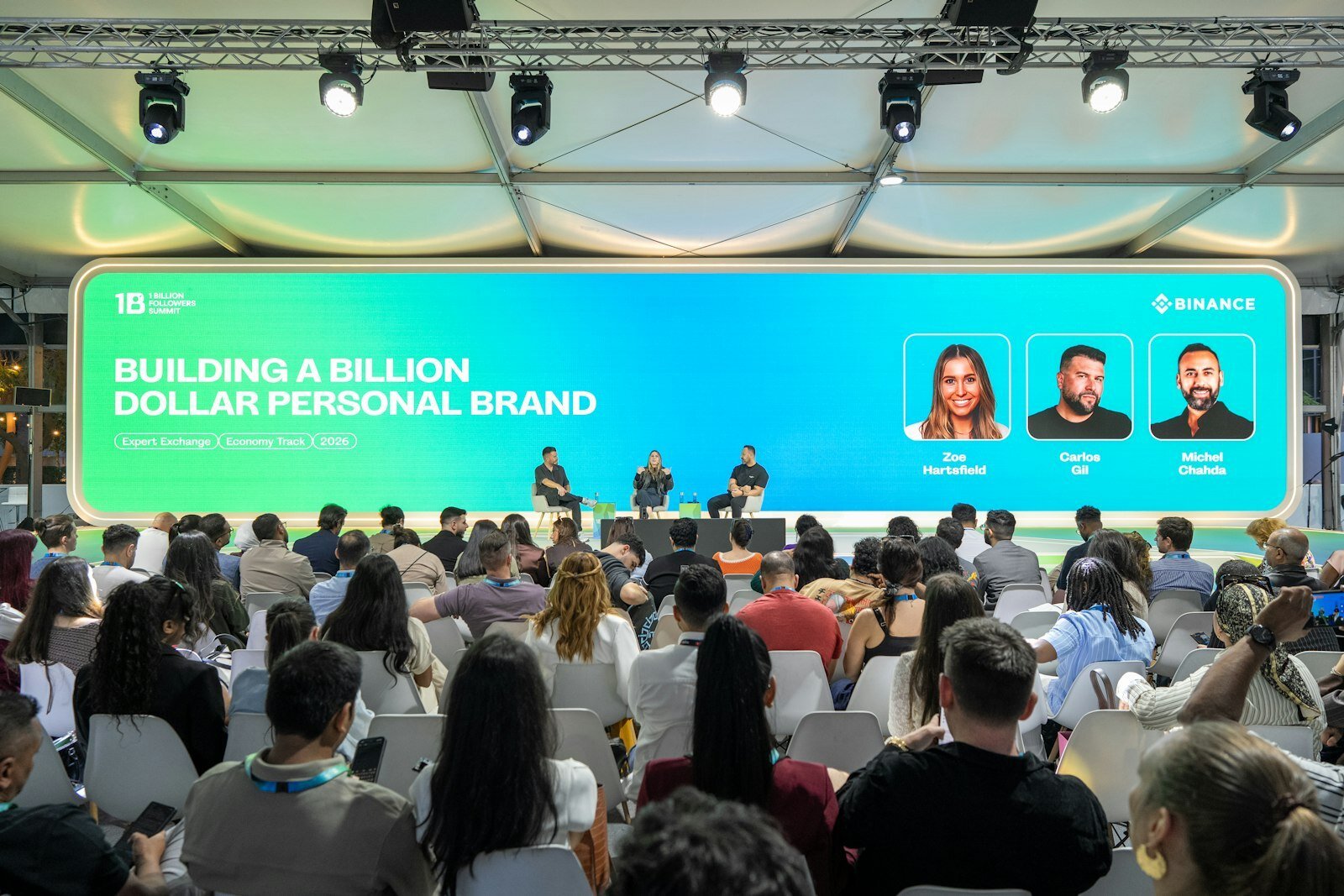
The lack of clarity was on display at the All In conference this week, where the topic came into sharper focus during a panel on world models. The conversation highlighted a familiar paradox in frontier AI: the more promising the technology appears, the more incentive companies have to talk around the commercial specifics until they are ready to defend a market position.
What are world models, and why do they matter?
World models are AI systems designed to understand and simulate physical space, making them useful for tasks that require spatial reasoning. In practical terms, they aim to help software and machines interpret environments, predict movement and interact with the world more intelligently.
That broad capability makes the category unusually flexible. A world model can function as a map-like representation for autonomous driving, a planning tool for robots moving through real spaces, or a generator that turns video into immersive, explorable scenes.
The reason venture capital has flowed into the field is simple: if world models work at scale, they could underpin several large businesses at once. Robotics, industrial automation, gaming, synthetic media, healthcare tools and advanced driving systems all sit within reach.
Why investors are paying attention
Investors are drawn to world models because the technology sits at the intersection of several large markets. Rather than being limited to one application, the same core capabilities may support multiple products across industries.
- They can improve robotic navigation and manipulation.
- They can help generate or edit 3D environments for media and games.
- They may advance autonomous driving and mobility systems.
- They could support specialized enterprise software in fields such as medicine and manufacturing.
How much are the leading labs saying about their products?
Very little, at least publicly. The clearest sign of that caution came from Michael Rabbatt, a co-founder of AMI Labs and the company’s vice president for world models, who took part in the conference panel and declined to spell out near-term plans.
Rabbatt’s message was essentially that the company is not ready to discuss product direction yet and will speak when it has something concrete to announce. In follow-up comments, he said AMI is still in a research-and-build phase and does not have public product plans or a launch timeline to share.
AMI is still a very young company, so its guarded approach is not surprising on its own. What stands out is that a similar pattern exists across much of the world-model landscape, even among better-funded and more visible firms.
World Labs’ Marble appears to be the most developed product currently associated with the category. But even that system is presented more as a demonstration of capability than as a clearly defined commercial platform. Its demos span multiple potential uses, including media generation, explorable game environments and CGI-style visual effects.
Robotics is part of the story too, but the product still feels like a proof of concept designed to show what the underlying system can do rather than a polished, targeted business tool.
Why are these companies so secretive?
The answer is partly strategic and partly competitive. World models are still early enough that companies want to protect both technical details and market plans before they commit to a specific direction. The field is also broad enough that revealing one successful use case could quickly attract competitors.
There is another reason for caution: once one company identifies a profitable application, others can raise money to chase the same opportunity. In a category as well funded as frontier AI, secrecy can buy time, which in turn can mean more room to iterate before rivals move in.
That dynamic was echoed by a supplier close to the ecosystem. Alex de Vigan, chief executive of Physicl, which provides data to the world-model sector, said his company knows its data has been useful, but not exactly how it is being deployed.
De Vigan said he would prefer more visibility into what customers are building, explaining that better product knowledge would let his company create more useful data. But for now, he said, the end uses remain unclear.
The supplier problem
World model companies rely on data providers, but the relationship can be oddly one-sided. Vendors may know that their data contributes to a system, yet still have little insight into whether the customer is targeting gaming, robotics, medicine or something else entirely.
That opacity can slow the development of the surrounding ecosystem. If suppliers do not know the end market, they cannot tailor training data as precisely. The result is a narrower feedback loop and a less mature commercial stack around the technology.
| Company / Product | Known focus | Public commercial clarity | Notable examples |
|---|---|---|---|
| AMI Labs | World models, spatial intelligence | Low | Research phase; partnerships in multiple sectors |
| World Labs / Marble | Explorable environments, media generation | Moderate | Game worlds, CGI, robotics demos |
| Physicl | Data supply for world models | Dependent on customer visibility | Supports unknown downstream applications |
| Waymo-style systems | Navigation and driving | Clearer | Autonomous vehicles |
Where could world models be commercialized first?
The most likely early markets are the ones that already need spatial reasoning and can tolerate high development costs. Robotics is an obvious candidate because machines need to perceive and interact with the physical world. Autonomous driving is another, since navigation and prediction are central to the category.
Video, gaming and CGI also look promising because world models can help create editable environments rather than flat, static media assets. That capability could be useful to studios, developers and content platforms that want interactive or personalized experiences.
Possible first-wave use cases
- Robotics: navigation, object handling and warehouse movement.
- Autonomous driving: planning, sensing and route prediction.
- Interactive media: explorable scenes for games and virtual production.
- Enterprise AI: specialized tools for industrial and medical workflows.
AMI’s public work suggests the company is testing several of these paths at once. According to the conference discussion and the company’s known partnerships, its reach has already extended into manufacturing, biomedicine, robotics and healthcare software for doctors through Nabia.
That breadth may look scattered, but it also reflects the reality of an early market. When the commercial category is not yet established, companies often explore several adjacent opportunities before narrowing the focus.
How does secrecy affect competition in frontier AI?
It can delay it, but only temporarily. The logic behind secrecy is straightforward: if a company announces a breakthrough use case too early, it risks triggering a stampede of rivals chasing the same market.
That is especially true in world models because the underlying technology is not tied to one product line. If one lab proves a strong robotic application, another can fundraise for a similar approach. If one company shows a compelling entertainment workflow, others can pivot into the same lane with fresh capital.
In other words, secrecy may help a startup or research lab protect its advantage while the technology is still being refined. But the same open-ended nature that makes the category attractive also makes it vulnerable to rapid imitation once the market shape becomes visible.
The competitive logic is that a company can stay quieter for longer, but it cannot prevent others from raising money and building once the opportunity is obvious.
That is one reason the world-model sector is taking on a “Dark Forest” feel: each player knows there may be other powerful actors nearby, but none wants to reveal too much and draw attention before it has a durable lead.
What the panel revealed about the state of the market
The All In conference panel made clear that the field is rich in ambition but thin on hard product disclosure. The biggest names in the category are widely discussed in AI circles, yet the exact shape of their businesses remains difficult to pin down.
That combination of high expectations and low transparency is unusual even by frontier-AI standards. Most popular AI categories eventually settle into identifiable product lines: chatbots, search tools, coding assistants or infrastructure. World models have not reached that stage.
The ambiguity may be temporary, but it also signals that the category is still defining itself. Until one or two applications prove especially viable, companies may continue to describe themselves in broad terms and avoid committing to a single commercial identity.
Timeline of the world model story so far
The timeline below captures the key developments and dynamics discussed around the sector.
| Timeframe | Development | Why it matters |
|---|---|---|
| Last year and earlier | World models moved from niche research into a funded startup category | Capital started flowing into labs focused on spatial intelligence |
| Recent months | AMI Labs and World Labs became the most visible names in the sector | The category gained credibility and broader attention |
| This week | Conference discussions highlighted how little is known about product plans | Raised new questions about commercialization |
| Near term | Potential use cases remain under wraps | Competition may stay muted until the first clear product launch |
Why this matters beyond the AI industry
World models matter because they could change how machines understand physical reality. If the technology matures, it may not just improve AI output quality; it could influence how robots behave, how vehicles navigate, how games are built and how digital environments are created.
That makes the category more than another speculative AI trend. It sits near the foundation of several industries, which is why the secrecy around it is so notable. When companies guarding that kind of capability avoid clear disclosures, it is often because they believe the upside is large enough to justify waiting.
For now, the sector remains a study in contrast: extensive money, elite founders, broad technical potential and remarkably little public detail. The market may eventually converge on one or two clear winners, but at the moment the defining feature of world models is still uncertainty.
And that uncertainty is exactly what makes the category worth watching. The next major announcement could determine whether world models become a robotics platform, a media engine, a mobility layer or something else entirely.
What happens next?
The next step will likely be a product reveal that removes at least some of the fog around the category. Until then, labs like AMI and World Labs may continue using demos, partnerships and research updates to signal progress without fully disclosing their roadmaps.
If and when one of them does commit publicly to a concrete use case, the rest of the ecosystem is likely to react quickly. That includes startups, suppliers and the larger AI companies that can move into the field if the opportunity becomes obvious enough.
For now, world model companies appear to be following a simple rule: build first, explain later. In a crowded and well-funded AI market, that may be the safest way to keep rivals from noticing exactly where the prize is.
Frequently asked questions
What are world models in AI?
World models are AI systems built to understand and simulate physical space. They are designed to help machines reason about environments, movement and interactions, which makes them relevant to robotics, autonomous driving, gaming and other spatial applications.
Why are world model companies being so secretive?
World model companies are being secretive because the category is broad and still early, so revealing a specific product direction could invite fast competition. Keeping plans quiet also gives labs more time to refine their technology before committing to a market.
Which companies are leading in world models?
AMI Labs and World Labs are among the most visible companies in the field. AMI is associated with Yann LeCun, while World Labs, led by Fei-Fei Li, has gained attention for its Marble product demos and broader spatial-AI ambitions.
What could world models be used for first?
World models could be used first in robotics, autonomous driving and interactive media. Those areas need spatial reasoning and environment simulation, making them natural early markets for the technology.
Why does secrecy matter for suppliers?
Secrecy matters for suppliers because they cannot always tailor their data if they do not know the customer’s target market. Better visibility would let them build more useful training data and improve the surrounding ecosystem.