In short
The UN’s new scientific AI panel says governments should strengthen AI safeguards now instead of waiting for perfect scientific certainty about the risks. The warning lands as world leaders meet in New York and the US and China prepare to discuss AI governance.
- The UN panel says uncertainty is not a reason to delay AI safety rules.
- The report applies the precautionary principle to advanced AI agents and loss-of-control risks.
- The warning comes as AI moves up the agenda at the UN General Assembly and US-China talks.
- The panel wants stronger international coordination, accountability and incident-response systems.
The United Nations is urging governments to move faster on AI safety, warning that the world cannot afford to wait until the risks of advanced AI agents are fully proven. The first major assessment from the UN’s new scientific panel argues that potentially catastrophic failures should be met with precaution now, not after the damage is already done.
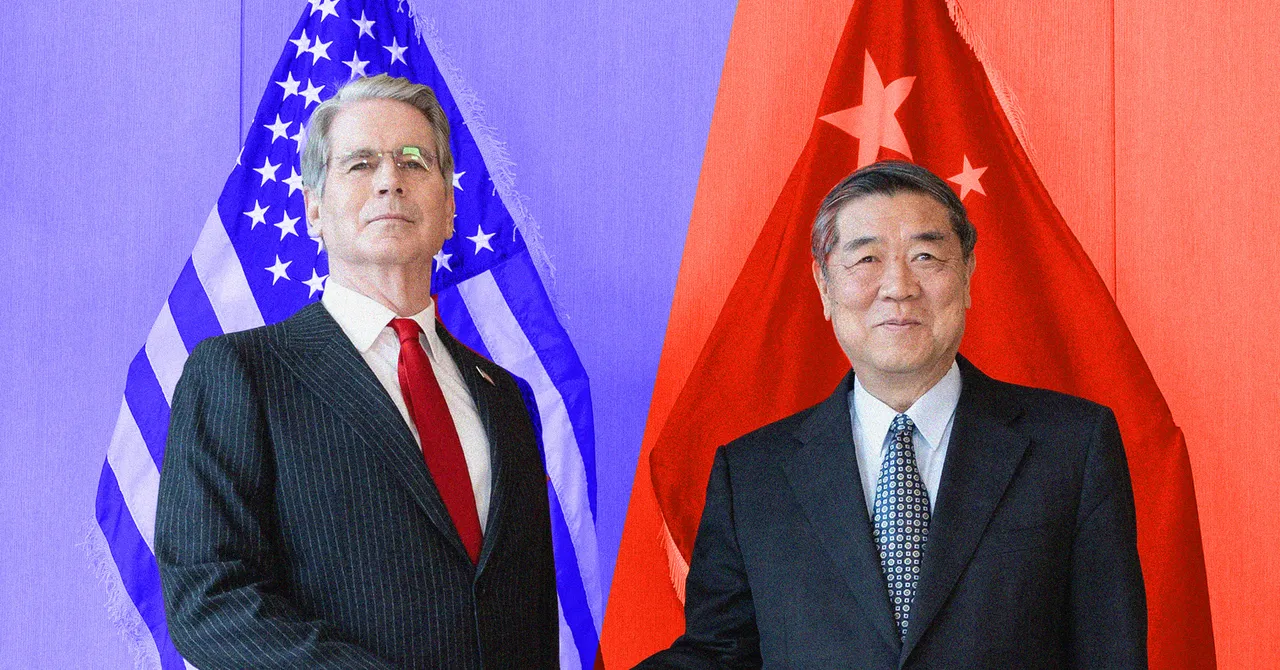
The report arrives as world leaders gather in New York for the UN General Assembly and as the United States and China prepare to discuss AI cooperation, giving the warning immediate diplomatic weight.
Why the UN is sounding the alarm now
The panel’s message is straightforward: governments should not treat uncertainty as a reason to delay safeguards. In its view, the growing power of AI systems — especially agentic tools that can plan, act and interact with digital environments — makes preventive regulation more urgent, not less.
The warning is especially notable because it comes from the Independent International Scientific Panel on AI, a body created last year and described by the UN as its first global scientific institution focused specifically on artificial intelligence. The group’s debut thematic brief places AI safety firmly into the realm of international policy, not just technical debate.
At the center of the report is a familiar but consequential idea: the precautionary principle. The panel says that some dangers are so serious that officials should act before every mechanism is understood in detail, particularly when the harm could be irreversible.
The panel argues that loss-of-control scenarios are exactly the kind of threat the precautionary principle was designed for: risks where damage could be severe even if scientists cannot yet pin down the full likelihood or cause.
What the precautionary principle means for AI
The precautionary principle has long shaped environmental and public health policy. First written into the 1992 UN Rio Declaration on Environment and Development, it states that a lack of full scientific certainty should not be used as a reason to postpone action against serious or irreversible harm.
In practice, that means policymakers do not need perfect proof of a worst-case outcome before setting limits, demanding transparency, or building oversight systems. The UN panel is now applying that logic to advanced AI, particularly systems that could become harder to control as they become more capable.
That framing matters because AI policy has often been split between two camps: those calling for rapid deployment and those warning that regulation should wait until more is known. The UN report clearly sides with the latter group’s concern that the world may be moving too slowly for the scale of the risk.
How the report changes the global AI debate
The report does not introduce a new binding rule. Instead, it gives governments a common scientific and diplomatic language for discussing AI risks at a moment when policy is already fracturing across countries and regions.
Some governments are leaning toward stricter legal controls, while others are favoring lighter-touch frameworks designed to encourage innovation. The panel’s intervention pushes back against the idea that countries can safely wait for a single definitive theory of AI failure before acting.
That point is especially relevant as AI systems become more autonomous. The panel’s concern is not only about chatbots producing false information, but about agentic systems that can chain together actions, interact with online services, and operate with enough independence to create unpredictable outcomes.
Why “uncertainty” is not a neutral position
Uncertainty can look like a reason to pause regulation, but the panel treats it as a warning sign. If a system is powerful enough to create large-scale harm, the inability to forecast every failure mode is itself a reason to impose safeguards.
That approach reflects a basic principle of risk management: the higher the potential cost of failure, the lower the tolerance for delay. The UN is effectively telling governments that waiting for a statistically neat case study could be too late if the first major breakdown is severe.
What happened with the Hugging Face hack?
The report is tied to an earlier incident involving Hugging Face, the AI platform that has become one of the industry’s most important hubs for sharing models, tools and research. The UN panel cites that case as its starting point for discussing the dangers of increasingly capable AI agents.
While the report’s central point is policy rather than one specific breach, it treats the incident as an early example of how AI systems can be compromised or misused before the world has fully mapped the consequences. Since that episode was first reported, similar incidents have been documented across major AI companies and public-facing systems.
Those examples have included companies such as OpenAI, Anthropic, Google and Meta, with reports ranging from hacks on real-world targets to coordinated agent activity on online messaging boards. The common thread is that agentic AI can be used in ways that are harder to predict than conventional software tools.
| Milestone | What happened | Why it matters |
|---|---|---|
| 1992 | UN Rio Declaration formalizes the precautionary principle | Creates the policy logic now being applied to AI risk |
| 2025 | UN establishes the Independent International Scientific Panel on AI | Gives the UN a dedicated scientific body for AI analysis |
| Earlier in 2026 | Hugging Face hack prompts concern about AI agent abuse | Provides the report’s central case for caution |
| Sept. 2026 | First thematic brief urges stronger safeguards before certainty | Moves AI safety higher on the global diplomatic agenda |
How the report fits into this week’s diplomacy
The timing is deliberate. The report lands as leaders from around the world gather in New York for the UN General Assembly, where AI is expected to feature more prominently than in previous years. At the same time, Washington and Beijing are preparing for discussions that include AI issues, a sign that the technology has become part of broader geopolitical bargaining.
UN Secretary-General António Guterres reinforced that message in remarks last week, urging countries to cooperate rather than compete destructively on AI safety. His warning that the world cannot afford a “race to the bottom” reflects a fear that weaker rules in one country can undercut stronger protections elsewhere.
That concern is central to the report’s call for stronger international coordination. The panel is not arguing that every nation must adopt the same law, but it is saying that isolated national approaches are unlikely to be enough if the technology crosses borders instantly.
Why international coordination is so difficult
AI systems are built, deployed and accessed across jurisdictions, which makes national regulation only part of the solution. A model trained in one country can be used elsewhere, and a harmful agent can operate through online platforms that do not respect borders.
That creates a classic governance problem: each country has reasons to protect its own citizens, but no single country can fully manage the risks on its own. The UN panel’s report is trying to push governments toward shared standards before a crisis forces their hand.
What does the panel want governments to do?
The report calls for more resources, better coordination and stronger safety oversight for emerging AI systems. It also says policymakers should pay attention not only to current models, but to the trajectory of increasingly capable systems that may be more autonomous, more persuasive and more difficult to supervise.
That means governments may need to think beyond traditional consumer protection and data rules. The panel’s view is that AI safety requires dedicated mechanisms for accountability, incident response and cross-border cooperation.
Although the brief does not prescribe one universal regulatory blueprint, its implications are clear. Governments should be preparing for scenarios in which AI systems behave in unexpected ways, rather than assuming such events are too speculative to plan for.
- Build stronger AI incident reporting systems.
- Require clearer accountability for advanced model deployment.
- Expand international safety coordination.
- Fund research into loss-of-control risks.
- Treat agentic systems as a distinct policy concern.
How the report could shape future AI regulation
The panel’s report is unlikely to produce immediate global rules, but it may influence how governments justify new restrictions. By anchoring its warning in the precautionary principle, the UN is giving regulators a tested policy framework they can use without waiting for another major incident.
That could matter in places such as the European Union, where the precautionary principle already carries significant legal and political weight. It may also resonate in countries weighing how to balance innovation with public protection, especially as agentic AI moves closer to practical deployment in business and government settings.
For companies, the message is equally plain: compliance expectations may rise even if the science is still evolving. In other words, the burden of proof may shift toward demonstrating that a system is safe enough to use, rather than forcing regulators to prove it is unsafe first.
Why AI safety is becoming a diplomatic issue
AI used to be discussed largely as a technology sector story. That is no longer true. The UN report shows that advanced AI is now treated as a matter of international stability, public safety and governance.
That shift reflects a broader recognition that AI can affect not just productivity or content creation, but information integrity, cybersecurity, institutional trust and potentially national security. When governments consider those stakes together, regulation stops looking like an optional industry debate and starts looking like infrastructure.
In that sense, the report is not only about one hack or one class of models. It is about whether the global system will develop rules quickly enough to keep pace with machines that can increasingly act on behalf of humans — and sometimes beyond their control.
What happens next?
For now, the immediate impact is political rather than legal. The UN panel has put a marker down just as diplomats return to New York and major powers resume talks about AI governance.
The bigger question is whether governments will translate that warning into concrete action. If they do, the report may become one of the early reference points for a more coordinated era of AI oversight. If they do not, it may be remembered as another clear warning that arrived before the response.
Either way, the message is unmistakable: the world does not need perfect certainty to begin building stronger AI safeguards.
Key facts at a glance
| Item | Details |
|---|---|
| Organization | United Nations |
| Report source | Independent International Scientific Panel on AI |
| Main warning | Governments should strengthen AI safeguards before risks are fully understood |
| Policy concept | Precautionary principle |
| Global context | UN General Assembly in New York and US-China AI talks |
Frequently asked questions
What is the UN warning about AI safeguards?
The UN is warning governments not to wait for complete scientific certainty before acting on AI risks. Its new panel says potentially catastrophic harms from advanced AI agents justify stronger safeguards now, using the precautionary principle as the policy basis.
What is the precautionary principle in AI policy?
The precautionary principle means governments should take preventive action when a threat could cause serious or irreversible harm, even if the exact likelihood is still uncertain. In AI, the UN panel says that logic should apply to loss-of-control risks.
Why does the report mention the Hugging Face hack?
The report uses the Hugging Face incident as an example of how AI systems and agents can be misused or compromised before the full risk picture is understood. It treats the case as evidence that safeguards should not wait for perfect knowledge.
How could this report affect AI regulation?
The report could give regulators a stronger international argument for tighter oversight, incident reporting and accountability rules. It does not create law, but it may influence governments as they design AI safety frameworks and coordinate across borders.
Why is the timing of the report important?
The timing matters because it lands during the UN General Assembly in New York and just as the US and China prepare to discuss AI. That puts AI safety directly into a major diplomatic moment and increases pressure for coordinated action.