In short
Rabbit has launched OS3, an AI agent app and cross-platform platform that works on phones, browsers and desktops without requiring the R1. The company is shifting away from dedicated hardware and toward software, local agent nodes and BYOK model access.
- Rabbit’s new OS3 platform works across phones, browsers and desktops, not just on the R1.
- The company says it has shipped more than 100,000 R1 units and pushed around 50 updates.
- Rabbit is not planning an R2, but it does plan a new Cyberdeck-style device.
- OS3 uses a bring-your-own-key model and can connect to OpenAI, Anthropic or open-source models.
- Rabbit says the local agent keeps file contents on the user’s machine, while prompts may pass through its servers.
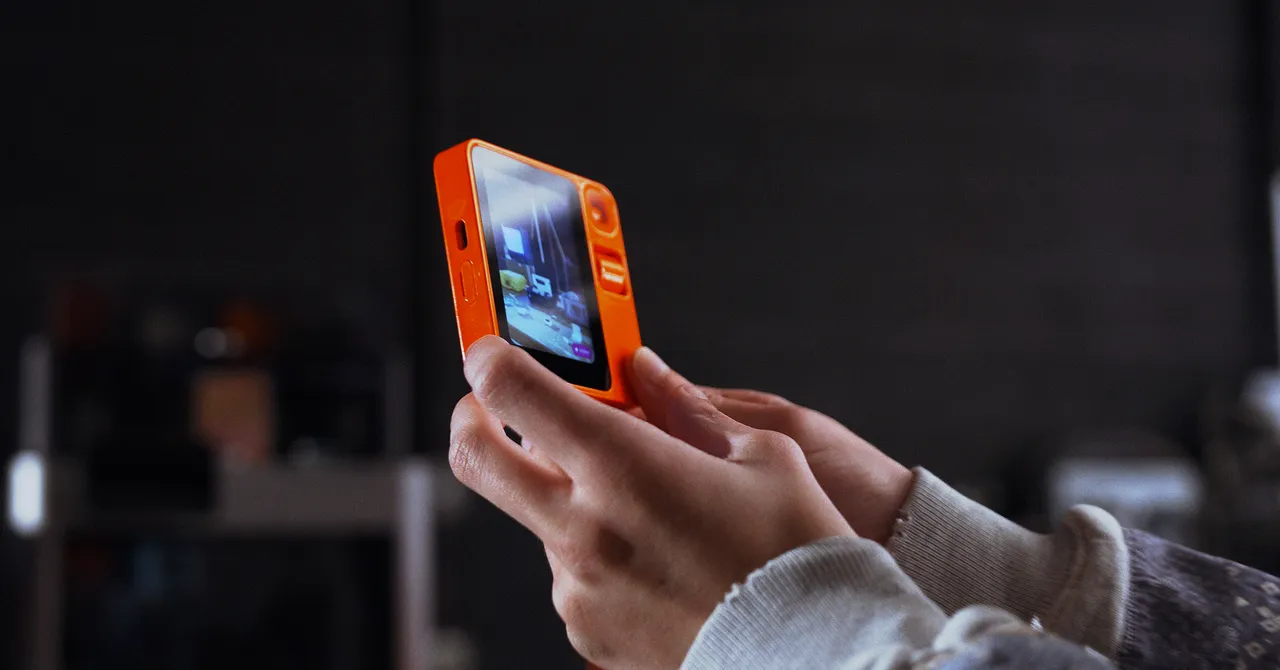
Rabbit has launched OS3, a new agentic software platform that lets people use AI assistants across phones, desktops and messaging apps without needing the company’s R1 gadget. The move marks a major pivot for the startup, which is now betting that its future lies in software and cross-device automation rather than dedicated AI hardware.
The announcement matters because Rabbit is trying to convert the backlash around its much-hyped R1 into proof that it was early to a market that is only now starting to mature. OS3 arrives as the broader AI industry embraces agents that can take actions on behalf of users, from opening files and sending messages to writing code and completing routine work.
Rabbit founder and chief executive Jesse Lyu argues that the company’s original hardware bet was not the mistake many critics assumed. Instead, he says the market simply wasn’t ready when the R1 debuted. Now, with AI models more capable and user expectations more aligned with agentic tools, Rabbit is reopening the argument on its own terms.
What Rabbit announced and why it matters
Rabbit’s new OS3 platform is designed to act as a cloud-connected operating system for AI agents that can reach across devices you already own. Users can access it through a web browser, Telegram, iMessage or the company’s R1 device, and Rabbit says the software is meant to coordinate actions across Windows, Mac and Linux machines.
The core pitch is that people no longer need a standalone AI gadget in their pocket to get utility from an assistant. Instead, Rabbit wants OS3 to live where work already happens: on a laptop, a desktop, a phone and the cloud. That framing is a sharp reversal from the company’s early message, which centered on the R1 as the primary way to interact with an AI assistant.
The launch also reflects a broader shift in Silicon Valley. AI agents are increasingly moving from demo-stage novelty to actual product strategy. Companies across the industry are racing to build systems that can do real work, even as technical limitations, platform rules and safety concerns remain unresolved.
How OS3 works
OS3 is Rabbit’s attempt to turn a conversational interface into a practical action layer across software and devices. The system lives in the cloud, but users install a local agent node on their computers so it can connect to desktop apps, files and websites more directly.
Rabbit says the software relies on its DLAM, or Direct Large Action Model, technology. In practical terms, that means the platform is meant to do more than generate text: it is supposed to execute local tasks, interact with software and even help write and debug code.
A single chat stream instead of separate threads
One of OS3’s most visible design choices is its interface. Rather than using a traditional app layout with a sidebar full of isolated chat threads, Rabbit presents what Lyu describes as a continuous “brain dump” conversation. Users can paste a task or intent into one stream, and the system is supposed to coordinate the models and tools needed to complete it.
Rabbit says one account can connect to up to five machines, with the platform deciding in the background which device should handle a given request. That architecture is intended to make the agent feel less like a chatbot and more like an invisible coordinator sitting above the user’s existing workflow.
What makes OS3 different from a chatbot
Rabbit is positioning OS3 as an agentic system rather than a simple text generator. The difference is important: a chatbot can answer questions, but an agent is supposed to complete tasks. That can include opening spreadsheets, moving data between apps, joining conversations on a user’s behalf or handling routine coding jobs.
Lyu says the software is meant to fit naturally into the way people already work. In his telling, the assistant should not require users to switch contexts or buy a new piece of hardware just to get useful automation.
| Rabbit milestone | What happened | Why it matters |
|---|---|---|
| CES 2024 launch | Rabbit unveiled the R1, a handheld AI gadget marketed as an assistant for tasks | It helped kick off early excitement around consumer AI hardware |
| Post-launch criticism | Reviews were harsh and the device’s agentic features struggled to impress | It raised doubts about whether dedicated AI hardware was necessary |
| Past 18 months | Rabbit says it shipped around 50 software updates to improve the R1 | Shows the company leaning on software rather than new hardware |
| OS3 launch | Rabbit introduced a cross-platform agentic system accessible without an R1 | Signals the company’s shift toward software and platform distribution |
| Next hardware | Rabbit says its next device will be a “Cyberdeck” for vibe coding | Indicates future hardware will be specialized, not a direct R1 sequel |
Why Rabbit is moving beyond the R1
The R1 was among the earliest products to ride the wave of interest in AI hardware designed around agentic behavior. Users could speak to it and ask it to do things like book transportation or place food orders. But the device’s launch was overshadowed by criticism that the experience was clunky and the software was nowhere near as capable as the marketing suggested.
That early reaction was damaging, but Rabbit is now arguing that the broader market has caught up to the vision. The company says what looked like overreach in 2024 looks more like anticipation in 2026, as AI assistants are now more widely discussed and more capable of taking on practical workflows.
At the same time, Rabbit has stopped manufacturing the R1, and remaining inventory is running low. The company is no longer framing the device as the center of its business. Instead, it is recasting the R1 as one input-output option for OS3, not the main event.
Why Rabbit says the old hardware bet was still the right one
According to Lyu, the company did not fail because it chose the wrong product category. He argues that Rabbit’s larger problem was having too little capital and too small a team to compete against AI studios backed by billions of dollars.
“Internally, from an engineering perspective—we didn’t make the wrong bet,” Lyu said, adding that the company’s challenge was limited resources compared with much larger AI rivals.
That argument is part defense, part reframing. Rabbit is trying to preserve the narrative that it was early, not mistaken, even if the first version of the idea did not land cleanly with reviewers or consumers.
How much traction did the R1 actually get?
Rabbit says the R1 performed better commercially than its reputation suggested. Lyu claims the company shipped more than 100,000 units worldwide and kept returns below 5 percent. He also says the hardware generated margins in the range of 45% to 50%.
Those figures matter because they suggest the company did not see the R1 purely as a product flop. Even without a subscription model for its AI features, Rabbit says the device created meaningful revenue and built a user base that continued providing feedback long after launch.
Lyu also said he saw fresh orders come through Rabbit’s website on the day of the OS3 announcement, though he noted those sales figures did not include units sold through major retailers such as Amazon, Target or Best Buy.
If accurate, that implies the R1 retained some consumer demand even as Rabbit shifted strategic direction. But the company is clearly treating that demand as a bridge to its software future rather than the basis for a new generation of hardware.
- Rabbit says more than 100,000 R1 devices were delivered globally.
- The company says return rates stayed under 5%.
- Lyu says hardware margins reached roughly 45% to 50%.
- No monthly subscription is required to use Rabbit’s AI features.
What happened to Rabbit’s finances and team?
Rabbit’s path since the R1 launch has not been smooth. The company stayed lean instead of expanding aggressively, a choice Lyu says was deliberate. But the business also faced pressure from a failed or delayed plan to launch in India, where regulatory issues blocked the rollout and created financial strain.
That strain reportedly became severe enough that some employees went on strike and said they had not been paid. Lyu acknowledged the turmoil but said the company has since raised more money and is now on firmer footing.
Lyu said Rabbit had secured additional funding and insisted there were no ongoing concerns about the company’s stability.
Rabbit says it has raised about $60 million in total and currently employs 15 people. That is a small headcount for a company trying to build a cross-platform AI operating system, but it also fits Rabbit’s long-standing identity as an extremely compact startup trying to punch above its weight.
Why the team stayed small
Rabbit’s lean staffing helped it conserve resources, but it also limited how quickly the company could iterate on products, respond to criticism and expand into new markets. Lyu’s position is that Rabbit’s discipline kept it alive long enough to get to a better product moment.
In other words, the company seems to believe it survived because it resisted the temptation to chase every opportunity at once. Rather than rush into another hardware launch, Rabbit doubled down on software refinement and product stabilization.
What changed in the R1 after launch?
Rabbit says the R1 is far more capable now than it was at release. Lyu claims the company has pushed around 50 updates over the past year and a half, refining the device and expanding what it can do.
One of the more important changes, according to Rabbit, has been a move toward openness. The company says users can bring in third-party agents such as OpenClaw or Hermes AI instead of being locked into Rabbit’s own models. That opens the device to a wider ecosystem and gives owners more control over how they use it.
Lyu said the device is now “completely different from day one” and described it as more open, with users able to decide what they want to do with it.
That shift is notable because it shows Rabbit moving away from the tightly controlled product story that accompanied the R1’s early marketing. The company now appears more willing to let the hardware function as a flexible endpoint for other tools and models.
Who is OS3 for?
OS3 is aimed at people who want AI help with everyday work, especially repetitive or multi-step tasks. Rabbit is pitching the system to users who already spend time in email, messaging apps, spreadsheets, code editors and browser tabs, and who want an assistant that can move between those environments.
The company’s examples focus on practical work rather than novelty. Lyu described using OS3 to transfer data from weekly sales reports into a master spreadsheet without manually opening the file on his computer. He also said he used the system to keep responding on Slack while he was occupied with a video shoot.
Those use cases may sound modest, but they are exactly the kind of tasks that agent startups are now racing to own. The pitch is not that AI will replace knowledge work overnight, but that it can take care of the repetitive parts that consume time and attention.
How Rabbit says the assistant handles real work
Rabbit says OS3 can be started from a phone or messaging app, while the actual work happens on the connected computer. That separation lets someone trigger a task from anywhere and have the local agent carry it out where the necessary files and applications already exist.
In Lyu’s Slack example, the agent reportedly carried on a 50-minute exchange with an engineer while identifying itself as his assistant. Rabbit says that kind of behavior is meant to preserve context and continuity while the user is unavailable.
How does Rabbit handle privacy and data?
Rabbit says the local agent does not store, copy or sell user data. The company also says that conversations and memory logs are kept on Rabbit’s servers, while the contents of files remain on the user’s machine.
That said, the setup is not entirely local. When a task requires model inference, the relevant prompts are sent through Rabbit’s servers to the user’s chosen model provider, which then processes the data under its own policies and terms. In practice, that means users still need to trust several layers of infrastructure.
This architecture will likely interest enterprise-minded users and privacy-conscious consumers alike. It is more transparent than some AI systems, but it still depends on a chain of cloud and model-provider relationships to function.
What is Rabbit’s BYOK strategy?
Rabbit is using a “bring your own key” model for OS3, which means users do not pay a monthly fee to Rabbit for access to the platform itself. Instead, they supply their own API keys from AI providers such as OpenAI or Anthropic, or connect open-source models they run locally.
This is a major business distinction. Many AI products now bundle the software and the model access into a subscription. Rabbit is trying a different approach, one that emphasizes platform flexibility while shifting some of the usage cost to the customer.
That strategy may appeal to advanced users who already subscribe to AI services or manage their own model infrastructure. It may also help Rabbit avoid some of the economics that have made AI products expensive to operate at scale.
| Model | Who pays | Main benefit | Main trade-off |
|---|---|---|---|
| Rabbit BYOK | User provides API keys | No Rabbit subscription required | User manages model costs and access |
| Bundled AI subscription | User pays monthly fee | Simpler setup and all-in-one access | Higher recurring cost, less flexibility |
| Local open-source model | User runs the model | More control and potentially better privacy | Requires stronger hardware and technical setup |
Why the broader AI agent market matters now
Rabbit’s return comes at a moment when the entire category of AI agents is being tested in public. Product teams are pushing systems that can browse, buy, schedule, write and control software, but each new release tends to raise the same questions about reliability, permissions and platform boundaries.
That is why Rabbit’s old controversies suddenly feel newly relevant. The company’s R1 relied on a virtual-machine approach to complete some actions on behalf of users, and similar techniques are now drawing scrutiny from other players in the market. Lyu notes, with some satisfaction, that the industry is now running into the same issues Rabbit faced much earlier.
Lyu pointed to recent debates around rival agent products as evidence that Rabbit encountered many of the same challenges before the market was ready to understand them.
Whether that makes Rabbit prescient or simply early is still open to debate. But OS3 suggests the company believes the consumer market has finally reached the point where an always-on, cross-device agent can be more useful than gimmicky.
What comes next for Rabbit?
Rabbit says it has no plans for an R2. That alone is a meaningful signal: the company is not treating OS3 as a temporary detour while it prepares a sequel to the original device.
Instead, Rabbit’s next hardware product is expected within months, and Lyu describes it as a Cyberdeck—a dedicated machine for “vibe coding” that will run OS3. That suggests the company still wants a physical product, but one aimed at a narrower, more specialized use case than the R1.
The planned device sounds less like a consumer novelty and more like a workstation for people who want AI to actively help them build software. If Rabbit succeeds, that hardware could give the company a clearer identity than the original palm-sized assistant ever did.
Why a Cyberdeck instead of a sequel?
A Cyberdeck would let Rabbit focus on a use case that is more aligned with the current AI boom: coding, prototyping and technical productivity. That is a better fit for a company trying to prove that its software can be genuinely useful without depending on mass-market gadget demand.
It is also an acknowledgment that the future of Rabbit may be less about consumer curiosity and more about a specific class of power users who want an AI-native workspace.
The bigger lesson from Rabbit’s pivot
Rabbit’s OS3 launch is more than a product update. It is a strategic reset, a public effort to rewrite the meaning of the R1 and reposition the company for an era in which AI agents are increasingly credible.
In 2024, the idea of a dedicated AI companion in your pocket looked ambitious and, to many reviewers, undercooked. In 2026, Rabbit is arguing that the device was not the mistake; the timing was. The company now wants to be judged on the usefulness of its software, not just the quirks of its first hardware product.
That may be a harder sell than Rabbit hopes, especially after the reputational damage of the R1 launch. But OS3 gives the startup a clearer story: AI agents do not need to live only in a gadget. They can operate across the tools people already use every day, and Rabbit wants to be the company that makes that feel normal.
For now, anyone can try OS3. That accessibility is important because it offers Rabbit a chance to prove its case in the real world, not just in a keynote or demo. The company’s bet is that if the assistant is useful enough, the hardware becomes optional.
That is the most revealing change of all. Rabbit was once selling a pocket-sized AI future. Now it is selling the idea that the future was already sitting on your desk, in your browser and in your phone all along.
Frequently asked questions
What is Rabbit OS3?
Rabbit OS3 is a cross-platform AI agent system that can run through a browser, Telegram, iMessage and the company’s R1 device. It is designed to handle tasks across connected computers, including software actions, file access and some coding work.
Do you need a Rabbit R1 to use OS3?
No, you do not need an R1 to use OS3. Rabbit says the software can be accessed from a desktop browser or messaging apps, and the R1 is now just one possible input-output device for the platform.
Is Rabbit still making the R1?
No, Rabbit says it is no longer manufacturing the R1. Existing stock is shrinking, and the company has shifted its focus to OS3 and to a future Cyberdeck-style hardware product.
How does Rabbit’s bring-your-own-key model work?
Rabbit’s bring-your-own-key model lets users supply their own API keys from providers like OpenAI or Anthropic, or connect open-source models. That means Rabbit does not charge a monthly subscription fee for the platform itself.
What is Rabbit’s next hardware product?
Rabbit says its next hardware release will not be an R2. Instead, the company is planning a Cyberdeck-style machine for “vibe coding” that will run OS3 and is expected to arrive within months.