In short
Two cryptanalysts used OpenAI’s Astra and Anthropic’s Claude Opus 5 to decode long-unsolved Enigma messages. The results suggest AI agents are becoming powerful tools for historical cryptanalysis and archival research.
- OpenAI’s Astra helped decode an Enigma message that had remained unsolved since 2005.
- Anthropic’s Claude Opus 5 also helped crack a separate long-unsolved message.
- Expert validation came from Frode Weirerud, who runs the Crypto Cellar archive site.
- The cases show AI agents can assist with archival research, simulation and pattern-based reasoning.
- Only seven Enigma messages remain unbroken, plus one with known plaintext but unbroken code.
Two long-unsolved Enigma messages have been decoded with the help of large language models from OpenAI and Anthropic, giving AI systems an unexpected role in one of the most famous codebreaking challenges of the Second World War. The breakthroughs matter because they show modern AI can assist with real historical cryptanalysis, not just conversational tasks or software coding.
The discoveries were reported by two independent cryptanalysts, one using OpenAI’s Astra model and the other using Anthropic’s Claude Opus 5, in work that combined archival research, prompting, simulation and historical context. Together, the cases suggest AI agents are becoming capable research tools for specialists working through stubborn, decades-old puzzles.
What exactly was solved?
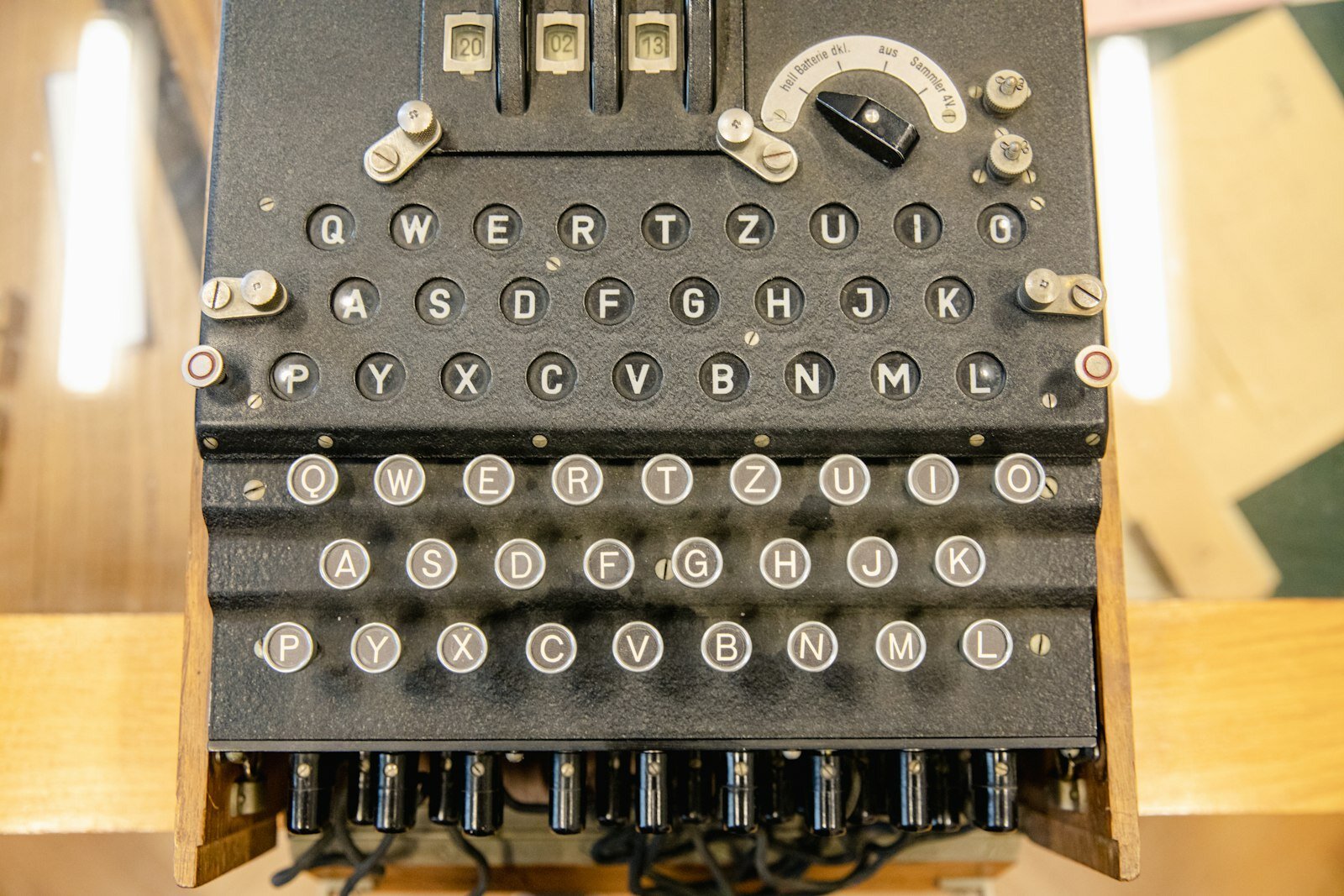
The newly cracked messages were encoded with Enigma, the electromechanical cipher machine used by Nazi Germany during World War II. Although Alan Turing and his colleagues helped break Enigma during the war, a small number of wartime messages have remained unsolved because of transcription problems, transmission errors or incomplete archival records.
In this latest round of progress, researchers say they recovered the plaintext of two separate messages that had resisted analysis for years. One of them had baffled investigators since 2005.
Why these messages remained unbroken for so long
The most stubborn Enigma records are often not the result of a weakness in the mathematics of the cipher itself, but of imperfect historical data. Some messages were miscopied, damaged, or preserved with gaps that make them hard to match against known patterns, even for skilled researchers.
That is part of what makes the new results noteworthy: the challenge was not simply brute-force decryption. It required archival detective work, contextual reasoning and careful reconstruction of likely message content.
How Astra helped crack one of the messages
According to developer Carter Leffen, the process began with a direct instruction to OpenAI’s newest model, Astra, to search an Enigma database for an unbroken message and decode it. Rather than stopping at a superficial answer, the model reportedly dug through archival material, identified context clues, built a simulator of the Enigma machine and narrowed in on the correct plaintext.
Leffen also used the model to create an interactive website that explains the problem and the solution, turning the cryptanalysis into a public-facing demonstration of how AI can support historical research.
Leffen’s account suggests the model did more than answer a question: it pursued the problem like a researcher, tracing references, testing hypotheses and using the archive itself as part of the solution.
That result is especially striking because the message in question had remained unresolved for roughly two decades. In practical terms, the AI did what human specialists sometimes spend weeks or months doing: searching records, comparing versions and building a plausible reconstruction from fragmented evidence.
What happened in the background?
Leffen’s account indicates Astra did not simply translate text on demand. Instead, it appears to have followed a workflow more like a human cryptanalyst’s:
- searching historical message databases
- comparing likely source material
- using contextual clues from the archive
- creating an Enigma simulation to test hypotheses
- recovering the message plaintext
The result highlights a broader shift in AI use: models are increasingly being used as research agents that can assemble information from many sources and work through multi-step problems with less hand-holding than earlier systems required.
Who validated the breakthrough?
The Astra solution was later checked by Frode Weirerud, a retired electrical engineer and longtime cryptology enthusiast who maintains Crypto Cellar, a resource site with archives and message databases. Weirerud said the result left him impressed and described the model’s work as remarkably professional.
He also said the system completed in two days what might take a human researcher weeks or months, based on his own experience with the relevant Bundesarchiv files.
Weirerud compared the model’s behavior to that of a highly disciplined archive researcher, saying the speed and depth of the work were “awe”-inspiring from his perspective.
His validation matters because cryptanalytic claims can be difficult to assess without an expert who understands the underlying records, known gaps and historical context. In this case, the confirmation came from someone who has spent years organizing and studying the same material.
What did Claude Opus 5 decode?
A second breakthrough came when cryptanalyst Jack Willis contacted Weirerud on September 21 to say he had used Anthropic’s Claude Opus 5 to solve another unsolved Enigma message. Willis provided more guidance than Leffen did, and the model ultimately used the known signature of a particular officer’s name as a critical clue.
That detail matters because it shows the AI did not need to invent a solution from scratch. Instead, it used a narrowly defined historical pattern to connect the cipher text to the likely plaintext. For cryptography, that kind of targeted reasoning can be just as valuable as raw computational power.
How much human help did the model need?
Willis’s approach appears to have involved more supervision than the Astra case. But the outcome still demonstrates something important: when given enough context and a useful clue, a frontier model can help unravel a puzzle that has resisted conventional efforts.
In other words, the models are not replacing cryptanalysts. They are extending what a cryptanalyst can do, especially when archival fragments and pattern recognition are central to the task.
How many Enigma messages are left?
Weirerud says there are now just seven Enigma messages that remain unbroken, plus one additional message whose plaintext is known but whose cipher has not yet been cracked.
That shrinking list underscores how rare the remaining open cases are. Most Enigma traffic has long since been understood, but the unresolved messages continue to attract historians, amateur codebreakers and now AI researchers looking for new ways to approach old evidence.
| Item | Details |
|---|---|
| Cipher system | Enigma, the WWII-era German encryption machine |
| First breakthrough | OpenAI’s Astra model helped decode a message unresolved since 2005 |
| Second breakthrough | Anthropic’s Claude Opus 5 helped decode a different unsolved message |
| Validation | Frode Weirerud confirmed the Astra result |
| Remaining unsolved messages | Seven unbroken messages, plus one with known plaintext but unbroken code |
Why this matters beyond wartime history
At first glance, this may look like a niche triumph for hobbyist cryptology. But the broader significance is much larger. These cases show that AI agents can help solve problems that require layered reasoning across incomplete archives, historical documents and technical simulations.
That has implications far beyond Enigma. Similar workflows could be useful in historical research, intelligence analysis, forensic document review, scientific literature exploration and other domains where the answer is buried inside messy records rather than clean datasets.
What this says about AI agents
The Enigma cases also illustrate how AI agents differ from older generations of chatbots. Instead of responding only to a prompt, they can navigate archives, perform intermediate reasoning and return to the task with greater persistence than a one-shot model.
In both examples, the models acted less like calculators and more like research assistants. They searched, tested, inferred and refined. That is exactly the kind of behavior AI vendors increasingly want to showcase as they compete to prove their systems can do useful work in the real world.
The Turing connection is more than symbolic
Alan Turing is often remembered for the philosophical question that bears his name, but during the war his more immediate legacy was practical: helping design the machinery and methods that made Enigma messages readable to the Allies. The Bombe, the early machine developed by Turing and his team, was central to that effort.
The new AI-assisted decoding does not rival that historical achievement. It does, however, echo the same spirit of combining intelligence, computation and persistence to solve a stubborn code. In that sense, today’s models are extending a very old tradition.
They are also doing it in a new way. Turing’s team built specialized hardware to attack a wartime cipher. Modern researchers are turning to general-purpose AI systems that can read archives, reason about context and build tools on the fly.
Why the archiving details matter
The Astra case included a wrinkle that may interest researchers and privacy-minded observers alike: the model’s logs referenced archived messages in a “private collection” not hosted by Weirerud. He has not confirmed exactly how the model reached those references, though he speculated that the data may have come from another researcher online or from public German government archives.
That uncertainty highlights an important issue in AI-assisted research. When a model appears to retrieve information from places the user did not explicitly supply, it can be difficult to determine whether the system drew on public material, indirectly shared data or something else entirely.
For historical work, that can be both powerful and messy. A model that finds the right clue is useful. But researchers still need transparency about where the clue came from and how it was used.
How AI changed the pace of the work
One of the clearest takeaways from the two cases is speed. Tasks that might have taken weeks of manual searching were reportedly completed in a matter of days, or less, once the models were brought in.
That does not mean the models solved the problem alone. They relied on expert prompting, curated databases and human verification. But they clearly reduced the friction involved in moving from an unsolved cipher to a plausible decryption.
- The cryptanalyst identified an unsolved Enigma record.
- The model searched archives and inferred possible context.
- A simulator or clue-based approach narrowed the options.
- The plaintext was recovered and checked by a human expert.
What comes next?
With only a handful of Enigma messages still unresolved, the remaining cases are likely to draw even more attention from researchers interested in combining AI with historical cryptanalysis. Each success makes the next one more tempting, not only because the list is shrinking, but because the tools appear to be improving quickly.
There is also a wider race underway in the AI industry. OpenAI and Anthropic are both trying to show that their models can do more than generate polished prose. Demonstrations like these offer a compelling proof point: the systems can assist with serious analytical work, provided humans know how to direct them.
For historians of codebreaking, the message is equally clear. A puzzle that once symbolized the limits of pre-digital intelligence is now being revisited with the most advanced tools of the present day. The result is not just a technical milestone, but a reminder that old problems can sometimes yield to new kinds of thinking.
And in the case of these two Enigma messages, that thinking came from machines built by companies founded decades after Turing’s era — machines that, on this occasion, helped finish work the war itself could not fully settle.
Frequently asked questions
What did OpenAI and Anthropic models decode?
They decoded two long-unsolved Enigma messages from World War II-era German communications. The breakthroughs were achieved with help from OpenAI’s Astra and Anthropic’s Claude Opus 5, using archival research, contextual clues and human verification.
How did the AI models solve the Enigma messages?
They solved them by searching archives, identifying context clues, and in one case building an Enigma simulator to test possibilities. The models were guided by human cryptanalysts, but they still performed the multi-step reasoning that helped recover the plaintext.
Who confirmed the results?
Frode Weirerud, a retired electrical engineer who runs the Crypto Cellar cryptology site, validated the Astra-based solution. His confirmation is important because he has deep familiarity with the Enigma archives and the remaining unsolved records.
How many Enigma messages are still unsolved?
There are now seven Enigma messages that remain unbroken, according to Weirerud, plus one additional message whose plaintext is known but whose code has not yet been cracked. That makes the remaining cases exceptionally rare.
Why does this matter for AI?
It matters because it shows AI agents can help with complex research tasks that require reasoning across incomplete records, not just casual conversation. The cases suggest frontier models may be useful in history, intelligence analysis, science and other archival work.