In short
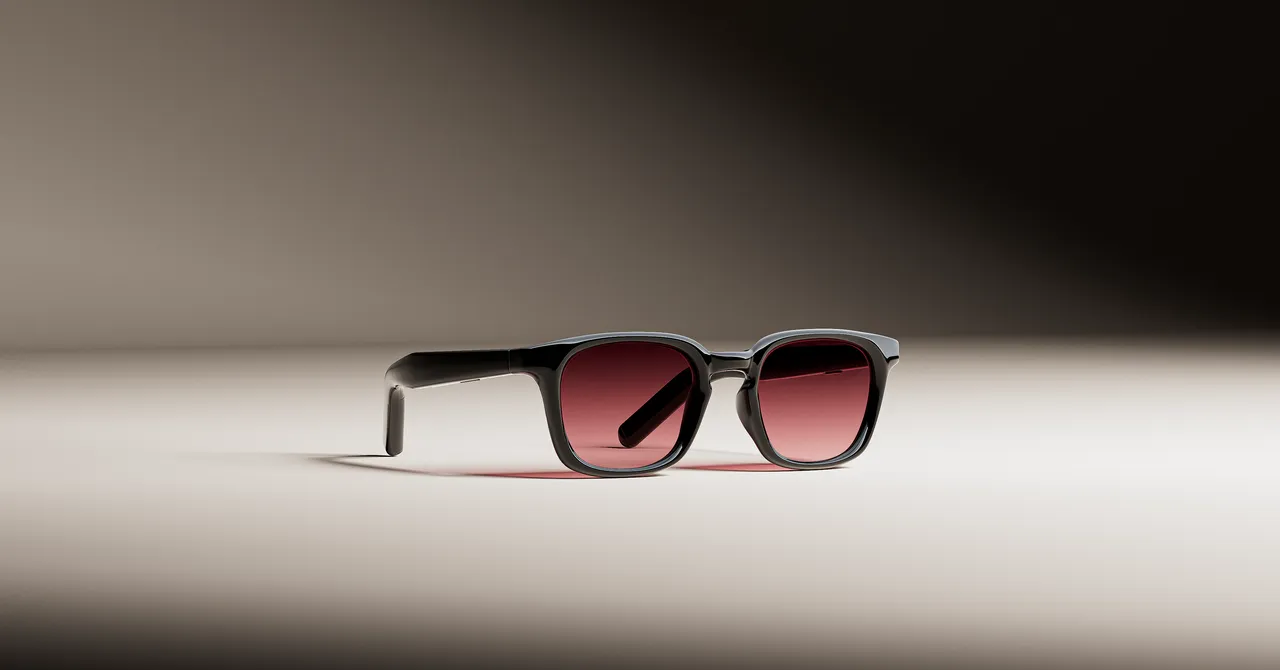
Viture has announced Vonder, a camera-free pair of AI smart glasses that aims to organize daily conversations into a memory graph and surface useful patterns over time. The $299 glasses begin preorder on September 28 and ship in November.
- Viture’s Vonder is a new AI smart-glasses model built around memory, voice, and privacy.
- The glasses have no camera and use audio plus bone-conduction sensors to collect context.
- Vonder can route requests to ChatGPT, Claude, Gemini, or DeepSeek depending on the task.
- The $299 glasses open for preorder on September 28 and are expected to ship in November.
- Viture is positioning Vonder as an everyday wearable rather than a surveillance device.
Viture has unveiled Vonder, a new pair of AI smart glasses that are designed to do more than display information: they are meant to remember your day, surface patterns in your behavior, and help organize your thoughts into a personal memory graph. The $299 glasses will open for preorder on September 28 and are scheduled to ship in November.
The announcement marks a notable shift for the San Francisco- and Beijing-based company, which built its reputation on plug-in display glasses for gaming and entertainment. With Vonder, Viture is moving into a more ambitious category of wearable AI—one that blends voice, memory, and model-switching assistance while trying to avoid the privacy backlash that has followed camera-equipped smart glasses from bigger rivals.
At the center of that pitch is a simple but provocative claim: the glasses can notice things about you that you may not notice yourself. According to Viture cofounder and chief executive David Jiang, the device has already changed how he behaves as a parent, after it flagged what he described as an unhelpful pattern of shouting at his son during tennis matches. The assistant apparently prompted him to stop criticizing and simply be present, turning the wearable into what Jiang sees as a kind of self-improvement tool rather than just a gadget.
That framing matters because Vonder arrives at a moment when the smart-glasses market is splitting into two camps. One side is dominated by products that emphasize cameras, content capture, and always-on AI. The other is trying to convince consumers that wearable intelligence can be useful without making the wearer look intrusive. Viture is clearly aiming at the latter group.
What exactly is Vonder, and why does it matter?
Vonder is Viture’s first smart-glasses product without a virtual display, and the company is presenting it as a more everyday, fashion-friendly device than its earlier hardware. Unlike the Viture One and Viture Beast, which act as portable screens that connect to another device through USB-C, Vonder is built around audio interaction, AI assistance, and memory organization.
The move matters because it signals a broader evolution in wearable computing. Instead of asking people to wear bulky face computers for entertainment, Viture is trying to make glasses that look and feel like normal eyewear while quietly doing much more in the background. If it works, the product could appeal to consumers who want the benefits of AI without a camera pointed at the world around them.
That positioning also puts Viture closer to emerging rivals such as Xreal and Even Realities, which have similarly tried to frame smart glasses as socially acceptable products rather than always-watching devices. In practice, Viture is betting that design, privacy cues, and utility can outweigh the suspicion many users feel toward wearable surveillance tech.
How Vonder works
Vonder combines microphones, speakers, bone-conduction sensors, and a multi-model AI assistant to capture, process, and retrieve information from the wearer’s day. The glasses can handle calls, play audio, provide navigation, and interact with an assistant that can route requests to OpenAI’s ChatGPT, Anthropic’s Claude, Google’s Gemini, or DeepSeek depending on what the system thinks will be fastest or most cost-effective.
Instead of acting as a simple voice assistant, Vonder is designed to generate a “memory graph” from the things users say and experience throughout the day. The app then visualizes that information as a web of connected topics, places, conversations, and recurring themes.
In Viture’s view, this is not a transcript or a note-taking service in the ordinary sense. The goal is to mimic how human memory clusters information: a person may not recall every sentence from a conversation, but they often remember the setting, the people, the emotional tone, and the central ideas. Vonder tries to do something similar with artificial intelligence.
How does the device capture information?
The answer is mostly through sound, not sight. Vonder does not have cameras. Instead, it relies on microphones for recording in specific modes and bone-conduction sensors that can passively pick up the wearer’s voice-related vibrations for much of the day. Viture says the glasses can run for about 16 hours on a charge.
A blue indicator light turns on when the glasses are actively recording audio, though the signal is placed on the arms of the frames rather than in a more prominent spot. The company appears to be making a deliberate effort to show that the device is recording, while also trying to keep that signal subtle enough that the glasses still resemble regular eyewear.
There is also a meeting mode that can record ambient sound through the built-in microphones. Outside that mode, the system is designed to be more selective about what it captures.
Why Viture is emphasizing privacy
Viture is making a point of distancing itself from the camera-heavy reputation of Meta’s Ray-Ban smart glasses. The company’s message is that Vonder should feel like an ordinary pair of glasses first and a computing device second. That argument is central to the product’s commercial prospects, because consumer acceptance will likely depend on whether other people feel comfortable around the wearer.
The privacy issue is not abstract. Smart glasses have repeatedly drawn criticism because they can be difficult to notice and easy to misuse. A wearable camera can make bystanders feel watched, and that discomfort has limited enthusiasm for the category even when the hardware itself is well reviewed.
Viture is attempting to solve that problem by removing the camera entirely, adding a more visible recording indicator, and shifting the product’s value proposition toward memory and assistance rather than capture. In effect, the company is saying that the best way to sell smart glasses may be to make them boring-looking and comparatively unthreatening.
“We want glasses people will actually wear,” Jiang said, describing the company’s goal as making the product feel like normal eyewear rather than a surveillance device.
How does the memory graph work?
The memory graph is the feature that most clearly separates Vonder from simpler AI glasses. As the system gathers information from conversations and daily routines, it organizes the data into linked topics that can later be searched and surfaced by the user.
Viture says the glasses can remember places you mention, habits you discuss, projects you are considering, and recurring concerns that may indicate stress or another pattern in your life. In the app, those connections are displayed visually, giving the wearer a map of people, ideas, locations, and plans that have come up over time.
During a demo, Jiang showed that the pair he was wearing had accumulated about three months of information. He said he could ask the glasses for recommendations based on his coffee preferences or use them to help unpack why he had been feeling stressed. The system also brought up topics he had been thinking about, including hiring decisions and the timing of the company’s product announcement.
Perhaps the most striking detail was that the glasses had also prepared a brief dossier about a visiting reporter before the meeting began, including background on what he writes about and possible discussion topics. That suggests Vonder is not only storing memories but also trying to anticipate what may matter next.
What makes the system different from a normal transcript?
According to Jiang, the difference is structure. A transcript records what was said in sequence, while Vonder attempts to infer how those details would be stored in a person’s mind. The company is aiming for associative memory, not verbatim recall.
That distinction could prove important in everyday use. People rarely search for “the third sentence from Tuesday’s lunch.” They ask more natural questions: What did I promise? Which coffee shop did I like? Why did that meeting feel tense? The promise of Vonder is that it can answer those kinds of fuzzy prompts by connecting fragments of life into something more searchable.
Who is Vonder for?
Vonder appears to be aimed at professionals, productivity enthusiasts, and early adopters who want more than notifications on their face. The feature set suggests a user who talks a lot, moves through meetings, manages relationships, and wants a private assistant that can help reconstruct context later.
It may also appeal to people who like the idea of a personal second brain, but prefer not to carry a separate recorder or depend entirely on a phone. By embedding microphones, speakers, and AI into glasses, Viture is trying to make memory capture feel continuous and low-friction.
That said, the product will likely face a familiar adoption problem: the more intimate the tool becomes, the more trust it requires. Users will need to be comfortable offloading personal conversations, stressors, and behavioral patterns to software. For some people that will feel useful. For others it will feel invasive.
What questions does Vonder raise about memory and identity?
Vonder raises a basic question about what happens when AI begins to shape the story you tell yourself about your own life. The glasses are not just helping users retrieve facts. They are deciding which moments matter enough to preserve, how those moments are grouped, and which patterns deserve attention.
That gives the system an unusual level of influence. A memory device can become a behavioral coach, a productivity aide, or a mirror. It can also become an editor, deciding which parts of a conversation are prominent and which are faded into the background.
Jiang seems aware of the tension. He argues that the device can improve how people think because it notices things humans miss. His example of parenting on the tennis court is meant to show that the glasses can catch patterns in real time and prompt better behavior before a bad habit becomes a lasting one.
Jiang said the system helped him recognize behavior he had not seen clearly on his own, and he described the glasses as a tool for making “better” versions of everyday life.
Still, the concern is that any memory system is partial. It may preserve your perspective more easily than anyone else’s, and it may reinforce your own assumptions if it cannot fully capture the other side of a disagreement. Viture’s answer is that the conversational back-and-forth helps fill in some of those gaps, but the limitation remains.
How Vonder fits into the smart-glasses market
Vonder enters a market that is growing more crowded but not yet settled on a winning formula. Some companies are leaning into mixed reality and screen projection. Others are moving toward lifestyle-first audio assistants. A few are trying to combine both. The challenge is to make smart glasses that feel desirable, useful, and socially acceptable all at once.
Viture’s earlier products were built for entertainment. They projected a display from a connected device, which made them attractive for gaming and portable video but less suitable for all-day wear. Vonder is a deliberate attempt to leave that niche and compete in a broader consumer category.
The company is also making a strategic bet on price. At $299, the glasses sit in a range that is still premium, but not completely out of reach for consumers curious about AI wearables. Prescription support, multiple frame shapes, different colors, and lens options should further broaden the potential audience.
How does Vonder compare with other AI glasses?
Vonder is less visually aggressive than camera-first wearables and more memory-focused than simple audio glasses. That middle ground may be Viture’s strongest opening.
| Product | Main focus | Camera | Price | Notable distinction |
|---|---|---|---|---|
| Viture Vonder | AI memory, voice assistance, everyday wear | No | $299 | Memory graph and multi-model assistant |
| Viture One / Beast | Portable display and entertainment | No | Varies | USB-C virtual screen projection |
| Ray-Ban Meta | Capture, social sharing, AI features | Yes | Higher tier | Camera-centric smart glasses |
| Xreal / Even Realities | Smart eyewear and display experiences | Varies by model | Varies | Privacy-forward styling and utility |
The comparison shows why Viture is emphasizing both privacy and utility. It does not want to be judged against headsets or influencer gadgets. It wants to be judged against everyday glasses that happen to be smarter than they look.
What the hardware suggests about Viture’s strategy
The hardware choices reveal a company trying to lower the social barrier to adoption. No camera means fewer privacy concerns. A more normal frame design means a better chance that people will wear the glasses for hours instead of minutes. Bone-conduction capture reduces the need for obvious microphone use. And support for prescriptions makes the product less like a novelty and more like something people might actually integrate into daily life.
The 16-hour battery life is also important. A wearable memory system is only useful if it can keep up with the rhythms of the day. If users need to recharge too often, the device becomes a convenience rather than a companion.
Frame variety and lens options matter for the same reason. Wearables compete not only on technical capability but on how invisible they can be in a social setting. The more a device resembles ordinary eyewear, the less attention it draws.
Why this launch matters beyond one product
Vonder is significant because it reflects a larger shift in how the tech industry imagines personal AI. The first wave of consumer AI products focused largely on chat interfaces and productivity tools. The next wave may be embodied—always near the user, constantly listening, and able to attach intelligence to the physical world.
That creates enormous opportunity and equally large risk. A device that remembers your habits, conversations, and worries can be deeply useful. It can also become one of the most intimate data repositories you own. The line between helpful and unsettling may depend on trust, design, and the social norms that develop around these devices.
For now, Viture is asking consumers to believe that the right wearable AI does not need to watch everything. It only needs to listen enough to help you understand your own life a little better.
Key launch details at a glance
- Product: Viture Vonder AI smart glasses
- Price: $299
- Preorders: September 28
- Shipping: November
- Design: No camera, prescription support, multiple frames and lens types
- AI partners: ChatGPT, Claude, Gemini, and DeepSeek
- Battery life: About 16 hours
Whether Vonder becomes a breakout product or a niche experiment will depend on whether consumers embrace the idea of a wearable memory assistant. But the company’s pitch is clear: smart glasses do not have to look like surveillance gear to feel futuristic.
And if Viture is right, the next useful wearable may not help you see more. It may help you remember yourself more clearly.
Frequently asked questions
What are Viture Vonder glasses?
Viture Vonder glasses are AI-powered smart glasses designed to capture voice-based context, organize memories into a digital graph, and provide assistance through large language models. Unlike Viture’s earlier products, they do not project a virtual display and they do not include a camera.
How much do Vonder glasses cost?
Vonder glasses cost $299. Viture says the frames can be fitted with prescriptions and will be offered in different shapes, colors, and lens types, including clear, transition, and sunglass versions.
How do Vonder glasses protect privacy?
Vonder glasses are built without cameras, and Viture says recording is limited by design. A blue indicator light turns on when audio is being recorded, and the company says the glasses only collect data more actively in specific modes such as meetings.
When will Vonder ship?
Preorders for Vonder open on September 28, and shipments are scheduled to begin in November. That timeline puts the product in the market soon after the announcement, assuming production stays on schedule.
Why is Viture making smart glasses without a display?
Viture is making display-free smart glasses to focus on everyday wear, privacy, and AI memory functions rather than entertainment projection. The company appears to believe that more natural-looking glasses will be easier for consumers to adopt and wear in public.
Frequently asked questions
What are Viture Vonder glasses?
Viture Vonder glasses are AI smart glasses designed to listen to daily conversations, organize memories into a graph, and answer questions through multiple large language models. They do not include a camera, which Viture says makes them more privacy-friendly than many rivals.
How much do Vonder glasses cost?
Vonder glasses cost $299. Viture says buyers will be able to choose from different frame styles and lens types, and the glasses can be fitted with prescription lenses.
When will Vonder be available?
Preorders for Vonder open on September 28, and the company says shipping should begin in November. That places the product launch in the final months of 2026.
How do the glasses handle privacy?
The glasses are designed without a camera, and a small blue light indicates when audio recording is active. Viture also says most data collection is tied to speaking, with a separate meeting mode for ambient recording.
Which AI models can Vonder use?
Vonder can use ChatGPT, Claude, Gemini, or DeepSeek. The system is designed to choose the model that best fits the task’s complexity, speed, and cost.