Updated August 11, 2026 10:24 pm
In short
Mark Zuckerberg’s AI manifesto is drawing fresh criticism for promoting convenience and productivity at the expense of attention, effort and the human experience behind relationships, hobbies and creative work.
- Zuckerberg’s manifesto frames AI as a personal assistant, tutor and creative engine.
- Critics argue the pitch values productivity over attention, experience and meaning.
- The essay lands amid rising backlash over jobs, energy use and privacy risks.
- Meta’s vision reflects a broader Silicon Valley habit of treating output as the highest good.
- The debate now centers on whether AI is enriching human life or simply automating it.
Update — August 11, 2026 10:24 pm
The updated source adds a new anecdote about AI-made “art”: a rock climber described hanging a machine-generated motivational poster in his room, only to be met with little more than awkward politeness. The point is that AI output can feel hollow when it replaces the effort and attention that make even bad human-made art worth reacting to.
It also sharpens the critique of Zuckerberg’s AI pitch by arguing that the most important parts of relationships and hobbies cannot be outsourced to software. In the revised version, a father planning a baking project with his daughter would get more out of choosing, teaching and even messing up the recipe himself than from letting an assistant do the work.
The new language further broadens Zuckerberg’s pitch to include “superintelligence,” data-center concerns and talk of government tyranny, while keeping the same basic argument: his manifesto treats personal life like something to optimize, not something to experience.
Update — August 11, 2026 1:53 am
The updated source adds a fresh anecdote about AI-generated “art”: a rock climber described hanging a machine-made motivational poster in his room, only to get little more than polite reactions from others. The example is used to argue that prompts and outputs can feel empty when they replace real effort.
It also sharpens the criticism of Zuckerberg’s pitch by stressing that AI can’t substitute for attention, time or shared experience in relationships and hobbies. The new version says a father planning a baking project with his daughter would gain more from choosing, teaching and even stumbling through the recipe himself than from outsourcing the choice to an assistant.
The revised piece further notes Zuckerberg’s mention of “superintelligence,” his comments about data centers and government tyranny, and his use of an AI-picked baking example to sell productivity as a virtue. It says the core problem remains the same: the manifesto treats personal life as something to optimize, not something to live.
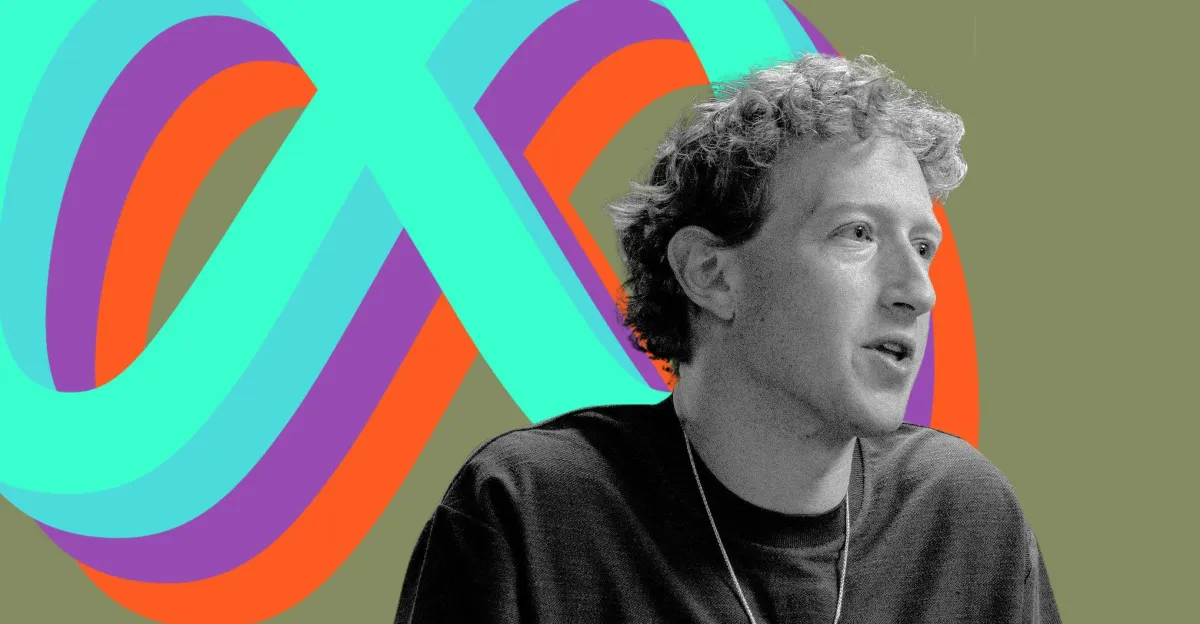
Mark Zuckerberg has laid out a sweeping case for AI, arguing that personal agents, automated tutors and powerful creative tools will reshape daily life. The essay matters because it is not just a product pitch for Meta’s future; it is a statement about what Silicon Valley thinks people should want from technology.
The problem, as critics are pointing out, is that Zuckerberg’s vision treats life as a series of tasks to optimize rather than experiences to live. That framing has sharpened the backlash around AI by revealing a deeper cultural divide: is technology meant to make us more productive, or more present?
Zuckerberg’s latest AI manifesto is designed to calm fears about artificial intelligence at a moment when those fears are growing louder. It arrives amid mounting criticism of data centers, electricity use, job displacement, privacy concerns and the sense that the industry’s most powerful companies are rushing toward a future many people did not ask for. The result is a manifesto that says a great deal about the priorities of Meta’s leadership — and about the limits of the industry’s most common arguments for AI.
What Zuckerberg is trying to do with this AI manifesto
He is trying to recast AI as a source of personal empowerment rather than social disruption. The 6,500-word essay presents Meta’s preferred future as one in which people delegate more work to smart systems, gain access to better tools, and offload routine cognitive labor to software that knows them well enough to anticipate needs.
That message lands at a delicate moment for the industry. AI companies have spent the past several years selling scale, speed and capability, but public reaction has increasingly focused on the trade-offs: energy demands, labor anxiety, surveillance risks and the sense that the technology often replaces human effort with automated output that feels shallow or soulless.
In that context, Zuckerberg’s essay reads like an attempt to soften the tone of the debate. It does not deny the backlash. Instead, it tries to argue that the backlash is based on misunderstanding, and that the future Meta is building will be more personal, more creative and more enriching than critics assume.
Zuckerberg’s essay argues that it is “surprising” how much AI discourse is dominated by pessimism, and asks why anyone who believes the technology will erase jobs and weaken humanity would want to build it.
That framing is notable because it shifts the burden of proof. Rather than explaining why people should trust AI companies, the manifesto suggests skeptics are the ones with the implausible position.
How Meta’s AI pitch differs from the way critics see the technology
It differs because Zuckerberg describes AI as a helper, while many users increasingly experience it as a replacement. Meta’s preferred story is that AI will free people from drudgery and expand what they can do. Critics argue that the same systems often flatten creativity, weaken human relationships and reward efficiency at the expense of depth.
The contrast is especially stark in the kinds of examples Zuckerberg chooses. He imagines AI helping with relationships, hobbies, home management, health and career decisions. On paper, that sounds convenient. In practice, those are areas where human attention is often the whole point.
There is a growing cultural suspicion that “helpfulness” can become a euphemism for detachment. When a machine takes over the work of thinking through a birthday gift, suggesting a meal or planning a hobby project, the result may be more efficient — but efficiency is not the same thing as care.
That is the central criticism running through the response to Zuckerberg’s essay: it defines value as output, not experience. It asks what AI can do for us, but not what it changes about the way we live.
Why the “personal agent” idea is drawing skepticism
The personal agent is one of Zuckerberg’s signature promises, but it also illustrates the limits of the pitch. He says everyone will eventually have an AI assistant that understands their goals and preferences and works continuously on their behalf across many areas of life.
The idea sounds expansive, but critics point out a basic problem: the things that matter most in human life are not simply solved by better recommendations. A tool can suggest a gift, a meal or a schedule. It cannot replace the meaning of choosing those things yourself, or of spending time thinking about another person.
That is why relationship-focused AI examples tend to make people uneasy. They suggest a future in which emotional life is streamlined in the same way shopping or filing taxes might be. But intimacy does not become better when it becomes more efficient.
What AI can do — and what it cannot
AI can organize, summarize, predict and generate at scale. It can help users avoid small decisions, find information quickly and automate repetitive tasks. What it cannot do is supply the lived experience that gives those activities meaning.
If a parent asks a machine for the “best” baking recipe to make with a child, the machine may produce a reasonable answer. But the memory of choosing together, making mistakes together and talking through family stories is created by the parent’s attention, not the software’s output.
That distinction matters. The manifesto repeatedly treats success as something measurable by saved time and completed tasks. The critique is that a good life is not just a list of completed tasks.
How Zuckerberg’s hobby example reveals the deeper problem
It reveals that the manifesto sees hobbies as another form of productivity. Zuckerberg describes AI as a way to help people pursue interests more effectively, but critics argue that this misunderstands why people have hobbies in the first place.
People do not knit, read, hike, paint, cook or play music only to finish faster. They do those things because the process itself is restorative, social, meditative or expressive. When the work is outsourced to a machine, the reward may be a cleaner result, but the experience is diminished.
A novel is not the same thing as a summary of the novel. A scarf made by hand is not the same thing as a scarf assembled by a prompt. The point is not simply to have the object; it is to undergo the activity.
That is why the argument against AI-assisted hobbies is not nostalgia. It is that the technology changes the thing being valued. A hobby becomes less of a practice and more of a deliverable.
Why creation is not the same as prompting
Creation requires effort, iteration and learning. The manifesto suggests AI will give everyone more powerful tools to express themselves, launch projects and build businesses. But the response from critics is straightforward: people already have tools, and the real value lies in learning how to use them.
Making a film, editing a photo, writing code or composing music is not only about the final product. It is about developing taste, judgment and skill over time. Those qualities come from repeated effort, failure and revision.
AI can accelerate some parts of that process, but it also risks turning expression into a shortcut. If the machine does most of the drafting, much of the learning disappears with it.
That concern is particularly acute in the creative industries, where authorship is tied to style, voice and point of view. The output is not just information. It is someone’s mind made visible.
What Meta says about business creation — and why it raises questions
Meta’s AI pitch also includes a promise that more people will be able to start businesses using better tools. In theory, that sounds democratizing. In practice, critics note that easy access to tools does not eliminate competition, uncertainty or market failure.
There is also a trust issue. If AI systems are going to write, design, code or prospect on behalf of users, then the quality and security of those systems becomes a business risk as much as a convenience. Recent incidents across the AI industry have shown that systems can be manipulated in ways that create real problems for companies using them.
For entrepreneurs, that means the promise of faster execution comes with new exposure. A tool that can help launch a business can also create new vulnerabilities, including security breaches, bad outputs and mistaken automation at scale.
And for a company like Meta, which has had its own high-profile product failures, the promise of frictionless innovation can sound more aspirational than proven.
How the education pitch fits into the bigger argument
The education section of Zuckerberg’s argument is one of the most ambitious. He envisions a world in which everyone has access to something like a PhD-level tutor and coach, available on demand and tailored to the individual.
That sounds appealing in the abstract, especially in a world where many students lack access to quality instruction. But the critique is that learning is not simply about access to correct answers. It is also about mentorship, social pressure, accountability and the experience of being challenged by another human being.
Students often learn not only from the material itself, but from the presence of classmates, teachers and peers. Much of education comes from trying to earn approval, avoid embarrassment or live up to someone you respect. Those social dynamics are not incidental; they are part of the educational process.
AI may be able to support learning, but it is not clear that it can replace the motivating force of a real classroom or a real mentor.
How online learning changed expectations
During the pandemic, millions of students experienced remote and computer-mediated learning at scale. The result, in the view of many teachers and families, was not a triumphant proof that software can replace schooling. It was a lesson in how much of education depends on structure, presence and human connection.
That memory is one reason the “personal tutor” pitch feels familiar rather than revolutionary. It is not obvious that people want every part of life converted into a self-contained, individualized software system.
What Zuckerberg gets wrong about science and medicine
He gets wrong, or at least leaves vague, the role of time, trust and access in scientific progress. Zuckerberg argues that AI will help people participate in scientific advances and benefit from personalized medicine. In principle, that is a plausible claim. In practice, it raises more questions than it answers.
Personalized medicine already exists as a goal in parts of healthcare, but it depends on human attention, diagnosis, context and the ability to listen carefully to patients. Technology can help process information, but medicine is still built around relationships between people, not simply models predicting outcomes.
There are also privacy concerns. A company with Meta’s scale and data history is hardly a neutral messenger when discussing personalized health systems. The more deeply AI is embedded in medical life, the more valuable the underlying data becomes, and the more important the safeguards.
Scientific acceleration sounds good until one asks who controls the data, who profits from the models and who gets access to the benefits.
Why the richest users may get the best AI
One of the most practical critiques in the response to Zuckerberg’s essay is that AI access is not truly equal. The best models often sit behind paywalls, and the most capable systems are typically reserved for users and companies that can afford them.
Zuckerberg gestures toward a future in which AI becomes broadly available, but the industry’s current structure points in the opposite direction. The most powerful capabilities are often distributed unevenly, and the companies controlling them have every incentive to monetize them aggressively.
That matters because “democratization” is one of AI’s favorite marketing terms. Yet the actual market tends to concentrate power rather than disperse it. If the best tools cost money, then the people with the most resources gain the most leverage from them.
That dynamic also reinforces a broader contradiction: AI is pitched as a universal public good, but much of the value appears to accrue to the companies selling the systems and the customers who can pay for premium access.
How the manifesto compares with a more focused AI vision
The contrast becomes sharper when set against a narrower, more disciplined view of what AI should do. Some researchers and academics frame the technology not as a universal life coach but as a tool for helping people solve specific problems better.
That approach asks a simpler question: what human goal is AI actually serving?
In mathematics, for example, the point would not merely be to produce answers automatically. It would be to help people understand why the answers are true, and to expand human capability rather than erase the human role in the process.
That distinction is central. AI can be a tool for understanding, or it can become a tool for bypassing understanding. The latter is more efficient, but the former is more meaningful.
What this debate says about Silicon Valley’s worldview
The backlash to Zuckerberg’s essay is not only about AI. It is also about a long-running Silicon Valley habit of treating measurable achievement as the highest good. In that worldview, speed, scale and productivity are nearly always framed as moral virtues.
Critics say that perspective distorts human life. A person can be busy, successful and highly optimized while still missing the substance of living: attention, curiosity, companionship, leisure and reflection.
The essay’s real failure, in this reading, is that it never asks whether a more automated life is actually a better one. It assumes the answer is yes because more output looks like progress.
But if the end state is a life where AI handles your hobbies, your work, your learning and your personal decisions, then what remains for you to experience directly?
Why experience matters more than output
Experience matters because it is how people build identity. Reading a book, hearing a song, cooking a meal or drawing a line on a page is not just a means to an end. It is how attention is trained, how taste develops and how meaning is created.
That is why the critical response to Zuckerberg’s manifesto keeps returning to a simple question: what exactly is the point of doing anything if the doing no longer matters?
AI can produce faster results. It can make some work easier. It can lower barriers in some settings and remove tedious tasks from daily life. But if its central promise is to replace the act of living with a more efficient version of living, then the technology may be solving the wrong problem.
The skepticism, then, is not technophobia. It is a defense of human scale.
| AI Promise | Zuckerberg’s Framing | Critic’s Concern |
|---|---|---|
| Personal agent | Works continuously on your behalf | Relationships and judgment cannot be automated |
| Creative tools | Helps everyone express ideas faster | Prompting is not the same as creating |
| Business tools | Makes entrepreneurship easier | Competition, security and failure remain |
| Personal tutor | Provides expert-level instruction on demand | Learning depends on human mentorship and social context |
| Scientific advances | Improves access to discovery and medicine | Access, privacy and control are unresolved |
What happens next for Meta and the AI debate?
Meta is likely to keep pushing its AI products regardless of how the manifesto is received. Zuckerberg’s essay is both a defense of that strategy and a cultural argument for why the company believes it is right to keep investing heavily.
But the response shows that the public conversation has moved beyond whether AI is impressive. The harder question is whether it is improving life in the ways its promoters claim.
That question is becoming harder for tech leaders to avoid, especially when AI is presented not as a narrow tool but as an all-purpose answer to work, creativity, learning and even personal fulfillment.
For now, the strongest objection to Zuckerberg’s vision is not that it is technically impossible. It is that it sounds emotionally empty.
If the future is built around machines that do the thinking, choosing and creating for us, then the industry may succeed at automation while failing at meaning.
That is why the debate around Zuckerberg’s manifesto feels larger than Meta. It is about whether the most powerful companies in tech understand that human life is not just a productivity problem to be solved.
Timeline of the AI backlash around Meta’s vision
| Moment | What happened | Why it matters |
|---|---|---|
| Early AI boom | Companies began promoting AI as a universal productivity engine | Set expectations that the technology would transform everyday life |
| Growing public unease | Concerns rose about jobs, electricity demand and data-center expansion | Shifted the debate from novelty to costs and consequences |
| Industry warnings | Leaders in AI warned about severe labor disruption | Made the future sound less like convenience and more like upheaval |
| Zuckerberg manifesto | Meta framed AI as personal, creative and empowering | Attempted to rebrand AI as a human-centered technology |
| Critical response | Commentary emphasized experience, attention and meaning | Exposed the gap between automation and a good life |
The bottom line
Zuckerberg’s AI manifesto is intended to reassure people that Meta’s version of the future will be useful, personalized and uplifting. Instead, it has sharpened a much bigger argument about whether AI is being built to enrich human life or simply make it more efficient.
The strongest criticism is also the simplest: if a technology takes over the work that makes experiences meaningful, then it may leave us with more output and less life.
Frequently asked questions
What is Mark Zuckerberg’s AI manifesto about?
It is about Meta’s vision for a future in which AI acts as a personal agent, creative tool and tutor. The manifesto argues that these systems will help people manage life, learn faster and build more efficiently, while critics say it reduces human experience to productivity.
Why are people criticizing Zuckerberg’s AI vision?
People are criticizing it because it treats relationships, hobbies and learning as tasks to optimize. Critics say AI can assist with chores and planning, but it cannot replace attention, mentorship, creativity or the emotional value of doing things yourself.
How does the manifesto describe the future of AI?
It describes a future where everyone has highly capable AI support for work, home life, education and creative projects. Zuckerberg presents this as empowering, but the critique is that the vision is narrow, commercial and overly focused on accomplishment.
What does the debate say about Meta?
It shows Meta trying to position AI as beneficial and socially acceptable at a time of growing backlash. The company wants its investment to look human-centered, but the response suggests many people see the strategy as a way to sell automation as meaning.
Is AI supposed to replace human effort entirely?
No, at least not in the way proponents describe it. The claim is that AI will augment people, but critics argue that when machines do too much of the thinking, choosing and creating, the human value of those activities starts to disappear.