In short
Napster has partnered with GEMS Education in Dubai to develop AI education tools, including digital teacher twins and classroom assistants. The move marks a major pivot for the once-famous music brand as it builds a regional AI business centered on local hosting and school pilots.
- Napster is partnering with GEMS Education in Dubai to test AI agents and digital personas in classrooms.
- The company wants to create digital twins of teachers that can help students outside class and provide teachers with insights.
- Napster is building a regional hub in Dubai and says it will localize products and keep data in-country where required.
- The company plans to expand its Middle East team from about 20 people to roughly 500 by 2030.
- The move reflects the UAE’s broader push to adopt agentic AI across government and public services.
Napster, the brand once synonymous with music piracy and early internet disruption, is trying to reinvent itself again—this time in education. The company has signed a strategic partnership in Dubai with GEMS Education to develop AI agents and digital personas for classrooms, including tools that can digitally mirror teachers and extend their reach beyond school hours.
The move matters because it signals how aggressively AI companies are moving into schools, and because Napster is betting that education could become a showcase for its broader AI ambitions in the Middle East and beyond.
In practical terms, the partnership is designed to produce proof-of-concept projects such as teacher digital twins, gamified learning tools, AI-assisted content creation, and classroom simulations. The first phase will be based at the GEMS School of Research and Innovation in Dubai, where educators, students, and technology partners will test how these systems perform in real learning environments.
For a company whose name once helped trigger a music-industry revolt, the pivot is striking. Napster was launched in 1999 as a peer-to-peer file-sharing service that changed how music was distributed, copied, and consumed. It was later forced into shutdown after copyright battles. Now, after multiple reincarnations and a 2025 acquisition by the Florida-based tech company Infinite Reality, the brand is being repositioned as an AI platform with an education-first entry point in the Gulf.
Why Napster’s return matters
Napster’s latest reinvention is notable not just because of the brand history, but because it places a once-infamous consumer internet name inside one of the fastest-moving AI markets in the world. The company is no longer selling music streaming or digital media; it is trying to sell AI infrastructure, AI assistants, and AI-powered learning tools.
That shift puts Napster in the same broad race as larger AI model builders and startup competitors seeking enterprise customers, government contracts, and sector-specific deployments. In this case, education is the opening market, and the United Arab Emirates is the launchpad.
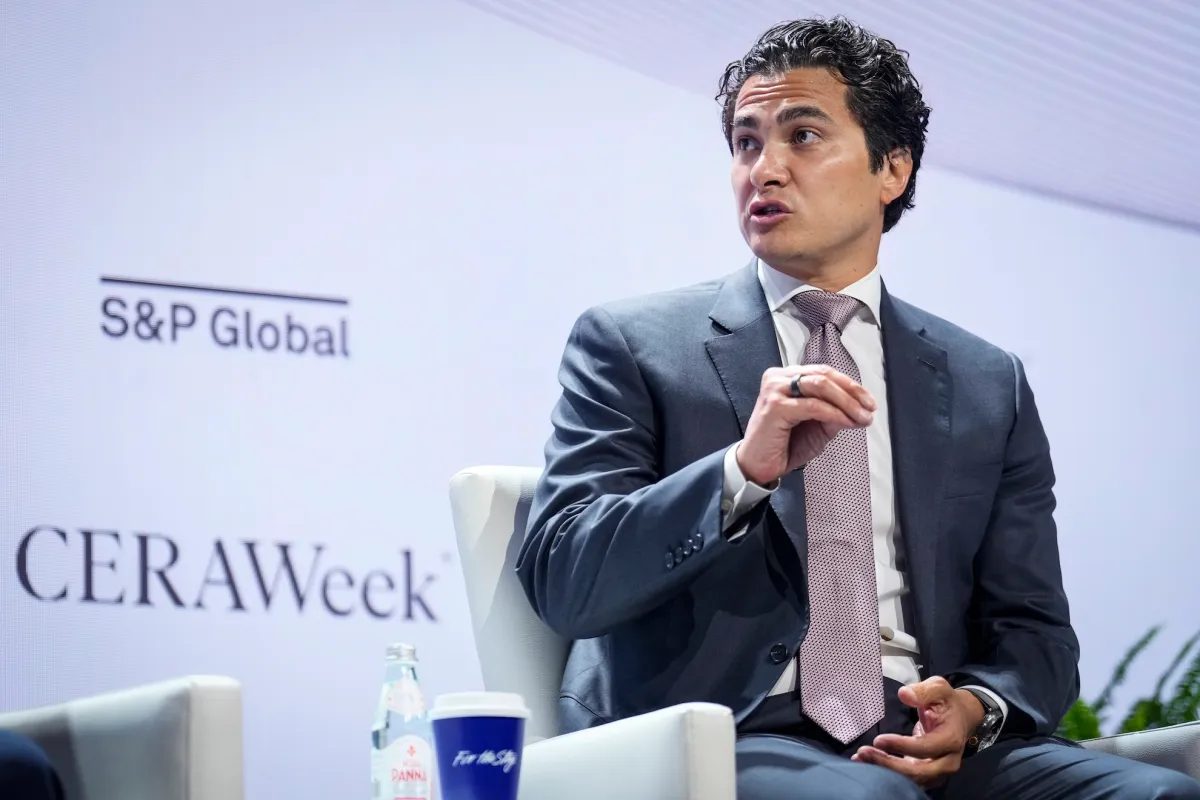
Samuel Huber, now leading Napster’s Middle East and Africa operations, frames the revival as a philosophy as much as a business strategy. In his view, the original Napster stood for user empowerment in music, and the new version aims to do something similar with intelligence and data.
Huber argues that the company’s old identity was about giving people more control over music, while the new mission is about giving users more control over AI systems and the data behind them.
He also positions Napster as a counterweight to dominant AI model companies, saying the goal is to offer an alternative rather than depend entirely on the biggest players in the market.
What exactly will Napster build for classrooms?
Napster says the GEMS partnership will focus on AI agents and digital personas that can support teaching and learning without eliminating the human role in education. The most eye-catching idea is the digital twin: a voice-and-video-based replica of a teacher that can answer questions, explain concepts, and stay available outside class.
According to the company, these digital twins would be trained on a teacher’s own materials, including course content and papers. The result would be a personalized online version of the instructor that students could consult after hours, while the teacher gains insight into recurring questions, knowledge gaps, and areas where extra support is needed.
Napster says the broader suite of tools could also include:
- Gamified learning experiences
- AI-assisted lesson and content creation
- Classroom simulation environments
- Digital instructor personas
- Student support systems that operate around the clock
The company says its learning system, Napster Learn, will provide the design, development, and product management resources behind the projects. The emphasis, at least in the company’s telling, is on making interactions with AI feel more natural through voice and video, so the tools behave less like a prompt box and more like a colleague or assistant.
How would a teacher digital twin work?
A teacher digital twin would work by using a teacher’s existing educational materials to generate a responsive digital version of that teacher. In theory, students could ask questions at any time, review concepts at their own pace, and receive explanations that reflect the teacher’s style and subject focus.
Napster says this would not replace live teaching. Instead, the digital persona would act as an extension of the classroom relationship, helping scale one-to-one support in a setting where teachers may have hundreds of students but only limited time.
Huber says the aim is to help teachers do more, not to remove them from the learning process. He argues that the technology should be seen as augmentation, similar to how word processors increased typing speed rather than replacing writers.
That framing is likely to be central to how Napster sells the product in a sector wary of automation. Schools and regulators around the world are already debating how AI affects academic integrity, student privacy, and the role of educators. Napster is trying to present its tools as support systems rather than substitutes.
How is Napster handling privacy and data sovereignty?
Napster says it is trying to address one of the biggest concerns in education AI: what happens to student and teacher data. Huber says data can remain inside the country where required, and that companies can host the system on their own servers if they need to. He also says Napster does not train its models on user data.
That pledge is important in the Gulf, where data sovereignty has become a major theme in digital policy. Schools, ministries, and private institutions often want AI tools that can run locally rather than sending sensitive information abroad.
Napster is also taking a local infrastructure approach in the region. In the UAE, it has partnered with G42 to host data and run AI models in-country. In Saudi Arabia, it has worked with Lenovo and data center operator Detasad to keep infrastructure within national borders.
These arrangements are not just technical choices; they are also commercial ones. Governments and large institutions are more likely to adopt AI products that align with local rules on privacy, residency, and control.
Why localising the product matters in the Gulf
Localisation is especially important in the UAE and Saudi Arabia because education technology products often need to reflect language, culture, and classroom norms that differ from those in Western markets. Huber says those cultural nuances matter even in digital products, and that adapting the offering for the region is essential.
That means more than translation. It can include curriculum alignment, instruction style, parental expectations, school governance, and the way AI systems respond to questions in different settings. A product that works in one market may need substantial redesign to work in another.
For Napster, that creates both risk and opportunity. If it gets localisation right, the company could become a useful bridge between global AI capability and regional deployment. If it gets it wrong, the product could be dismissed as another imported tech concept that fails to fit the classroom.
Why is Dubai the launchpad for this AI push?
Dubai is the launchpad because the UAE has made AI a national priority and is actively encouraging adoption across public services and industry. In May, the UAE Cabinet approved a federal framework for implementing agentic AI across ministries and government entities, with a plan to move 50 percent of government services and operations to agentic AI models within two years.
That policy direction gives companies like Napster a clear incentive to establish a local presence and align with the country’s digital ambitions. The education partnership with GEMS also gives the company a high-visibility testbed in one of the region’s best-known school groups.
Napster is also building a regional hub in Dubai, and Huber has been tapped to lead the Middle East and Africa business. His appointment signals that the company wants more than a sales office; it wants a base for product development, partnerships, and regional expansion.
| Key development | Details | Why it matters |
|---|---|---|
| Partnership | Napster and GEMS Education | Gives Napster a live classroom environment to test AI products |
| Main focus | AI agents and digital personas for education | Could extend teacher support and student access to learning |
| Launch location | Dubai, UAE | Places Napster inside a market with strong AI policy backing |
| Infrastructure strategy | Local hosting in the UAE and Saudi Arabia | Supports data sovereignty and institutional adoption |
| Regional hiring target | About 500 staff by 2030 | Shows Napster is planning a long-term regional buildout |
What is the business strategy behind the education move?
The education partnership appears to serve several strategic goals at once. First, it helps Napster demonstrate that its AI products can work in a real, socially important sector. Second, it gives the company a foothold in the Gulf, where governments and large institutions are spending heavily on AI. Third, it helps the brand shed its old identity and become known for something other than music.
Napster’s corporate history has been turbulent. After the original file-sharing service was shut down in 2001, the brand passed through several owners and business models, including a stint as a music-streaming service. It was then acquired by Infinite Reality in 2025 for $207 million and soon after abandoned streaming altogether in favor of AI.
That acquisition and pivot matter because they show Napster is no longer trying to compete as a media company. It is now trying to compete as an AI platform company, and education may be one of the most visible ways to prove the model.
The company’s challenge is to convince schools that AI personas are useful tools rather than gimmicks. The education sector is full of technology products that promise transformation but deliver little more than a polished interface. Napster will need measurable value: better student engagement, less administrative burden, improved access to support, or more efficient content creation.
Who is Samuel Huber, and why does he matter here?
Samuel Huber matters because he is the executive shaping Napster’s regional identity and strategy. Before taking over as Napster’s Middle East and Africa CEO, he founded and led the UK-based technology company Landvault, which was acquired by Infinite Reality in 2024.
His background helps explain why Napster is leaning into immersive, interactive, and infrastructure-heavy digital products. Huber’s pitch is that AI should feel like an embedded working partner rather than a detached chatbot.
Huber says the company is working to make AI interactions feel more human through voice and video, with the broader goal of making AI behave like a coworker that can be used across multiple industries.
He also emphasizes that the company is investing heavily in the region because the UAE’s long-term vision for AI makes the market attractive for entrepreneurs and technology builders.
How could teachers and students actually use this?
Teachers could use Napster’s tools to extend their availability, answer recurring questions, and generate new content more quickly. Students could use them to review lessons after class, ask for clarification, or revisit concepts at a pace that fits their own learning style.
In theory, that could reduce bottlenecks in large classrooms, where teachers often cannot provide enough individualized attention. It could also help students who are reluctant to ask questions in person or who need extra support outside school hours.
Potential uses include:
- After-hours revision support
- One-on-one concept explanation
- Lesson prep and content drafting for teachers
- Practice simulations for classroom scenarios
- Analytics on student questions and misunderstandings
But there are still unanswered questions. How accurate will the digital twin be? How much oversight will teachers retain? What guardrails will prevent hallucinations or inappropriate advice? And will students trust an AI version of a teacher enough to use it regularly?
What are the biggest concerns?
The biggest concerns are job displacement, reliability, privacy, and educational quality. Even if Napster insists the system is designed to augment teachers, many educators may worry that schools will eventually use AI personas to reduce staffing costs or substitute for human support.
There is also the issue of whether the AI produces meaningful learning outcomes. A more sophisticated chatbot is not automatically a better educational tool. Schools will likely demand evidence that the system improves comprehension, engagement, or efficiency before adopting it widely.
Another concern is cultural and pedagogical fit. Education is not just a content-delivery industry. It depends on trust, classroom dynamics, social development, and human judgment. Any AI tool that enters that environment will need to prove it strengthens those elements rather than weakening them.
What does the timeline look like?
Napster’s reinvention has unfolded quickly over the past few years. From a music-streaming brand to an AI platform, the company has been racing to find a durable new identity. Its education partnership in Dubai is one of the first visible signs of what that identity may become.
| Date | Event | Significance |
|---|---|---|
| 1999 | Napster launches as a peer-to-peer music-sharing service | Transforms music distribution and triggers major industry backlash |
| 2001 | Original service shuts down after legal defeats | Ends the first era of the brand |
| 2024 | Infinite Reality acquires Landvault | Sets up the leadership path for Samuel Huber |
| 2025 | Infinite Reality buys Napster for $207 million | Begins the brand’s transition into AI |
| January 2026 | Napster shuts down its music-streaming service | Clears the way for a full pivot away from music |
| May 2026 | UAE Cabinet approves agentic AI framework | Creates a favorable policy backdrop for AI partnerships |
| September 2026 | Napster announces partnership with GEMS Education | Launches the education-focused AI push in Dubai |
How big could the regional plan become?
Napster is aiming for scale. The company says it expects its regional team to grow from roughly 20 people to about 500 by 2030. That is a substantial expansion and suggests the company sees the Middle East and North Africa as a core growth market rather than a side project.
The headcount target also indicates that Napster is preparing for work beyond education. If the company succeeds in schools, it could use the same infrastructure and partnerships to enter other sectors where AI agents and digital personas may be useful, such as government, training, customer service, and enterprise learning.
That broader ambition fits with Huber’s view that Napster should become a flexible AI platform. He argues that the company is trying to help make the country’s AI vision a reality, not simply sell isolated software products.
Huber says he is in the region because the UAE has a clear AI strategy and because he sees an opportunity to help build it through long-term investment and local partnerships.
What happens next?
What happens next will depend on whether the initial classroom pilots deliver results that educators consider useful. The GEMS School of Research and Innovation will serve as the proving ground, and its outcomes will likely shape how aggressively Napster expands the product.
If the tools help teachers scale their time without undermining trust, Napster could find a niche in one of the world’s most AI-forward regions. If the systems feel clunky, repetitive, or overly mechanical, the company may struggle to convince schools that digital personas deserve a place in the classroom.
For now, the company is betting that education can become the place where its latest reinvention makes sense. A name once associated with downloading songs without permission is now trying to become associated with something far more institutional: the future of learning.
Whether that future includes teacher clones, AI assistants, or classroom simulations, Napster’s return shows just how far the company—and the internet—have traveled since its first disruptive act more than two decades ago.
The real test is no longer whether Napster can change an industry. It is whether schools want it to.
Frequently asked questions
What is Napster doing in Dubai?
Napster is partnering with GEMS Education to develop AI education tools in Dubai, including digital teacher personas, classroom simulations, and AI-assisted content creation. The company says the project will start with proof-of-concept work at the GEMS School of Research and Innovation.
Is Napster building teacher clones?
Yes, in effect. Napster says it is developing digital twins of teachers trained on instructors’ own materials so students can ask questions and review lessons outside class. The company says these tools are meant to extend teachers’ reach, not replace them.
Will Napster use student data to train its AI models?
Napster says it will not use user data to train its AI models. The company also says data can remain in-country where required and can be hosted on a company’s own servers if institutions need that arrangement.
Why is Napster focusing on the UAE?
Napster is focusing on the UAE because the country has made AI a national priority and is encouraging adoption across government and business. The company says the Gulf market also requires strong localization and local data hosting.
How many people does Napster plan to hire in the region?
Napster says it wants to grow its regional team from about 20 employees to roughly 500 by 2030. That target suggests the company sees the Middle East and North Africa as a long-term strategic market.