Updated July 30, 2026 11:55 am
In short
Pangram has raised $9 million, launched new text and image detectors, and says demand is rising as publishers, platforms and other institutions look for better ways to identify AI-made content.
- Pangram raised $9 million in a round led by Menlo Ventures.
- The startup launched Pangram 4 for text and Pangram Image for visual content.
- It says the new text model is more than 99% accurate on AI-assisted and mixed writing.
- Customers include Substack, Quora, schools, publishers and recruiters.
- The company is competing with GPTZero, Copyleaks, Originality.ai and Winston AI.
Update — July 30, 2026 11:55 am
Pangram says its new image detector will roll out more broadly in the coming weeks, rather than staying in research preview indefinitely.
The company also says users can already access its tools through a $20-a-month web subscription or a Chrome extension that labels AI content in real time on X, LinkedIn, Substack, Reddit and Medium. Its feed dashboard also shows a human-versus-AI breakdown for the page being viewed.
TechCrunch’s testing found the text model still made some mistakes, including occasionally flagging fully human passages as AI-written, and the image detector missed at least one photo of AI-generated content.
Update — July 29, 2026 2:55 pm
Pangram says its newest text model is also better at identifying AI “humanizer” tools, which are designed to make machine-written text look more like it came from a person.
The company also says its AI image detector can spot synthetic images even when they are embedded inside real-world photos, and that the tool is built on pixel-level patterns rather than watermark checks tied to a single model provider.
TechCrunch also reported that Pangram’s API customers include Quora, schools, universities, publishers, agents and recruiters, and that Substack has integrated the technology to show readers which newsletter authors use AI.
AI detection startup Pangram has raised $9 million and released new tools for spotting AI-written text and AI-generated images as publishers, schools, platforms and employers race to identify synthetic content online. The New York-based company says its latest model can catch AI-assisted writing, mixed human-AI drafts and many “humanized” rewrites with high accuracy, a capability that matters as AI slop, fake citations and bot-driven propaganda spread across the internet.
The round was led by Menlo Ventures, with backing from Haystack, ScOp, Script Capital and Cadenza. Alongside the funding announcement, Pangram unveiled Pangram 4, its newest text detection model, and a separate image detector now in research preview.
The startup’s pitch is straightforward: as generative AI becomes more capable and more widely used, the ability to tell human work from machine output is becoming a business necessity, a compliance issue and, in some settings, a legal safeguard.
Why Pangram’s funding matters now
Pangram’s raise arrives at a moment when organizations are under growing pressure to understand what in their workflows, feeds and archives was created by a person and what was produced with AI. That pressure is no longer limited to social media moderation teams or academic integrity offices. It is now reaching newsrooms, law firms, universities, recruiting departments and online publishing platforms.
The company says its text detector is designed to identify fully AI-generated writing, AI-assisted drafts and content that has been lightly edited by a human after being produced by a model. Pangram also argues that its system can better spot “humanizer” tools, the newer class of software meant to disguise machine-written text as if it were authored by a person.
For a market built on distinguishing authenticity from automation, timing matters. The internet has been flooded with AI-written posts, SEO spam, synthetic product reviews, fake scholarship references and propaganda-like content, all of which have increased demand for tools that can flag suspicious material before it spreads too far.
What is Pangram?
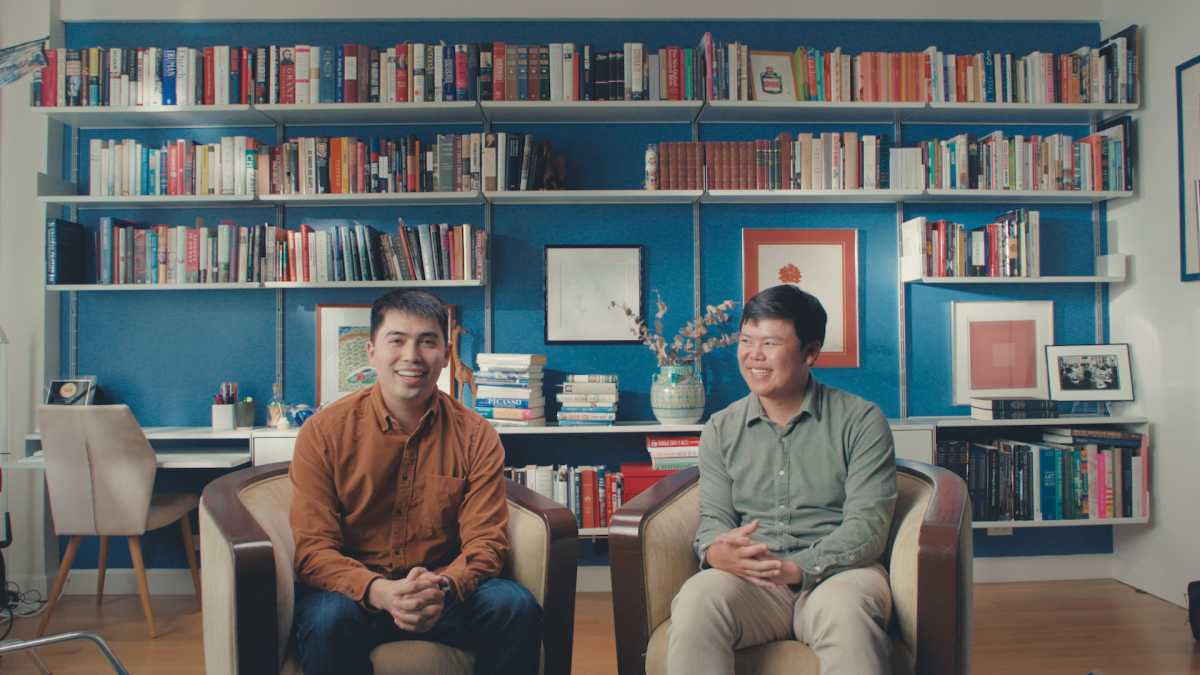
Pangram is a New York-based startup founded about two years ago by Stanford AI and machine learning graduates Max Spero and Bradley Emi. The company was launched after ChatGPT’s breakout release made it easy for anyone to generate credible-sounding text at scale, changing the economics of content production almost overnight.
In the founders’ view, that shift created a new category of digital problem: not merely bad writing, but large volumes of text that readers cannot easily evaluate because they may be syntactically polished while still being untrustworthy, misleading or fabricated.
“It’s incredibly valuable to know whether what you’re looking at is something that’s AI-generated or not,” Spero said, arguing that the label changes how readers judge a text’s reliability and whether they should scrutinize it for errors, hallucinations or weak sourcing.
The startup says the issue is bigger than embarrassment or convenience. According to Spero, the growing use of AI is affecting the integrity of public discourse, professional work and institutional submissions. He cited examples ranging from bot-driven influence campaigns to lawyers submitting fake citations and public officials reading prompts aloud in speeches.
How does Pangram’s detection technology work?
Pangram’s detection system is built around a machine learning model trained on tens of millions of confirmed human-written documents. The company then creates a paired synthetic version of each document, matching the topic, approximate length and tone, but writing it with a frontier large language model. That gives the detector a direct comparison between human and machine patterns.
Rather than depending on metadata, hidden watermarks or other external markers, Pangram says its model learns stylistic signals in the text itself. The system is trained to recognize the recurring choices that AI models tend to make in wording, sentence rhythm and phrasing, even when the output has been polished or partially rewritten by a person.
The company says the result is a detector that can identify the difference between plain human writing, heavily assisted writing and content that has been reworked to appear more natural.
How accurate is Pangram 4?
Pangram says its newest text model is more than 99% accurate at spotting AI-assisted writing and mixed human-AI content, with a very low false-positive rate for human text. The startup says roughly one in 10,000 human documents are incorrectly flagged as AI-generated.
That is an impressive claim, but not the same as saying the model is flawless. Detection systems always face an adversarial environment, because the content they are evaluating can be edited, paraphrased, translated, stylized or deliberately designed to evade scrutiny.
Still, Pangram is positioning Pangram 4 as a significant step forward in an increasingly crowded category.
Why is AI detection becoming a bigger business?
AI detection is becoming a bigger business because organizations are increasingly being forced to answer a simple question: who actually made this?
The answer affects trust, liability, quality control and sometimes legal exposure. A polished article written by a reporter has a very different meaning from an article generated by a model and lightly edited by an editor. A court filing with made-up citations is not just sloppy; it can trigger sanctions. A research paper containing AI-generated references can undermine an entire academic submission.
Pangram’s founders see this as a structural change, not a temporary panic. The company argues that as more content is produced by large language models, the internet risks becoming saturated with material that is superficially fluent but increasingly unmoored from human verification.
Spero said the broader problem is not only that AI-generated content is multiplying, but that it can overwhelm human-created work unless platforms and institutions actively label it and preserve space for authentic writing.
That concern is already shaping policy. ArXiv, the open-access repository widely used by researchers, adopted a new enforcement rule this year that can impose a one-year submission ban if authors appear to have failed to review LLM output carefully, including examples such as hallucinated citations or stray assistant prompts left in the text.
What products did Pangram launch with the funding?
Pangram launched two major products alongside the new financing: Pangram 4 for text and Pangram Image for visual content.
The text model is the company’s core product and is already accessible through a web subscription, browser extension and API. The image model is still in limited release, but the company says it will expand availability in the coming weeks.
Its Chrome extension is designed to label content in real time across sites such as X, LinkedIn, Substack, Reddit and Medium. Users also get a feed health score, which breaks down how much of what they are seeing appears to be human versus AI-generated.
Pangram’s API is already being used by a range of customers, according to the company, including Substack, Quora, educational institutions, publishers, recruiting teams and other organizations that want to screen content before it is distributed or evaluated.
How does Pangram Image work?
Pangram says its image detector does not depend on the limited watermark-based checks used by some AI companies, which typically only detect images generated by the company that created the watermark.
Instead, the startup says its model examines pixel-level statistical patterns that differ between photographs created in the physical world and images synthesized by AI systems. Pangram says that even when an AI-generated object appears inside a real-world photo, the detector can still identify the synthetic portion.
The tool is still in research preview, but the company’s early pitch is that image detection will soon be as important as text detection, given how rapidly synthetic visuals are spreading across social platforms, ecommerce pages and news feeds.
How did the model perform in real-world testing?
In practical testing, Pangram appears to be strong but not perfect, especially when dealing with text that has been heavily edited or rewritten. The text detector readily identified fully AI-generated articles and was generally resistant to simple attempts to humanize them.
It also handled cases where AI-generated text had been revised by a person, and it could still spot some subtle traces of machine assistance. At other times, however, it labeled clearly human-written sentences as AI-assisted, illustrating one of the central challenges in this market: a false positive can be nearly as problematic as a missed detection, depending on the setting.
The image detector also showed promise in identifying AI-generated visuals, including more realistic outputs. Pangram’s system could even highlight synthetic elements embedded inside a real-world image. In one case, though, it misclassified a photo of an AI-generated image as human content, a reminder that even advanced detection systems remain probabilistic rather than definitive.
| Item | Details |
|---|---|
| Company | Pangram |
| Headquarters | New York |
| Founded | About two years ago |
| Founders | Max Spero and Bradley Emi |
| New funding | $9 million |
| Lead investor | Menlo Ventures |
| Other investors | Haystack, ScOp, Script Capital, Cadenza |
| New products | Pangram 4 text detector, Pangram Image |
| Distribution | Web, Chrome extension, API |
| Price | $20 per month for web access |
Who is using Pangram?
Pangram says its tools are being adopted by customers across publishing, education and online platforms that need a fast way to sort authentic content from synthetic output. Substack is one of the most visible integrations, using Pangram’s technology to show readers whether the authors they follow rely on AI in their newsletters.
Other users include Quora and a range of schools, universities, publishers, agents and recruiters, according to the company. Those customers are not necessarily trying to ban AI outright; in many cases, they are trying to establish disclosure standards, moderation policies or internal review processes.
That distinction is important. Pangram’s CEO says the company is not trying to create a moral blacklist of AI users. Instead, it is building infrastructure for disclosure and verification in a world where AI-assisted work is becoming normal.
Spero said he is not interested in encouraging a witch hunt against people who use AI, but believes a mechanism is needed to push back against low-quality synthetic content and make transparent where machines were involved.
How Pangram fits into the crowded AI detection market
Pangram is not alone in pursuing AI detection. Competitors including Winston AI, Originality.ai, Copyleaks and GPTZero are all competing for similar customers and use cases.
That crowded field reflects both the size of the opportunity and the skepticism that follows it. Detection tools are useful only if they are accurate enough to be trusted, robust enough to withstand adversarial editing and transparent enough that users can understand how the conclusions were reached.
Each vendor is trying to solve the same core problem in slightly different ways. Some focus on text, some on images, and some on broad platform moderation workflows. Pangram’s bet is that a model trained at scale on paired human and synthetic documents will give it an edge in mixed-content detection, which is likely to be one of the hardest categories going forward.
What are the main risks for detection tools?
The main risks are false positives, false negatives and overconfidence. A detector that flags too much human text can damage reputations or workflows, while one that misses machine-written material can create a false sense of security.
There is also a philosophical problem: as AI writing becomes more common, the line between “human” and “AI-assisted” can blur. A draft may be written by a person, revised by a model and then edited again by a person. In that world, rigid binary labels may be less useful than nuanced disclosure.
Pangram appears aware of that problem. The company says it aims to identify degrees of AI involvement rather than only full automation, which may be a more realistic way to handle modern content production.
What does this mean for the future of the web?
The rise of AI detection signals a broader shift in the internet’s trust architecture. As generative tools make it easier to produce convincing text and visuals at scale, websites may need new ways to identify provenance, enforce disclosure and preserve human-made material.
That shift could reshape moderation policies, publishing standards and even search quality. If synthetic content becomes cheap and abundant, it may push platforms to reward sources that can prove originality, editorial oversight or human authorship.
Pangram’s founders argue that the threat is not abstract. They see an online environment where new GPUs are being deployed faster than new people are being born, and where the volume of machine-generated content can easily outpace the human signal if no one actively filters it.
The company’s answer is not to eliminate AI from the web. It is to make its presence visible.
Whether the market embraces that idea will depend on how well tools like Pangram can keep pace with the next generation of models, editing tricks and image generators. For now, the startup is betting that the appetite for verification will keep growing alongside the flood of synthetic content.
Timeline of Pangram’s growth and product rollout
The company’s rapid rise can be summarized in a few key milestones.
| Period | Milestone | Why it matters |
|---|---|---|
| About two years ago | Founded by Stanford graduates Max Spero and Bradley Emi | Created to address the surge in generative AI content |
| Post-ChatGPT boom | Product focus sharpened on AI text detection | Demand grew for distinguishing human from machine writing |
| This year | ArXiv tightened enforcement around unreviewed LLM output | Showed institutional concern over AI-assisted submissions |
| July 2026 | Raised $9 million led by Menlo Ventures | Expanded resources for product development and market growth |
| July 2026 | Launched Pangram 4 and Pangram Image | Broadened detection from text into visual content |
As the content economy keeps shifting toward automation, Pangram is making a simple bet: the more AI is used to create what people read and see, the more valuable it becomes to prove what is still human.
The market will now test whether detection can keep up.
Frequently asked questions
What is Pangram?
Pangram is a New York-based AI detection startup that builds tools to identify whether text or images were created by humans, AI systems or a mix of both. Founded by Stanford graduates Max Spero and Bradley Emi, it is focused on verification and disclosure rather than banning AI use outright.
How much funding did Pangram raise?
Pangram raised $9 million in new funding. The round was led by Menlo Ventures, with participation from Haystack, ScOp, Script Capital and Cadenza. The company is using the capital to expand its products and distribution as demand for AI detection grows.
What does Pangram 4 do?
Pangram 4 is the company’s newest text detection model, designed to flag AI-generated, AI-assisted and heavily edited mixed content. Pangram says it can also better detect humanizer tools that try to make machine-written text look more natural and human.
Does Pangram detect AI images too?
Yes. Pangram has introduced an AI image detector called Pangram Image, although it is still available only in research preview. The company says the model looks for pixel-level statistical patterns that separate synthetic images from real photos, including AI elements inside real-world pictures.
Who is using Pangram's technology?
Pangram says its tools are used by platforms and organizations including Substack and Quora, along with schools, universities, publishers, recruiters and other customers. Many of those users want to identify AI involvement for disclosure, moderation, integrity checks or workflow review.