In short
SpaceX has agreed to acquire AI coding startup Cursor in a $60 billion all-stock deal, expanding Elon Musk’s push into frontier AI. The purchase could help SpaceX compete more directly with Anthropic and OpenAI in the fast-growing coding tools market.
- SpaceX agreed to buy Cursor for $60 billion in an all-stock transaction.
- The deal is aimed at strengthening SpaceX’s position in AI coding tools and frontier AI.
- Cursor had reported more than $1 billion in annualized revenue and was gaining industry attention.
- The merger is expected to close in the third quarter, pending regulatory approval.
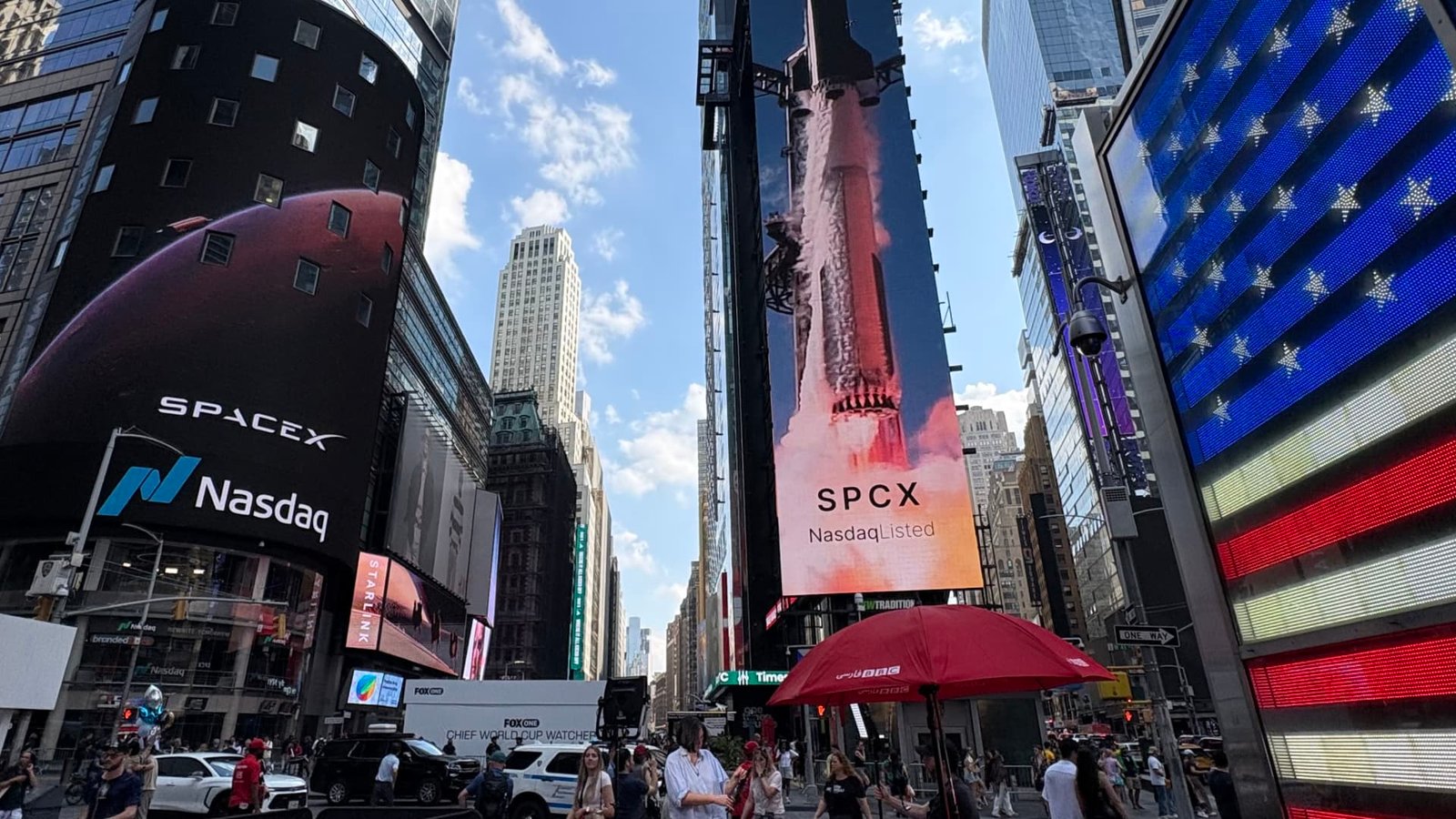
SpaceX has struck one of the most eye-catching technology deals of the year, agreeing to acquire AI coding startup Cursor in an all-stock transaction valued at $60 billion. The move arrives only days after Elon Musk’s rocket company made its debut on the Nasdaq in what was billed as the largest initial public offering ever, instantly reshaping the narrative around the newly public company and its ambitions beyond spaceflight.
The acquisition places one of the fastest-growing software startups in the center of Musk’s expanding AI strategy. Cursor, founded in 2022, has become widely known among developers for an AI-powered coding assistant that can generate, edit and review software more quickly than traditional tools. For SpaceX, the deal appears designed to deepen its competitive position against major AI developers including Anthropic and OpenAI, both of which have built popular products for coding and software assistance.
According to a securities filing referenced by the company, SpaceX expects the merger to close in the third quarter of this year, subject to the necessary regulatory approvals. The agreement was announced just months after SpaceX said it had obtained the right to acquire Cursor later in 2026, setting up a transaction that had been closely watched across both the venture capital and AI sectors.
Why the deal matters
At first glance, the combination may seem unusual. SpaceX is best known for rockets, satellites and launch services, while Cursor is a software-first artificial intelligence company with a product aimed at developers. But the deal fits a broader trend in the AI market: the most valuable companies are increasingly competing not only on models and infrastructure, but on the specific tools users rely on every day.
By bringing Cursor inside the company, SpaceX gains a platform with a large and growing user base in one of AI’s most commercially attractive categories: coding copilots and developer productivity tools. These products sit close to enterprise workflows, command meaningful subscription revenue, and can become embedded in software teams’ daily operations.
The acquisition also comes as Musk continues to knit together a broader network of companies spanning rockets, electric vehicles, social media and AI. Earlier this year, he merged SpaceX with xAI, his artificial intelligence startup, in a move that signaled a more aggressive push into frontier AI. Cursor now looks set to become part of that larger ecosystem.
Inside Cursor’s rise
Cursor has been one of the standout startups in the coding-assistant market since its founding in 2022. The company built a reputation for turning AI into a practical development tool, allowing engineers to speed up routine tasks such as writing boilerplate code, debugging and making edits across large projects.
That approach helped Cursor grow quickly in a highly competitive segment. In November, the company said it had reached more than $1 billion in annualized revenue, an extraordinary milestone for a startup only a few years old. It also landed at No. 37 on CNBC’s 2026 Disruptor 50 list, underscoring its rapid ascent and increasing visibility among investors.
The company’s momentum has not been without challenges. Market-share data cited from spending analytics firm Ramp suggests Cursor’s share of the category fell from 41% in June 2025 to roughly 26% by May 2026. During that same period, Anthropic expanded its lead and now controls about half of the market category, according to the data.
That shift helps explain why a larger parent company with deep technical and financial resources could be an appealing outcome for Cursor. In a market where product quality, model access, distribution and infrastructure all matter, scale has become a strategic advantage.
The financial terms and dilution impact
SpaceX said it will pay $60 billion in class A common stock for Cursor. Based on the company’s IPO valuation, the transaction represents about 3.4% dilution. In practical terms, that means existing shareholders will see a modest reduction in ownership percentage in exchange for a business that SpaceX believes can strengthen its future competitive positioning.
The all-stock structure is notable because it avoids a large cash outlay and signals that SpaceX is using its own market value as currency. That approach is common in high-growth technology transactions when a buyer wants to preserve cash and align the acquired company’s future performance with the larger enterprise.
The IPO backdrop adds another layer to the deal. SpaceX’s public-market debut was already a landmark event, and the Cursor acquisition immediately became one of the earliest major strategic decisions facing the company in its newly public life. The transaction also helped push SpaceX shares higher on Tuesday, with the stock rising about 16% and lifting the company ahead of Amazon and Microsoft by market capitalization, according to the report.
How SpaceX is framing the acquisition
SpaceX has portrayed the move as an investment in frontier AI capabilities rather than a simple expansion into software. In a post on X, the company said it looked forward to working closely with the Cursor team to advance its AI ambitions.
SpaceX said it is eager to collaborate with Cursor’s team to strengthen its frontier AI efforts.
That language suggests SpaceX sees Cursor as more than a standalone coding product. It may serve as both a consumer-facing tool and a technical asset that can feed into broader AI development across Musk’s companies.
Gwynne Shotwell, SpaceX’s president and chief operating officer, had recently told CNBC that the Cursor partnership made strong strategic sense. Her remarks signaled that the deal was not a sudden opportunistic purchase, but rather the culmination of a relationship or strategic arrangement SpaceX had been building toward over time.
Cursor CEO Michael Truell also signaled enthusiasm when the arrangement was first disclosed. He described the collaboration as an important step toward building what he called the best place to code with AI, and said he was excited to work with the SpaceX team as Cursor scaled up its technology.
Cursor’s chief executive described the partnership as an important step in the company’s effort to become the best environment for AI-assisted coding.
Investor overlap and the role of Thrive Capital
One of the more interesting financial threads in the story is the role of Thrive Capital, which reportedly holds stakes in both SpaceX and Cursor. A source familiar with the matter said the combined position is now worth more than $10 billion.
That overlap highlights how deeply intertwined the modern AI investment ecosystem has become. The same major venture investors frequently back the companies that define adjacent layers of the technology stack: model developers, application startups and the infrastructure providers that power them. When those bets converge in a single transaction, the financial implications can be enormous.
For Thrive, the outcome appears especially significant because the firm stands to benefit from value creation on both sides of the transaction. For the broader market, the deal reinforces a familiar pattern in AI: private capital is not merely funding the sector, but helping to shape how its leading companies combine, compete and consolidate.
A market where coding tools have become strategic battlegrounds
Coding assistants are no longer niche developer utilities. They have become one of the most fiercely contested commercial frontiers in AI, because they touch a lucrative and technically demanding customer base: software engineers and enterprise teams.
Products in this category can deliver immediate, measurable benefits such as faster debugging, reduced manual work and quicker feature development. That makes them attractive to individual developers, startups and large enterprises alike.
It also means the market is highly competitive. Anthropic has become a major force in AI coding tools, while OpenAI has continued to expand its software-development offerings. Cursor built its reputation as one of the best-known independent products in this space, but market-share trends suggest the competition has been intensifying.
For SpaceX, acquiring a company like Cursor may be a way to avoid fighting from the outside for software talent and developer attention. Instead, it can bring the product, the team and the revenue stream directly into its own corporate structure.
What SpaceX gains strategically
- A popular developer-facing AI product with strong brand recognition
- Direct exposure to a fast-growing segment of enterprise software spend
- Technical talent experienced in applied AI product development
- Potential synergies with xAI and other Musk-controlled businesses
- A stronger competitive position versus Anthropic and OpenAI
The regulatory path ahead
Even with a signed agreement in place, the transaction is not yet complete. SpaceX said the merger must still receive the appropriate regulatory approvals before closing, and the company expects that to happen in the third quarter.
That timeline matters because large strategic acquisitions in sensitive technology areas can attract scrutiny. Regulators may examine not only the transaction structure, but also the market implications of transferring a high-profile AI coding platform into a company already led by one of the most influential figures in technology.
For now, however, the filing indicates that both sides are moving forward. The market reaction suggests investors believe the deal could enhance SpaceX’s long-term position rather than distract from its core business.
The April arrangement that set the stage
This latest announcement did not come out of nowhere. In April, SpaceX disclosed that it had secured the right to acquire Cursor for $60 billion later in the year. That earlier filing also outlined a potential penalty if the transaction were not completed: SpaceX would owe Cursor a $1.5 billion termination fee and provide $8.5 billion in computing resources.
Those terms show how carefully structured the agreement was from the start. They also suggest both companies expected a high-stakes transaction that would require significant operational coordination, technical resources and legal preparation.
By the time the formal acquisition was announced, the framework had already been laid. The remaining steps were largely procedural, though the scale of the deal ensured it would still draw intense attention from investors, competitors and regulators.
What this means for Musk’s broader AI strategy
The Cursor acquisition should be understood in the context of Musk’s increasingly ambitious effort to shape the AI industry through multiple channels. xAI gives him a direct presence in model development. SpaceX offers massive engineering talent, infrastructure and a newly public equity currency. Cursor brings a popular product with a direct line to developers.
Together, those pieces could form a broader strategic stack: foundation models, developer tools, computing resources and consumer-facing applications. That kind of vertical integration is becoming more common in AI, where the winners may be the companies that can control both the model layer and the products people actually use.
There is also a brand element. Musk has often positioned his companies as builders of the next technological frontier. A coding assistant that helps engineers write better software fits neatly into that narrative, especially if it can be tied to frontier research, enterprise adoption and infrastructure scale.
At the same time, the move raises a practical question: how closely will Cursor remain tied to its original product identity? Some acquisitions preserve the acquired brand while folding in back-end resources. Others transform the startup into a component of the parent company’s wider AI portfolio. SpaceX has not yet publicly detailed how Cursor will be integrated.
Key deal facts at a glance
| Item | Details |
|---|---|
| Acquirer | SpaceX |
| Target | Cursor |
| Deal value | $60 billion |
| Payment structure | All-stock transaction |
| Expected closing | Third quarter of 2026 |
| Regulatory condition | Subject to required approvals |
| Cursor founded | 2022 |
| Cursor annualized revenue milestone | More than $1 billion, reported in November |
| IPO dilution impact | About 3.4% |
Timeline of the deal
| Date / Period | Event |
|---|---|
| 2022 | Cursor is founded |
| April 2026 | SpaceX says it has the right to acquire Cursor later in the year |
| November 2025 | Cursor says it has crossed $1 billion in annualized revenue |
| 2026 | Cursor ranks No. 37 on CNBC’s Disruptor 50 list |
| June 2026 | SpaceX announces the formal $60 billion stock acquisition |
| Q3 2026 | Expected closing period, pending approval |
The competitive backdrop
AI coding tools have moved from novelty to strategic necessity in the race among major AI companies. OpenAI and Anthropic have both built strong positions in the segment, and market-share data indicates Anthropic has become the category leader. In that environment, owning a top-tier product can be as valuable as building a better model.
That is why the SpaceX-Cursor transaction matters beyond the headline number. It is part of a larger industry pattern in which the most aggressive buyers are using acquisitions to lock in distribution, talent and customer relationships before rivals do.
For SpaceX, the acquisition could also reduce dependence on outside providers for certain AI tools. With Cursor inside the company, the group may be able to align product development more directly with its own technical goals and infrastructure resources.
What comes next
The next few months will determine whether the deal closes on schedule and how SpaceX chooses to integrate Cursor into its AI operations. Investors will be watching for details on leadership, product roadmap, organizational structure and whether Cursor remains a distinct brand.
They will also be watching how Musk’s portfolio companies interact. If xAI, SpaceX and Cursor are all part of a more unified strategy, the acquisition could be the first major sign of a broader consolidation play in frontier AI.
For now, one thing is clear: SpaceX is no longer just a rocket company in the market’s eyes. With this acquisition, it is making a forceful statement that it intends to compete for a leading role in artificial intelligence as well.
The deal underscores SpaceX’s determination to compete more directly in frontier AI, not just in aerospace.
As the company moves toward closing, the acquisition of Cursor may prove to be one of the defining transactions of SpaceX’s public-company era.