In short
New York’s 12th District primary became a $27.4 million AI proxy war, with pro- and anti-regulation forces spending heavily around Alex Bores. Bores lost narrowly to Micah Lasher, but the outcome stopped short of a decisive victory for either side.
- AI-linked super PACs spent $27.41 million in a New York primary fight over Alex Bores.
- Bores lost to Micah Lasher 39.1% to 35%, turning the race into a narrow rather than decisive defeat.
- The contest was driven by broader fights over AI regulation, with Anthropic- and OpenAI-linked interests on opposite sides.
- Local Manhattan politics and establishment support for Lasher still proved more important than the industry proxy war.
- AI spending is already spreading to other states, suggesting the New York race may be a preview of the 2026 midterms.
What began as a little-noticed New York Assembly race turned into one of the most expensive political fights ever tied to artificial intelligence. By the time the ballots were counted in New York’s 12th Congressional District, the contest had become a national test of whether the AI industry could use its money to shape the politics of regulation. The answer, at least for now, is mixed: Assemblyman Alex Bores fell short in the Democratic primary, but the pro-industry forces that opposed him did not deliver the wipeout they seemed to want either.
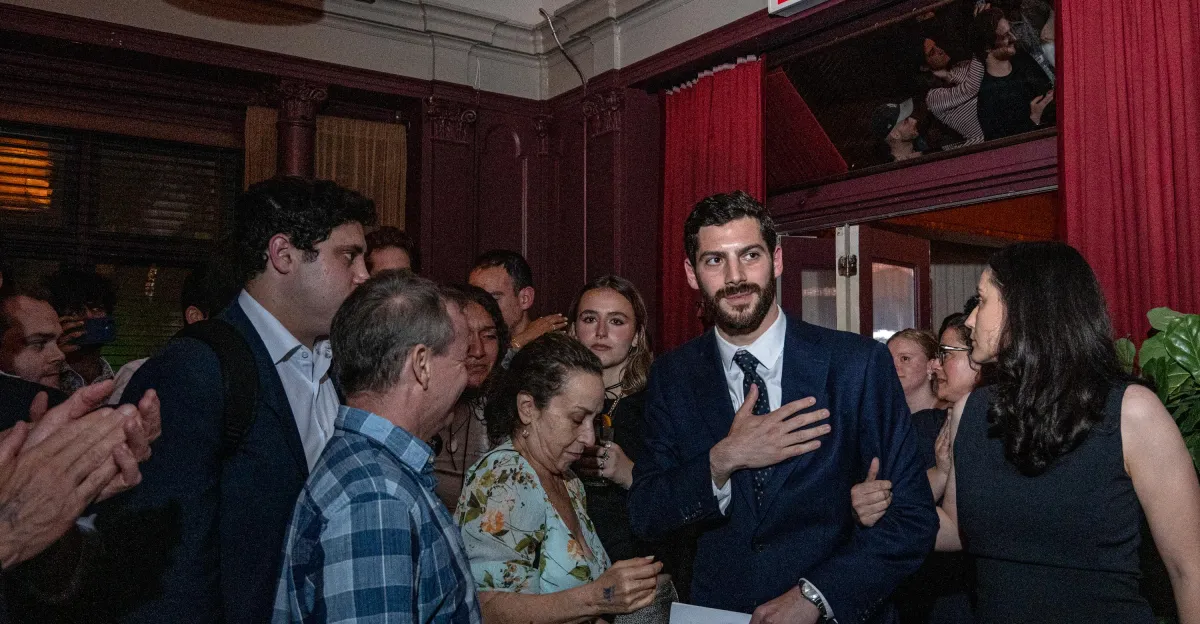
Bores, a state lawmaker who helped drive New York’s high-profile push to impose guardrails on frontier AI companies, finished second to Assemblyman Micah Lasher in the crowded primary. The final tally showed Lasher ahead with 39.1 percent of the vote to Bores’s 35 percent, a narrow but decisive margin in a district that will almost certainly remain in Democratic hands in November. Still, the race drew far more attention than the local ballot line would normally command because of the enormous sums poured into it by rival super PAC networks connected to the AI sector.
According to Federal Election Commission filings, those outside groups spent a combined $27.41 million in a hard-fought proxy battle over the political future of one candidate. On one side were organizations aligned with Anthropic and other backers of stricter AI oversight. On the other were forces tied to OpenAI, Palantir, and investors associated with a more deregulatory agenda. The result was not a clean victory for either camp. Bores did not win the seat, but the anti-regulation coalition also failed to bury him.
A local race that became a national AI referendum
The New York 12th primary had all the ingredients of a Manhattan Democratic contest: an open seat, a retiring incumbent with deep local influence, and a field crowded with well-known names. But the race quickly grew into something else after Bores became a target of industry-backed political spending. That attention transformed what might have been an inside-baseball local contest into a broader referendum on AI regulation, political influence, and the limits of corporate money.
Bores had already made himself a prominent figure in the debate over AI policy. Before the campaign, he coauthored the RAISE Act, one of New York’s most visible attempts to put safety and disclosure requirements on the most powerful AI systems. A version of that bill became state law last year, giving him a legislative accomplishment that made him a target for industry critics and a hero to many supporters of AI oversight.
That legislative profile made him especially interesting to both sides of the industry debate. For companies and investors who view regulation as a drag on innovation, backing opponents of the RAISE Act’s author was an obvious strategy. For those who believe stronger oversight is necessary to prevent harm from advanced AI systems, Bores became a symbol worth defending. The spending that followed reflected that larger fight.
The money behind the fight
The race was fueled by a cluster of super PACs on both sides, each operating independently of the candidate they supported or opposed. Bores was backed by a set of pro-guardrails committees that raised and spent extraordinary sums for a single House primary. Leading the opposition was a super PAC called Leading the Future, which pushed a deregulatory message and counted among its funders executives connected to OpenAI, Palantir, and Andreessen Horowitz.
The pro-Bores side was no less formidable. Groups including Jobs and Democracy PAC, Dream NYC, You Can Push Back, and the Guardrails Alliance funneled money into the race to keep Bores competitive. Some of that support traced back to people and organizations with direct interests in challenging OpenAI’s influence or advancing a more restrictive approach to AI governance.
By the numbers, the balance of spending was lopsided but not overwhelming. The pro-Bores coalition spent $19.26 million, while Leading the Future spent $8.15 million. Put together, the AI-related spending totaled $27.41 million, an extraordinary figure for a single local primary in a district that was never expected to swing to Republicans.
How the super PAC money broke down
The fight was notable not only for its size but also for the way it exposed a developing pattern in AI politics: competing industry factions using political committees to shape the environment around regulation before national rules are even in place. The spending in New York was not simply about winning one seat. It was about establishing a model for how tech companies, founders, investors, and policy groups intend to fight over AI’s future in elections to come.
- Pro-Bores spending: $19.26 million
- Anti-Bores spending: $8.15 million
- Total AI-related spending: $27.41 million
- Vote share: Lasher 39.1%, Bores 35%
Why Micah Lasher still won
Although the AI spending dominated national headlines, the race was still shaped first and foremost by local Manhattan politics. Lasher entered the contest with a major establishment advantage. He was widely viewed as the favored successor to retiring Rep. Jerry Nadler, whose district has long been anchored in the city’s political networks. Lasher also benefited from a super PAC associated with former New York City Mayor Michael Bloomberg, a reminder that this race was not a binary contest between AI factions alone.
Lasher’s political profile also complicated the narrative that he was simply the candidate of the anti-regulation camp. He had, notably, been a co-sponsor of the RAISE Act himself. That detail matters because it suggests the primary was not a clean ideological divide between “pro-AI” and “anti-AI.” Instead, the election became a competition over credibility, local alliances, and who could claim the best balance between innovation and guardrails.
In the end, the district’s institutional and political establishment appeared to matter more than the industry money. For many voters, the primary was likely about neighborhood representation, experience, and continuity after Nadler’s departure, rather than a vote on AI policy alone.
The establishment edge
Lasher’s advantage reflected a familiar New York pattern: candidates with deep local networks, donor relationships, and support from major political actors often have a leg up in crowded primaries. That kind of support can be hard for even the most well-funded insurgency to overcome, especially when the election is taking place inside a safely Democratic district where the real contest is for who represents the party in November rather than who wins the seat outright.
The final ranking of the field underscores that point. Bores finished ahead of several other high-profile contenders, but not the frontrunner:
- Micah Lasher — 39.1%
- Alex Bores — 35%
- Jack Schlossberg — 10.8%
- Nina Schwalbe — 7.1%
- George Conway — behind Schwalbe, with only a distant share of the vote
Schlossberg, the grandson of President John F. Kennedy, and Conway, the well-known former Republican lawyer turned Trump critic, both drew attention that did not translate into a serious threat to Lasher. Their underperformance helped highlight how much of the race’s actual gravity came from local political infrastructure and organized support rather than celebrity alone.
The larger AI battle behind the primary
What made the race significant beyond Manhattan was the way it mirrored the broader split inside the AI industry. On one side are companies and investors pushing for lighter rules, fewer compliance burdens, and a faster path to deployment. On the other are AI firms and backers who believe safety requirements, transparency obligations, and policy constraints are necessary to avoid real-world harm from rapidly advancing systems.
That divide is not just philosophical. It is increasingly being translated into political spending, campaign infrastructure, and issue messaging. The NY-12 fight showed that AI regulation has moved from think tanks and statehouses into the thick of electioneering. It also revealed that the industry is willing to spend at a scale once reserved for the biggest national policy fights.
Anthropic’s role in the broader spending picture was especially notable. The company has been one of the most visible corporate advocates for stronger AI guardrails, and its financial support helped energize the pro-Bores side. That, in turn, made the primary look like a proxy struggle between Anthropic and OpenAI, even though the actual coalition maps were more complicated than a simple two-company showdown.
“They set out to make people afraid to stand up to them,” Bores said in a statement after the results were known, adding that the close finish showed there was still appetite for resistance to the power of AI companies.
Bores also stressed that he had not entered the race only to make a point about artificial intelligence. But after the loss, he framed the campaign as proof that aggressive industry pressure may not intimidate lawmakers as much as some tech leaders assume.
What the race says about the future of AI politics
The primary’s broader significance lies in what comes next. Even though NY-12 is likely to remain in Democratic hands, the lesson of the race will not stay confined to Manhattan. AI companies, venture capital firms, and policy-focused donors are already investing in other contests across the country where regulation could become a campaign issue. The New York race offered a template: identify lawmakers with a record on AI policy, amplify them or attack them with super PAC money, and use local elections to influence national debate before Congress settles on a federal framework.
That strategy is already visible elsewhere. Campaign finance tracking shows that AI-related political groups have spent more than $50 million across 19 states, with New York’s 12th District standing out as the most expensive battleground so far. Texas primaries have also seen heavy spending, though on a smaller scale. The pattern suggests that what happened in Manhattan was not an anomaly but an early example of how AI policy fights could play out in election cycles ahead.
Why the general election may look different
The general election for NY-12 is unlikely to reproduce the same level of drama. The district is overwhelmingly Democratic, which means the November contest should be far less competitive on partisan grounds. But that does not mean the AI issue will disappear.
Instead, the fight is likely to be shaped by a different set of national concerns and political calculations, including the party alignment of GOP candidates, the influence of Donald Trump on Republican primary politics, and the unpredictable role of AI regulation in a broader election year defined by multiple competing issues.
Some of the topics that could matter more in November include:
- Inflation and the cost of living
- The war with Iran and foreign policy tensions
- Data center expansion and its local effects
- Party loyalty and Trump’s influence over GOP candidates
Those issues may leave less room for AI as a standalone voter concern. But the election still matters to the industry because the super PACs are treating local races as signal points for a much larger map.
OpenAI, Anthropic, and the politics of influence
The proxy nature of the contest cannot be separated from the broader question of how major AI firms seek political influence. Companies and executives in the sector increasingly understand that legislation, state-level rulemaking, and the composition of Congress can shape everything from product timelines to compliance costs to liability exposure.
For OpenAI and its allies, backing candidates and committees that resist heavy-handed regulation fits a broader strategy to preserve room for fast-moving innovation. For Anthropic and aligned donors, the political case is that guardrails are not an obstacle but a prerequisite for public trust and sustainable deployment.
The New York primary made those competing visions visible. It also showed how quickly industry money can distill abstract policy disagreements into sharp election narratives. Voters may not always care about the fine print of AI regulation, but they can be mobilized by the idea that outside interests are trying to buy influence over the rules that govern emerging technology.
What super PACs can and cannot do
The Bores race also highlighted the limits of outside spending. Super PACs can pour in advertising dollars, shape voter perceptions, and elevate or damage candidates. But they cannot substitute for local support, incumbent advantage, or the basic political architecture of a district.
That helps explain why a well-funded campaign against Bores did not produce a collapse, and why the pro-Bores effort could not quite carry him over the finish line. Money mattered enormously, but it was only one force among many.
In practical terms, the race suggests three truths about AI politics:
- Industry spending can rapidly nationalize a local race.
- Establishment politics still matter more than a single issue in many districts.
- AI regulation is becoming a live campaign question, not just a policy debate.
A race that ended without a clean winner
Because the outcome was close, both sides can claim some degree of vindication. Supporters of stronger AI guardrails can point to the scale of the pro-Bores operation and the fact that Bores turned an obscure district race into a national conversation. Opponents can say that, despite huge spending and intense attention, the pro-regulation side failed to secure a victory in a district where the candidate’s policy profile was central to his brand.
That ambiguity may be the most important takeaway. The battle over Bores did not prove that one camp has permanent momentum. It showed that AI politics has entered an era where major players are willing to spend like traditional industries defending existential interests, but where local factors still determine who actually wins office.
For voters, that means the next round of AI politics will likely be even louder, more expensive, and more strategically targeted. For lawmakers, it is a warning that positions on AI are no longer just background policy preferences; they are becoming campaign liabilities or assets. And for the industry, it is a reminder that the race to shape AI regulation will be fought not only in Washington and state capitals, but in local primaries where few expected the technology to become a headline issue.
Key numbers from the New York 12th primary
| Category | Amount / Result | What it means |
|---|---|---|
| Total AI-related spending | $27.41 million | A record-scale proxy fight for a local primary |
| Pro-Bores spending | $19.26 million | Backers of stronger AI guardrails |
| Anti-Bores spending | $8.15 million | Backers of a more deregulatory AI agenda |
| Micah Lasher vote share | 39.1% | Won the Democratic primary |
| Alex Bores vote share | 35% | Finished second after becoming a national symbol in the fight |
| District outlook | Strongly Democratic | General election is expected to remain in party hands |
Looking ahead
The financial scale of the race is likely to be remembered longer than the margin itself. Bores’s loss may prevent advocates from claiming a clean victory, but it does not erase the significance of what happened in New York. AI companies and their allies have shown they are prepared to spend heavily to influence policy outcomes. Their opponents have shown they can respond in kind.
That leaves American politics with a new reality: AI is no longer only a subject for conference panels, regulatory hearings, and Silicon Valley debates. It is now a live electoral issue, with donors, super PACs, and candidates all learning how quickly a local race can become a proxy war over the future of the technology.
The New York 12th primary did not settle the national fight over AI regulation. But it made something clear. The contest for political power over artificial intelligence has already begun, and it is likely to intensify as the midterms approach.