In short
Former NVIDIA robotics marketing lead Amulya Vishwanath says the industry has not reached a robotics ChatGPT moment yet because the field is still rebuilding foundational hardware, software and safety standards. She argues robotics is in a “Lego era” of modular progress rather than a single-model breakthrough.
- Amulya Vishwanath says robotics is still in a “Lego era,” not a ChatGPT-style inflection point.
- She argues the sector still needs better hardware, software integration and safety standards.
- Her firm, Techable VC, is investing in physical AI across robotics, materials science and life sciences.
- The debate centers on whether robotics will be transformed by one general model or by gradual infrastructure improvements.
NVIDIA alumnus and venture capitalist Amulya Vishwanath says robotics has not yet reached its ChatGPT-style inflection point because the industry is still rebuilding its core parts, from actuators and robotic hands to software stacks and safety rules. Her view matters because it cuts against the increasingly popular argument that a single general-purpose foundation model will soon make today’s fragmented robotics approaches obsolete.
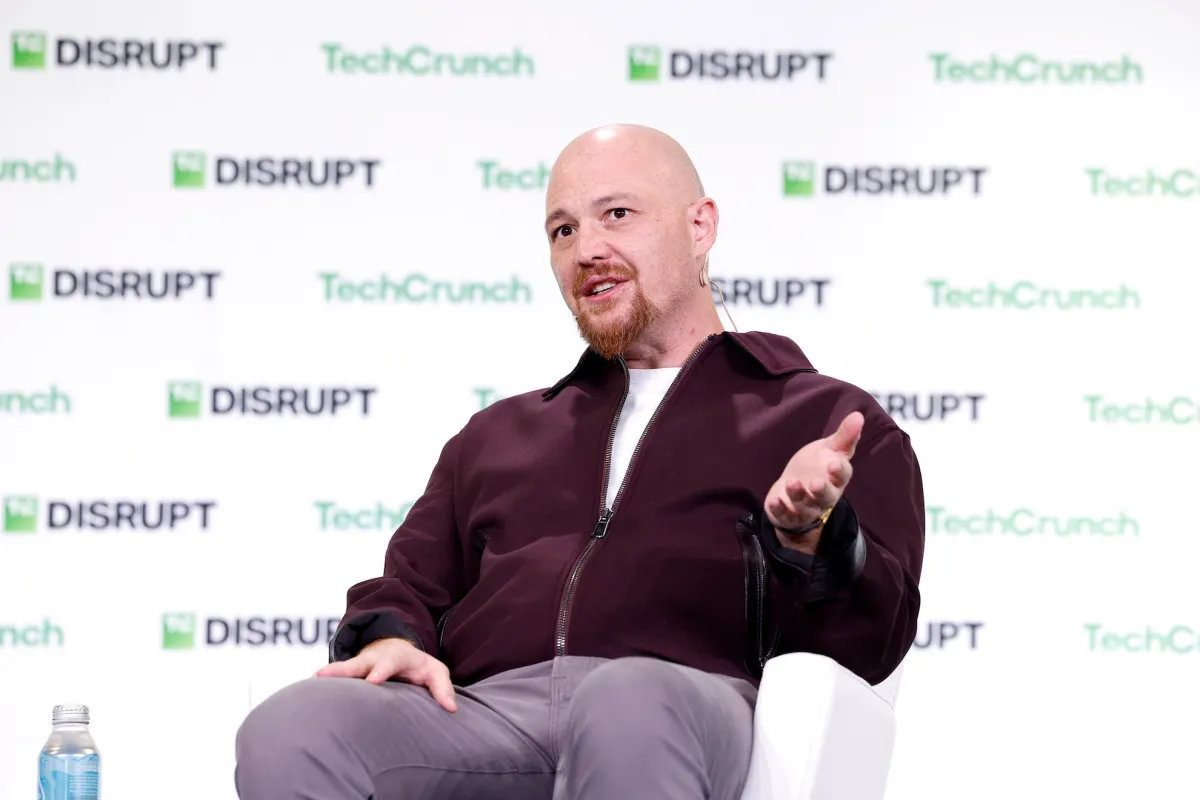
Vishwanath, who spent seven years helping lead product marketing for NVIDIA’s robotics platforms before founding Techable VC, shared her perspective on TechCrunch’s Equity podcast while discussing where she is placing early-stage bets in physical AI. Her firm is focused on robotics, materials science and life sciences, and she sees the sector as promising but still structurally immature.
That assessment lands at a moment when robotics investing is heating up again, fueled by advances in machine learning, cheaper sensors and renewed interest in automation. Yet Vishwanath argues that the field remains earlier than many enthusiasts assume. In her telling, robotics is not on the verge of a sudden, universal leap forward. Instead, it is assembling its foundations piece by piece.
Her metaphor is simple: robotics is in its “Lego era.” The building blocks are visible, but they have not yet snapped together into a standardized, mass-market platform. That means the industry still needs more reliable physical components, better integration and more mature guardrails before it can support a true breakout moment.
What Vishwanath means by the “Lego era”
Vishwanath’s “Lego era” label is meant to capture how robotics development is still highly modular and unfinished. Rather than one dominant architecture, the field is made up of many interchangeable pieces that are improving at different speeds.
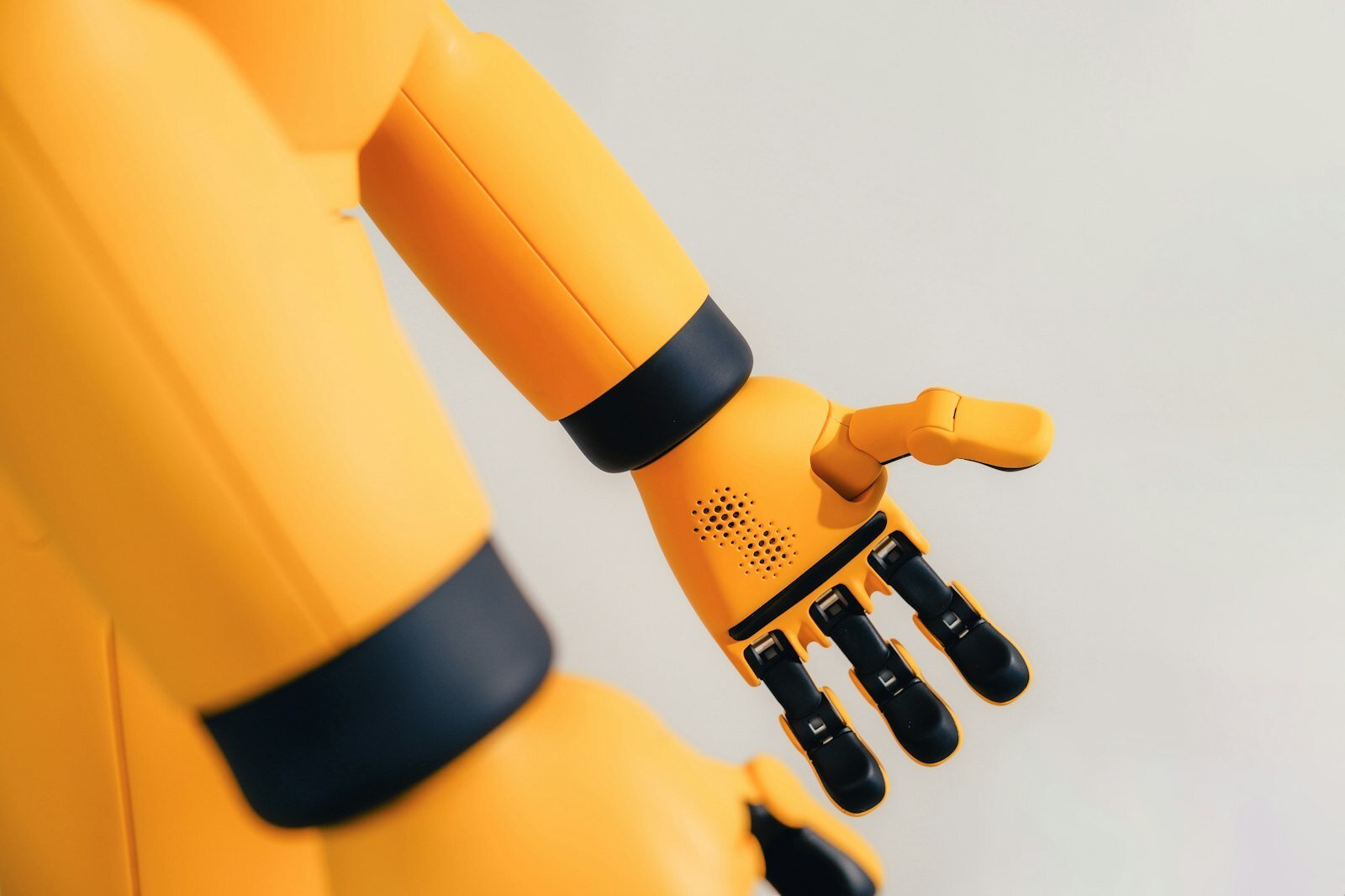
Those pieces include the hardware that moves robots, the end-effectors that let them interact with the world, the software that coordinates behavior and the standards that define how safely machines should operate around people.
In practical terms, that means robotics companies are still solving core infrastructure problems before they can scale like software platforms. A chatbot can be updated centrally and distributed instantly. A robot, by contrast, must work reliably in a messy physical environment where the cost of failure is real and immediate.
Vishwanath’s point, as discussed on Equity, is that robotics still needs a more complete set of dependable building blocks before any single model or product can redefine the market.
That distinction helps explain why many robotics businesses are still vertical-specific. Warehouse automation, surgical robotics, manufacturing systems and consumer robots each face different constraints, environments and regulatory hurdles. A generalized model may eventually help across categories, but it does not erase the hard engineering work required to make machines useful in the physical world.
Why some investors think robotics could have a ChatGPT moment
Some founders and investors believe robotics is close to the kind of leap that large language models delivered for software. The core argument is that a general foundation model, trained on massive datasets and capable of transferring knowledge across tasks, could dramatically simplify robotics development.
That view has gained traction as AI systems become more capable at perception, planning and language-grounded instruction. If one large model can help a robot understand its surroundings, reason about tasks and adapt to new situations, then many specialized systems could be rendered less essential.
General Intuition chief executive Pim de Witte made that case earlier this year on TechCrunch’s Equity podcast, suggesting that one broadly capable foundation model could make a large portion of current robotics work redundant. In that telling, the industry is waiting for a single software breakthrough to unlock a much broader wave of automation.
Vishwanath does not dismiss that possibility, but she clearly believes the timeline is more complicated. In her view, the bottlenecks are not just algorithmic. They are mechanical, operational and systemic. Robotics still has to solve hardware reliability, deployment complexity, safety validation and the challenge of working in unstructured environments.
How robotics differs from chatbot breakthroughs
Robotics differs from chatbot breakthroughs because physical systems are harder to update, slower to deploy and far more expensive to fail. A text model can be evaluated, retrained and rolled back digitally. A robot arm in a factory or a machine in a lab must behave safely and consistently in the real world.
That difference changes the economics of innovation. It also changes the pace at which customers adopt new tools. Buyers of robotics systems often need proof of uptime, maintenance support, certification and integration with existing operations before they commit.
The result is an industry where technical progress does not automatically translate into mass adoption. Even impressive demonstrations can take years to become commercially durable products.
Who is Amulya Vishwanath, and why does her view matter?
Vishwanath is a notable voice because she brings both an operator’s and an investor’s perspective to physical AI. Before launching Techable VC, she spent seven years at NVIDIA working on product marketing for the company’s robotics platforms, giving her a front-row seat to the hardware and software trends shaping the field.
She is also one of the early women executives from NVIDIA to spin out and launch her own early-stage investment firm. That background gives her credibility with founders building the next generation of robotics systems, as well as a close understanding of what the semiconductor and AI infrastructure stack can and cannot currently do for machines in the physical world.
At Techable VC, she is looking for startups in physical AI across robotics, materials science and life sciences. Those categories share a common thread: they are technologically demanding, deeply tied to the real world and likely to require long development cycles before scale.
Her perspective is useful precisely because it sits between the hype cycle and the lab bench. She sees how quickly AI capabilities are evolving, but she also sees the stubborn realities of deployment, manufacturing and safety.
What Techable VC is betting on
Techable VC is positioning itself around the parts of the economy where AI meets atoms rather than just pixels or text. That includes robots, new materials and life sciences tools, all of which depend on scientific advances and real-world testing.
These areas are attractive to investors because they address large markets and can create substantial value if they work. But they are also slower, more technical and more capital-intensive than many software businesses.
Vishwanath’s focus suggests she is looking for companies that can solve foundational problems rather than simply wrap AI around existing workflows. In robotics, that could mean better manipulation systems, more capable sensors, sturdier components, improved simulation, or software that makes robots easier to train and deploy.
In materials science and life sciences, similar logic applies. The highest-value startups may be those that can accelerate experimentation, improve discovery and shorten the cycle between research and practical use.
How physical AI is different from software AI
Physical AI is different from software AI because it must operate under the laws of physics, not just the logic of data. The system has to see, plan, move and recover from mistakes in a real environment, often with humans nearby.
That creates a much tougher product challenge. A software bug can crash an app. A robotics bug can damage property, halt operations or create safety incidents.
Because of that, even when the intelligence layer improves, the rest of the stack still matters. Hardware quality, calibration, perception accuracy and safety protocols all remain essential parts of the product.
Why safety standards still matter so much
Safety standards are one of the clearest signs that robotics remains in a formative stage. Vishwanath’s comments highlight that the industry is still rebuilding the norms that allow machines to work alongside people confidently and consistently.
Unlike consumer apps, robots are typically governed by operational constraints that vary by setting. A warehouse robot does not face the same requirements as a surgical robot or an industrial arm. The common thread is that all of them need dependable behavior, and often certification, before they can be deployed at scale.
This is one reason the sector tends to advance in steps rather than in one dramatic leap. Each new generation of robots depends not only on smarter models but also on better standards, more robust testing and more predictable performance across sites.
For startups, that reality can be both a hurdle and an opportunity. The hurdle is obvious: the path to market is longer. The opportunity is that companies that solve reliability and safety better than competitors can build durable advantages.
What the current robotics moment looks like
The current robotics moment is defined by rising ambition and unfinished infrastructure. Investor interest is stronger, AI models are more capable and the idea of autonomous machines is more compelling than at any time in recent memory.
But the industry still resembles a patchwork. Different companies are tackling different parts of the stack, from foundation models and simulation to grippers, perception systems and deployment software. There is progress, but not yet the kind of convergence that would create a single universal robotics platform.
That is why Vishwanath’s framing resonates with many practitioners: the field is moving fast, but it is still assembling itself. The ingredients are improving, yet the recipe is not settled.
This is also why comparisons to ChatGPT can be misleading. Chatbots benefited from a digital environment in which distribution, iteration and adoption are comparatively fast. Robotics must marry AI with mechanical reliability, and that makes timelines harder to compress.
| Topic | Current reality | Why it matters |
|---|---|---|
| Core hardware | Actuators, hands and other components are still evolving | Limits dexterity, durability and cost |
| Software stack | Many systems remain specialized and fragmented | Makes interoperability and scaling harder |
| Safety standards | Rules and norms are still being refined | Slows deployment but improves trust |
| Foundation models | Getting more capable, but not yet universal | Could improve generalization if paired with better hardware |
| Commercial maturity | Early-stage across much of the market | Suggests robotics is still pre-breakout |
How investors should read the debate
Investors should read the debate as a question of timing, not just possibility. Few serious observers doubt that AI will reshape robotics. The disagreement is about whether that shift will arrive through a sudden platform moment or through gradual infrastructure buildout.
Vishwanath’s stance implies that investors should be patient and selective. Rather than expecting a sweeping replacement of specialized robotics work, they may need to back the companies that make general intelligence useful in the real world.
That could include startups building foundational hardware, tooling for robot developers, simulation environments, data infrastructure, or software that translates advances in AI into dependable field performance.
It also suggests that the most valuable robotics companies may not be the flashiest ones. They may be the businesses that quietly fix the hardest bottlenecks: grasping, perception, calibration, uptime and safety.
What could unlock the next stage?
The next stage for robotics will likely depend on several things moving together: better AI models, cheaper and more reliable hardware, stronger safety frameworks and clearer demand from customers willing to deploy at scale.
When those elements begin to align, the industry could see faster commercialization. For now, however, Vishwanath’s message is that robotics is still in the construction phase.
That does not make the opportunity smaller. If anything, it may make it larger. Entire categories of real-world automation remain unsolved, and the companies that crack the infrastructure layer could benefit for years.
But the path will likely be less sudden than the rise of ChatGPT. Instead of a single overnight breakthrough, robotics may advance through a series of compounding improvements that gradually turn today’s prototypes into dependable products.
Timeline: How the conversation around robotics AI is evolving
The debate over robotics has changed quickly as AI capabilities have improved, but the industry’s physical constraints have not disappeared. The timeline below shows how those ideas are shaping the current discussion.
| Period | Development | Market implication |
|---|---|---|
| Pre-2022 | Robotics progress was steady but fragmented across use cases | Few signs of a universal platform breakthrough |
| Late 2022 | ChatGPT resets expectations for what foundation models can do | Investors begin asking whether robotics has its own breakout moment ahead |
| 2023-2024 | AI capabilities expand across perception and planning | More interest in general-purpose robotics models |
| 2025 | Debate intensifies between “platform moment” believers and infrastructure-first skeptics | Funding and strategy increasingly hinge on whether robotics needs one model or many building blocks |
Bottom line for the robotics sector
Vishwanath’s core message is that robotics is promising but not yet ready for a ChatGPT-like transformation. The sector still has to finish assembling the physical, software and safety layers that make machines broadly useful.
For founders, that means the opportunity remains open, but the work is still hard. For investors, it means the best bets may be on the companies solving the unglamorous but essential infrastructure problems that let robots move from demos to dependable deployment.
And for the industry as a whole, it means the most important breakthrough may not be a single model at all. It may be the cumulative effect of many improvements finally clicking into place.
Until then, robotics remains in its Lego era: full of promise, but still waiting for all the pieces to fit.
Frequently asked questions
What did the former NVIDIA executive say about robotics and ChatGPT?
She said robotics has not yet reached a ChatGPT-style breakthrough because the industry is still assembling its core building blocks. In her view, the field needs more mature hardware, software and safety infrastructure before one model can transform everything.
Why does she call robotics the “Lego era”?
She uses that phrase to describe an industry made up of many modular pieces that have not fully come together. The parts exist, but actuators, robotic hands, software systems and safety standards are still being improved and standardized.
Who is Amulya Vishwanath?
Amulya Vishwanath is a former NVIDIA robotics product marketing leader who spent seven years at the company before launching Techable VC. She is now a founder and managing partner investing in physical AI, including robotics, materials science and life sciences.
What is Techable VC investing in?
Techable VC is focused on physical AI, with early-stage bets across robotics, materials science and life sciences. The firm is looking for companies that solve hard real-world problems rather than software-only AI applications.
Do all investors agree robotics needs one general foundation model?
No, investors are split. Some believe a general foundation model could unlock a robotics breakthrough, while others argue the industry still needs specialized components and safety systems before that kind of platform moment can arrive.