Updated October 14, 2026 6:54 pm
In short
Zenzap has raised $44 million to expand its AI workplace messenger, and now says it has 50 staff, plans to hire in product and R&D, and is already being used internally by Bessemer while targeting frontline industries beyond office teams.
- Zenzap raised $44 million from Bessemer, Lightspeed, The Garage and several individual investors.
- The startup is building an AI workplace messenger meant to replace consumer apps like WhatsApp in business settings.
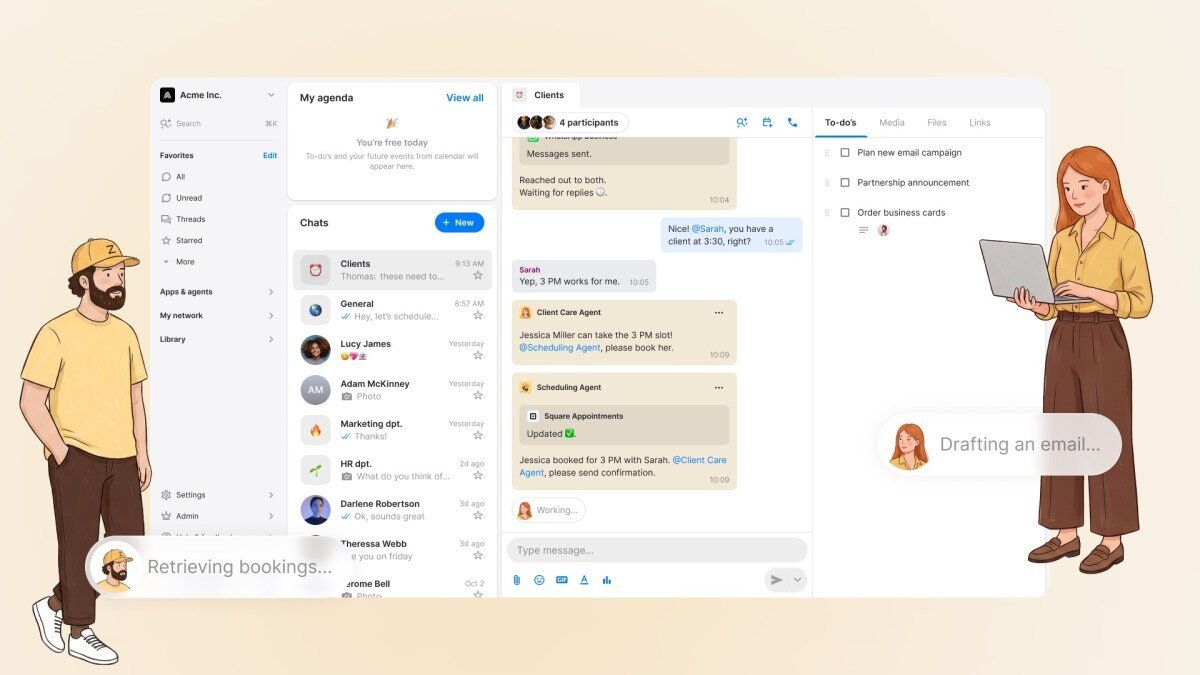
- Its product combines chat, tasks, scheduling, AI search and automation for frontline and mobile-first teams.
- Customers reportedly include FedEx, Dollar General, Taco Bell, Starbucks, Casey’s and Regal.
- Founder Guy Weiss says the company initially bootstrapped before deciding to pursue venture backing.
Update — October 14, 2026 6:54 pm
Zenzap also says it now has 50 employees spread across the U.S., Tel Aviv and Europe, and plans to add more staff in product and R&D.
On the company side, founder Guy Weiss said Bessemer’s Adam Fisher pushed him to take the business venture-backed so it could scale, and Bessemer’s Fisher said the firm has already been using Zenzap internally to manage investment-team discussions and deal flow.
Weiss also said Zenzap is designed for a broader set of frontline industries, including hospitality, construction, healthcare and fast food, where workers need a mobile-first tool rather than Slack-style software.
Zenzap has raised $44 million to expand its AI-powered workplace messaging app, a platform designed to give companies a more secure alternative to consumer chat tools such as WhatsApp, Telegram and iMessage. The funding, announced on October 14, 2026, will help the startup push deeper into business communication, automation and AI-assisted coordination for teams that need mobile-friendly chat without losing corporate control.
The round comes as many organizations still rely on personal messaging apps to run daily operations, despite the security, compliance and IT-management headaches that come with them. Zenzap’s pitch is simple: offer the speed and familiarity of consumer chat, but wrap it in the context, permissions and workflow tools that businesses need.
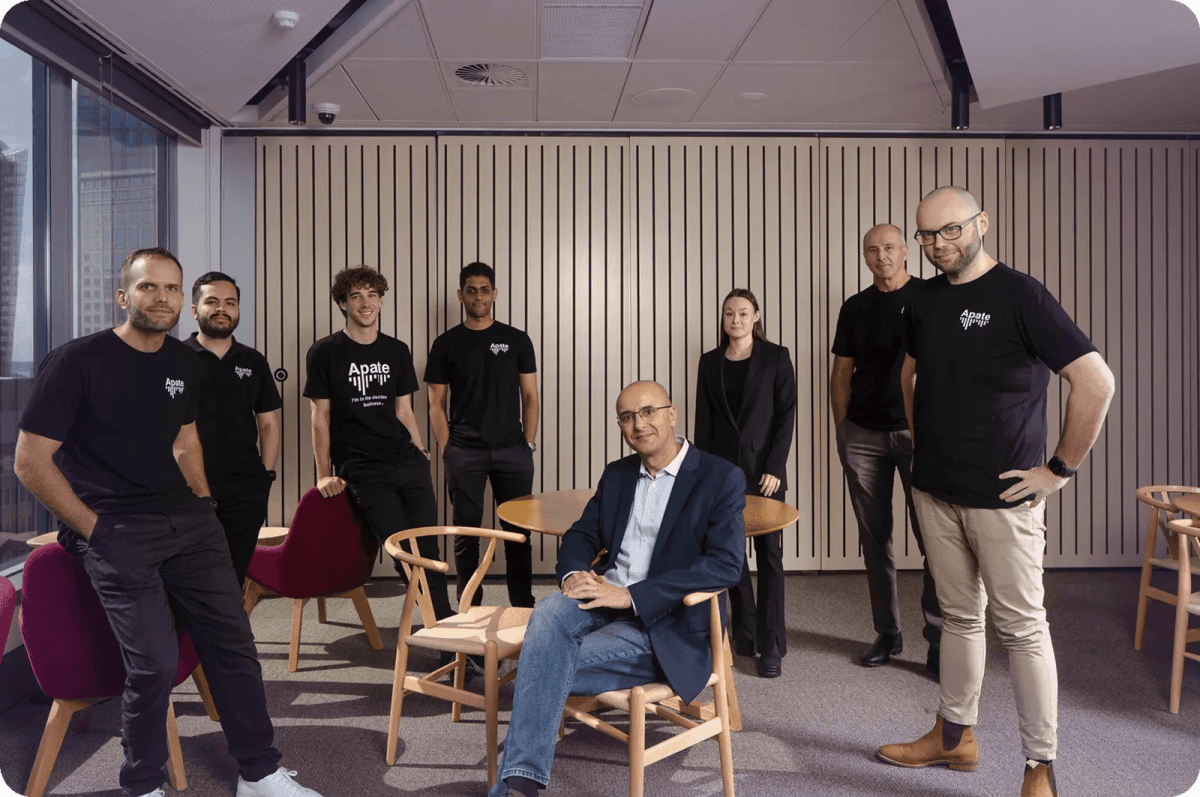
For founder Guy Weiss, the raise is especially notable because it is his first time securing outside capital. After bootstrapping an earlier company, selling it, and spending years as an investor, Weiss initially funded Zenzap himself before agreeing that the startup would need venture support to scale.
Why Zenzap is targeting WhatsApp-heavy workplaces
Zenzap is aiming at a problem that is easy to recognize and hard to fix: employees often default to whatever messaging app they already use in their personal lives. That usually means WhatsApp in many markets, but also Telegram, Discord or iMessage, depending on region and workplace culture.
That behavior is convenient, but it creates a long list of issues for employers. Consumer apps are not built around enterprise permissions, audit trails, device management or IT oversight. They can also blur the line between personal and professional communication, making it harder for workers to disconnect after hours and for companies to keep sensitive information inside approved systems.
Zenzap’s argument is that existing enterprise tools are not fully solving the problem either. Slack and Microsoft Teams are powerful, but Weiss says they were built with different user habits in mind and often feel cumbersome in mobile-first environments or for frontline workers who need something more immediate and less technical.
What problem does the startup say it solves?
Zenzap says it gives businesses a messaging layer that is easy enough for everyday employees to adopt, while also being structured enough for IT teams to manage safely. The company is positioning itself not as another general collaboration suite, but as a communication hub for organizations that need to coordinate quickly across distributed workforces.
That framing matters because its target customers are not just software teams. Zenzap says it is built for sectors such as hospitality, construction, healthcare and fast food — industries where people are often spread across shifts, locations and devices, and where the main requirement is fast, reliable coordination rather than formal project management.
Weiss argues that consumer messaging apps and conventional enterprise tools both miss the mark for workplace AI, because one side lacks compliance and the other was not designed for a mobile-first, everyday-use workflow.
How much funding did Zenzap raise?
Zenzap raised $44 million from a group of investors that includes Bessemer Venture Partners, Lightspeed and The Garage. Individual backers in the round include Wix president Nir Zohar and Yoram Tietz, the former general manager of EY.
The size of the round signals that Zenzap is trying to move quickly from startup-stage validation to broader market expansion. In a crowded collaboration software market, the company will need enough capital to build product depth, win trust from enterprise buyers and prove that its model can spread beyond a handful of pilot customers.
For Bessemer, the investment is also a bet on a shift in workplace software: if AI agents become a standard part of everyday employee communication, the messaging layer they live inside could become highly valuable.
Why did the founder initially avoid venture money?
Weiss says he originally wanted to build the company without outside funding. He had already experienced success as a founder and did not want the pressure of another fundraising cycle or the reputational risk that can come with it.
According to Weiss, he used his own capital at the beginning and even worked from Bessemer’s office before deciding the business needed to be venture-backed if it was going to scale. That shift came after discussions with Bessemer partner Adam Fisher, who persuaded him that building a product meant for broad adoption would require significantly more resources.
The backstory helps explain why this round stands out. It is not simply another enterprise software financing; it is a founder returning to company-building after an earlier exit, choosing to re-enter the fundraising world only once the opportunity looked large enough to justify it.
What does Zenzap actually do?
Zenzap combines standard team chat with a set of AI and workflow features intended to make it more than just a messaging app. The free tier includes group chats, direct messages, task management, calendar integration, scheduling tools, AI-powered voice chat and search.
Paid plans start at $51 per month for up to 20 users. Those tiers unlock voice and video calls, smart task sorting, task templates and larger file storage limits. They also allow AI search across the workspace and let users turn messages directly into tasks.
The company also sells AI agents for workflow automation, plus voice-note and call transcription features. Those functions use a credit-based pricing system, suggesting Zenzap sees AI as a usage-driven revenue stream layered on top of subscriptions.
| Feature | Free tier | Paid tier | AI / usage-based tools |
|---|---|---|---|
| Messaging | Group chats, direct messages | Same core chat tools | — |
| Work management | Task management, calendar and scheduling | Smart task sorting, task templates, higher file storage limits | Message-to-task conversion |
| Calls and voice | AI-powered voice chat | Voice and video calls | Voice-note and call transcription |
| Search | AI-powered search | Workspace-wide AI search | Search with AI context |
| Automation | Basic productivity features | Expanded workflow features | AI agents for automation |
Who is using Zenzap now?
Zenzap says it already counts a number of recognizable businesses among its customers, including FedEx, Dollar General, Taco Bell, Starbucks, Casey’s and Regal. The company also says individual branches or locations of large chains such as IHOP and McDonald’s use the platform to coordinate staffing and supply-related discussions.
That customer mix is important because it shows where the product is finding traction. Zenzap is not trying to sell only to headquarters teams or knowledge workers. Instead, it appears to be appealing to operational staff who need to coordinate shifts, share updates and manage tasks in real time.
Weiss said that each industry has its own workflows, but they all share a common need: a self-serve system that employees can learn quickly and use without formal training. The company believes AI can help teams handle those routines more efficiently.
Why are frontline industries an attractive market?
Frontline industries are attractive because they represent large workforces, high communication frequency and repeated daily processes. Restaurants, logistics, retail and healthcare all depend on quick updates and shift-based coordination, which makes them prime candidates for a mobile-first communication product.
They also tend to have less tolerance for complicated software. If a platform is not easy to use on a phone and does not provide immediate value, adoption can stall. That is one reason Zenzap emphasizes simplicity and self-service instead of heavyweight enterprise deployment.
How is Zenzap different from Slack and Teams?
Zenzap’s answer is that it is designed around the realities of everyday mobile communication rather than desktop-centered workplace software. Weiss argues that Slack and Microsoft Teams are strong products, but they were not built specifically for the sort of fast, casual and highly distributed communication patterns common in many non-technical workplaces.
He also says workplace AI cannot simply be added on top of consumer apps that fail to meet corporate security standards. In his view, the combination of AI agents and workplace messaging requires a platform built with compliance, IT governance and organizational context from the start.
That positioning suggests Zenzap is trying to occupy a niche between familiar chat apps and traditional collaboration suites. Its product strategy is not only about replacing one app with another, but about rethinking where AI should live inside daily work communication.
Fisher, the Bessemer partner who supported the company early on, said the startup’s broad focus could be an advantage because many workers outside the developer world want a clean separation between work and personal messaging and are ready for AI helpers embedded in that experience.
Why investors think the timing is right
Investors backing Zenzap appear to believe that the workplace communication market is being reshaped by two simultaneous forces: the continued spread of mobile-first work and the rise of AI agents that can do more than answer questions.
If AI becomes a daily assistant for scheduling, task routing, note-taking and operational coordination, then the communication app itself could become the primary place where work happens. That creates an opportunity for platforms that already sit inside employee conversations rather than only on the periphery of corporate software stacks.
For Bessemer in particular, the investment is also a practical experiment. Fisher said the firm itself uses Zenzap inside its investment team to manage conversations and deal flow, indicating the product is already being tested in a real business setting.
Where does the company go from here?
Zenzap currently has 50 employees spread across the United States, Tel Aviv and Europe. The company says it plans to expand its product and research and development teams in the near future, a sign that the new funding will be used to accelerate both engineering and go-to-market work.
The challenge ahead is substantial. Zenzap must prove that businesses will switch communications habits, that its AI tools are useful enough to justify the added complexity, and that it can sustain adoption across different industries rather than only a few early customer groups.
It also enters a market where incumbents are not standing still. Slack, Microsoft and other collaboration platforms continue to add automation and AI features, while consumer messaging products remain deeply entrenched in daily life. Zenzap’s job is to convince companies that those familiar habits can be redirected into a more secure and better managed environment without losing speed or ease of use.
Timeline of Zenzap’s growth
Here is a quick look at the company’s path to this funding round.
| Year | Milestone | Why it mattered |
|---|---|---|
| 2012 | Guy Weiss bootstraps StuccoMedia | Shows his earlier founder experience and preference for self-funding |
| 2015 | StuccoMedia is sold to Market Group | Gives Weiss an exit and later investor experience |
| 2022 | Zenzap is founded | Weiss starts the new company after meeting Bessemer’s Adam Fisher |
| 2022-2026 | Initial bootstrapping and product development | Builds the platform before taking venture money |
| 2026 | $44 million funding round announced | Provides capital for scaling product, R&D and market expansion |
What this means for workplace software
Zenzap’s fundraise reflects a broader change in how investors are thinking about workplace software. The most interesting products in the category are increasingly those that sit where people already communicate, not where managers wish they would communicate.
If the startup succeeds, it could help define a new class of AI-enabled workplace messenger built for non-technical employees, especially in industries where work is coordinated in short bursts over mobile devices. If it fails, it will still have highlighted a real and persistent pain point: businesses want the convenience of consumer chat without surrendering control, security or separation between work and personal life.
For now, Zenzap has the capital, the customer list and the backing of well-known investors to make its case. The next test is whether enough companies decide that their employees need a new kind of chat app — one built not just for messaging, but for the AI-assisted operating style of modern work.
Frequently asked questions
What is Zenzap?
Zenzap is an AI workplace messenger designed for companies that want a secure, mobile-friendly alternative to consumer chat apps. It combines team chat with tasks, scheduling, search and automation features so employees can communicate and coordinate in one place.
How much did Zenzap raise?
Zenzap raised $44 million in a funding round backed by investors including Bessemer Venture Partners, Lightspeed and The Garage. The company says the money will help it scale product development, research and development, and customer growth.
Why is Zenzap trying to replace WhatsApp at work?
Zenzap is trying to replace WhatsApp at work because consumer messaging apps are popular but often fail enterprise security and compliance requirements. The startup says businesses need the simplicity of chat plus IT control, auditability and AI tools built for work.
Who is using Zenzap today?
Zenzap says organizations such as FedEx, Dollar General, Taco Bell, Starbucks, Casey’s and Regal are among its users. It also says branches of chains like IHOP and McDonald’s use the platform to coordinate shifts and supply-related conversations.
How is Zenzap different from Slack or Microsoft Teams?
Zenzap says it is built for mobile-first, everyday workplace communication rather than desktop-heavy collaboration. The company argues that Slack and Teams are strong tools, but they were not designed around the needs of frontline workers and other non-technical employees.