In short
Cerebras CEO Andrew Feldman says personal AI assistants that live at home and run partly on-device are approaching faster than many expect. He sees the shift as a major consumer change and a growth opportunity for AI infrastructure.
- Cerebras CEO Andrew Feldman says home AI assistants are not far off.
- He expects future assistants to split work between local devices and the cloud.
- Feldman says these systems will need strong security controls and permission boundaries.
- He believes consumer AI agents are already paving the way for broader household adoption.
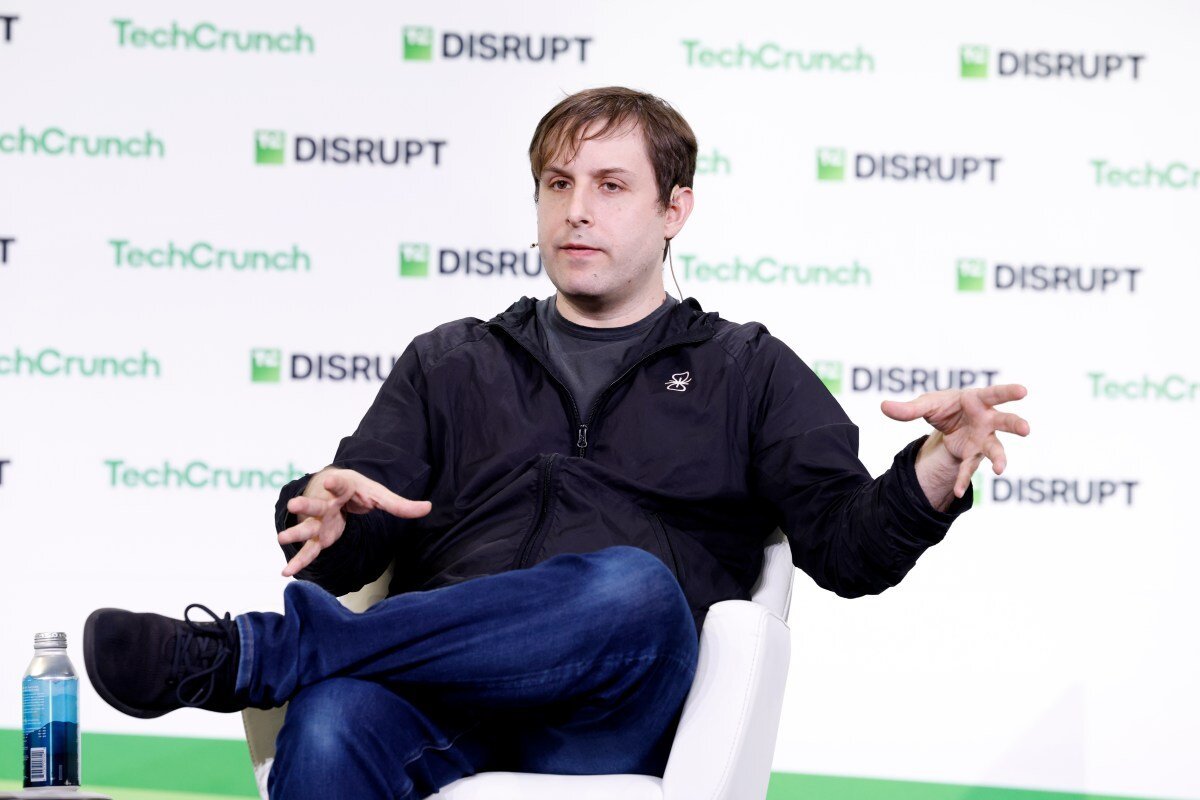
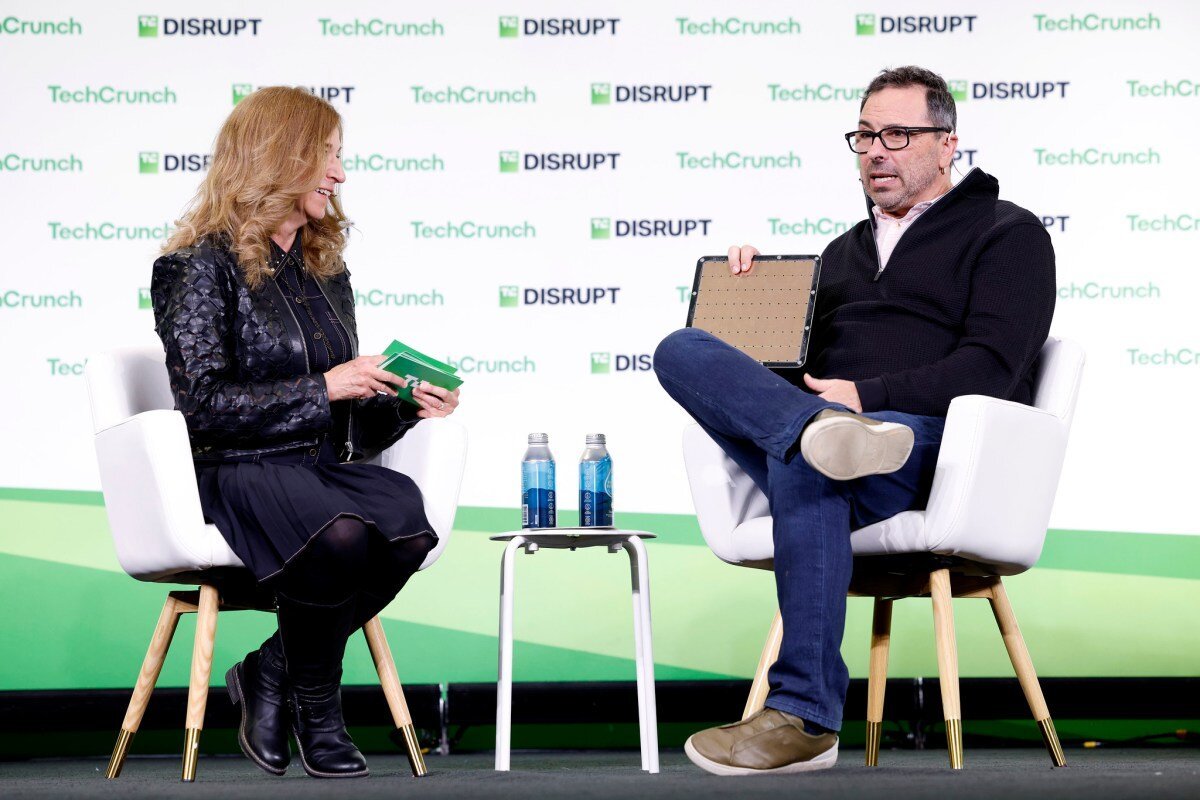
Cerebras Systems co-founder and CEO Andrew Feldman says the next big consumer shift in artificial intelligence could be a personal assistant that lives at home, runs partly on-device, and helps with everyday tasks. Speaking at TechCrunch Disrupt 2026 on Tuesday, Feldman argued that this kind of AI appliance is not a distant fantasy but something that may arrive sooner than many expect.
His comments matter because they point to a coming change in how consumers may use AI: less as a chat window in the cloud, and more as an always-available, personalized helper with access to local data, private context, and even payment tools. For a company like Cerebras, which sells high-performance AI hardware, that future also hints at a new market beyond enterprise computing.
What Feldman thinks the home AI era will look like
Feldman’s core prediction is straightforward: people will eventually have their own AI systems at home, and those systems will not rely entirely on remote servers. Instead, they will combine local processing with cloud resources, much like smartphones already split some functions between the device and the internet.
He described a future in which a home assistant knows its user well, creates a security boundary around personal information, and can take actions on a person’s behalf. In his view, these assistants will not just answer questions; they will also be able to complete practical tasks such as making purchases using stored payment methods.
Feldman said the shift toward consumer AI appliances is “not very far away,” and suggested that future assistants will run some tasks locally while sending others to the cloud.
The idea reflects a broader industry push toward “agentic” AI, meaning software that can do more than generate text. These systems can search, plan, organize, and act across apps and services, often with a degree of autonomy that makes them feel more like helpers than tools.
Why local AI matters for consumers
Local processing is one of the key reasons the home assistant concept is gaining traction. Running part of an AI model on a user’s own device can improve speed, reduce latency, and keep some sensitive information off remote servers. It can also make the assistant more reliable in situations where network connections are poor or unavailable.
For consumers, the appeal is obvious. A local-first assistant could understand household routines, calendar habits, shopping preferences, and family logistics without forcing every interaction through a cloud service. That kind of setup could make AI feel less like a novelty and more like a utility.
Feldman also emphasized the security implications. In his view, a home AI system will need a protected perimeter around personal data and permissions, especially if it can access accounts, calendars, or credit cards. That requirement could become one of the biggest design challenges in consumer AI.
How would these assistants actually work?
They would likely use a hybrid model, Feldman said, with some inference happening on the device and more complex requests routed to the cloud. That architecture would give the assistant faster response times for everyday tasks while preserving the ability to tap larger models when needed.
In practice, that could mean an assistant handles simple scheduling reminders locally, but calls out to cloud infrastructure for more advanced planning, research, or multimodal reasoning. It could also mean the assistant keeps a long-term memory of user preferences, while tightly controlling which data is shared externally.
| Feature | Likely role in a home AI assistant | Why it matters |
|---|---|---|
| On-device processing | Handles routine, low-latency tasks locally | Improves speed and privacy |
| Cloud processing | Supports heavier reasoning and larger models | Extends capability beyond the device |
| Security perimeter | Limits what the assistant can access or share | Protects sensitive personal data |
| Payment access | Lets the assistant buy items or services | Moves AI from advice to action |
| Personal memory | Retains user preferences and context | Makes the assistant more useful over time |
Why Cerebras is invested in this future
For Cerebras, the emergence of personal AI assistants would strengthen demand for the kind of computing infrastructure the company builds. A world full of consumer AI devices would still need specialized chips, data-center support, and model-serving systems to power the cloud side of those products.
That is why Feldman’s remarks also function as a strategic signal. If consumers begin adopting assistants that are always on, context-aware, and action-oriented, the companies supplying the underlying hardware stand to benefit from sustained demand even if much of the user experience feels local and private.
In that sense, Feldman is describing more than a product trend. He is describing a new computing layer, one where AI becomes embedded into the home just as smartphones became embedded into daily life.
What makes the hardware market attractive?
The hardware opportunity grows when AI moves from occasional use to constant use. A home assistant that monitors calendars, manages reminders, tracks preferences, and executes purchases will create a steady workload that must be supported by chips, memory, networking, and software orchestration.
That could benefit companies that specialize in inference at scale, low-latency responses, and efficient model serving. It may also favor manufacturers that can help reduce the cost of local AI devices as consumers demand more capable assistants in more places around the house.
How far away is this consumer shift?
According to Feldman, the shift is closer than many people assume. He did not put an exact timeline on it, but his tone suggested that the transition from cloud-only chatbots to hybrid local assistants is already underway and could accelerate quickly.
He pointed to the rise of consumer-facing AI agents as evidence that everyday users are warming to software that does more than answer prompts. While many people still interact with AI through generic chat interfaces, the industry is already experimenting with more specialized products that can manage personal workflows.
That trend is important because consumer adoption often follows a simple pattern: first comes curiosity, then routine use, and then expectation. Feldman appears to believe AI is moving from the first stage into the second.
What is Feldman already using AI for?
Feldman said he personally relies on multiple AI agents to manage parts of his day. He described using them to sort through his calendar, gather information about people he is about to speak with, and streamline work he once performed manually.
That practical use case reflects the broader evolution of AI in the workplace. The technology is increasingly being used not just to generate content, but to reduce administrative friction. For executives and professionals, that can mean less time spent on preparation and more time spent on decision-making.
Feldman said he now uses a collection of agents to handle routine preparation work, including calendar review and background research before meetings.
Still, he said the most exciting opportunity lies beyond automation of existing tasks. In his view, the real value of AI comes from use cases that were not possible before — products and behaviors that have yet to be invented.
Why is he so focused on infrastructure?
Feldman said he prefers building platforms rather than consumer products because infrastructure companies enable other founders to create the user-facing experiences. That perspective is common among hardware and cloud executives, who often see their role as providing the foundation for innovation rather than owning every application layer themselves.
His comments also reveal an important split in the AI industry. Some companies are racing to build the next viral assistant. Others, like Cerebras, are betting that the bigger long-term prize is supplying the compute needed for that ecosystem to function.
Consumer AI is already changing shape
The move toward home-based AI assistants fits into a broader transformation in the market. Early chatbots were mostly reactive: users asked questions, and the model answered. The newer wave of AI products is more proactive, with systems that can plan tasks, maintain memory, and carry out actions across multiple services.
That shift also helps explain why “agents” have become such a buzzword in the industry. Companies are increasingly trying to build AI that behaves less like a search box and more like a digital employee or household aide.
Examples of consumer AI agents are becoming more visible, and Feldman used that momentum to argue that home use is approaching. Even if the exact product form is not yet settled, the direction of travel is clear: AI is moving closer to daily life, closer to private data, and closer to the kinds of decisions that matter.
What could go wrong?
The promise of a personal AI assistant at home comes with several unresolved concerns. Privacy remains the most obvious issue, especially if the system can access calendars, contacts, messages, shopping accounts, and payment tools.
There is also the question of trust. A useful assistant must be able to act autonomously, but too much autonomy can create mistakes, misuse, or unintended purchases. Striking the right balance between convenience and control will likely define the next phase of product design.
Security is another major concern. A device that knows a household’s routines and financial details becomes a valuable target for attackers. That is one reason the concept of a “security perimeter,” which Feldman highlighted, will likely become central to any serious consumer AI platform.
Key challenges for home AI
- Protecting personal information while allowing useful memory and context
- Preventing unauthorized purchases or actions
- Keeping responses fast enough for daily use
- Making local hardware affordable for mainstream consumers
- Building trust through transparent permissions and controls
How the market could evolve next
The most likely near-term future is not a fully robotic household assistant replacing every app and device. It is more likely to be a gradual layering of AI into the home through phones, speakers, laptops, and dedicated appliances that handle different parts of the same job.
Over time, those products may converge into a more unified assistant that knows the user deeply, works across devices, and can complete transactions safely. If that happens, companies in hardware, cloud computing, consumer software, and digital payments will all have a stake in the result.
Feldman’s remarks suggest that the industry is still in the early innings, but the destination is becoming easier to see. The next era of AI may be less about typing into a chatbot and more about living alongside a trusted system that can help manage everyday life.
Timeline of the consumer AI shift
| Stage | What users do | What changes for the industry |
|---|---|---|
| Chatbot era | Ask questions and receive text answers | AI is treated as a conversational tool |
| Agent era | Delegate tasks like scheduling and research | AI begins acting across apps and workflows |
| Hybrid home assistant era | Use personal AI that runs partly on-device | Privacy, security, and local compute become central |
| AI appliance era | Rely on a household system for daily help and purchases | AI becomes a mainstream consumer utility |
For now, the home AI assistant remains a vision rather than a product category with a single dominant design. But if Feldman is right, the companies building the chips, models, and software layers for this shift may be laying the groundwork for one of the next major consumer platforms.
Frequently asked questions
What did Cerebras CEO Andrew Feldman say about home AI assistants?
He said home AI assistants are likely to arrive sooner than many people think. Feldman described a future in which personal AI systems run partly on-device, partly in the cloud, and handle tasks such as scheduling, context gathering, and purchases.
Why does Feldman think local AI matters?
Local AI matters because it can improve speed, reduce dependence on the cloud, and keep sensitive data closer to the user. Feldman also said a home assistant would need a strong security perimeter if it is going to know users well and access important accounts.
How would a home AI assistant be different from today’s chatbots?
It would be more proactive and more personal. Rather than only answering questions, a home AI assistant would likely manage tasks, remember preferences, access calendars and payment tools, and act across apps with some level of autonomy.
Why is this good news for Cerebras?
It supports Cerebras’ broader thesis that AI will require massive amounts of computing power even as products become more consumer-friendly. If local and cloud-based assistants spread, demand for specialized AI infrastructure could increase.