Updated October 13, 2026 8:54 pm
In short
Google’s private Android app feature now also includes upcoming trusted sharing, a path to public Play Store release, and new AI and parental controls across Google Play.
- Google is letting users run AI-built Android apps privately through Google Play.
- The feature launches first in the U.S. for adults 18 and older.
- Apps created in Google AI Studio can remain hidden from public Play search and listings.
- Google also announced new Play features including Game Finder, Ask Play upgrades and Gemini integration.
- Personal apps may later be shared with trusted friends or published publicly after review.
Update — October 13, 2026 8:54 pm
Google says the private app workflow is only the first step. In the months ahead, creators will be able to share their AI-built apps with a trusted circle of friends or family without making them public.
The company also says a personal app can later be converted into a full Play Store release if it catches on, but only after passing trust-and-safety review.
Separately, Google is adding more AI-driven Play features, including Ask Play comparisons for similar apps and deeper integration of Play content into Gemini chats. It is also rolling out a parent age-range setting that shares a child’s age band with developers instead of a birthdate.
Google is making it easier for Android users to run AI-generated apps privately on their own phones, without having to publish them to the Google Play Store first. The new option matters because it lowers one of the biggest barriers to so-called vibe-coded apps: turning a personal idea into a native Android app without exposing it to millions of other users.
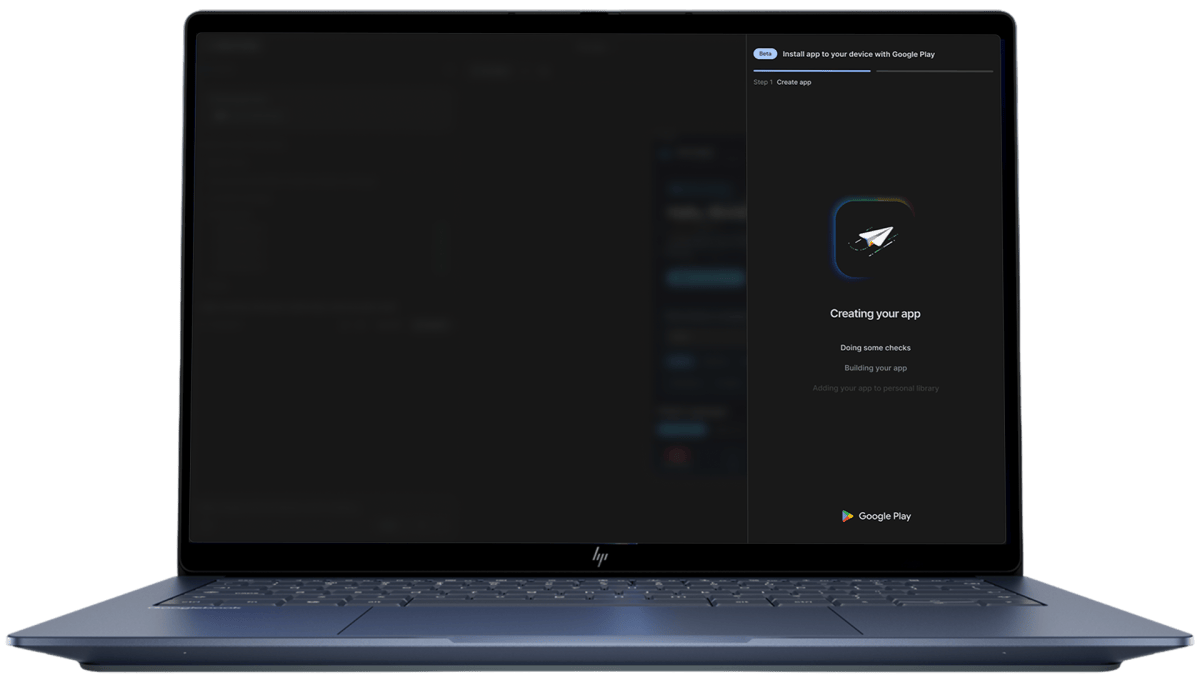
Announced Tuesday, the feature lets people create apps with Google AI Studio and install them through Google Play using a standard Google account. Those apps stay private by default, remain invisible in search and listings, and are accessible only to the creator unless they are later shared more broadly.
For a growing number of hobbyists, parents, small teams and nontechnical builders, that changes the practical path from idea to usable app. Instead of stopping at a web tool or submitting to the public store on day one, creators can now build for their own Android device first.
What Google is changing in Google Play
Google is introducing a private distribution path for personal apps built with AI, allowing Android users to launch them directly on their devices without making them public. The apps still have to follow Google Play policies, but they no longer need to be exposed to the entire store just to function on one person’s phone.
That shift is designed for the growing class of apps built through conversational or prompt-based coding tools. These projects are often highly specific: a home inventory tracker, a family calendar helper, a youth sports sign-up tool, or a workflow app for a very small group. Under the older model, even a one-off app had to pass through a public marketplace that reaches billions of devices.
Google says the feature is intended to reduce that friction while keeping trust and safety guardrails in place. The company is framing the update as part of a broader vision for a more personalized Play ecosystem, where software does not have to be mass-market to be useful.
| Feature | What it does | Availability | Notes |
|---|---|---|---|
| Private vibe-coded apps | Run AI-built apps on a personal Android device without public listing | Launching first in the U.S. for adults 18+ | Apps stay invisible in Play search and listings |
| Google AI Studio | Create apps using Google’s AI tooling | Available now as part of the workflow | Apps can be installed for personal use |
| Trusted sharing | Share a personal app with a small circle of approved users | Planned in coming months | Useful for family, friends or small teams |
| Public release path | Move a popular personal app into the full Play Store | Available after review | Requires trust and safety checks |
Why this matters for vibe coding
Vibe coding has become a shorthand for building software with the help of AI, often by describing what you want in plain language and letting the model generate the code. The trend has opened app development to people who would not normally write Android software from scratch, but distribution has remained a bottleneck.
Until now, if someone wanted to use their AI-made app on Android in a native way, the easiest official route often meant publishing it broadly. That was awkward for projects never meant for the public. Many builders responded by keeping their creations as web apps, which can run anywhere but do not always provide the same device integration, performance or native user experience.
Google’s new option effectively removes that trade-off for personal use. It gives builders a private path to test, iterate and actually use what they make on Android hardware without first opening the door to the whole world.
How the new private app flow works
In simple terms, a user can build an app in Google AI Studio and then run it through Google Play on their own device. The app is not indexed publicly, does not appear in store search, and is not visible in standard listings.
The company says the app remains tied to the creator’s account. That means the normal consumer-facing storefront becomes, in effect, a secure distribution mechanism for personal software rather than only a marketplace for public products.
Google is also keeping policy enforcement in place. Personal apps are not exempt from Play’s rules, which suggests the company wants the private-app feature to expand access without turning the store into a loophole for unsafe software.
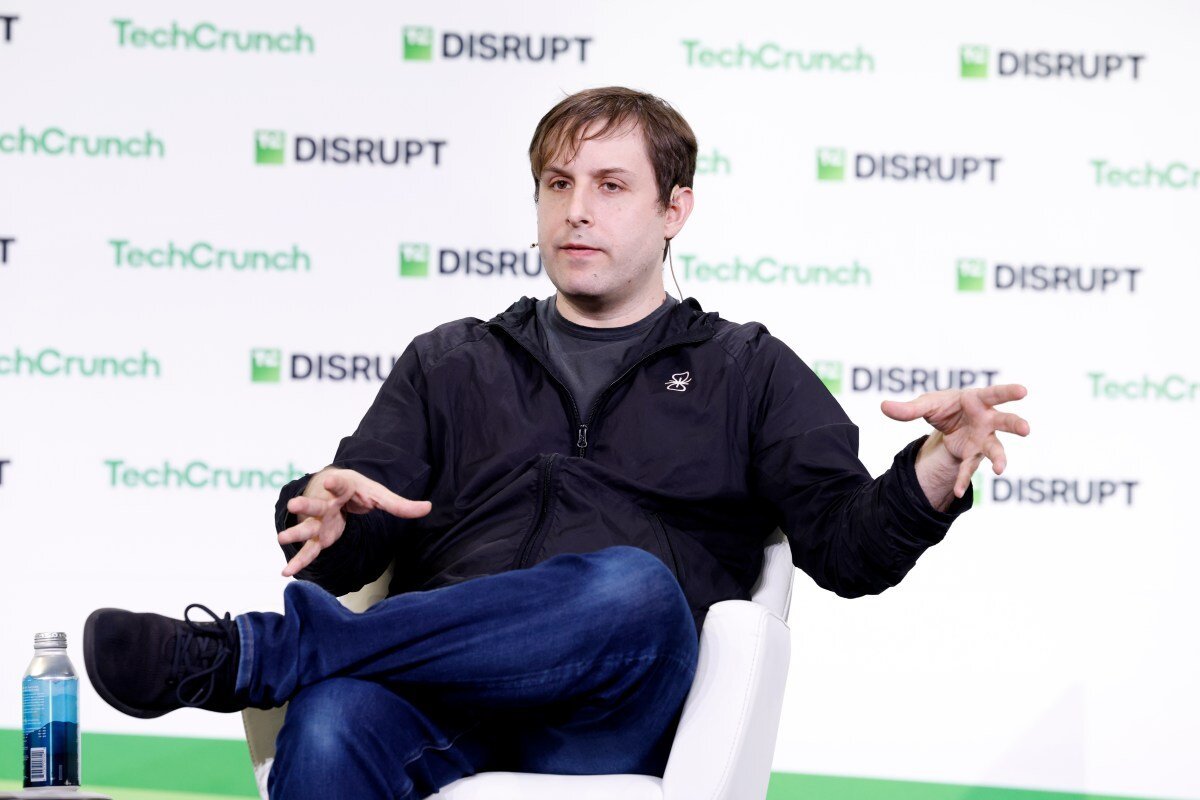
In a pre-launch briefing, Sam Bright, Google’s vice president and general manager for Google Play and the Developer Ecosystem, said the company sees the future of apps as more personal and secure, with Play becoming a place where software can be built for individual needs rather than only mass distribution.
Bright also said Google wants the Play experience to evolve beyond the old “there’s an app for that” idea toward a model better described as “there’s an app for me.”
Who can use the feature first?
For now, the private app option is limited to users in the United States who are at least 18 years old. Google has not announced a wider international rollout, and it is starting with adults rather than teens or younger users.
That cautious launch is consistent with the safety concerns that come with AI-assisted app creation. Even when an app is personal, it can still request permissions, handle user data or interact with other services. A limited rollout gives Google room to observe how people use the feature before expanding access.
How Google is pairing private apps with new Play features
Google did not stop at private app distribution. The company also unveiled a set of Play updates that reflect a broader effort to make its app store more individualized and AI-driven.
Game Finder aims to personalize discovery
Google says it is building a personalized recommendation engine for games called Game Finder. The feature will draw on a user’s preferences alongside broader signals from Google’s game community, which the company says includes 1.2 billion players.
The goal is to make discovery feel less generic and more tailored to how each person actually plays. At launch, the feature will be available in the U.S. in English.
This matters because discovery has long been one of the hardest parts of mobile gaming. With millions of titles across app stores, a more customized ranking system could help surface niche or lesser-known games that otherwise get buried.
Community tools are getting more social
Google is also adding ways for users to shape their own gaming experience. The company plans to let people curate lists of games, post questions in a new Community Posts area and take part in 48-hour gaming challenges called Sprints.
Those additions suggest Google is trying to make Play feel less like a static catalog and more like an active community hub. In practice, that could encourage users to spend more time inside the ecosystem rather than jumping out to external forums or social platforms for game advice.
Ask Play is becoming more useful
The built-in assistant Ask Play is also getting an upgrade. Google says it will now be able to compare similar apps and highlight the key differences between them.
That could be especially helpful in categories crowded with lookalike products, such as note-taking apps, photo editors or productivity tools. Rather than requiring users to read multiple descriptions and reviews manually, Ask Play could summarize distinctions in a faster, more conversational way.
In addition, Google says Play apps and games will be more deeply integrated into Gemini conversations, extending discovery and recommendations into its broader AI assistant ecosystem.
Why Google is pushing this now
Google’s timing reflects two converging trends: the rise of AI-assisted app creation and the continuing importance of mobile ecosystems. As more people use generative AI tools to build software, the question is no longer just whether they can produce code. It is how easily they can put that software into practical use.
By lowering the distribution barrier, Google is making Android more attractive as a platform for personal software experiments. That could pull more builders into Google’s own tools, especially Google AI Studio, while keeping them inside the Play ecosystem for installation and management.
It is also a strategic response to the fact that many would-be app creators have been choosing the web. Web apps are easier to share and deploy, but they do not always feel native on a phone. If Google can make personal Android app distribution feel simple and safe, it may persuade more people to build directly for Android instead of settling for browser-based versions.
What happens if a private app becomes popular?
Google says personal apps will not be trapped in that private state forever. If a project gains traction, creators will have a route to publish it more broadly on Google Play after it goes through the required trust and safety reviews.
That matters because it gives hobby projects a possible growth path. A small app built for a child’s sports team, a neighborhood group or a family workflow could eventually become a public product if enough people find it useful.
The company is also planning a trusted-sharing layer in the coming months, allowing creators to share private apps with a selected network of friends. That could be useful for small communities that need more than one user but still do not want to go public.
- Build privately first, public later if needed
- Share with a small trusted group before launching widely
- Use AI Studio to move from idea to installed Android app
- Keep apps out of public search and listings by default
How does this affect everyday users?
For everyday Android owners, the change could make personal software feel much more attainable. People who once would have needed an engineer, a freelancer or a no-code service to create a custom tool may now be able to describe what they need and test it on their own device.
That could include simple but practical apps: an app to track medication, a shared checklist for family chores, a tool for a volunteer group or a custom interface for a hobby. The value is not that these apps are huge commercial products, but that they solve narrow problems extremely well.
The update may also help normalize the idea that software can be personal infrastructure, not just consumer entertainment. In that sense, Google is betting that the next wave of app growth will come from highly specific, low-volume use cases as much as from app-store hits.
How Google balances openness and safety
Google’s pitch is not that anyone can upload any AI-made app without oversight. Instead, the company is trying to open the door while preserving the guardrails that make Play a trusted distribution channel.
That balance shows up in several ways: the feature starts with adults in one country, personal apps stay private by default, the apps must still follow store policies and any public launch still requires review. In other words, Google is broadening access, but not removing control.
This approach may be especially important as AI lowers the technical barrier to software creation. More people can make apps faster, which also means more low-quality, buggy or potentially unsafe apps can be produced. Keeping the review process intact gives Google a way to avoid turning Play into a free-for-all.
A small change with big implications
At face value, this is a product update inside Google Play. In practical terms, it may be a meaningful shift in how people think about building software for mobile devices. The old default was publication first and privacy later, if at all. Google is now offering the reverse: private use first, broader distribution only if the app earns it.
That could matter far beyond hobbyists. Independent developers, parents, teachers, coaches, community organizers and small businesses may all find that a private Android app is enough to solve a real problem. If the experience is smooth, some of those projects will eventually move into the public store. Others may never need to.
What Google is really selling is lower friction. Instead of forcing every app idea to become a public product, the company is carving out room for software that exists simply because one person or one group needs it.
Timeline: how Google’s Play changes unfold
The rollout is happening in stages, with the private app feature leading the way and other personalization tools arriving around it. Here is the sequence Google has outlined so far.
| Phase | What changes | Audience |
|---|---|---|
| Launch day | Private AI-built Android apps can run on personal devices through Google Play | U.S. adults 18 and older |
| Near term | Game Finder, Ask Play upgrades and tighter Gemini integration roll out | U.S. users first, with English-language support where noted |
| Coming months | Trusted sharing lets creators share personal apps with selected friends | Private groups and small communities |
| Later stage | Personal apps can be converted into public Play Store listings after review | Creators whose apps gain traction |
What this signals about the future of app stores
Google’s update hints at a future in which app stores are not only marketplaces, but also personal deployment systems. If that model catches on, app stores could become more like platforms for managed distribution, custom access and AI-assisted creation.
That would be a notable evolution for mobile software. For years, the app store model has centered on discovery, downloads and monetization at scale. Google is now suggesting there is equally important value in the opposite direction: private, local and highly specific software that may never need a large audience.
It is too early to know how widely people will use the feature, or whether AI-generated personal apps will prove durable once the novelty wears off. But the direction is clear. Google wants Android to be not just a place to install apps, but a place to build the exact app you need and keep it to yourself if you want to.
For the growing number of users experimenting with AI coding, that may be the difference between an idea that stays in a browser and one that becomes a genuinely useful mobile tool.
Frequently asked questions
What are private AI apps on Google Play?
Private AI apps are Android apps built with Google AI Studio that can be installed and run on a creator’s own device without being publicly listed in Google Play. They stay hidden from search and listings unless the creator later chooses to share or publish them.
Who can use the new Google Play feature first?
The feature is rolling out first to users in the United States who are 18 or older. Google has not announced a broader international release yet, and the initial launch is limited to adult users as the company tests the private-app workflow.
Can a private app be shared with other people?
Yes. Google says creators will be able to share their vibe-coded apps with a trusted network of friends in the coming months. The apps can also move to the public Play Store later if the creator wants to launch more widely and completes the required reviews.
Why is Google making this change now?
Google is responding to the rise of AI-assisted app creation, where many people want to build useful personal tools without going through a full public launch. The new option reduces friction for builders who want native Android apps but do not want to publish them to billions of users.