In short
TypeSafe AI raised $870 million at a $7.5 billion valuation just weeks after launching Jev, a non-text AI model built for automation. The company says the model is already being used by a third of Fortune 500 firms.
- TypeSafe AI raised $870 million in a round led by Andreessen Horowitz.
- The startup says Jev is a non-text AI model designed for automation, not text generation.
- TypeSafe claims Jev is already used by a third of Fortune 500 companies.
- The company was founded in 2024 by alumni of OpenAI and Meta.
- The raise reflects growing investor interest in enterprise AI tools beyond chatbots.
TypeSafe AI has raised $870 million at a $7.5 billion valuation only weeks after unveiling Jev, its non-text AI model, underscoring how quickly investor appetite is shifting toward systems built for automation rather than chat. The round, announced on October 9, was led by Andreessen Horowitz with participation from Sequoia and existing backer DCVC.
The financing reflects the speed of Jev’s rise since its Sept. 15 launch. TypeSafe says the model is already being used by roughly a third of Fortune 500 companies, a striking claim for a startup that had barely entered the market when enterprise attention began to snowball.
Jev is unusual in a sector still dominated by large language models. Instead of generating prose or code, it produces probabilities that TypeSafe describes as “calibrated decisions,” which the company says makes it better suited to workflow automation, systems integration and operational decision-making.
That pitch has resonated with corporate buyers looking for AI that can do more than converse. TypeSafe argues that because computers do not operate in human language, tools designed primarily for text generation are not always the best fit for enterprise automation.
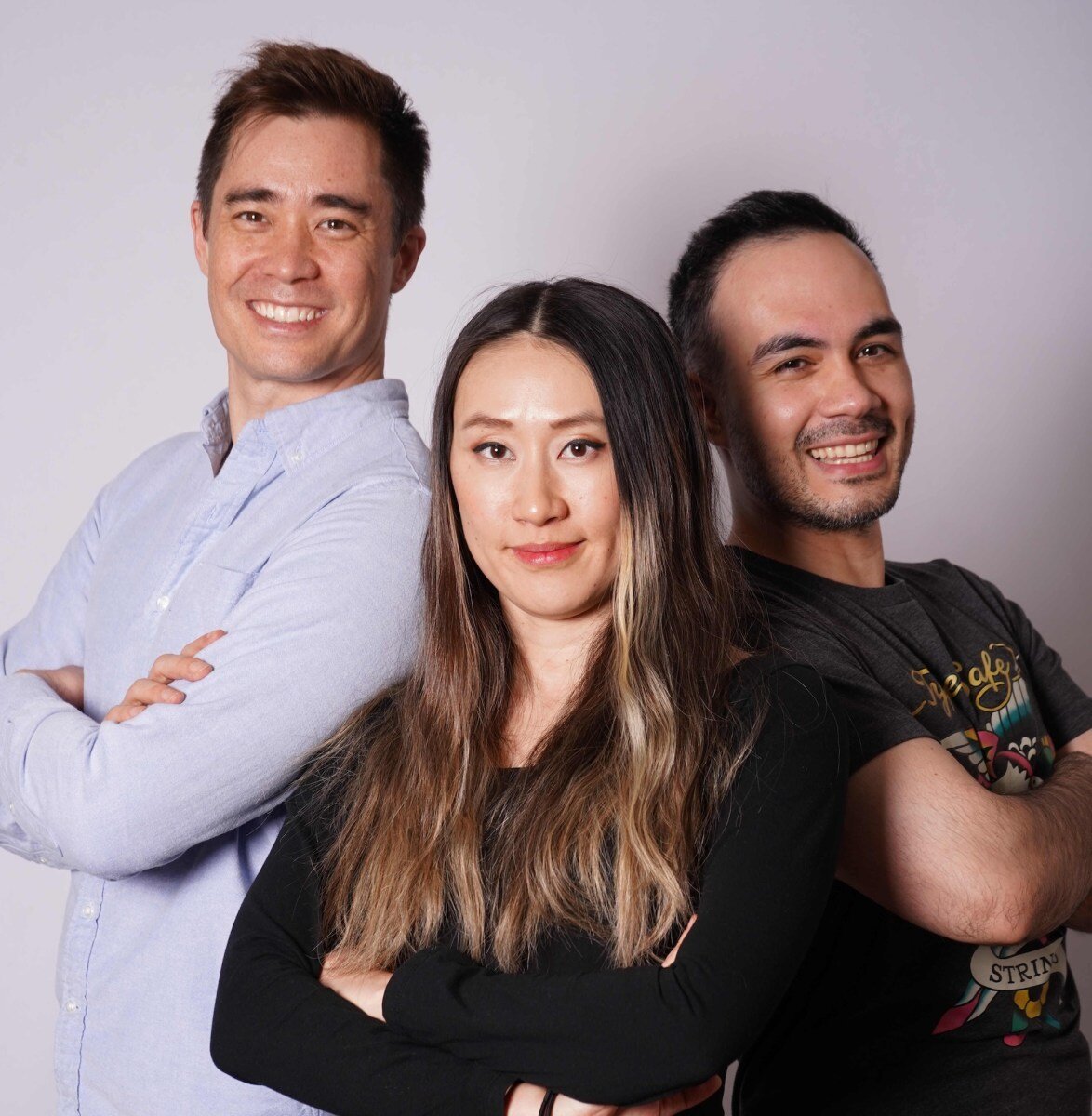
The company was founded in 2024 by Diogo Almeida, formerly a researcher at OpenAI, alongside former Meta research engineer Sasha Sheng and entrepreneur Erik Gafni. The funding round gives the young startup a heavyweight cap table and a major runway as it tries to prove that non-text models can become a new category in commercial AI.
Why the Jev raise matters
TypeSafe’s latest round is notable not only for its size, but also for its timing. In most startup cycles, a company that launches a product in mid-September would not typically secure a multibillion-dollar valuation by early October. Jev’s momentum suggests investors see an opportunity to back a company that is trying to redefine what enterprise AI should do.
The round also signals that market leaders are willing to fund alternatives to the dominant chatbot and copilot formats. As more businesses move from experimentation to deployment, many are prioritizing speed, reliability and task execution over open-ended conversation. TypeSafe is positioning Jev directly in that gap.
That makes the company part of a broader shift in enterprise AI, where firms are increasingly chasing models that can make decisions inside software systems, not just answer prompts. In practical terms, the move could influence how companies think about procurement, workflow design and the future of automated business operations.
What is Jev, and how is it different from an LLM?
Jev is a transformer-based model, but TypeSafe insists it should not be grouped with large language models. The key difference is output: rather than generating text tokens, Jev returns probabilities that feed into decisions.
In TypeSafe’s framing, that makes Jev a better fit for automation tasks where businesses need structured judgments, classifications or next-step recommendations. The company says the model uses fewer tokens and runs faster than conventional LLMs, which could translate into lower costs and reduced latency in production systems.
For enterprise users, those claims matter because AI deployment often comes down to economics. If a model can process tasks more quickly and with less computational overhead, it may be easier to integrate into high-volume workflows such as approvals, routing, risk scoring or internal operations.
How does TypeSafe describe “calibrated decisions”?
TypeSafe uses the term to describe outputs that are intended to be more directly useful for software systems than natural-language responses. Instead of producing a paragraph, the model returns a probability or decision signal that can be consumed by another application.
That approach is designed for environments where the goal is not conversation, but action. In other words, Jev is being marketed as infrastructure for machines rather than as a writing assistant for humans.
TypeSafe co-founder Diogo Almeida has argued that the industry’s progress in human language has not automatically translated into better automation tools, because software systems operate on different rules than people do.
How did TypeSafe build momentum so quickly?
TypeSafe’s rise appears to have been accelerated by a combination of product novelty, enterprise curiosity and the company’s bold market positioning. Jev launched on Sept. 15 and quickly drew attention for being framed as something fundamentally different from the wave of text-first AI products flooding the market.
According to the startup, the adoption curve has been unusually steep. Its claim that one-third of Fortune 500 companies are already using the model has not been independently verified, but if accurate, it would indicate a remarkably fast penetration into large enterprises.
That kind of early traction is often enough to trigger intense investor competition, especially in AI, where funds are still looking for the next platform shift. Jev’s pitch — faster, leaner and more automation-focused than mainstream LLMs — gave backers a clear narrative to underwrite.
Who are the founders behind TypeSafe AI?
TypeSafe was founded in 2024 by three people with backgrounds in research and software: Diogo Almeida, Sasha Sheng and Erik Gafni. Almeida previously worked as a researcher at OpenAI, while Sheng had been a research engineer at Meta. Gafni brings entrepreneurial experience to the group.
The team’s pedigree likely helped TypeSafe stand out in a crowded market. Investors often place a premium on founders who combine technical credibility with a differentiated thesis, particularly when the company is asking the market to rethink a major category.
Who backed the round and what does it signal?
The financing was led by Andreessen Horowitz, one of the most active venture firms in artificial intelligence, with Sequoia also participating. Existing investor DCVC returned as well, suggesting early backers were willing to deepen their commitment as the startup’s profile increased.
A round of this size from such well-known firms does more than supply capital. It also sends a signal to the market that the company is worth watching and may be well positioned to scale rapidly if the product continues to gain adoption.
For a young startup, that kind of endorsement can accelerate hiring, customer conversations and broader credibility with enterprise buyers. In AI, where trust and technical validation often matter as much as features, a major venture syndicate can help convert attention into commercial momentum.
Table: Key facts about TypeSafe AI and Jev
| Item | Details |
|---|---|
| Company | TypeSafe AI |
| Product | Jev, a non-text AI model based on a transformer architecture |
| Funding | $870 million |
| Valuation | $7.5 billion |
| Lead investor | Andreessen Horowitz |
| Other investors | Sequoia, DCVC |
| Launch date | Sept. 15, 2026 |
| Claimed enterprise adoption | Used by one-third of Fortune 500 companies |
| Founders | Diogo Almeida, Sasha Sheng, Erik Gafni |
What this says about the AI market
Jev’s rapid ascent highlights a growing divide in the AI sector between systems that generate language and systems that are built to make things happen inside enterprise software. Many companies now see the biggest payoff not in chat interfaces, but in tools that can automate repetitive or high-volume decision points.
That shift has implications for pricing, infrastructure and product strategy. If models like Jev prove that they can deliver lower latency and lower token usage while improving task performance, they could pressure parts of the LLM market to justify their cost relative to more specialized systems.
It also suggests that enterprise buyers are becoming more sophisticated in how they evaluate AI. Rather than asking only whether a model can write or summarize well, they are increasingly asking whether it can reliably trigger actions, fit into workflows and reduce operational burden.
Why enterprise adoption matters so much
Enterprise adoption is the most important proof point for a startup like TypeSafe because it determines whether a product is a novelty or an infrastructure layer. A model can go viral among developers and still struggle to convert into long-term business use.
If Jev is truly moving into corporate workflows at the pace TypeSafe claims, that would suggest the product is solving an urgent problem for buyers. In AI, urgency often beats elegance. Companies that can demonstrate measurable time savings, cost reductions or improved operational precision tend to move fastest from pilot projects to widespread deployment.
- TypeSafe is betting that non-text AI will become a major enterprise category.
- Jev is designed for decisions and automation, not language generation.
- Big-name investors are backing the company just weeks after launch.
- The startup says adoption has already reached a large share of Fortune 500 firms.
What happens next for TypeSafe?
The next test for TypeSafe is whether Jev can sustain its early momentum and prove that its architecture offers real-world advantages at scale. Startup hype is common in AI, but durable enterprise adoption usually depends on reliability, integration and measurable return on investment.
The company now has the capital to expand engineering, support customer deployments and sharpen its product claims. It also faces heightened expectations. With a multibillion-dollar valuation so early in its life, TypeSafe will be judged not just on innovation, but on execution.
If it can validate its promises around speed, efficiency and automation, Jev could emerge as one of the first breakout examples of a non-text model becoming mainstream in enterprise software. If not, the company’s ambitious valuation may prove to be an early bet on a category that still needs to earn its place.
Either way, the funding round marks a significant moment in the AI market: investors are no longer only chasing better chatbots. They are also betting on models that speak the language of machines.
| Milestone | Date | Why it matters |
|---|---|---|
| TypeSafe founded | 2024 | Startup formed by researchers and an entrepreneur |
| Jev launched | Sept. 15, 2026 | Introduced as a non-text model for automation |
| Funding announced | Oct. 9, 2026 | $870 million raise at $7.5 billion valuation |
The speed of the round tells its own story. In a market crowded with assistants, generators and copilots, TypeSafe has convinced top-tier investors that the next wave of enterprise AI may be less about talking and more about deciding.
Frequently asked questions
What is TypeSafe AI’s Jev model?
Jev is a transformer-based non-text AI model that TypeSafe says produces probabilities and decision signals rather than paragraphs or code. The company is positioning it as automation infrastructure for enterprise software, where structured judgments can be more useful than open-ended text generation.
How much funding did TypeSafe AI raise?
TypeSafe AI raised $870 million in new funding. The round valued the company at $7.5 billion and was led by Andreessen Horowitz, with participation from Sequoia and existing investor DCVC.
Why is Jev getting so much attention?
Jev is drawing attention because it launched only weeks ago and is already being framed as a faster, more efficient alternative to large language models for enterprise automation. TypeSafe also says the product has been adopted by a large share of Fortune 500 companies.
Who founded TypeSafe AI?
TypeSafe AI was founded in 2024 by Diogo Almeida, Sasha Sheng and Erik Gafni. Almeida previously researched at OpenAI, Sheng worked as a research engineer at Meta, and Gafni brings an entrepreneurial background.
Is Jev an LLM?
No, TypeSafe says Jev is not a large language model. It uses a transformer architecture, but instead of generating text, it returns probabilities and calibrated decisions intended for workflow automation and machine-oriented tasks.