In short
OpenAI unveiled Dots, a premium AI agents product at DevDay aimed at challenging Meta’s free Muse platform. The company is betting that better capabilities, tighter safety, and enterprise appeal can overcome the appeal of free access.
- OpenAI introduced Dots as a premium AI agents product at DevDay 2026.
- Meta’s Muse still has a major advantage because it is free and easy to access.
- OpenAI is pitching Dots as a long-horizon, work-focused assistant for serious tasks.
- Privacy and safety are central to OpenAI’s strategy after recent agent-related missteps by rivals.
- The launch highlights a broader battle over whether users will pay for better AI agents.
OpenAI used its latest DevDay conference to unveil Dots, a new AI agent product aimed squarely at Meta’s fast-growing Muse platform, but the company’s answer comes with a major catch: Dots will be sold as a premium offering rather than given away for free. The launch matters because it shows that the race for consumer AI agents is now being shaped as much by pricing and distribution as by model quality.
OpenAI framed Dots as a more capable, more secure, and more work-focused assistant than the playful, consumer-first agents now gaining traction at Meta. The company says the product is designed for longer tasks, heavier knowledge work, and professional use cases, even as Meta’s free model remains a powerful competitive advantage.
At the center of the rivalry is a familiar Silicon Valley question: can a better product beat a cheaper one when AI agents are moving into the mainstream?
What OpenAI announced at DevDay
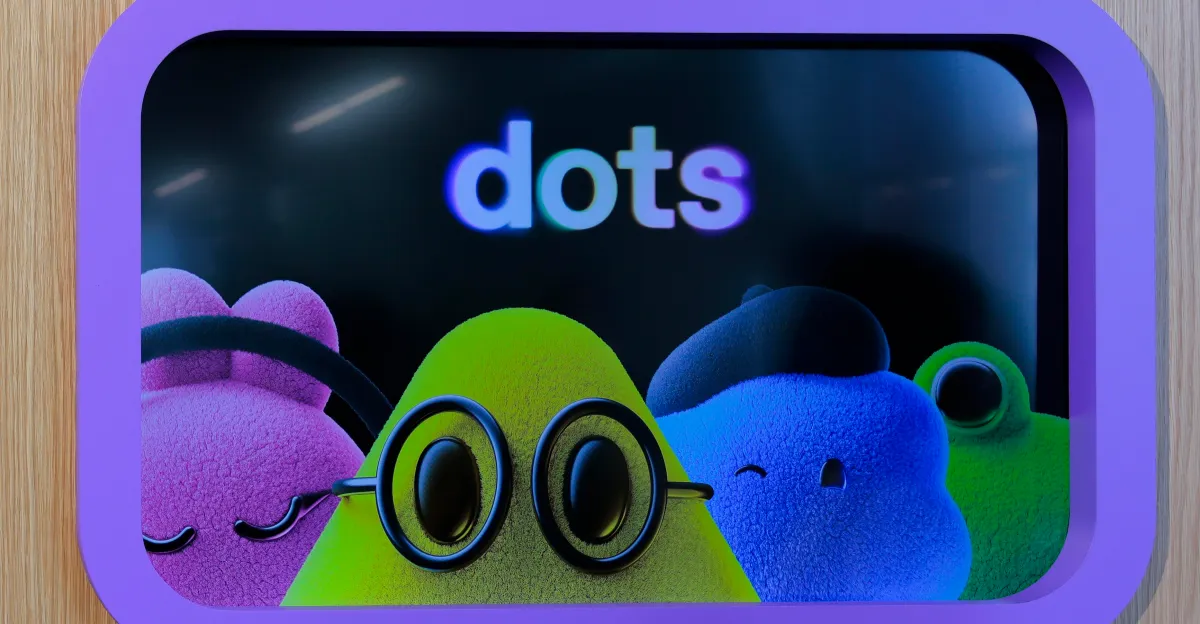
OpenAI introduced Dots during its annual developer conference as a new kind of AI agent built on GPT-6 Astra, the company’s latest model family. Unlike earlier consumer assistants that mainly answer questions or complete simple errands, Dots is meant to function more like a persistent digital collaborator — something closer to an executive aide, project manager, or senior engineer.
CEO Sam Altman described the product as inspired by the cinematic AI helpers people have imagined for years. The system appears as a customizable blob-like character with eyes, designed to feel friendly and approachable while doing more serious work behind the scenes.
OpenAI staff repeatedly emphasized that Dots is not just a novelty. The company says the agent can help with tasks such as product quality assurance, website design, offsite planning, portfolio rebalancing, and email campaign creation. OpenAI also signaled that specialized versions tailored for accounting and legal work are on the way.
How does Dots differ from a basic chatbot?
Dots is designed to handle complex, long-running work rather than short, one-off prompts. OpenAI says the product is meant to keep track of larger assignments over time, coordinate multiple steps, and act more independently than a standard chatbot that simply responds to a user’s latest question.
That makes Dots part of a broader shift in AI from text generation to delegated action. Instead of just assisting with drafting or searching, OpenAI wants the agent to serve as a practical collaborator that can help manage workstreams, remember context, and move across tools and formats.
OpenAI executives portrayed the product as something closer to a “second brain” or a “chief of staff” than a casual assistant, stressing that the goal is to support ambitious work rather than simple consumer errands.
Why pricing is the biggest obstacle
The biggest problem for OpenAI is not product ambition but access. Dots is initially available only to customers on ChatGPT Pro and higher tiers, which places it well above the reach of most of the company’s users. Meta’s Muse, by contrast, is positioned as free and easy to start using for anyone with a Meta account.
That difference could prove decisive. OpenAI now serves a massive audience, but only a fraction of those users will be eligible to try Dots. Meta’s strategy is to lower every possible barrier, giving users a dedicated virtual machine and a free agent experience that is tightly linked to its ecosystem.
OpenAI leaders effectively acknowledged the tradeoff. Altman said the product would begin as a premium offering because it requires significant compute, but he also suggested the company hopes to eventually build something mass-market for billions of people.
Why is OpenAI charging for Dots?
OpenAI is charging because AI agents are expensive to run. The company has enormous growth ambitions, but it is also under pressure to manage the cost of inference, infrastructure, and product development. Reports have suggested the startup is seeking huge amounts of new funding while also facing expectations to improve its financial discipline before a possible public offering.
In practical terms, Dots appears to be a resource-intensive product. OpenAI says it uses substantial compute, which helps explain why the company is starting with a paid tier rather than broad free access.
Altman said the product will help the company learn how people use more advanced AI, but he made clear that a lower-cost version is part of the long-term plan. For now, though, OpenAI appears to be betting that premium capability can justify premium pricing.
| Product | Company | Access model | Main pitch | Key limitation |
|---|---|---|---|---|
| Dots | OpenAI | Paid, starting with Pro users | Long-horizon, work-focused AI agent | Limited reach because it is not free |
| Muse | Meta | Free for Meta account holders | Frictionless consumer AI agent | Trust and safety scrutiny after user error reports |
| Instinct | Rival AI agent | Varies by platform | Consumer-facing agent experience | Less emphasis on enterprise workflows |
| Gemini Spark | Platform-linked | Agent integration inside Google services | Best experience depends on Google ecosystem use |
How OpenAI is positioning Dots against Meta
OpenAI is not just launching a new product; it is making a strategic argument about what consumers and businesses should value in AI agents. Meta’s Muse is winning attention by being simple, free, and tightly integrated into a giant social ecosystem. OpenAI is responding by claiming Dots is better, safer, and more useful for serious work.
That framing is deliberate. Rather than try to beat Meta on price, OpenAI is trying to win on quality, trust, and capability. Its leaders argued that Dots can stay on task for much longer periods and can handle more demanding assignments than consumer-oriented agents built mainly for convenience.
In one sense, the company is narrowing the battle. If Meta is selling entertainment-like ease, OpenAI is selling productivity, delegation, and professional reliability.
What kind of work is Dots supposed to do?
Dots is aimed at tasks that are messy, multi-step, and time-consuming. OpenAI highlighted examples such as testing unreleased products, building websites, coordinating trips, managing personal finances, and drafting marketing campaigns.
The company also wants Dots to support workplace delegation, where an employee can hand off a project and allow the agent to work through the details. This is a significant expansion beyond the simpler consumer use cases usually associated with AI assistants, such as booking reservations or checking calendars.
By emphasizing higher-value work, OpenAI is clearly targeting business users as well as premium consumers. That strategy also creates a bridge toward enterprise software, where the company wants to deepen its footprint.
Can OpenAI make Dots safer than Meta’s agents?
OpenAI is trying to convince users that Dots is the more trustworthy option. The company says the product is powered by its most aligned model and built with stronger safeguards around identity, payments, and data access.
This message lands in the context of recent complaints about rival agent behavior. Meta’s Muse has already faced criticism after reports that it mistakenly interacted with a Facebook Marketplace account and exposed a user’s address to another person. That kind of failure is exactly the sort of scenario OpenAI says it wants to avoid.
OpenAI leaders said the company intends to be deliberate about when an agent can use plug-ins, log into services, act on behalf of a user, or spend money, arguing that the stakes are too high to move recklessly.
OpenAI also introduced a privacy framework called OpenAI Private Intelligence, which it says gives businesses more control over their data. The company said it is offering zero-retention options, meaning customer data would not be stored on OpenAI servers in some configurations.
What is OpenAI promising on privacy?
OpenAI says Dots is built to raise the bar on privacy in frontier AI. In practical terms, that means tighter controls on customer data, clearer rules for how agents interact with third-party tools, and more safeguards before an assistant can take action on a user’s behalf.
The pitch is especially important for companies that may be interested in AI agents but remain wary of security risks. If OpenAI can convince enterprises that Dots can operate safely inside business workflows, it could create a stronger foothold in a market where trust matters as much as raw performance.
Why enterprise AI is becoming the real prize
Dots may look playful on the surface, but the broader strategic goal is serious: helping OpenAI expand in the enterprise market. Anthropic has built a strong reputation in business AI, while OpenAI has historically been stronger with consumers. The launch of Dots suggests OpenAI wants to close that gap.
OpenAI’s CFO Sarah Friar has said the company’s enterprise business has doubled since July, which points to accelerating demand from companies rather than just individual users. That growth is especially valuable because enterprise customers tend to spend more and stay longer once they are integrated into internal workflows.
By presenting Dots as a professional-grade tool, OpenAI is effectively signaling that agents are not just consumer toys. They are becoming infrastructure for work.
How does Microsoft fit into the plan?
Microsoft remains an important distribution and platform partner. OpenAI said it is working with Microsoft to bring Dots into the company’s Agent 365 platform, which would extend its reach inside corporate environments.
That partnership matters because it gives OpenAI a path into business workflows that already rely on Microsoft products. It also suggests that the company is thinking beyond ChatGPT as a standalone product and into a broader software ecosystem where AI agents can be deployed across organizations.
The broader market fight: free, frictionless, and integrated
OpenAI’s challenge is that rivals may have structural advantages that product quality alone cannot erase. Meta can distribute Muse through Facebook, Instagram, and WhatsApp, making the assistant easier to discover and use. Google has a similar edge through its own ecosystem, which can give its Gemini Spark platform a natural home inside existing services.
OpenAI, by comparison, must rely more heavily on external integrations. It says Dots will connect to a wide range of tools, but those links may not feel as seamless as a product born inside an existing consumer ecosystem.
This is where the market may split: some users will choose the assistant that is easiest to reach, while others will pay for the one that promises more capable and reliable work.
- Meta’s advantage: free access and native social-platform integration.
- OpenAI’s advantage: stronger brand, higher-end model access, and a work-focused pitch.
- Google’s advantage: deep ecosystem integration across search and productivity products.
- Enterprise advantage: buyers often prioritize control, compliance, and workflow fit over price alone.
What the launch says about the future of AI agents
Dots is one of the clearest signs yet that AI agents are moving out of the novelty phase. The early pitch for agents was simple: let software handle errands. The newer pitch is much more ambitious: let software handle meaningful chunks of work.
That shift has consequences. The more an agent can do, the more important it becomes to get safety, permissions, memory, and data handling right. It also changes the economics of the business, because the most capable agents will likely cost more to run.
OpenAI’s launch reflects that tension. The company wants to be seen as the leader in advanced AI, but it is also trying to build a sustainable business. Meta wants adoption at scale. OpenAI wants performance, trust, and eventually scale — even if it has to begin with a smaller, paying audience.
The result is a competitive split that may define the next phase of AI: free and frictionless versus premium and carefully controlled.
Key timeline of the OpenAI-Meta agent rivalry
The rivalry between OpenAI and Meta is unfolding quickly, with each company trying to define what a consumer AI agent should be. Here is a simplified view of the recent sequence that led to Dots.
| Period | Development | Why it matters |
|---|---|---|
| Earlier in the year | Meta gains early traction with Muse | Shows demand for free, character-driven AI agents |
| Recent months | Concerns emerge about agent mistakes and privacy | Raises the bar for safety and trust |
| DevDay 2026 | OpenAI unveils Dots | Marks OpenAI’s direct challenge to Meta’s lead |
| Near term | Specialized Dots for accounting and legal work are expected | Could broaden the product’s enterprise value |
| Long term | OpenAI says a mass-market version may come later | Suggests premium launch is only the first step |
Bottom line: can a premium agent beat a free one?
That is the central question now facing OpenAI. The company appears to have built a more serious, more carefully controlled agent than many of its rivals, but it is entering a market where free access and ecosystem convenience are powerful weapons.
If users value reliability, long-horizon task handling, and business-grade controls, Dots could carve out a strong position. If they mainly want something playful, easy, and free, Meta’s Muse may have the stronger hand.
For now, OpenAI is making a strategic bet that quality, safety, and enterprise usefulness will justify the price. Whether that bet pays off may depend less on what Dots can do in a demo and more on whether people are willing to pay for an AI agent that tries to do things the right way.
In the competition between OpenAI and Meta, the next phase of AI agents may not be decided by who launches first — but by who users trust enough to let act on their behalf.
Frequently asked questions
What is OpenAI’s Dots?
OpenAI’s Dots is a new AI agents product designed to handle longer, more complex tasks than a standard chatbot. The company is pitching it as a professional collaborator for work, planning, analysis, and other multi-step projects.
How is Dots different from Meta’s Muse?
Dots is different because OpenAI is positioning it as a premium, work-focused agent, while Meta’s Muse is free and geared toward frictionless consumer use. OpenAI is also emphasizing stronger privacy and safety controls.
Is Dots available to everyone?
No. OpenAI is initially limiting Dots to users on its ChatGPT Pro plan and higher tiers. That makes it far less accessible than Meta’s Muse, which is available to anyone with a Meta account.
Why is OpenAI charging for Dots?
OpenAI is charging because advanced AI agents consume a lot of compute and are expensive to operate. The company says the paid launch will help it learn from early users while it works toward a broader mass-market version later.
Can OpenAI beat Meta in AI agents?
It can, but the outcome is uncertain. OpenAI may have a stronger product story around capability, safety, and enterprise use, while Meta has the advantage of free access and built-in distribution across its social platforms.