In short
Thieves stole two PlusAI trailers marked with Nvidia branding in Northern California, likely expecting valuable tech cargo, but found about 20 tons of sand used for testing. Police recovered the trailers the same day as cargo theft targeting high-value electronics continues to rise.
- Two PlusAI trailers were stolen in Northern California and later recovered.
- The trailers were filled with simulated cargo: about 40,000 pounds of sand.
- Police have not announced any arrests, and the case remains under investigation.
- The incident fits a broader rise in theft targeting AI and data-center supply chains.
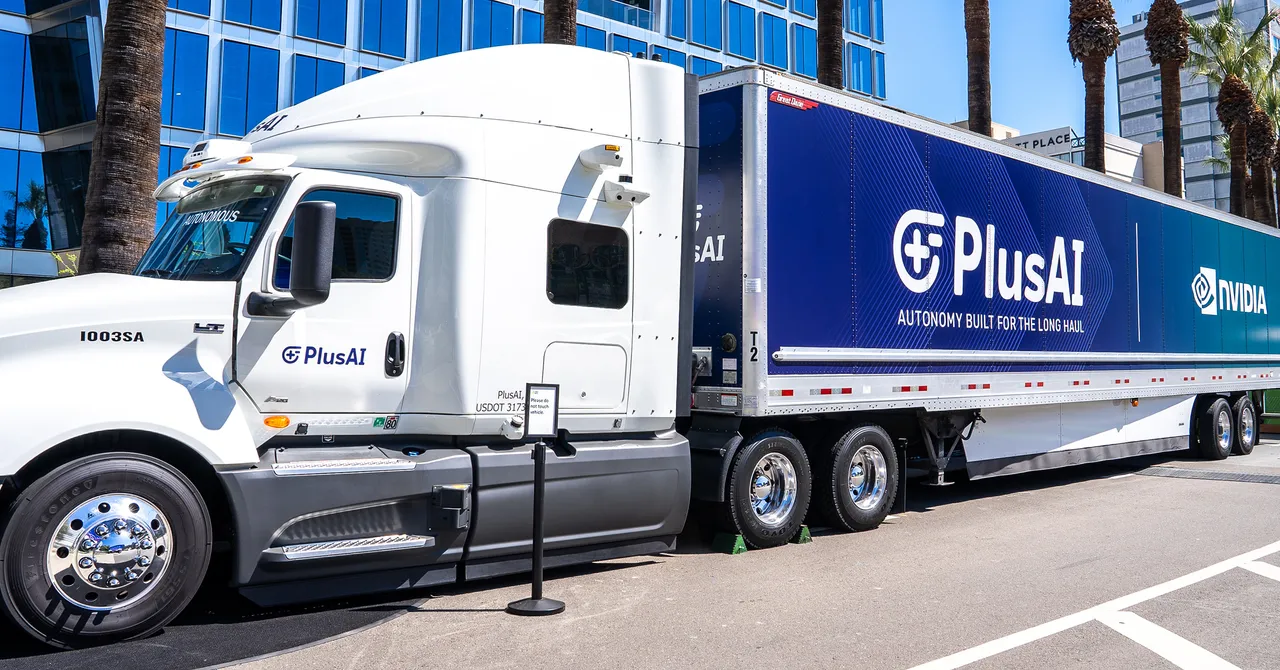
Thieves who stole two trailers marked with PlusAI and Nvidia branding in Northern California were apparently looking for high-value tech cargo, but instead found roughly 20 tons of sand. The unusual theft, which unfolded Thursday in Newark and Fremont, underscores how cargo crime is increasingly targeting the supply chain for expensive electronics, even when the actual haul turns out to be decoy material.
The incident is part of a wider surge in organized theft aimed at computer hardware, data-center gear, batteries, and other valuable freight. In this case, the trailers belonged to self-driving truck developer PlusAI, whose simulated cargo was being used for testing and research rather than shipping real semiconductors or AI hardware.
What happened in Newark?
The theft came to light after a PlusAI executive received an unexpected text message Thursday morning from someone who thought they had spotted the company’s trucks near their workplace in Newark, California. That tip set off a chain of calls and police involvement that quickly revealed the trailers were missing from where they had been parked near PlusAI’s warehouse, about half a mile away.
According to the Fremont Police Department, officers helped recover the trailers after they were driven away by unknown suspects. The trailers carried PlusAI and Nvidia logos, making them look like the kind of shipment that might contain valuable AI or autonomous-vehicle equipment.
PlusAI says the trailers were part of its research and development work and were loaded with simulated material rather than real freight. The company later confirmed that the recovered trailers still contained the sand used for testing.
By Thursday afternoon, police said the trailers had been returned to PlusAI. No arrests had been announced, and the investigation remained open.
Why was there sand in trailers carrying Nvidia branding?
Because PlusAI uses mock loads to test its autonomous trucking systems. The company said the trailers were filled with around 40,000 pounds of sand in total, or about 20,000 pounds per trailer, as a stand-in for real cargo during development and testing.
That method is common in logistics and vehicle research, where trucks need to behave as if they are hauling live freight. Simulated weights allow engineers to evaluate braking, handling, routing, and other performance factors without exposing actual products to risk.
In this case, the decoy load likely explains why the thieves abandoned the trailers after breaking the locks and discovering what was inside.
How the theft appears to have unfolded
The trailers were secured with hand locks that were broken during the theft, according to PlusAI. The company’s truck cabs, which are the self-driving vehicle units used to pull the trailers, were not stolen and remained inside the warehouse.
That detail suggests the criminals were focused on moving the trailers themselves, not the autonomous truck systems. It also indicates a degree of planning: the trailers were apparently detached and taken without the full vehicle combination, then later recovered once the thieves realized the load was worthless to them.
| Key detail | What happened |
|---|---|
| Company involved | PlusAI, in partnership with Nvidia |
| Location | Newark and Fremont, California |
| Items stolen | Two trailers with company branding |
| What was inside | About 40,000 pounds of sand |
| Security measure | Hand locks, which were broken |
| Outcome | Trailers recovered the same day; no arrests reported |
How does this fit into the broader cargo theft problem?
This odd theft lands amid a real and growing problem for the tech industry: freight theft aimed at chips, servers, networking hardware, and other high-value equipment. As data centers expand and the AI boom drives demand for specialized hardware, shipments have become attractive targets for organized thieves.
Recent incidents in California have highlighted how brazen these crimes can be. In August, WIRED reported two separate cases in which thieves intentionally struck escort vehicles guarding sensitive tech freight, then made off with the cargo. In those incidents, millions of dollars’ worth of equipment had still not been recovered as of the report’s publication.
Authorities have also investigated thefts involving Tesla batteries and bitcoin mining machines. Some suspects have been arrested in those cases, but many others remain unsolved, reflecting how difficult cargo-theft networks can be to disrupt once they identify a profitable target.
What thieves are looking for
According to Verisk CargoNet, which tracks cargo crime in the United States, some of the most frequently targeted items in recent months have included metals and enterprise-grade computer and networking equipment. Those categories align with the supply-chain realities of the AI era: expensive, compact, and easy to resell compared with bulkier consumer goods.
That makes trailers with Nvidia logos especially tempting, even if, in this case, the branding was more a lure than a promise of actual chips inside.
Why the Nvidia connection matters
The logos on the trailers almost certainly made the shipment look more valuable than it was. Nvidia is the dominant force in the AI chip market, and its name carries enormous weight in both investor and criminal imagination. For thieves, a trailer associated with the company could easily signal a jackpot of GPUs, servers, or other high-demand hardware.
PlusAI and Nvidia are collaborating on software and autonomous-truck technology, which places the startup squarely in the center of one of the most closely watched sectors in transportation. That relationship likely made the trailers even more noticeable, even though the contents were only simulated load material.
The irony is hard to miss: criminals apparently targeted what looked like premium AI freight and ended up stealing sand, a material that is both ordinary and, in this context, essential to development testing.
How did police and the companies respond?
Police in Fremont said the matter is still under investigation. The department has not announced any arrests, and authorities have not publicly identified the suspects or explained how they were able to hook up and drive away with the trailers.
PlusAI confirmed the trailers used sand as a stand-in load and said the trailers were recovered intact, including the full amount of sand. Nvidia did not respond immediately to a request for comment.
From a security standpoint, the incident is notable because it shows how cargo thieves can be fooled by branding and assumptions. Even when the target is not what it appears to be, the theft itself still disrupts operations, consumes police resources, and exposes weak points in transportation security.
Timeline of the theft and recovery
- Early Thursday: A PlusAI executive receives a text from an acquaintance saying they saw the company’s trucks near their office.
- Shortly after: PlusAI realizes the trailers are missing from the warehouse area in Newark.
- Police response: Fremont police are contacted and help locate the trailers.
- Discovery: The trailers are found to contain simulated loads of sand.
- Thursday afternoon: Police say the trailers are back with PlusAI.
What this incident reveals about AI-era logistics
The theft is both comic and cautionary. On one hand, the thieves walked away with an extremely heavy, extremely unprofitable haul. On the other, the case highlights how freight tied to AI, chips, robotics, and autonomy is now part of a high-stakes criminal ecosystem.
As companies build more sophisticated trucking and warehousing systems, they are also becoming more visible to people looking for valuable cargo. That includes not only criminal groups but also opportunistic thieves who may not know the exact contents of a shipment before trying to steal it.
Using decoy loads like sand may help engineers test vehicles safely, but it also serves as a reminder that supply-chain visibility cuts both ways. If branding signals value, it can invite the wrong kind of attention even when the freight is ordinary.
What happens next?
For now, the case appears to be heading toward a standard but unresolved cargo-theft investigation. Police will likely review evidence from the warehouse, nearby streets, and any vehicle activity associated with the theft. The suspects remain unknown, and it is not clear whether the thieves realized the cargo was useless before abandoning the trailers or after leaving the scene.
What is clear is that PlusAI’s lost trailers became an example of a fast-moving, modern theft trend colliding with a very old criminal mistake: judging a target by its label rather than its contents.
In Silicon Valley’s latest cargo crime story, the thieves may have aimed for Nvidia-grade gold but ended up with a pair of sandboxes on wheels.
Key facts at a glance
- Two branded trailers were stolen from PlusAI in Northern California.
- The trailers contained simulated cargo, not chips or electronics.
- Each trailer reportedly held about 20,000 pounds of sand.
- Police recovered the trailers the same day.
- No arrests had been announced as of Thursday.
Frequently asked questions
What did thieves steal from PlusAI?
Thieves stole two trailers belonging to PlusAI that carried PlusAI and Nvidia branding. The trailers were later recovered in Northern California, but they turned out not to contain valuable electronics or chips. Instead, they held simulated cargo used for testing.
Why were the trailers full of sand?
The trailers were full of sand because PlusAI uses simulated loads during research and development testing. The company said the sand helped mimic the weight of real freight so its autonomous truck systems could be evaluated under realistic conditions.
Were any Nvidia chips stolen in the incident?
No, there is no indication that any Nvidia chips were stolen. The trailers were branded with Nvidia logos, but PlusAI said the cargo was simulated and consisted of about 40,000 pounds of sand.
Have police made arrests in the case?
No arrests had been announced as of Thursday. Fremont police said the case remains under investigation, and authorities have not publicly identified any suspects or disclosed how the trailers were taken.
Why is this story getting attention?
It is getting attention because it combines a bizarre outcome with a serious trend: cargo theft aimed at high-value technology shipments. The case highlights how criminals are increasingly targeting AI-related freight, even when the actual haul turns out to be a decoy.