In short
Meta unveiled a camera-free Ray-Ban Audio model and updated Ray-Ban Meta Gen 3 glasses, expanding its smart glasses lineup with more styles, AI features and price points. The company is leaning into fashion and accessibility while privacy concerns over camera wearables continue to shadow the category.
- Meta introduced camera-free audio glasses alongside refreshed camera-equipped Ray-Ban Meta Gen 3 frames.
- The company is using more styles, celebrity collaborations and lower-priced models to widen adoption.
- A new personal AI agent, Muse, is being pushed across the glasses ecosystem.
- Meta added a hearing-assistance feature and modest privacy updates, but surveillance concerns remain unresolved.
- The company expects to offer more than 100 glasses variations by year’s end.
Meta is expanding its smart glasses lineup with a new camera-free Ray-Ban Audio model and a refreshed Ray-Ban Meta Gen 3 camera glasses update, betting that lighter designs, broader style choices and more AI features will help normalize wearable computing. The timing matters because the launch comes as public backlash over “surveillance glasses” grows, yet Meta is responding mainly with product variety rather than a major privacy overhaul.
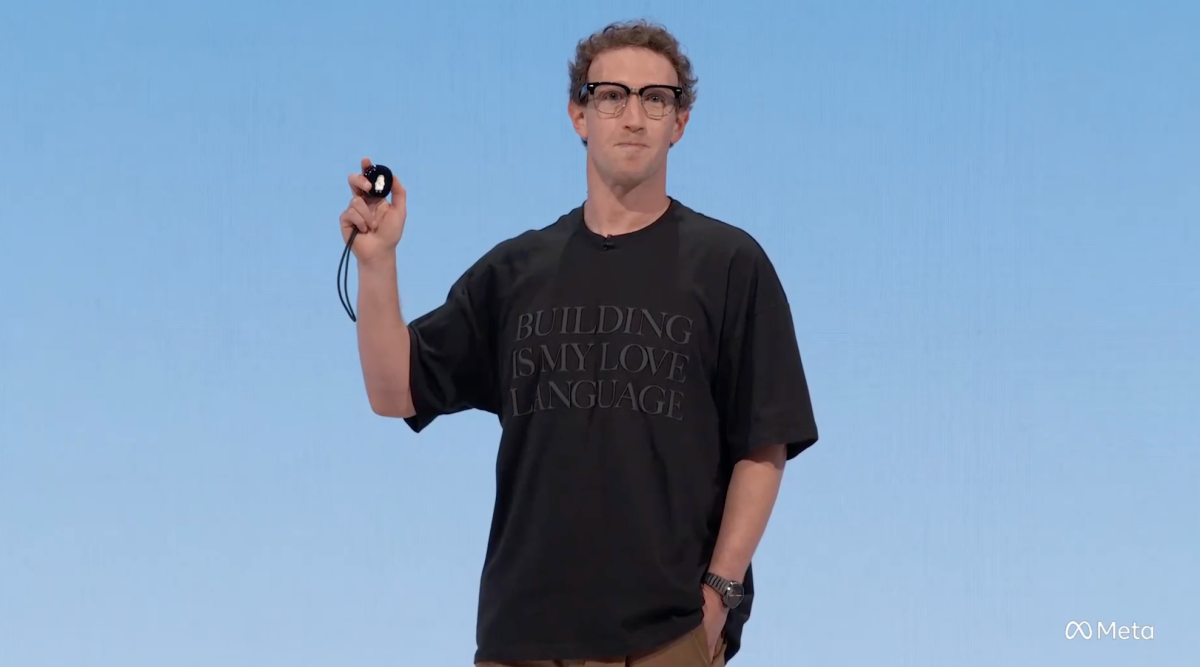
At Meta Connect 2026, the company used smart glasses as the centerpiece of its hardware pitch, unveiling multiple new frames, more price points and a bigger role for Meta AI across the lineup. The strategy is clear: make glasses look less like gadgets and more like everyday eyewear, then layer in assistants, audio, camera tools and accessibility features to widen the appeal.
That approach may help Meta reach a broader audience, but it also leaves a central tension unresolved. The company is adding more ways to wear AI on your face at the same moment critics are asking for stricter limits on what smart glasses can see, hear and store.
Meta’s smart glasses strategy is getting broader, not simpler
Meta’s newest hardware announcements show a company trying to cover both sides of the smart-glasses market. On one end is a camera-free model designed to feel less intrusive and more socially acceptable. On the other is a refreshed camera-equipped pair aimed at people who want the full range of Meta’s wearable AI features.
The message from Meta is not that one pair of glasses will satisfy everyone. Instead, the company appears to believe that success in wearables will come from offering a lot of variations — different frames, finishes, lens types, prescriptions and feature sets — until smart glasses become as ordinary as regular eyeglasses.
That’s a significant bet on consumer comfort. It also reflects a broader reality in the wearable market: adoption often depends less on a single breakthrough product than on whether the device can blend into daily life without making the wearer feel self-conscious or invasive to others.
What are Ray-Ban Meta Audio Glasses?
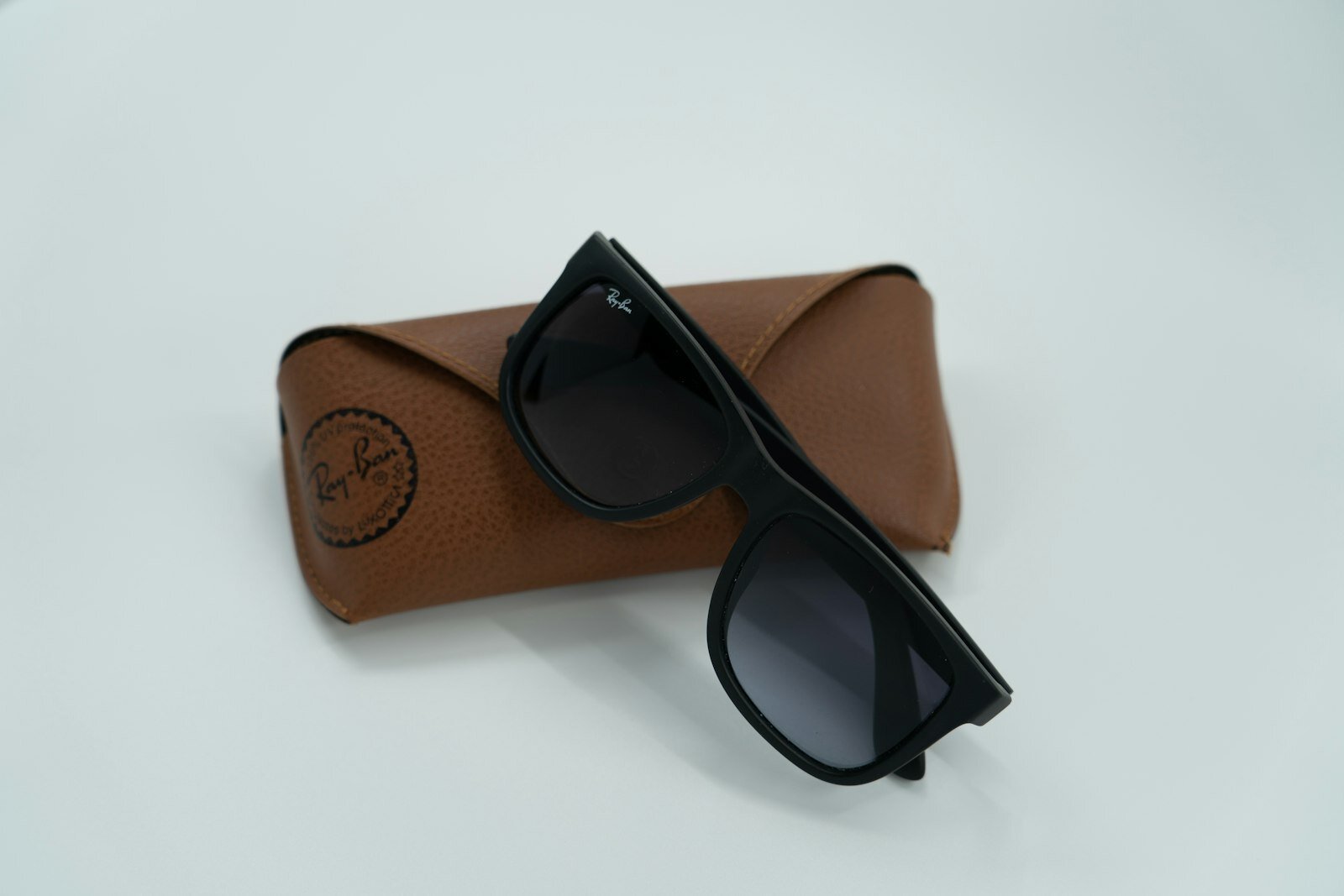
Ray-Ban Meta Audio Glasses are Meta’s newest smart glasses without a camera, built around audio, Meta AI and hands-free communication. They can play music and podcasts, take phone calls and respond to voice-based AI prompts, but they cannot record video or still images.
Meta says the audio-only model was developed over several years as the company learned where consumers actually saw value in smart glasses. According to Alex Himel, Meta’s vice president of wearables, the company eventually concluded that open-ear audio was the clearest everyday use case and that a camera was not necessary for that experience.
The absence of a camera does more than remove a feature. It changes the structure of the hardware itself. By eliminating the image-sensing components, Meta was able to redesign the frame to reduce weight and give the product a more conventional glasses-like feel.
How do the audio-only glasses differ from the camera models?
The audio-only version is lighter, slimmer and cheaper than Meta’s more advanced smart glasses. It starts at 43 grams, which is below the weight of the company’s camera-equipped Ray-Ban Meta Gen 2 glasses and well below the heavier Meta Ray-Ban Display model.
The company says the battery can last up to 12 hours on a charge, a meaningful improvement for all-day wear. The design also comes in two frame styles — Clubmaster and Burbank — plus 23 color-and-lens combinations. Meta says the glasses support the same wider prescription range as its existing Ray-Ban Meta Optics line.
The starting price is $349, making the audio-only model cheaper than the camera-toting Gen 3 glasses that Meta also introduced. In practical terms, the company is offering a lower-friction entry point for people who want the convenience of wearable audio and AI without the baggage of a camera.
Meta says the new glasses are meant to “rearchitect” the frame by moving electronics out of the front of the device and making room for a lighter, more flexible design.
Why does the camera-free design matter?
The camera-free design matters because it lowers both the physical and social cost of wearing smart glasses. A lighter frame is easier to wear all day, and the absence of a camera removes one of the most sensitive features in public-facing wearables.
Meta’s audio-only design also suggests a strategic response to criticism. Smart glasses with cameras are often viewed as tools that could normalize covert recording. A model that cannot capture images at all may feel less threatening to bystanders, even if it still uses microphones and AI voice processing.
That said, the company is not framing the product as a privacy-first device. It is presenting it as a practical, lightweight, everyday accessory with the minimum necessary technology to make AI useful.
Ray-Ban Meta Gen 3 keeps the camera and adds refinements
Meta’s refreshed Ray-Ban Meta Gen 3 glasses keep the camera in place and build on the previous generation with modest hardware improvements. The new model has a sixth microphone, compared with five on the second generation, which Meta says should help improve call quality.
Battery life rises slightly to nine hours, one hour more than before. The frames also get adjustable temple arms, which should improve fit across a wider range of face shapes. Audio is now captured with Dolby Atmos support for spatial sound.
The Gen 3 glasses are also being sold in more style combinations, with 27 color and lens options plus three seasonal variants. But the upgrade comes with a notable price increase: the new version starts at $449, up from $379 for the prior generation.
What is new about the Gen 3 design?
The Gen 3 design is less about reinvention than refinement. Meta is polishing fit, call quality, battery life and audio rather than introducing a radically different user experience.
The company is also leaning harder into fashion. The new aviator style is aimed at users who want a more obvious style statement, while the Zena frame moves in a bolder, geometric cat-eye direction. Together, these options suggest Meta is trying to make smart glasses feel less like tech hardware and more like a personal accessory.
That fashion-first approach may be especially important for a category still fighting the perception that smart glasses look awkward or overly technical in everyday settings.
Meta is turning smart glasses into a fashion catalog
One of the most striking parts of Meta’s rollout is how much effort the company is putting into styling. Rather than selling a single flagship frame, Meta is now spreading its wearable strategy across multiple lines, limited editions and celebrity partnerships.
The lower-priced Meta Glasses line also gains new styles, including Capri and Nova, plus a new ivory version tied to Kylie Jenner. Another collaboration features Blackpink star and White Lotus actor Lisa, with pink lenses and a collectible-style charm inspired by her pets.
The company says the point is to expand the audience, especially among women and younger buyers. That is a notable shift for a category that has often skewed male and early-adopter heavy.
Who are the celebrity collaborations for?
Meta’s celebrity editions appear designed to make smart glasses feel more like a fashion product than a niche gadget. The company believes recognizable style ambassadors can help break the perception that smart glasses are only for tech enthusiasts or a narrow slice of consumers.
Alex Himel said Meta has seen broader interest when it introduces styles that appeal to younger and more female audiences. He pointed to the company’s prior celebrity-linked efforts as evidence that some buyers are drawn to frames that feel more personal and less overtly technical.
Meta’s wearables chief said the company has seen certain frame styles resonate with a younger, more female audience, helping the glasses appeal beyond the traditional male-heavy market.
That strategy makes commercial sense. Eyewear is already a deeply style-driven purchase, and Meta seems to be treating aesthetics as a core part of product adoption rather than an afterthought.
How much do Meta’s new smart glasses cost?
The price structure shows Meta trying to cover a wide range of budgets. The audio-only Ray-Ban Meta Audio Glasses start at $349, the non-celebrity Meta Glasses start at $249, and the camera-equipped Ray-Ban Meta Gen 3 glasses start at $449.
Special editions and celebrity collaborations land higher, with some models priced at $399. Meta is also adding prescription and lens variations across the lineup, which can change the final cost depending on customization.
Here is a simple comparison of the major models announced or updated at Meta Connect 2026:
| Model | Camera | Battery life | Starting price | Key selling point |
|---|---|---|---|---|
| Ray-Ban Meta Audio Glasses | No | Up to 12 hours | $349 | Lighter frame, audio and AI without recording |
| Ray-Ban Meta Gen 3 | Yes | Up to 9 hours | $449 | Camera, improved microphones and refined fit |
| Meta Glasses | Varies by model | Not specified in announcement | $249+ | Lower-cost fashion-focused line |
| Celebrity editions | Varies by model | Not specified in announcement | $399+ | Fashion collaboration and limited-edition appeal |
Meta’s pricing suggests the company wants to segment the market by intent. Budget buyers can get into the ecosystem cheaply, while heavier users can pay more for cameras and premium features.
What is Muse doing in Meta’s glasses?
Muse is Meta’s new personal AI agent, and the company wants it across the whole wearable ecosystem. On the company’s campus and in its demonstrations, Muse is being positioned as a context-aware assistant that can help users with tasks rather than simply answer questions.
Meta’s pitch is that an AI agent in your glasses can better understand your situation, remember more of what you need and act on your behalf. That could mean helping with shopping, organization, recommendations or simple task execution.
In one demonstration, the assistant was asked to help choose snacks that offered the best protein-to-calorie ratio. It could respond to the request, but it stumbled when asked to complete a more complex cart-building step. That is a reminder that the technology is still early, even if the use cases are becoming clearer.
How could Muse change everyday use?
Muse could make smart glasses feel more proactive and less like passive accessories. Instead of waiting for a user to ask a question, the assistant could potentially connect context, memory and actions in a more seamless way.
That is appealing from a product perspective because it makes the glasses feel more indispensable. It is also where privacy questions become harder to ignore, since more contextual assistance usually means more data collection, more inference and more dependency on Meta’s ecosystem.
For now, the feature is best understood as a glimpse of Meta’s long-term ambition: a wearable AI layer that is always available, always listening for the wake word and increasingly integrated into everyday decisions.
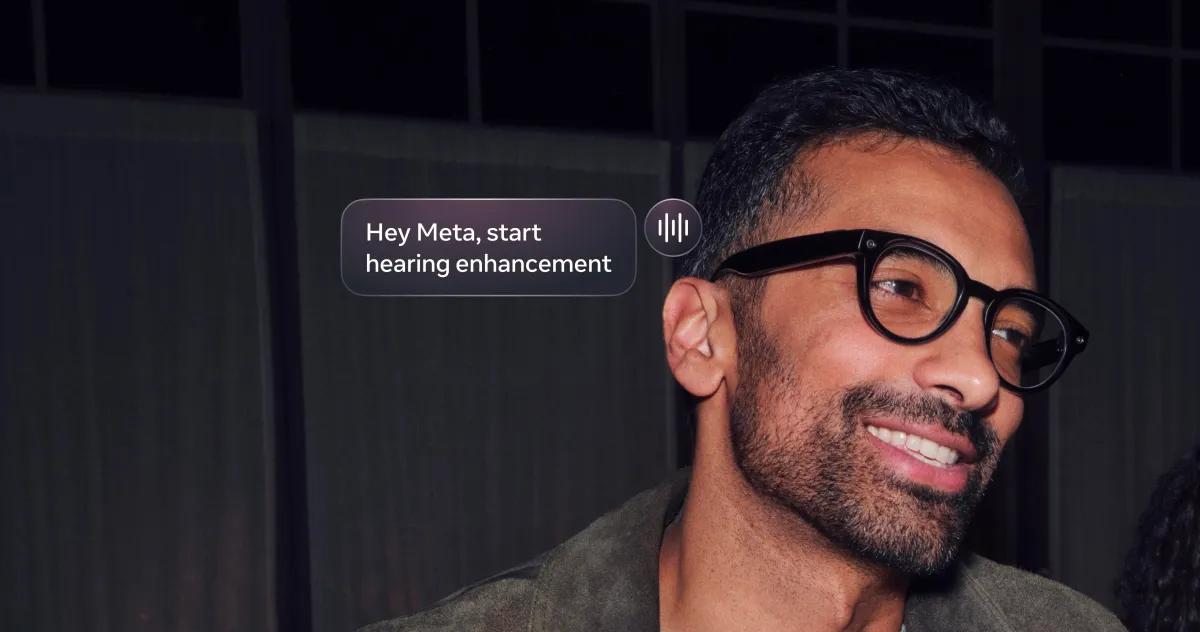
Can Meta’s glasses help with hearing loss?
Yes. Meta also showed a hearing assistance feature that has received FDA clearance and is designed to amplify conversation in noisy environments for people with mild hearing loss.
During the demonstration, the effect was illustrated by having the reviewer wear earplugs to mimic reduced hearing. With the feature active, speech became easier to follow, particularly higher voices, and the system was able to boost conversational audio enough that the user could more comfortably engage in a busy setting.
Meta says the hearing feature will cost an additional $149, but the company is positioning it as a one-time payment rather than a subscription. It is also eligible for FSA and HSA spending, which may make it more accessible for some users.
This is one of the more straightforwardly useful parts of the announcement. Unlike AI assistants or camera functions, hearing support has a clearer accessibility benefit and a more obvious practical value proposition.
Why privacy remains the biggest issue
Meta did introduce a few privacy-related updates, but they are unlikely to settle the broader public debate around smart glasses. The company is adding a “private processing” system to wearables, a server-based approach intended to keep user data inaccessible to Meta or third parties when end-to-end encryption cannot be used or when on-device processing is not enough.
Meta is also giving users the option to stop their visual data from being used for AI training. Audio-only queries, however, can still be used to train systems.
Those steps matter, but they do not directly solve the main concern many critics have: that smart glasses can be used to covertly record people in public without their knowledge.
Meta argues that private processing is meant to preserve privacy while still allowing more capable AI features than a purely on-device system could support.
Himel said the goal is to keep data limited to the user while still enabling more advanced models than an on-device-only architecture can handle. In other words, Meta is trying to balance stronger privacy assurances with the performance advantages of cloud-based processing.
That may be technically sensible. It is not, however, the same as solving the trust problem around cameras on faces in public spaces.
How many versions of Meta glasses will exist?
Meta says the answer could be more than 100 variations by the end of the year. That figure includes different frame shapes, colors, lens options, prescription combinations and limited-edition models across the company’s smart glasses family.
The goal is not just to maximize sales, but to normalize the product category by flooding it with choice. If the glasses come in enough forms, Meta seems to believe, there will be a version that feels acceptable to nearly everyone.
That strategy can be summarized in a few parts:
- Offer a camera-free option for users worried about discomfort or surveillance concerns.
- Keep camera-equipped glasses for people who want richer AI and capture tools.
- Use celebrity collaborations and fashion variations to broaden appeal.
- Add accessibility features such as hearing assistance to create clearer value.
- Push AI across the whole lineup so the glasses feel part of a larger platform, not a one-off device.
It is an ambitious rollout, and it reflects Meta’s belief that the next major computing platform may not be a phone replacement or a headset, but a pair of glasses people can wear for most of the day.
The real challenge is outside Meta’s bubble
Inside Meta’s campus, the strategy looks persuasive. Glasses are everywhere, staff and attendees are wearing them, and the company can show off a dense wall of styles and features as evidence that the future is already here.
Outside that bubble, the reaction is much more complicated. Public concern over wearable surveillance continues to grow, and people who are uneasy about smart glasses are not necessarily asking for more options. Many are asking for fewer camera-equipped devices in public places, stronger controls and clearer social norms.
That disconnect is the heart of Meta’s problem. The company can keep iterating on design, battery life, AI and fashion until the product feels better in hand. But if people remain worried about being recorded without consent, better styling alone may not be enough to win trust.
For now, Meta’s answer to that skepticism is scale: more models, more features, more style choices and more AI woven into everything. Whether that produces mainstream acceptance or simply more public resistance will determine how far this glasses strategy can go.
What happens next?
Meta’s rollout makes one thing clear: the company is not stepping back from smart glasses, even as criticism grows. If anything, it is doubling down on the category and trying to separate the socially palatable parts of the product from the more controversial ones.
The camera-free Ray-Ban Audio glasses are the clearest example of that split. They give Meta a product that feels lighter, safer and easier to wear, while preserving the AI voice experience the company wants to normalize.
At the same time, the company is keeping camera glasses alive and improving them incrementally. That suggests Meta sees the category as a long game, one in which the future of personal computing will arrive not through one decisive launch, but through steady accumulation of features, styles and permissions.
Whether the public agrees is another matter. For now, Meta is asking consumers to accept that the face is the next great computing surface — and that the future can be worn in more than 100 different ways.
| Launch area | Why it matters | Potential concern |
|---|---|---|
| Audio-only Ray-Bans | Lower weight and lower price broaden appeal | Still collect audio and rely on voice interaction |
| Ray-Ban Meta Gen 3 | Improved call quality, fit and battery | Camera wearables remain controversial |
| Muse AI agent | Moves glasses toward proactive assistance | Raises data and context concerns |
| Hearing feature | Offers clear accessibility value | Adds another paid layer to the ecosystem |
Frequently asked questions
What did Meta announce about smart glasses in 2026?
Meta announced new Ray-Ban Meta Audio Glasses without a camera and updated Ray-Ban Meta Gen 3 glasses with a camera. The company also expanded its lower-cost Meta Glasses line, added celebrity collaborations and introduced more AI and accessibility features.
How much do Meta’s new smart glasses cost?
Meta’s audio-only Ray-Ban Meta Audio Glasses start at $349, while the refreshed Ray-Ban Meta Gen 3 glasses start at $449. The lower-cost Meta Glasses line starts at $249, with some celebrity editions priced at $399 or more.
Why is Meta launching camera-free smart glasses?
Meta says the camera-free model answers strong consumer demand for lightweight, comfortable glasses focused on audio and AI. It also helps reduce one of the biggest objections to smart glasses: the idea that they can be used for covert recording in public.
What is Muse in Meta’s glasses?
Muse is Meta’s personal AI agent, and the company plans to bring it to its glasses lineup. The goal is for the assistant to understand context better, remember more of what users need and help complete tasks directly from the wearable.
Do Meta’s new glasses help with hearing loss?
Yes. Meta introduced an FDA-cleared hearing assistance feature for its glasses that boosts speech in noisy environments for people with mild hearing loss. The feature costs an additional $149 and is positioned as a one-time purchase, not a subscription.