In short
Rabbit has launched OS3, a standalone AI agent that works without the R1 and runs across Windows, Mac, and Linux. The move signals a major pivot away from hardware-only access and toward a broader software platform.
- Rabbit’s OS3 AI agent no longer requires the R1 device.
- The system can operate across Windows, Mac, and Linux computers.
- Rabbit says it can connect up to five devices and multiple AI models to one account.
- The company is reportedly ending R1 manufacturing while planning a new OS3-based device.
- Privacy will be a key issue because Rabbit stores chats and memories on its servers.
Rabbit has introduced OS3, a standalone AI agent platform that no longer requires its R1 gadget to work. The new system is designed to run in the cloud while controlling apps and files locally across Windows, Mac, and Linux machines, marking a major shift for the startup after the rocky reception of its first AI hardware product.
The move matters because it broadens Rabbit’s addressable market from a niche device audience to mainstream desktop users, while also signaling that the company is still betting on agentic software even as it scales back production of the R1.
Rabbit’s latest announcement suggests a reset in strategy: instead of selling a single-purpose AI companion, the company is now packaging its technology as an operating environment for handling tasks across multiple devices, models, and messaging surfaces.
What is Rabbit OS3?
OS3 is Rabbit’s new “agentic operating system,” a software layer that can coordinate AI models, applications, and files to complete tasks on a user’s behalf. Unlike the original Rabbit R1 experience, OS3 is not tied exclusively to dedicated hardware.
According to the company, the system can operate across Windows, Mac, and Linux computers, and users can connect up to five devices to a single account. Rabbit says OS3 will determine which device, app, file, and model is best suited for a given request, then orchestrate the workflow automatically.
How OS3 differs from the R1
OS3 is designed to be software-first, while the R1 was a standalone AI gadget that depended on Rabbit’s specific device ecosystem. That distinction is important because the R1 arrived with high expectations and an unkindly mixed reception, leaving Rabbit under pressure to prove its broader technology had a future beyond the handheld product.
Now, instead of asking customers to buy special hardware just to test Rabbit’s ideas, the startup is making its agent available through desktop browsers and connected messaging services. That gives the company a chance to compete more directly with the growing field of AI assistants and task automation tools.
How does Rabbit say OS3 works?
Rabbit says the system runs in the cloud but executes locally across connected devices, which gives it flexibility in choosing where tasks are performed. The company claims OS3 can look at the user’s available devices and decide which one should be used to access a document, interact with software, or complete another action.
Users can also bring their preferred AI models into the system. In practice, that means OS3 is intended to behave less like a single chatbot and more like a control layer that routes work between devices and models depending on the job.
| OS3 feature | What Rabbit says it does |
|---|---|
| Device support | Works across Windows, Mac, and Linux |
| Account limits | Allows up to five devices per account |
| Model support | Lets users connect preferred AI models |
| Access points | Available via desktop site, messaging apps, and R1 |
| Architecture | Cloud-based orchestration with local device operation |
Why Rabbit is moving away from hardware-only access
Rabbit is widening access because the company appears to have learned that a hardware-dependent strategy is much harder to sustain than a software platform. Building, shipping, and supporting a consumer device is expensive, and a narrow hardware user base limits growth even when the underlying software has potential.
The startup’s earlier product launch drew attention, but attention alone does not guarantee a viable business. By offering OS3 without requiring an R1, Rabbit can reach more users, gather more feedback, and reduce the friction that often prevents curious people from trying an emerging AI product.
There is also a competitive reason for the shift. The AI market is increasingly crowded with desktop assistants, agent tools, and integrated model platforms from larger companies. A standalone service that runs on existing computers is far easier to adopt than a separate gadget that must justify its own price and utility.
What this means for Rabbit’s future
Rabbit is not abandoning hardware altogether, but it is clearly changing the role hardware plays in its business. The company is now positioning physical devices as one possible endpoint for its software rather than the only way to experience it.
That may give Rabbit more room to iterate after the mixed reaction to the R1. If OS3 gains traction on standard desktops, the company could rebuild its brand around usefulness rather than novelty.
Who can use OS3 now?
OS3 is intended for users on Windows, Mac, and Linux machines, and Rabbit says it can also be accessed through a desktop website or via connected messaging apps such as Telegram and iMessage. The company has also kept support for the R1 itself.
That cross-platform availability is one of the system’s biggest selling points. It removes the need to own a special device and makes Rabbit’s software easier to test in everyday workflows, whether that means managing files, interacting with apps, or coordinating tasks across several computers.
What happened to Rabbit’s R1 device?
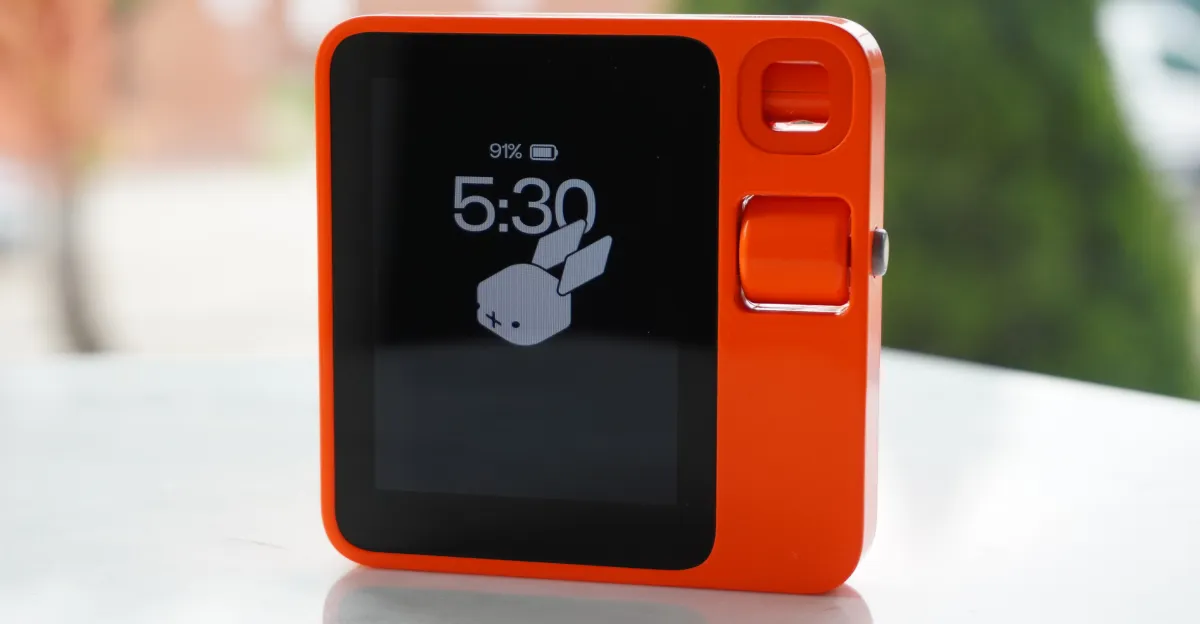
The R1 is no longer Rabbit’s main focus, and the company has reportedly stopped manufacturing the device. Jesse Lyu, Rabbit’s founder, told Wired that the startup has ended production, although the company is not walking away from hardware completely.
Instead, Rabbit is planning a new vibe-coding “cyberdeck” that will run OS3 when it launches in the coming months, according to Wired. That suggests the company still sees hardware as part of its long-term vision, but only after it is better aligned with the software it wants to sell.
Rabbit’s founder has said the company has stopped making R1 units and is now shifting attention toward a new device concept designed to run OS3.
Why data privacy will be a major issue
Rabbit is making broad claims about how OS3 handles user information, and privacy will likely be a central question for anyone considering the platform. The company says the system will not store, copy, use, or sell customer data.
At the same time, Rabbit says it will retain users’ chats and the memories derived from them on its servers. It also notes that third-party AI providers connected to OS3 will process data under their own privacy policies.
That combination is likely to raise familiar concerns about modern AI agents: what they remember, where the information lives, and which companies can access it along the way. Users weighing OS3 will need to understand not just Rabbit’s policies but also the rules of the models and services they connect.
What users should watch for
- How much conversational history OS3 stores over time
- Which connected models are used for different tasks
- Whether files remain local or move through cloud services
- How easy it is to delete stored memories or chat records
- What permissions are required on each connected device
How does OS3 fit into the wider AI agent race?
OS3 arrives as tech companies race to turn chatbots into agents that can actually do work. That shift is central to the current AI market: users are no longer just asking systems to answer questions, but to manage digital tasks, operate software, and make decisions about where and how work gets done.
Rabbit’s approach is notable because it tries to unify several parts of that trend in one product: cloud coordination, local device access, multi-model support, and messaging-based interaction. In other words, it is trying to become the layer that connects a user’s devices to the AI tools that can take action.
Whether that ambition is enough will depend on reliability. AI agents are only useful if they can actually complete tasks consistently, and desktop users tend to notice errors quickly. If OS3 works as advertised, it could help Rabbit move past the disappointment surrounding R1. If it does not, the company may find that a broader software pitch is harder to sustain than a hardware novelty.
Timeline: Rabbit’s shift from device to platform
Rabbit’s story shows how quickly AI startups can be forced to adapt when hardware and software expectations diverge. The company’s latest announcement is less a product update than a strategic pivot.
| Period | Development | Why it matters |
|---|---|---|
| R1 launch era | Rabbit introduced its AI device to significant attention | Established the company as an AI hardware brand |
| Post-launch reaction | The device received a cool response from many users and observers | Raised questions about the hardware-first strategy |
| Current shift | Rabbit unveils OS3 as a standalone agentic operating system | Expands access to standard computers and cloud workflows |
| Near-term plan | The company is reportedly preparing a new cyberdeck-style product | Shows Rabbit is still exploring hardware, but on different terms |
What this announcement says about AI hardware in 2026
Rabbit’s latest move reflects a broader pattern in consumer AI: hardware is no longer the only way to make a product feel futuristic. Many users now expect their existing phones and laptops to be enough, provided the software is powerful, intuitive, and reliable.
That reality makes pure hardware plays more difficult, especially for startups without the manufacturing scale of larger tech companies. The software has to do more work, because the device itself cannot be the entire value proposition.
Rabbit appears to understand that lesson. OS3 is an attempt to move from a single device story to a platform story, where the company’s value lies in how well it can coordinate AI models and devices rather than in one gadget alone.
Bottom line
Rabbit’s OS3 is a significant pivot: a standalone AI agent that works without an R1 and can run across major desktop operating systems. The change gives Rabbit a better shot at relevance in the fast-moving AI agent market, but it also raises the same hard questions that continue to follow the company—whether its software is reliable, whether its privacy promises hold up, and whether it can turn novelty into durable utility.
Frequently asked questions
What is Rabbit OS3?
Rabbit OS3 is a standalone AI agent platform that the company says can coordinate apps, files, devices, and AI models to complete tasks. It runs in the cloud but works across Windows, Mac, and Linux devices, so users do not need an R1 to access it.
Does Rabbit OS3 require the R1 device?
No, Rabbit OS3 does not require the R1 device. Rabbit says users can access the system through a desktop website, connected messaging apps, or the R1 itself, making the software available to people who never bought the hardware.
What happened to Rabbit’s R1 hardware?
Rabbit has reportedly stopped manufacturing the R1 device. The company is not leaving hardware behind entirely, however, and is said to be working on a new vibe-coding cyberdeck that will run OS3 when it launches.
How many devices can Rabbit OS3 connect?
Rabbit says one account can connect up to five devices. The system is designed to choose the best device, file, app, or model for a task automatically, which is central to its agentic workflow.
What does Rabbit say about OS3 privacy?
Rabbit says OS3 will not store, copy, use, or sell user data, but it will keep chats and related memories on its servers. The company also says any third-party AI providers used by OS3 will follow their own privacy rules.