In short
Amazon Web Services is previewing The Biological Computing Company’s rat-brain AI model to selected customers, giving the startup wider reach and testing whether biological computing can improve video generation. The move highlights growing interest in nontraditional AI architectures that promise lower costs and better efficiency.
- AWS is offering a limited preview of TBC’s rat-brain AI model to selected customers.
- The startup says its biology-inspired system can speed up video generation and reduce inference costs.
- TBC has raised more than $50 million and is now expanding through Amazon’s cloud distribution.
- The approach uses live rat brain cells and stem cells on silicon arrays to study neural processing patterns.
- The main challenge is whether the model can maintain quality and efficiency at larger scale and longer video lengths.
Amazon Web Services has begun offering a preview of a startup’s AI system built by studying rat brain cells, giving The Biological Computing Company a major distribution boost and putting biologically inspired computing closer to mainstream enterprise use. The model is designed to make video generation faster and cheaper, and Amazon says it should reach broader AWS enterprise access soon.
The move matters because it marks one of the clearest steps yet in turning a once-experimental field into a commercial AI product. Instead of replacing today’s AI architecture, the startup is trying to improve how current video models work by mimicking patterns learned from living neural tissue.
What Amazon is launching and why it matters
Amazon is making The Biological Computing Company’s so-called rat-brain model available to select AWS customers in a limited preview starting Tuesday. The startup, often called TBC, says its system can help video-generation models produce content faster while cutting inference costs, the computing expense tied to running a model after training.
The partnership is notable for two reasons. First, it gives a young biology-heavy startup access to a massive cloud customer base. Second, it suggests major cloud providers are willing to support approaches that sit outside the standard playbook of transformer-based AI.
For Amazon, the launch expands a marketplace that already includes other biologically derived systems. For TBC, it is a validation point after years of technical work and a fresh $50 million-plus funding run that has put the company on a firmer commercial footing.
How does a rat-brain AI model work?
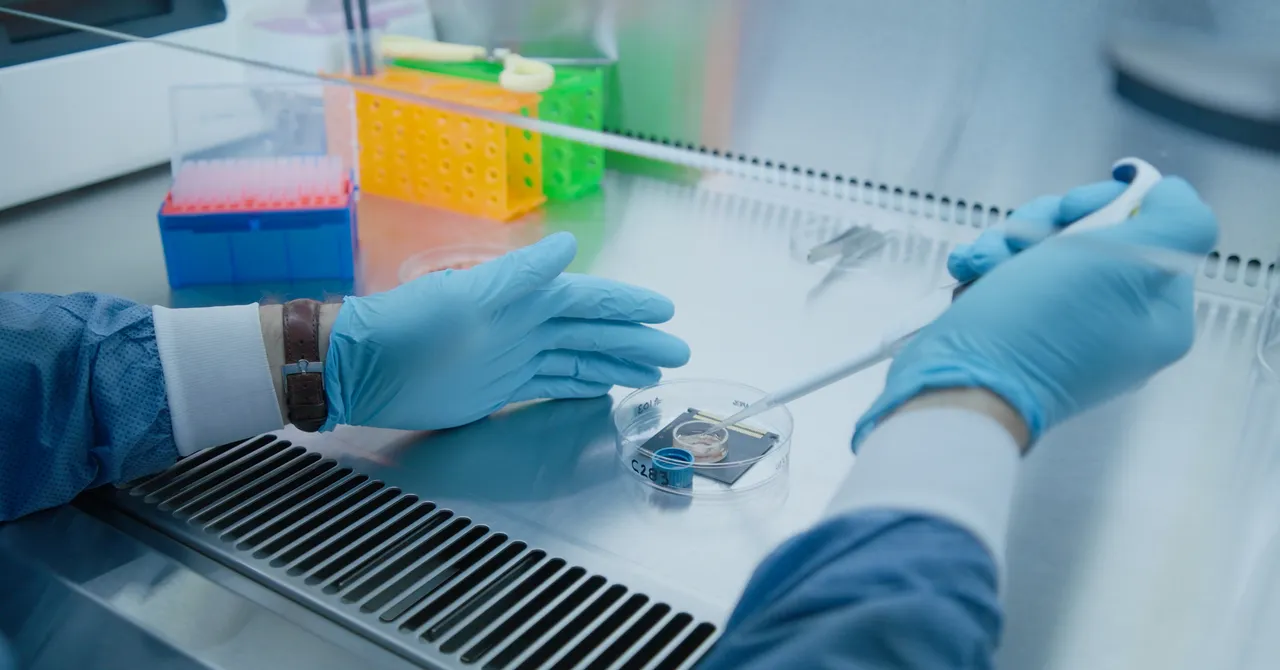
The system works by mapping information into biological tissue, then observing how the tissue responds and converting those responses into software patterns that can inform AI models. In practice, that means TBC places rat brain cells, and in some cases human stem cells, onto multi-electrode silicon arrays, stimulates them electrically, and records the resulting activity.
The company then analyzes those neural patterns for computational behaviors that can be translated into software improvements. The goal is not to replace standard machine learning with living tissue, but to extract useful signals that can make existing generative models more efficient.
“We figured out a way to code information, like images for example, to the biological material,” cofounder Alexander Ksendzovsky said. “We then observe how the biology processes that information, and then we build a tool that mimics that process.”
That distinction is important. TBC is not claiming that its model thinks like a human or animal brain. Instead, it is trying to learn from the way biological systems process information and use those insights to improve software that already powers AI video generation.
Why video generation was the first target
Video was the natural starting point because the company’s hardware and biology setup lent itself more easily to visual data than to text. The layout of the electrode arrays matters, since each contact point interacts with neurons in a slightly different way. That made images easier to encode and test than language, which is more abstract and harder to map cleanly onto a biological grid.
From there, the business case emerged. If TBC could show its biological approach improved systems for generating video, it could prove the idea on a task that already has established benchmarks. That makes the science easier to measure and the commercial value easier to explain to potential customers.
President and COO Jon Pomeraniec said Jeff Dean, one of the startup’s investors and a well-known AI researcher, pushed the company toward fine-tuning video models first so it could demonstrate value on known benchmarks before moving to harder problems.
That strategy reflects a broader challenge in AI. Technologies that sound radical often need a practical entry point before customers will trust them. Video generation gives TBC a measurable arena where speed, fidelity, and cost can all be compared against existing systems.
What is biological computing, and why is it gaining attention now?
Biological computing uses living cells or biological materials as part of computation or model design. Researchers in the field have long imagined systems that behave less like pure math engines and more like the brain’s own neural circuitry. Until recently, the category was mostly a research curiosity with limited commercial traction.
That is changing as AI companies look for ways to make models more efficient. Training and running large generative systems can be extremely expensive, so any method that reduces compute needs or improves output quality is valuable. Biological computing is drawing attention because it promises a different route to efficiency, even if it is still technically difficult and operationally messy.
The catch is that the field is much harder to productize than standard software. It requires laboratories, careful handling of live cells, monitoring conditions that keep biological material healthy, and a pipeline that can translate messy living signals into digital outputs. That makes scaling far more complex than scaling cloud software alone.
How Amazon is already involved in biological computing
Amazon is not entering the category for the first time with TBC. According to Deap Ubhi, AWS’s global director of technology for startups, the company already works with other biological-computing firms, including Australia-based Cortical Labs, which combines lab-grown neurons with silicon chips.
Cortical Labs describes its approach as “wetware as a service,” a phrase that captures the hybrid nature of the field. The company also sells a low-power biological computer intended for laboratory use, illustrating how some of these efforts are moving beyond theory into specialized products.
Ubhi said TBC stood out because of its practical mindset. Rather than trying to overturn the basic architecture of generative AI, he said, the startup focused on making current visual models more efficient. That compatibility with existing industry standards appears to have made the company more attractive to Amazon as a partner.
The funding story behind The Biological Computing Company
TBC was founded in Baltimore four years ago by two neuroscientists and neurosurgeons, Ksendzovsky and Pomeraniec. The company later opened an office and research lab in San Francisco, where about 35 employees now work directly with rat brain cells and human stem cells.
Its financing has accelerated quickly. Earlier this year, TBC raised $25 million in a round led by Primary Venture Partners. Soon after that round closed in March, the company secured another $25 million, pushing total funding above $50 million. That second round had not been publicly reported before now.
That capital has likely helped the startup build out the physical infrastructure required for biological computing, which is much more hands-on than a pure software startup. Maintaining lab operations, research staff, and specialized hardware is expensive, but the scale of the investment suggests backers see a commercial path beyond the novelty.
| Milestone | Details | Why it matters |
|---|---|---|
| Company founded | Four years ago in Baltimore | Shows the startup has been developing the technology for several years |
| San Francisco lab opens | Last year | Expanded hands-on research capacity with live cells and arrays |
| First major funding round | $25 million, led by Primary Venture Partners | Gave TBC its first significant outside backing |
| Additional undisclosed round | $25 million after March closing | Pushed total funding above $50 million |
| AWS limited preview | Starting Tuesday | Introduces the model to select Amazon customers |
What TBC claims its model can do
TBC says its biological approach can make video generation up to five times faster than the open-source model it uses as a comparison and can also reduce inference costs. Inference is the stage where an AI model applies what it has learned to produce a result, such as a video clip, image, or text response.
The company has not disclosed the exact open-source model it uses as a benchmark, saying only that it compares against one of the leading frontier video-generation systems. That leaves outside observers with incomplete information, but it is common for startups to hold back some technical details while they seek adoption and further testing.
Even so, the performance claims are meaningful because video generation is a high-cost, compute-intensive area where better efficiency can translate directly into stronger margins or lower customer bills. If TBC’s approach holds up in broader usage, it could become relevant to media, advertising, entertainment, and enterprise content teams.
How AWS customers will access it
Amazon says only a limited group of AWS customers can use the model initially, but both companies expect the rollout to widen to all AWS enterprise customers soon. That gives TBC a channel to prove the product with real users rather than in a purely experimental environment.
The fact that Amazon is distributing the software through its cloud platform is especially important. Cloud marketplaces can turn niche technology into a scaled offering quickly if enterprise buyers see value and the product integrates cleanly into existing workflows.
For a startup like TBC, the distribution advantage may be as valuable as the technical validation. Access to AWS customers can produce more feedback, more usage data, and potentially more commercial contracts.
What are the biggest risks for this kind of AI?
The biggest risk is whether a biological model can remain useful when pushed beyond controlled tests. Even if it performs well on benchmark tasks, longer and more complex video generation could reveal limits around consistency, memory, or fidelity over time.
That concern is not unique to biological computing, but it is especially important here because the model’s value proposition is tied to efficiency and better output quality. If performance degrades on longer clips or more demanding workloads, the startup’s advantages could narrow quickly.
Ubhi said the key question is whether the model still shows gains under extreme use, especially for customers who want to generate much longer videos and expect stable detail from start to finish.
There are also operational risks. Because the technology relies on live biological material, scaling is not as straightforward as adding more GPUs to a data center. The company must manage both the software side and the lab side at once, which complicates growth.
Why this launch matters for the broader AI market
This is about more than one startup’s product debut. The AWS preview signals that major cloud providers are increasingly open to alternative AI architectures, especially if they promise efficiency gains in a market obsessed with cost.
It also shows how the AI race is branching beyond the familiar battle over bigger models and more compute. Some companies are trying to squeeze more from standard architectures. Others, like TBC, are looking to biology itself for design ideas that may unlock a new generation of models.
If TBC succeeds, it could help normalize a hybrid future in which AI systems borrow from living neural processes without fully becoming biological computers. If it stumbles, it will still have helped define the practical limits of the field.
Either way, the move from lab to AWS preview is a milestone. It shows that an idea once confined to speculative research is now being tested in a commercial setting with real customers, real benchmarks, and real expectations.
Timeline of key events
The startup’s path to AWS has been gradual, with each step building on the last.
- Four years ago: The Biological Computing Company is founded in Baltimore by Ksendzovsky and Pomeraniec.
- Last year: The company opens a San Francisco office and research lab.
- Earlier this year: TBC raises $25 million in a major round led by Primary Venture Partners.
- March: The first major funding round closes, followed by an additional $25 million round that was not previously disclosed.
- Tuesday: AWS begins offering the rat-brain model to select customers in limited preview.
What comes next for The Biological Computing Company?
The next phase will be less about announcing the concept and more about proving durability. TBC will need to show that its biological insights translate into consistent gains across different customer workloads and that the model can handle more ambitious generation tasks without losing quality.
Amazon, for its part, will likely watch closely to see whether the technology performs as advertised and whether buyers find it useful enough to justify broader rollout. If the early results are strong, the partnership could position AWS as one of the first major cloud platforms to help commercialize biological computing at scale.
For now, the story is not that AI has become biological. It is that the search for better AI has reached the point where living cells are being put to work inside enterprise software pipelines. That alone marks a striking shift in how the industry is defining innovation.
Frequently asked questions
What is the rat-brain AI model Amazon is previewing?
It is a biological computing system from The Biological Computing Company that studies how rat brain cells process information and turns those patterns into software improvements for AI video generation. Amazon is offering it to select AWS customers in limited preview.
Why is Amazon working with a biological computing startup?
Amazon is partnering with TBC because the company’s approach may make current generative AI models more efficient, especially for video. AWS also appears to see biological computing as an emerging category worth supporting alongside other advanced AI tools.
How does TBC’s technology claim to improve video generation?
TBC says it maps visual information into biological tissue, observes the neural response, and uses that data to improve existing video-generation models. The company claims the result can be up to five times faster than the open-source model it benchmarks against.
How much funding has The Biological Computing Company raised?
The startup has raised more than $50 million in total. It closed a $25 million round led by Primary Venture Partners earlier this year and then secured another $25 million round after that, which had not been previously reported.
What is the biggest challenge for biological computing?
The biggest challenge is scaling. Because the technology depends on live biological material and lab operations, it is harder to expand than ordinary cloud software. The model also has to stay accurate and consistent when used for longer, more demanding workloads.