In short
Patti Harrison says the internet and Silicon Valley once felt liberating, but now seem driven by addiction, profit, and political harm. In a new interview, she criticizes social media, AI, and the tech industry’s failure to live up to its utopian promises.
- Harrison says her early excitement about futuristic technology has been replaced by deep skepticism.
- She argues that social media became manipulative once news, ads, and algorithms dominated the experience.
- She warned that AI is being deployed too quickly and with too little public scrutiny.
- She linked Silicon Valley’s culture to profit-seeking, militarization, and the erosion of trust.
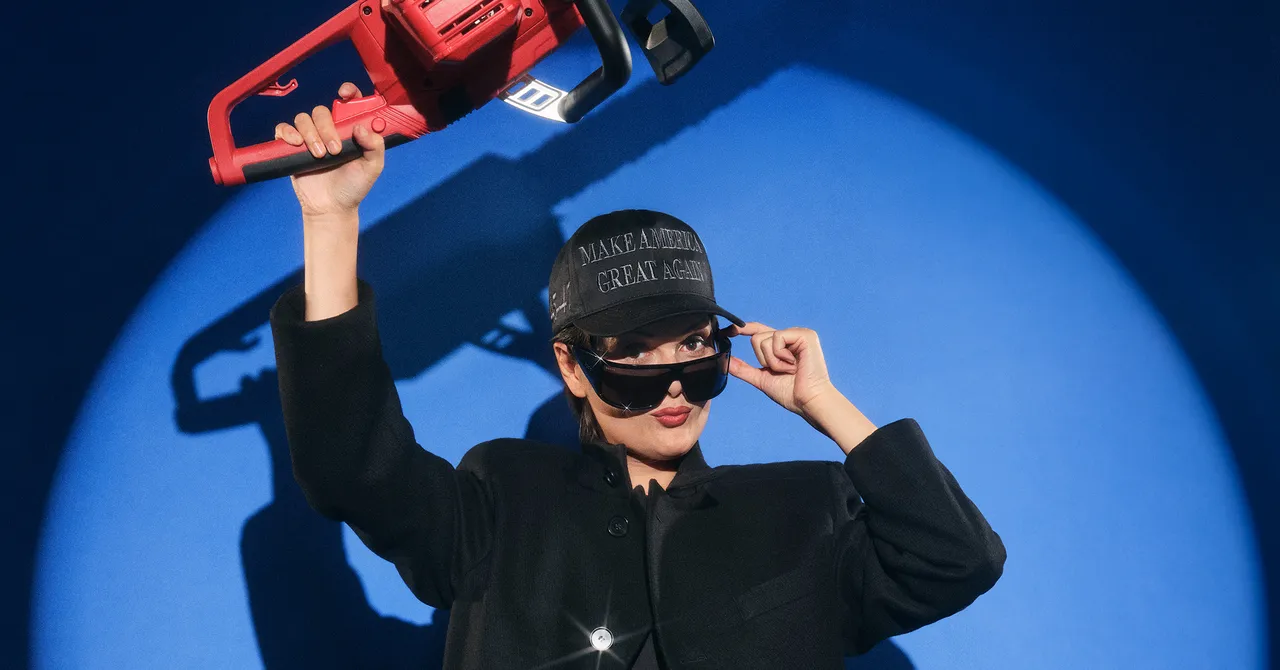
Patti Harrison says the future she once imagined in technology has curdled into something darker. In a wide-ranging interview tied to her WIRED cover appearance in September 2026, the comedian and actor argued that Silicon Valley’s promises of progress have been undermined by social media addiction, AI hype, billionaire power, and the real-world use of robotics in conflict.
The conversation matters because Harrison is not speaking as a policy expert but as a culturally influential performer who once saw the tech world as imaginative and liberating. Her disillusionment reflects a broader public mood: enthusiasm for digital tools has increasingly been replaced by suspicion about surveillance, manipulation, and the social costs of the platforms that shape daily life.
Harrison was interviewed in London after finishing a sold-out run of her show Just Ironing Some Things Out! and performing at the Edinburgh Festival Fringe. The discussion ranged from trans identity and political speech to social media’s psychological toll, the aesthetics of shock comedy, and the way artificial intelligence has entered society before many of the consequences have been fully understood.
From tech optimism to deep skepticism
Harrison said that when she was younger she was captivated by the promise of futuristic technology. Like many people who came of age on sci-fi, she imagined a world of intelligent machines, self-driving cars, and strange new forms of human-machine coexistence.
That early fascination, she explained, has given way to frustration and anger. Her criticism is not that technology itself is inherently bad, but that the business models around it have distorted what once felt creative and communal. In her view, the companies selling progress often end up delivering surveillance, ads, and addictive design instead.
She connected that shift to a broader cultural loss: the internet, in her telling, used to feel more open, chronological, and exploratory. Now it is optimized for profit, engagement, and constant stimulation, which she argued makes it harder for people to understand what is real and what is engineered to keep them scrolling.
Why does Patti Harrison think social media changed for the worse?
She thinks social media became worse because it stopped functioning primarily as a tool for connection and turned into an attention machine. Harrison argued that the merger of news and social platforms created incentives for outrage, while algorithmic systems and monetization made users feel trapped in a cycle that is both emotionally draining and financially extractive.
Harrison described social media as a kind of public panopticon that profits from user behavior while also making people feel isolated and manipulated. She suggested that many users understand this on some level, but continue using the platforms because they have become inseparable from work, identity, and income.
How social media became a trap for creativity
Harrison said the internet played a major role in launching her career. She has gotten work because of the jokes and posts she made online, which gave her a direct path from internet comedy to television and performance. That success, however, comes with a cost: stepping away from the platforms that helped her get noticed can feel professionally risky.
In her account, that is exactly how the system is designed to work. Social networks reward visibility, dependency, and compulsive posting while making creators fear that leaving will sever their livelihoods. That pressure is especially intense for younger performers and writers who use social media as both portfolio and paycheck.
She also pointed back to an earlier era of online life—Xanga, MySpace, and the early years of YouTube—as a time when digital spaces still felt more exploratory and less commercialized. She said those platforms helped her find communities that did not exist in her rural environment, particularly as a queer young person still searching for language and belonging.
| Era | What Harrison says it felt like | Why it mattered to her |
|---|---|---|
| Early web and MySpace | Open, creative, less ad-heavy | Helped her find community and culture outside rural Ohio |
| Early YouTube | Surprising but still relatively uncluttered | Expanded access to entertainment and ideas |
| Modern social platforms | Algorithmic, monetized, addictive | Created anxiety, dependence, and a sense of being monitored |
What worries her about AI?
She is not opposed to the idea of artificial intelligence as a concept, but she is alarmed by how quickly it is being pushed into daily life. Harrison said the biggest problem is not the technology alone; it is the speed, scale, and profit motive behind its rollout.
She criticized the industry for integrating new systems before the public has had time to consider the consequences. In her view, the debate is not merely about convenience or novelty. It is about labor displacement, environmental damage from data centers, misinformation, and the risk of handing over more social power to people and companies already flush with money.
Harrison said she has used early AI image tools, including DALL·E, but she finds it unsettling when AI is framed as a casual helper for everyday decisions. Even small-use examples, she suggested, reflect a larger pattern: society is being asked to normalize machine-made mediation in places where human judgment used to be enough.
What happened to the future she once imagined?
According to Harrison, the future did arrive—but not in the way she hoped. The sleek futurism she once associated with robotics and intelligent machines now feels tied to militarization, labor exploitation, and corporate grift.
She said the problem is not simply that new tools exist. It is that companies often present them as ethically neutral while quietly placing them into systems of power. That includes, in her telling, the use of robotic technologies in war zones and the broader willingness of the tech sector to profit from danger while maintaining a public image of progress.
Harrison argued that once capitalism takes hold of a promising technology, it reveals who is willing to compromise principles for money or prestige. In her view, that dynamic has repeatedly soured the futuristic ideals she once admired.
How comedy and politics overlap in her work
Harrison said she does not always want to turn every performance into an explicit political speech, but she also does not believe art exists outside politics. Her position is that a comedian’s work is always shaped by the world around them, even when the joke is about something absurd, filthy, or deliberately juvenile.
That tension has become even sharper in a media environment where misinformation, genocide coverage, and online outrage coexist with trivial content and viral nonsense. Harrison said the modern news cycle creates a kind of cognitive whiplash that makes people uncertain about what deserves attention and what can be laughed at.
She also described frustration with how some publications edit interviews involving contentious issues. In her account, she has repeatedly tried to speak about Gaza and the fear of professional retaliation that can accompany political honesty, only to see those remarks removed before publication.
For Harrison, that kind of editorial filtering is part of the same ecosystem she distrusts online: a system that rewards safe branding over candor and flattens complex views into shareable fragments.
Who is Patti Harrison in this interview?
She is a comedian who uses absurdity as a way to expose discomfort, contradiction, and shame. In the interview, that identity sat alongside her willingness to discuss transness on her own terms rather than as a mandatory explanatory framework for her work.
Harrison said she has long been open about being transgender, even if she does not always center it in performances. She likes the idea that audiences can encounter her first as a performer rather than as a label, especially when the work itself is more about comic energy, character work, or online absurdity than identity politics.
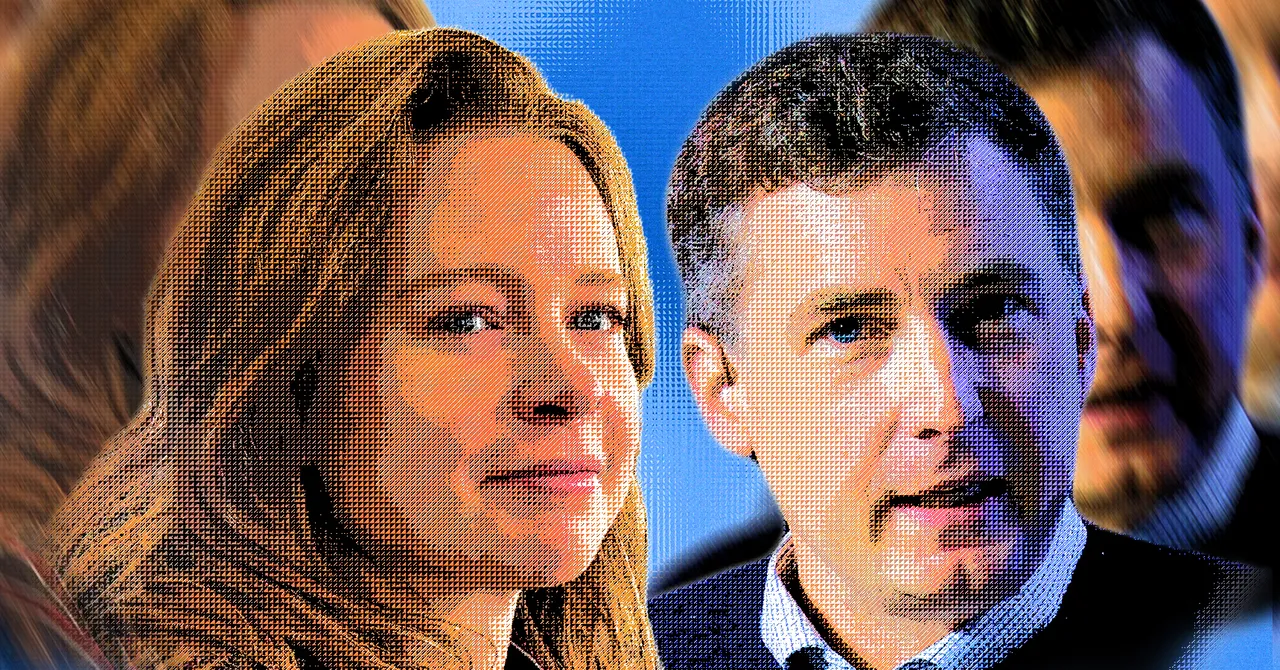
That approach also shaped why she was a fitting choice for WIRED’s cover concept, in which she was asked to portray several of Silicon Valley’s most prominent leaders. The joke, she seemed to understand, was not only that a woman could impersonate the tech world’s most powerful men, but that she could do so while skewering the mythology that surrounds them.
How her trans identity fits into the story
Harrison said that being trans is part of her life, but not always the center of the character she plays publicly. She explained that she often prefers ambiguity in her art when a character’s trans identity is not the point of the joke or scene.
That choice is not about concealment so much as artistic control. Harrison said she is interested in being seen as funny, strange, and highly specific, not only as a spokesperson for any one identity category.
At the same time, she made clear that trans life is inherently political in the current climate. Even when a performer avoids explicit slogans, their existence and visibility can be read as political, especially in media spaces where trans people are routinely turned into targets.
Shock humor, censorship, and the limits of what can be said
Harrison also reflected on her taste for provocative comedy. She said she has always been drawn to shock humor, but that the shock only works when it is rooted in some version of truth rather than cruelty for its own sake.
That distinction matters because she believes some modern comedy has become timid, avoiding difficult subjects while reaching instead for easy insults. In particular, she criticized the routine use of anti-trans jokes and slurs aimed at disabled people, saying those choices often masquerade as edge while actually relying on old prejudices.
She framed that trend as part of a larger anxiety in culture: people want to say something explosive, but many of them reach for the most vulnerable targets because it is the easiest way to generate attention.
Timeline: Patti Harrison’s tech awakening
Harrison’s remarks trace a clear arc from enthusiasm to distrust. The following timeline captures the main phases of that shift as described in the interview.
| Period | Stage | Harrison’s view |
|---|---|---|
| Childhood | Sci-fi fascination | Technology felt magical and full of possibility |
| Teen years | Online discovery | MySpace and YouTube opened access to culture and community |
| Early career | Internet as launchpad | Online posting helped create acting opportunities |
| Present day | Disillusionment | Platforms feel extractive, manipulative, and politically compromised |
Why her comments resonate beyond comedy
Harrison’s interview lands in a moment when trust in major technology companies is increasingly fragile. Public debate around AI, social media, content moderation, and platform power has moved from niche industry circles into mainstream life. More people now experience the costs of algorithmic systems directly: burnout, misinformation, identity attacks, attention fatigue, and a sense of being perpetually surveilled.
What makes Harrison’s perspective notable is the mix of personal experience and cultural criticism. She is not talking like a company executive or a policy analyst. She is speaking like a creative worker whose career was shaped by the internet and who now sees its incentives more clearly than she once did.
That gives her remarks a broader emotional truth. Many users still enjoy the internet while recognizing that the platforms are making them worse. Harrison’s interview captures that contradiction with unusual clarity: the tools that expanded her world also helped build the ecosystem she now fears.
Key facts from the interview
- The interview was conducted in London after Harrison’s sold-out run of Just Ironing Some Things Out! and an appearance at the Edinburgh Festival Fringe.
- Harrison said the early internet helped her find community while she was growing up in rural Ohio and still coming to terms with her identity.
- She argued that social media shifted from connection to manipulation once news, ads, and algorithms became central to the experience.
- She said AI is being rolled out too quickly, with too little scrutiny, and too much emphasis on profit.
- She linked modern tech culture to militarization, corporate grift, and a shrinking sense of civic trust.
What this says about the tech mood in 2026
Harrison’s remarks fit a wider cultural shift. The futuristic optimism that once surrounded Silicon Valley has not disappeared entirely, but it has been overshadowed by skepticism about who benefits from innovation and who absorbs the harm. The debate now reaches far beyond engineers and investors.
Performers, writers, and other public figures increasingly talk about technology not as a neutral tool but as an environment that shapes speech, labor, identity, and mental health. Harrison’s interview is a sharp example of that shift because she speaks from inside internet culture rather than from the outside looking in.
Her central argument is simple enough to stand on its own: the future still exists, but the people building it should not be trusted automatically just because they call it progress. That message, delivered with her trademark mix of bluntness and absurdity, is what makes the interview linger.
Harrison’s core complaint is that Silicon Valley sold a dream of liberation while building systems that are harder to escape, easier to exploit, and increasingly disconnected from the public good.
Frequently asked questions
What did Patti Harrison say about Silicon Valley?
She said Silicon Valley turned a once-appealing tech utopia into something more cynical and harmful. Harrison argued that the industry now prioritizes profit, addiction, and image over genuine public benefit, especially in social media and AI.
Why is Patti Harrison critical of social media?
She believes social media became a system of manipulation rather than connection. Harrison said algorithmic feeds, outrage incentives, and the blending of news with social platforms have made users feel worse while enriching the companies behind them.
Does Patti Harrison use AI?
Yes, but only in limited ways and with caution. Harrison said she has used early AI tools such as DALL·E, but she is alarmed by how quickly AI is being integrated into society without enough research, oversight, or concern for the consequences.
Why was Patti Harrison featured on a WIRED cover?
She was chosen because her absurdist comedy made her a fitting person to parody the tech elite. WIRED used her to play several Silicon Valley power figures, turning her into a satirical stand-in for the men who dominate the industry.