In short
Trump and Xi are set to meet in Washington as a trade truce nears expiration, with tariffs, AI safety, and rare earth minerals dominating the agenda. Analysts expect limited breakthroughs, but the talks could still shape supply chains and technology policy.
- The Trump-Xi summit comes as a trade truce is due to expire on November 10.
- Rare earth minerals are a major bargaining chip because they are vital to AI, defense and manufacturing.
- AI safety is on the agenda, but chip controls and technology access make progress difficult.
- Taiwan remains a major red line that could disrupt the meeting.
- Analysts expect symbolic deliverables more than a sweeping breakthrough.
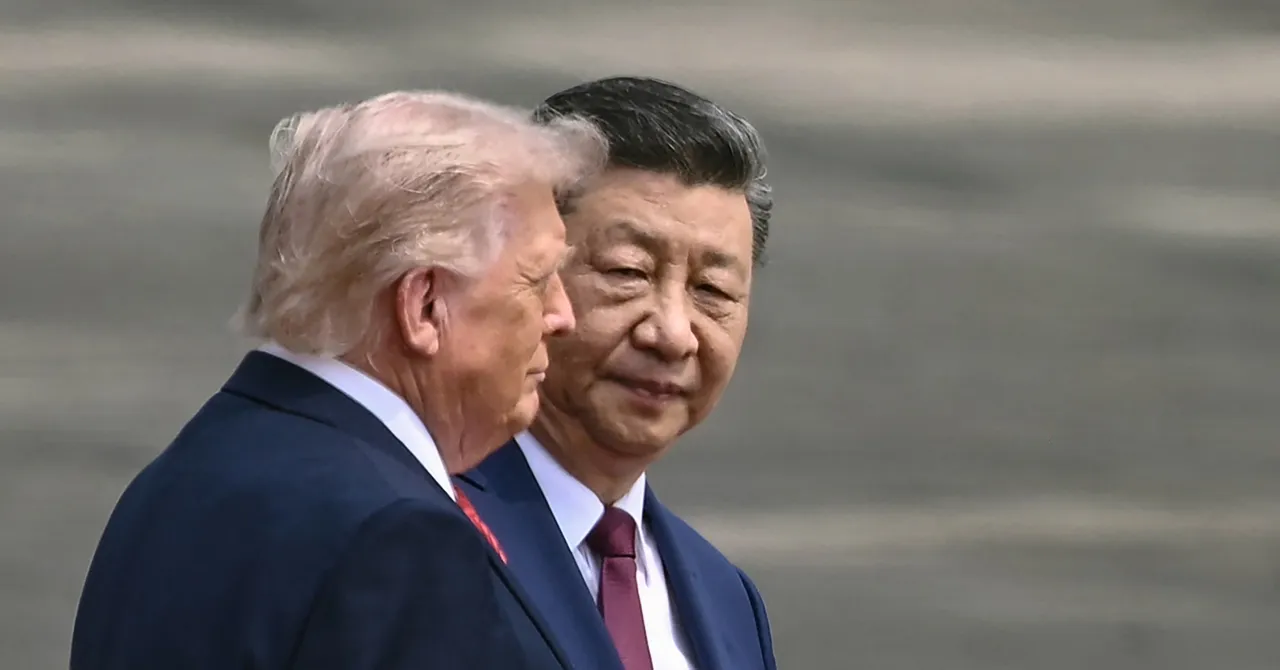
Donald Trump and Xi Jinping are set to meet this week in Washington in a summit that could shape the next phase of the U.S.-China relationship, with tariffs, artificial intelligence, and rare earth minerals at the top of the agenda. The talks matter because both countries are trying to protect vital supply chains and strategic advantages without letting trade tensions spill into a broader confrontation.
The White House encounter follows a round of preparatory talks between senior U.S. and Chinese officials and comes as an existing trade truce nears expiration on November 10. The meeting could determine whether both sides extend that pause, tighten their demands, or leave the relationship vulnerable to a renewed cycle of tariffs and retaliation.
While the summit is expected to produce at least some visible deliverables, analysts say a sweeping breakthrough remains unlikely. Instead, the more realistic outcome may be a carefully managed status quo, with both governments seeking leverage while avoiding a collision that could rattle markets and strategic industries.
Why this summit matters now
The timing of the meeting makes it far more consequential than a standard diplomatic photo-op. The U.S. and China are trying to navigate a trade relationship that touches everything from farm exports to semiconductor controls, while also managing geopolitical flashpoints such as Taiwan and Iran.
This summit also lands at a moment when AI infrastructure depends heavily on mineral and chip supply chains that are exposed to policy shifts in both countries. That means decisions made in Washington could have ripple effects across technology manufacturing, energy systems, defense production, and consumer electronics.
How the talks were prepared
The agenda is being shaped in advance by a U.S. delegation led by Treasury Secretary Scott Bessent and Trade Representative Jamieson Greer, who have been meeting with Chinese Vice Premier He Lifeng. That lower-level engagement is designed to narrow the list of issues before the presidents sit down face to face.
According to the public outline of the talks, the two sides are expected to focus on the trade dispute, supply chains, technology competition, and politically sensitive issues that can derail broader cooperation. The discussions are unfolding against a global backdrop that includes conflict in the Middle East, adding to the pressure on both governments to avoid another destabilizing front.
| Topic | Why it matters | Current status |
|---|---|---|
| Trade truce | Limits tariff escalation and keeps negotiations alive | Set to expire November 10 |
| Rare earths and minerals | Critical inputs for AI hardware, vehicles, and defense systems | Central bargaining chip |
| AI safety and controls | Linked to chip exports and competitive advantage | On the agenda, but contested |
| Taiwan | One of Beijing’s most sensitive red lines | Potential source of friction |
| Iran and detainees | Broader security and humanitarian issues | Likely discussed cautiously |
What is at stake in the expiring trade truce?
The current trade truce, agreed during a Trump-Xi meeting in Busan last year, is scheduled to lapse on November 10 unless extended. That agreement lowered the immediate tariff threat from Washington and paused certain port fees, helping calm a trade relationship that had been on edge.
Now both governments must decide whether to keep that arrangement alive. An extension would buy time for negotiations over a broader package, while failure to renew it could reopen a cycle of economic pressure that neither side appears eager to trigger right away.
Possible deliverables from the summit
One outcome could be the establishment of purchase targets for specific goods. Items discussed in this context include agricultural products, energy, and Boeing aircraft, all of which have symbolic and economic weight in U.S.-China trade relations.
Another possibility is continued work on a package of roughly $30 billion in so-called non-sensitive goods. That basket is said to cover about 10 categories, though the scope is still unsettled and no final agreement has been announced.
- Extension of the trade truce beyond November 10
- New purchase commitments for U.S. goods
- Progress on a broader package of non-sensitive products
- Short-term easing of tariff pressure
Why rare earths remain one of the biggest bargaining chips
Rare earth elements and related minerals are among the most strategically important materials in the negotiations because they are used in automobiles, defense platforms, and advanced technology systems, including AI hardware. Their importance has only grown as AI data centers, chip fabrication, and electrified transport all depend on stable access to specialized inputs.
Under the Busan agreement, China lifted export limits on these materials, a move that helped ease immediate pressure on U.S. industry. For Washington, securing a more predictable supply of these minerals is not just an economic issue but a national security priority.
Beijing understands that leverage. By controlling a major share of the global market for rare earths and related materials, China can influence the pace and terms of negotiations with the United States. That dynamic has made the minerals issue one of the clearest examples of how trade policy and industrial strategy now overlap.
How AI hardware depends on minerals and chips
AI systems are often discussed in terms of software breakthroughs, but the physical infrastructure matters just as much. Advanced chips, servers, power systems, and the materials used to produce them all depend on complex supply chains that cross borders and are vulnerable to export controls.
That means trade policy can directly affect the pace of AI deployment. If access to minerals, chips, or manufacturing equipment becomes more restricted, companies on both sides of the Pacific could face higher costs and slower rollout schedules.
How AI safety entered the summit agenda
AI safety is expected to come up because U.S. and Chinese officials are increasingly aware that the technology race is not only about speed but also about control. Scott Bessent has indicated that the topic will be part of the bilateral conversation, reflecting concern among some policymakers and business leaders that uncoordinated development could create risks.
Business leaders have pushed for dialogue on the issue, but there is no consensus on what success would look like. Beijing wants Washington to loosen restrictions on Chinese technology access, while many in the U.S. want to maintain or even strengthen controls to slow Chinese advancement in critical areas.
China’s preferred outcome is easier access to U.S. technology, while many American companies and policymakers are focused on keeping strategic AI capabilities from moving too quickly across borders.
At the same time, the domestic political climate in the United States complicates the picture. Trump has generally rejected calls for tighter AI regulation at home, which makes it harder to predict whether the summit will produce a meaningful framework on safety or merely a broad statement of concern.
What makes the AI debate so complicated?
The debate is complicated because AI safety is tied directly to export controls. Rules affecting computer chips, chipmaking tools, and related materials can function as de facto AI policy, shaping which companies and countries can build the most advanced systems.
That creates a tension between two goals: preserving strategic advantage and reducing the risks associated with rapid AI development. Both Washington and Beijing understand that their positions on one issue can affect the bargaining room on the other.
Taiwan, Iran and other geopolitical red lines
The summit is not just about trade. It also sits on top of several geopolitical fault lines, especially Taiwan, which remains one of Beijing’s most sensitive issues. Chinese officials have reportedly warned that new U.S. arms sales to Taiwan could prompt them to withdraw from the summit altogether.
That is a significant threat because it shows how quickly security policy can collide with economic diplomacy. Even if both sides are prepared to discuss trade and technology, a move perceived as crossing a red line on Taiwan could undermine the entire meeting.
Iran is also expected to be part of the conversation, along with the issue of detained foreign nationals. These topics are likely to be handled carefully, since neither government wants to appear to concede ground on security, sovereignty, or human rights concerns.
Why the two sides may avoid hard commitments
Both governments have strong incentives to keep the talks from breaking down, but neither is likely to yield much in public. That means any progress will probably be incremental and carefully framed, rather than a dramatic strategic reset.
The U.S. is seeking greater access to Chinese markets and products, as well as movement on critical minerals and security-related issues. China, meanwhile, wants relief from tariffs and curbs on technology access. Each side has leverage, but each also has constraints.
China’s bargaining position extends beyond the bilateral relationship. It has economic and geopolitical interests in regions such as Africa and Latin America, where competition with the United States can influence trade, infrastructure, and resource access.
How much progress should observers expect?
Probably less than the symbolism of the summit suggests. The meeting may produce announcements that allow both leaders to claim momentum, but analysts do not see strong evidence that a deep reset is on the table.
That cautious reading is consistent with the pattern seen in previous encounters. When Trump and Xi met in Beijing in May, the optics were carefully managed, yet the substantive concessions were limited. The upcoming Washington summit may follow a similar script: visible diplomacy, modest gains, and unresolved structural tensions.
“I think there will be some show of deliverables because of the fact that it’s a presidential summit coming, but I don’t feel like we’re on the verge of some sort of breakthrough,” China trade analyst Anna Ashton said, adding that a continuation of the status quo may be the most realistic expectation for both sides.
Her assessment reflects a broader reality in U.S.-China relations: both capitals want stability more than they want confrontation, but neither is ready to give up the leverage that keeps negotiations alive.
What each side wants from the meeting
The summit is best understood as a negotiation between competing priorities rather than a single-issue trade event. Each side is entering the meeting with a distinct list of demands and limited room to compromise.
U.S. priorities
- Extend the trade truce and prevent immediate tariff escalation
- Secure more reliable access to rare earths and critical minerals
- Push for purchase commitments on agricultural goods, energy, and aircraft
- Maintain leverage on technology exports and AI-related controls
- Avoid concessions that could weaken the Taiwan position
China’s priorities
- Reduce tariff pressure and broader trade restrictions
- Ease limits on technology imports and export controls
- Protect sensitive positions on Taiwan and sovereignty
- Keep the relationship from slipping into a wider strategic rupture
- Preserve influence in sectors where Beijing has supply-chain leverage
What to watch after the summit
The most important signals may come after the cameras leave. Any joint statement, follow-up ministerial meetings, or sector-specific commitments will reveal whether the summit produced real bargaining progress or merely bought time.
Watch especially for three things: whether the trade truce is extended, whether any mineral-related supply assurances are announced, and whether there is language on AI safety that goes beyond general concern. These details will show whether the two sides are moving toward a more durable framework or simply managing a temporary pause.
For now, the summit appears less like a turning point than a stress test for a relationship that is too important to collapse and too competitive to become easy. That tension is exactly why the meeting is drawing so much attention in Washington, Beijing, and global markets alike.
Timeline: How the summit setting evolved
| Date | Event | Significance |
|---|---|---|
| Last year in Busan | Trump and Xi reached a trade truce | Paused some tariffs and port fees |
| Earlier this year | Beijing and Washington continued lower-level talks | Kept the summit agenda open |
| This week | U.S. and Chinese officials meet ahead of the summit | Shape the list of issues for the leaders |
| Wednesday, September 23 | Trump is scheduled to greet Xi at Joint Base Andrews | Signals unusually high-level personal diplomacy |
| November 10 | The trade truce expires unless extended | Defines the immediate deadline for action |
In the end, the meeting will be judged less by ceremony than by whether it reduces the odds of a sharper economic or geopolitical confrontation. That is why the next few days could matter far beyond the walls of the White House.
Frequently asked questions
When is the Trump-Xi summit taking place?
The Trump-Xi summit is scheduled for this week in Washington, with Trump expected to welcome Xi at Joint Base Andrews on Wednesday, September 23. The meeting is being framed as the key diplomatic event around the United Nations General Assembly period.
Why are rare earth minerals important in the talks?
Rare earth minerals are important because they are essential for AI hardware, defense systems, vehicles and advanced manufacturing. China’s dominance in the supply chain gives it leverage, while the U.S. wants more reliable access and fewer export disruptions.
Will the summit produce a major breakthrough?
Probably not. Analysts say the most likely outcome is limited progress, such as a trade truce extension or small purchase commitments, rather than a sweeping deal. Both sides appear more focused on managing tensions than resolving them.
What role does AI play in the meeting?
AI is part of the agenda because both governments see it as a strategic competition issue tied to chip exports, industrial policy and safety concerns. The discussion may focus on controls and risk reduction, but major policy alignment is unlikely.
Could Taiwan derail the summit?
Yes. Taiwan is one of Beijing’s most sensitive issues, and Chinese officials have signaled that new U.S. arms sales could prompt them to abandon the meeting. That makes Taiwan one of the biggest risks to any progress.