In short
A New York studio and musician launched Bezzy, a data center plushie that plays a shrill real-world noise recording to satirize the AI infrastructure boom. The project aims to push readers toward the facts about power use, noise pollution and community impacts.
- Bezzy is a satirical plush toy built to sound like a real data center near Virginia.
- The project comes from Basura and Big Data and launched with a new single.
- Creators say the goal is to shift attention from AI hype to community impacts and infrastructure costs.
- Only 20 handmade dolls are for sale, priced at $99.
- The campaign website directs visitors to research and reporting on data center expansion.
A New York creative studio and musician have turned the grating sounds of a real data center into a stuffed toy called Bezzy, a satirical product launched on Sept. 18, 2026 to spotlight how AI infrastructure affects power use, land use and nearby communities. The project matters because it reframes the data center boom as a neighborhood issue, not just a tech industry story.
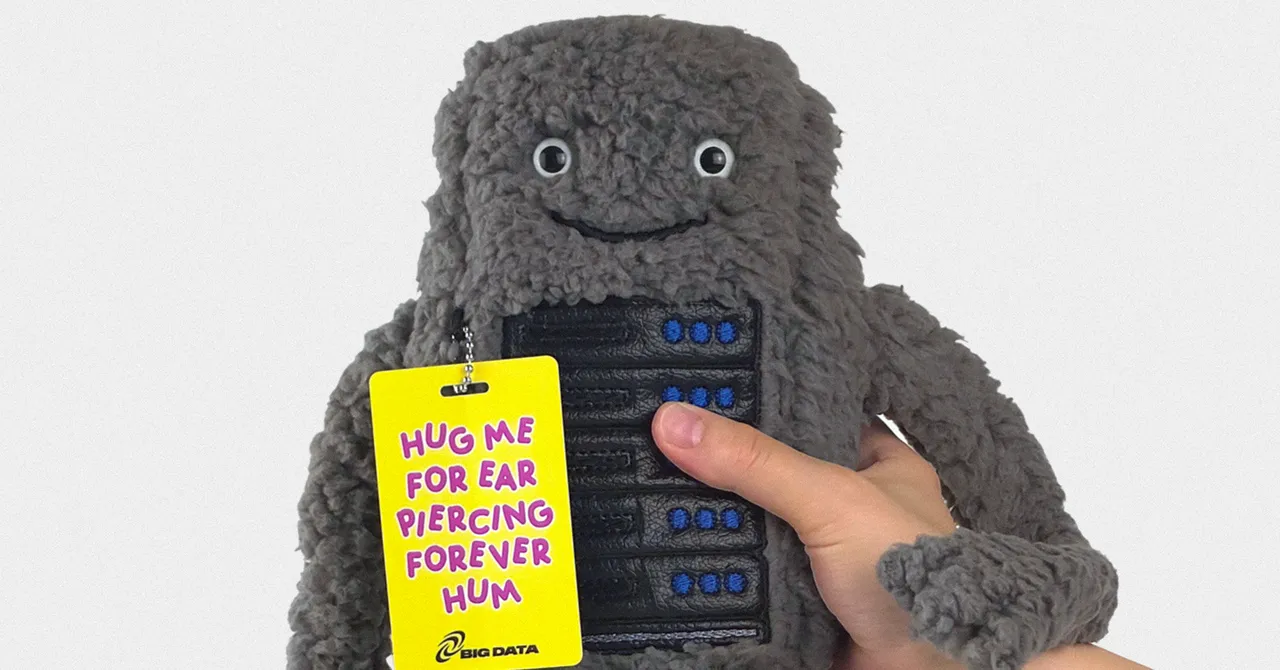
The toy is part of Adopt a Data Center, a collaboration between the New York-based studio Basura and Big Data, the music project of producer Alan Wilkis. The concept is simple and deliberately unsettling: hug a plush server rack with googly eyes and long limbs, and it emits a shrill recording taken from a Virginia data center neighbor’s experience.
That mix of cute merchandise and environmental critique is intended to provoke attention in a debate that has become increasingly politically broad, economically significant and locally contentious. Data centers now underpin the expansion of generative AI, but they also draw complaints about noise, massive electricity demand and the infrastructure needed to support them.
What is the Bezzy plushie and why was it made?
Bezzy is a hand-sewn stuffed character designed to look like a personified data center server rack. The plushie is soft, whimsical and intentionally absurd, but it also plays a sound clip associated with the hum, grind and high-pitched whine that some residents say they hear from nearby facilities.
The project’s creators say the point is not just novelty. Instead, they want people to think more carefully about the physical footprint of AI systems and the communities that live alongside the buildings powering them.
“It’s not about whether AI data centers should exist,” said Basura founder Rajeev Basu. “It’s about who gets to decide where they go, what resources they consume, and whether the communities living beside them actually benefit.”
That framing positions the toy as a form of public education as much as a joke. By making the sound of a data center tangible, the collaborators are trying to turn an abstract policy debate into something people can hear, hold and share.
How does the satire work?
The satire works by collapsing two very different emotional registers: the comforting familiarity of a plush toy and the discomfort of infrastructure noise. The result is meant to be funny, but only in the uneasy way that satire often is when it targets a real grievance.
Buyers who squeeze Bezzy’s torso hear a short, piercing audio burst derived from an actual recording made near a Virginia data center. The tag attached to the toy leans into the joke with a phrase about an “ear-piercing forever hum,” underscoring the project’s mock-affectionate tone.
Why use a toy instead of a documentary or ad?
A toy is more likely to be picked up, photographed and passed around than a policy white paper. The creators are relying on novelty and humor to get people to click through to the campaign site, where the joke gives way to links, research and reporting about the broader data center debate.
Basu has described the tactic as a way to lure audiences in without asking them to begin with a lecture. The physical object acts as an attention-grabber; the website then tries to convert that attention into awareness.
Why are data centers under so much scrutiny now?
Data centers have become one of the most visible symbols of the AI boom. They are the buildings packed with servers, cooling systems and power equipment that make large-scale AI services possible, and they have been multiplying rapidly as the biggest tech companies race to meet growing demand.
But the expansion has brought mounting concern from communities and critics who say the facilities can strain electric grids, intensify dependence on gas-fired generation and create persistent noise problems for people living close by.
Those concerns have helped transform data centers from an obscure corner of the internet economy into a subject of local zoning battles, environmental debate and political scrutiny. The issue is no longer limited to engineers or energy analysts; it is now tied to where cities grow, how power is allocated and who absorbs the costs of digital convenience.
| Project element | Details | Why it matters |
|---|---|---|
| Product | Bezzy plushie | Makes data center noise physically tangible |
| Creators | Basura and Big Data | Combines design satire with music-driven activism |
| Sound source | Recording from near a Virginia data center | Anchors the joke in a real neighborhood complaint |
| Availability | 20 handmade dolls | Creates scarcity and reinforces the art-object framing |
| Price | $99 | Puts the toy in the space between merch and collectible |
Who are Basura and Big Data?
Basura is a New York creative studio known for unconventional, often environmental or socially pointed projects. Big Data is the electronic music project of producer Alan Wilkis, who is also known for earlier work including “Dangerous,” his 2013 collaboration with Joywave.
Neither partner is operating like a conventional activist organization, and that is part of the appeal. Their work often uses humor, design and pop-culture references to engage people who might not seek out policy debates on their own.
The collaboration launched alongside a new Big Data single, extending the satire across both a physical product and a music release. That cross-media approach suggests the creators are trying to turn a niche complaint into a broader cultural moment.
What else has Basura done?
Basura has built a reputation for strange, concept-heavy products that blur the line between art, commerce and commentary. Previous projects have included luxury fashion for dogs and a collaboration with Yerba Madre on shoes made to break apart while walking so they can disperse wildflower seeds.
Those earlier efforts help explain why the studio would approach data centers through a toy. Basura appears to specialize in packaging serious themes inside playful, collectible forms.
What exactly is the campaign trying to change?
The campaign is trying to change the public conversation around AI infrastructure by moving attention from abstract growth stories to local consequences. The creators want readers and buyers to ask not just whether more data centers are needed, but who benefits from their arrival and who carries the burden.
That is why the website does not end with a purchase page. Clicking “adopt now” takes visitors to a statement with research links and articles about the real-world implications of data center growth.
“Adopt a data center: All they ask for is everything,” the project website says, compressing the message into a sarcastic line that points to power demand, land use and community tradeoffs.
In other words, the toy is less a merchandise line than a funnel into a set of arguments. The joke is the hook, but the campaign’s broader ambition is to redirect curiosity toward evidence.
How much does Bezzy cost and how many are being sold?
Bezzy is being sold for $99, and only 20 units are available. The dolls are handmade in the United States, according to the creators.
The limited run is important because it signals that this is not meant to be mass-market plush merchandise. The scarcity gives the object the feel of an art edition while also keeping the scale small enough to preserve the project’s satire.
- Price: $99
- Quantity: 20 dolls
- Production: Handmade in the U.S.
- Purchase channels: Adopt a Data Center website and Big Data storefront
Why does the noise issue resonate beyond one neighborhood?
The noise issue resonates because it is one of the few ways many people encounter data centers directly. For most users, the facilities remain invisible; the internet simply works. But for residents living nearby, the effects can be audible, continuous and difficult to ignore.
The project’s creators say they interviewed dozens of people living near data centers across the United States. That reporting foundation suggests the campaign is rooted in recurring complaints, not an isolated anecdote.
One of the most striking aspects of the story is that the sound clip used for Bezzy is not invented in a studio. It is based on a real recording from a person who lives near one of these facilities, which gives the satire a documentary edge beneath the humor.
How do communities describe the experience?
According to Basu, one person who recorded the audio described it as a relentless, alarm-like shriek that never lets up and is impossible to tune out. That characterization captures why noise can become more than a nuisance; it can become a constant source of stress for those living nearby.
Such complaints are now part of the broader resistance to data center expansion, alongside concerns about water use, grid demand and the placement of industrial infrastructure near homes.
Why does Alan Wilkis say the backlash is bipartisan?
Wilkis says the criticism around data centers cuts across party lines because it connects to practical, local concerns rather than ideology alone. In his view, AI has become a proxy for deeper economic inequality, while data centers are the concrete buildings where that debate lands on the ground.
The musician argues that the AI economy is now tied to the wider fortunes of the stock market and the companies dominating it. That makes the data center boom both a technological story and a financial one.
Wilkis told WIRED that AI reflects “decades of widening wealth inequality in America” and that the physical infrastructure behind it has become a symbol of that imbalance.
He also pointed to the concentration of market value in a small number of technology companies, suggesting the U.S. economy is already deeply exposed to AI’s success. That argument helps explain why the backlash can come from very different political communities, even if they disagree on broader tech policy.
How does this fit into the larger AI infrastructure debate?
The Bezzy campaign is part of a wider conversation about how much physical infrastructure the AI industry will require and where it should be built. As AI models grow more compute-intensive, the systems supporting them demand more land, more electricity and more cooling.
That infrastructure push has economic upside for developers and technology companies, but it can also produce local backlash when residents feel excluded from decisions or left with the downside of industrial development.
The controversy is especially sharp because the benefits and burdens are unevenly distributed. Consumers get faster tools and more advanced services, while some neighborhoods get transformer noise, transmission lines and an expanding industrial footprint.
What are the key tensions?
- Power demand: Data centers need large, steady electricity supplies.
- Environmental impact: Critics worry about fossil-fuel dependence and emissions.
- Community consent: Residents often say they are left out of planning decisions.
- Economic concentration: The gains flow mainly to a small number of tech firms.
These tensions explain why a satirical plush toy can attract serious attention. The joke may be soft, but the underlying conflict is not.
What happens after the joke?
After the joke comes the invitation to read, research and reconsider. The campaign website functions almost like a trapdoor from entertainment into civic literacy, taking users from a playful object to source material about the realities of data center development.
That move may be the project’s most effective feature. It recognizes that many people will never click on an energy report or zoning document unless they are first drawn in by something memorable.
In that sense, Bezzy is less about selling a plushie than about selling an idea: that the digital world has a physical cost, and that cost is increasingly visible in places far from Silicon Valley boardrooms.
Timeline of the Adopt a Data Center project
The campaign arrived as part of a coordinated release that linked the plush toy, the website and a new Big Data single. Here is a simplified view of how the project was rolled out.
| Date / Stage | Event | Significance |
|---|---|---|
| Months before launch | Basura conducts interviews with residents near data centers | Builds the factual and emotional basis for the project |
| Launch day | Bezzy plushie and Adopt a Data Center website go live | Introduces the satire to the public |
| Same day | New Big Data single is released | Extends the campaign across music and design |
| Post-launch | Users click through to research and reporting links | Channels curiosity toward the real debate |
Why this story matters for readers beyond tech circles
This story matters because it shows how a technical infrastructure issue has become a public-facing social question. Data centers are no longer just industrial buildings hidden behind fences; they are part of a larger reckoning over energy use, AI growth and who gets to shape development.
It also shows how satire can serve as a bridge between specialist concerns and mainstream attention. A toy that screams may seem like a punchline, but it is also a reminder that digital convenience depends on material systems with real consequences.
For communities near these facilities, the issue is immediate. For everyone else, the message is broader: the AI era is being built in neighborhoods, not in the cloud.
As the data center debate continues to expand, projects like Adopt a Data Center suggest that public understanding may depend less on technical explanations than on memorable symbols. Bezzy is one of those symbols — humorous, unsettling and designed to make noise in every sense of the word.
Frequently asked questions
What is the Bezzy data center plushie?
The Bezzy data center plushie is a satirical stuffed toy shaped like an anthropomorphized server rack. When squeezed, it plays a shrill recording inspired by noise heard near a real data center, turning infrastructure complaints into a physical, humorous object.
Who made the Adopt a Data Center project?
The Adopt a Data Center project was created by New York studio Basura and Big Data, the music project of producer Alan Wilkis. The collaboration combines design, satire and music to draw attention to the effects of AI infrastructure.
Why are data centers controversial?
Data centers are controversial because they can consume large amounts of electricity, contribute to grid strain, expand fossil-fuel use and generate noise pollution for nearby residents. As AI demand grows, more communities are questioning who benefits and who pays the costs.
How much does the Bezzy plush toy cost?
The Bezzy plush toy costs $99 and is being sold in a limited run of 20 handmade units. The small quantity reinforces that the project is intended as a satirical art object, not mass-market merchandise.
What is the goal of the campaign?
The goal of the campaign is to get people to think more critically about where data centers are built, what resources they use and whether local communities see any benefits. The website sends visitors to research and reporting after the playful front-end introduction.