In short
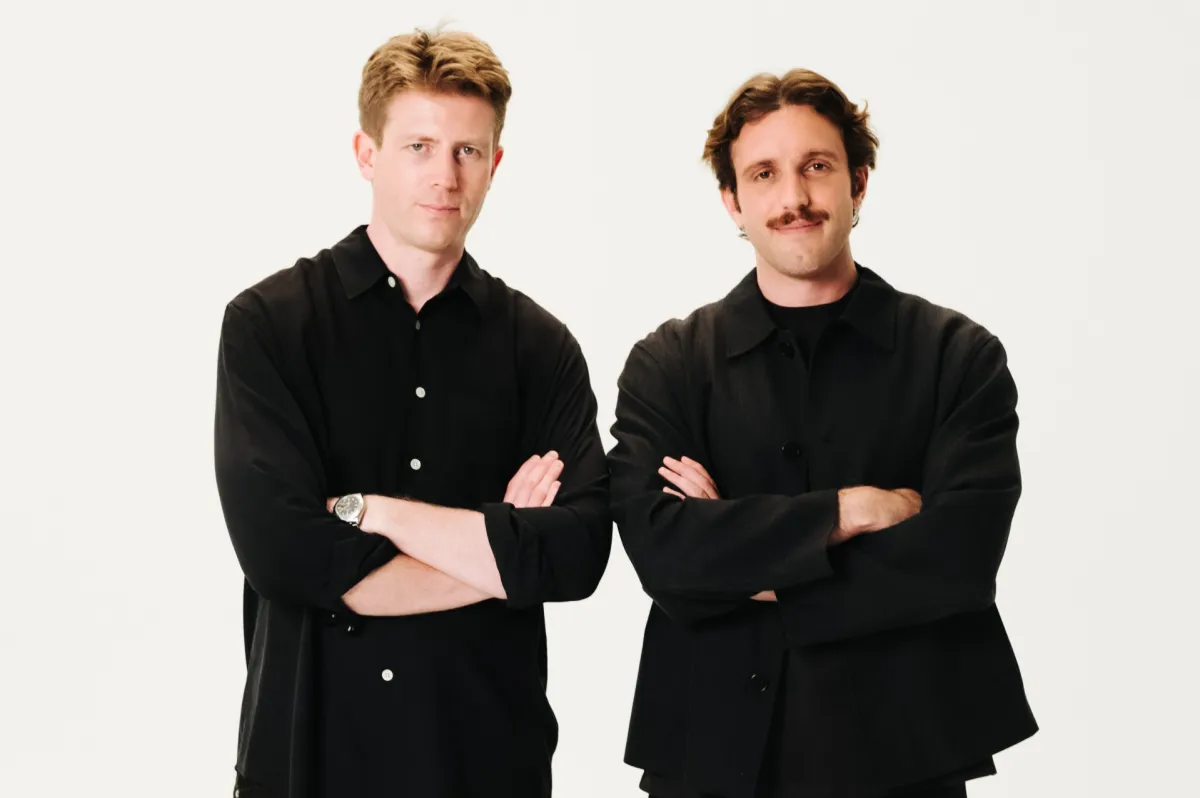
Former TikTok employees Melody Chu and Jing Liu launched Superpose, an iOS AI pose app that suggests portrait poses for real-life photos. The startup says it has already topped 22,000 downloads and raised $2.2 million from investors.
- Superpose uses AI to suggest four pose options after a user takes a photo.
- The app focuses on real-world portraits instead of AI-generated backgrounds or fantasy images.
- It has been downloaded more than 22,000 times and generated over 190,000 poses.
- Superpose raised $2.2 million from Khosla Ventures, Meitu, and OVTR VC.
- The founders want to improve pose realism, personalization, and live camera coaching.
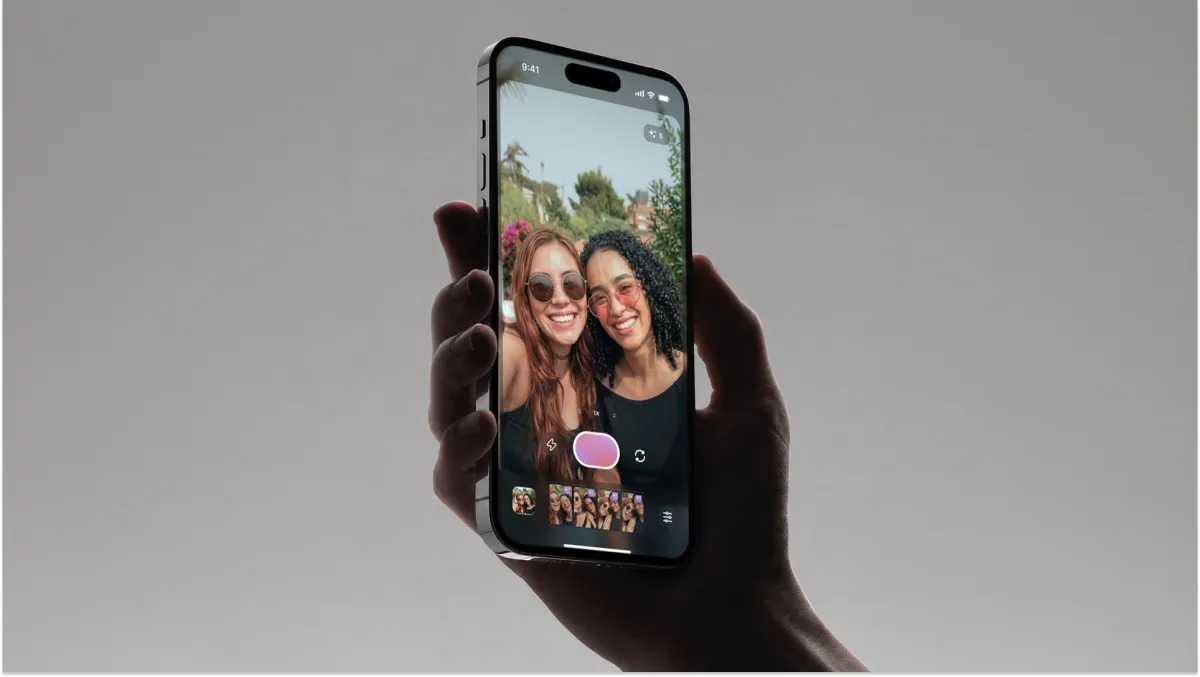
Two former TikTok employees have launched Superpose, an iPhone camera app that uses AI to suggest better poses for portraits, selfies, and friend photos. The startup is betting that generative AI can do more than create images: it can help people take more flattering real-world photos at the moment they’re captured.
The app matters because it sits at the intersection of consumer AI, camera software, and social sharing, where companies are racing to turn image models into practical tools for everyday users.
Superpose, which debuted in July, generates pose suggestions after a user snaps a selfie or photographs someone else. It has already attracted tens of thousands of downloads and is being positioned as a focused portrait tool rather than a broad AI image-editing platform.
What Superpose does
Superpose is designed to act like a real-time posing assistant inside a camera app. A user can take a photo of themselves or another person, and the app responds with several AI-generated pose ideas meant to improve the shot.
According to the company, the app produces four possible poses at a time. Some are fairly natural, while others can look exaggerated or slightly strange, reflecting both the promise and the rough edges of AI-guided creativity.
Users can save a pose they like or use a match-pose function to try to recreate the suggested composition. The aim is not to edit an existing image after the fact, but to help people frame a better portrait before the shutter closes.
How is Superpose different from other AI camera tools?
Superpose is different because it focuses on physical posing rather than AI backgrounds or synthetic images. The company says it wants to improve the process of taking real photos instead of generating fantasy scenes or heavily altered outputs.
That distinction places Superpose alongside a growing number of AI photography tools, but with a narrower product philosophy. Google has introduced Camera Coach on Pixel devices to help users with framing and composition, while Adobe recently added an experimental camera feature that critiques photos and offers capture suggestions. Superpose takes the same broad idea and pushes it into pose coaching.
Why did the founders build it?
The startup was born out of a relatable domestic frustration: bad photos. Melody Chu said the idea came from repeated disappointment with the way her husband photographed her, which convinced her there was room for software that could help people look better in everyday pictures.
Chu said the problem became obvious in her own life, describing a long-running frustration with photos taken by her husband and suggesting that advances in computer vision and generative AI made it possible to build a solution.
That kind of pain-point-driven origin story is common in consumer startups, but it also helps explain Superpose’s design. Instead of aiming at professional photographers or content creators with advanced editing workflows, the app is aimed at ordinary users who want more flattering portraits with less effort.
Chu co-founded the company with Jing Liu, and both bring deep product and imaging experience from major tech companies. Before Superpose, Chu held product roles at Meta, Nextdoor, Roblox, TikTok, and Slack. Liu previously worked as a founding engineer at a 3D face-scanning startup and later helped develop image and video models at TikTok.
How does the app work in practice?
Superpose functions like a standard camera app on the surface, but AI sits behind the posing layer. The user captures a photo, and the app generates suggested body positions, hand placements, and framing ideas that can be used to improve the final result.
For some users, that may feel like a helpful nudge. For others, the model’s recommendations can appear overly stylized or uncanny, especially when the system leans toward dramatic body shapes or elaborate posture cues.
The company acknowledges that issue and says it is actively working to improve the realism and usefulness of the generated results. That work includes refining the generation style, adding personalization, and finding better ways to coach users directly from the camera viewfinder.
What is the user experience supposed to be?
The experience is meant to feel fast and practical. Rather than forcing users into a long editing session, Superpose attempts to intervene at the moment of capture, when people are still deciding where to stand, how to hold their arms, and how to angle their face.
That approach is important because portrait photography often depends less on filters than on subtle choices about posture and composition. The startup is betting that many consumers would rather receive live guidance than fix photos later.
How much traction has Superpose gained so far?
Superpose says it has been downloaded more than 22,000 times since launch and that users have generated over 190,000 poses. Those figures are modest by the standards of major consumer apps, but they suggest there is at least early curiosity around AI-assisted portrait photography.
The app gives users five free generations per day. After that, customers can buy additional packs, including five extra generations for $2.99 or 20 generations for $9.99.
That pricing indicates a freemium model built around light experimentation rather than constant power use. It also suggests the company is testing whether users will pay for pose coaching the way they pay for photo filters, editing tools, or premium camera features.
| Metric | Detail |
|---|---|
| App name | Superpose |
| Launch | July 2026 |
| Platform | iOS |
| Pose generations | 4 suggestions per request |
| Free use | 5 generations per day |
| Paid options | 5 for $2.99; 20 for $9.99 |
| Downloads | More than 22,000 |
| Generated poses | More than 190,000 |
| Funding | $2.2 million |
Who is backing the startup?
Superpose has raised $2.2 million from Khosla Ventures, Meitu, and OVTR VC. The investor list is notable because it combines a prominent Silicon Valley firm with Meitu, the Chinese smartphone and selfie app maker known for consumer-facing imaging products.
That mix suggests investors see potential in AI-enhanced photography as a consumer category, especially if the product can blend utility, light entertainment, and social sharing. It also points to a broader trend in which image-generation tools are moving closer to the camera itself.
Chu said the company is deliberately trying to become the best portrait camera for following AI directions, rather than a broad app for creating artificial backgrounds or entirely invented images.
In other words, Superpose is trying to own one slice of the market rather than chase every feature. That strategic focus could help it stand out in a crowded app ecosystem where many products try to do too much.
Why AI-guided photography is becoming a category
AI-guided photography is emerging because consumer cameras increasingly need to do more than capture light. They are now expected to offer instant advice on framing, subject placement, and aesthetics, all without making the process feel technical.
That shift is being driven by two overlapping trends. First, generative AI has made visual suggestions cheap and fast to produce. Second, people already use phones as their primary cameras, which creates a massive market for tools that make everyday photos look better with less effort.
For companies, the attraction is clear: if AI can help users get a better photo the first time, it can reduce editing friction and create a more immediate, satisfying workflow. For users, the benefit is less about novelty and more about confidence.
Where Superpose fits in the market
Superpose sits between a traditional camera app and a creative AI assistant. It is not an image generator in the usual sense, but it borrows the underlying model logic to improve a real-world action: how someone stands and poses in front of a lens.
That makes it part of a broader wave of practical AI tools aimed at everyday tasks. Rather than replacing photography, the app attempts to make ordinary portrait-taking easier, more polished, and less dependent on someone’s ability to direct a subject.
What are the risks and challenges?
One challenge is trust. If AI-generated pose ideas feel awkward, users may ignore them. In portrait photography, subtle mistakes can quickly become visible, and suggestions that look strange on screen may be even worse in real life.
Another challenge is differentiation. Camera apps with AI features are multiplying, and large platform players can copy popular ideas quickly. Superpose will need to prove that its posing advice is consistently better, more personalized, and more fun than alternatives.
There is also the broader question of whether users want an app to coach them so directly. Some people may welcome that guidance, while others may find it intrusive or too prescriptive. The company’s focus on live, real-photo capture could help mitigate those concerns, but the product still has to feel natural.
What happens next?
Superpose says it is improving generation styles, personalization, and in-viewfinder coaching. Those changes are likely aimed at making suggestions feel less uncanny and more like a practical assistant standing beside the photographer.
If the startup succeeds, it could carve out a niche as the AI camera for people who want better portraits without learning photography fundamentals. If not, it may become another example of a clever feature that struggled to become a habit.
Timeline of Superpose and AI camera competition
Here is a quick look at how the category has evolved and where Superpose fits into it.
| Time | Development | Significance |
|---|---|---|
| Last year | Google introduced Camera Coach on Pixel phones | Brought AI framing and composition guidance into a mainstream smartphone camera |
| July 2026 | Adobe released an experimental AI camera critique feature | Expanded AI assistance into live capture feedback |
| July 2026 | Superpose launched on iOS | Focused AI pose coaching on portrait photography |
| September 2026 | Superpose disclosed traction and funding | Showed early user interest and investor backing |
What this says about consumer AI
Superpose is a reminder that many of the most promising consumer AI products may not be flashy chatbots or fully synthetic media tools. They may instead be narrow applications that use AI to make a familiar task easier, faster, and more accessible.
Photography is especially fertile ground for that kind of product design because the average user already understands the goal. They do not need to learn a new creative medium; they just want a better result from a familiar one.
For now, Superpose is still early. Its user base is small, its recommendations are sometimes odd, and its commercial model will need more testing. But the startup has identified a simple problem that many people recognize immediately: taking a good photo of a person is harder than it looks.
By framing AI as a posing coach instead of an image faker, Superpose is making a deliberate bet on utility over spectacle. Whether that becomes a durable category will depend on how well the app turns that idea into repeat use.
For now, it is one more sign that consumer AI is moving from novelty toward small, specific jobs that people actually perform every day.
Key facts at a glance
- Superpose is a new iOS camera app from former TikTok employees Melody Chu and Jing Liu.
- The app uses AI to generate pose suggestions for selfies and portrait photos.
- It launched in July 2026 and says it has crossed 22,000 downloads.
- Users have generated more than 190,000 poses on the platform.
- Superpose has raised $2.2 million from Khosla Ventures, Meitu, and OVTR VC.
Frequently asked questions
What is Superpose?
Superpose is an iOS camera app that uses AI to suggest better poses for selfies and portrait photos. It acts like a posing coach, generating multiple pose options after a user takes a photo and letting them save or match the suggested position.
Who created Superpose?
Superpose was created by former TikTok employees Melody Chu and Jing Liu. Chu previously held product roles at Meta, Nextdoor, Roblox, TikTok, and Slack, while Liu worked on face-scanning and image-model technology before co-founding the startup.
How much funding has Superpose raised?
Superpose has raised $2.2 million in funding. The backers include Khosla Ventures, Meitu, and OVTR VC, signaling investor interest in AI tools that improve consumer photography rather than just generate images.
How many users does Superpose have?
Superpose says it has been downloaded more than 22,000 times since launching in July 2026. The company also says users have generated more than 190,000 poses, which suggests early traction for the app's AI coaching approach.
How does Superpose make money?
Superpose uses a freemium model. Users get five pose generations per day for free, then can buy extra generations for $2.99 for five more or $9.99 for 20 more, which monetizes occasional heavy use.