Updated September 14, 2026 11:25 pm
In short
Trump phoned into the All-In Summit to dismiss AI takeover fears, while Huang used the moment to cast the AI boom as a national win, and the updated source adds a more vivid data-center pitch from the president.
- Trump used a live call at the All-In Summit to dismiss AI panic and defend rapid development.
- Huang avoided confrontation and framed AI as an American economic opportunity.
- The moment landed during a broader debate sparked by Anthropic CEO Dario Amodei’s call for a slower frontier pace.
- Data centers and infrastructure were central to Trump’s argument about AI-driven economic gains.
Update — September 14, 2026 11:25 pm
Trump’s onstage comments were a little more pointed in the updated account: he said the “robots will not be taking over” and repeated his description of AI panic as a “hoax.”
The new version also adds a sharper detail on his data-center pitch, saying he argued some communities would be “dying” without them but could become “really wealthy” if they host the facilities.
Huang’s response is unchanged in substance, but the source now quotes him saying America should make sure “everybody wins” in the AI race across industries, states and workers.
President Donald Trump phoned into the All-In Summit on Monday while Nvidia CEO Jensen Huang was onstage, turning a routine tech appearance into a live political moment about artificial intelligence, data centers and the future of work. The surprise speakerphone call mattered because it brought the White House directly into one of Silicon Valley’s most heated debates: whether AI is an economic boom or a threat that should be slowed down.
The exchange unfolded in front of a packed audience at the All-In Podcast’s annual summit, where Trump dismissed fears that AI systems will displace humans at scale and argued that the technology is being overblown as a public danger. Huang, who has become one of the most influential voices in the global AI race, did not challenge the president. Instead, he emphasized that the United States should win broadly from the AI boom across companies, states, industries and workers.
What happened onstage at the All-In Summit?
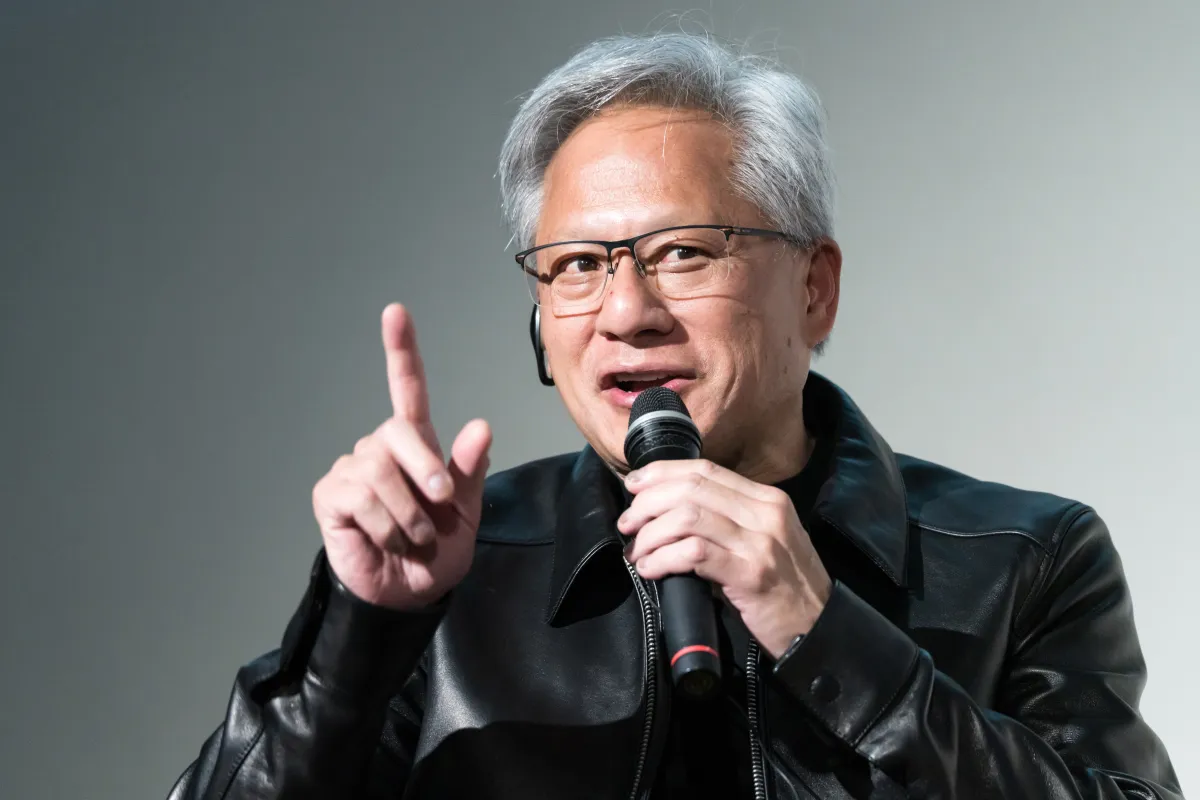
A live phone call from President Trump interrupted Huang’s appearance and quickly became the most memorable moment of the event. Huang placed the president on speakerphone in front of the audience, allowing Trump to address attendees directly as discussion around AI policy was intensifying across the technology industry.
Trump used the appearance to reject the idea that artificial intelligence represents an existential social threat. He described fear around the technology as a “hoax” and said the machines would not replace people in the way some critics have warned. In the same remarks, he also talked up the role of data centers, suggesting that communities hosting them could benefit economically after previous decline.
The moment arrived during a week already filled with high-profile AI commentary, giving the call an outsized significance beyond its novelty. It was not simply a celebrity-style interruption; it landed in the middle of a broader fight over whether U.S. policy should accelerate AI development, impose safeguards, or do both at once.
Why the timing matters for AI policy
The timing matters because the call came just as tech leaders, investors and policymakers were debating how fast frontier AI should advance and what kinds of guardrails should be in place. Over the weekend before the summit, Anthropic CEO Dario Amodei published a lengthy essay arguing that the industry should slow its pace and coordinate more seriously with governments.
That argument sparked immediate reaction throughout the AI world, with many executives agreeing that the sector needs more careful oversight. Trump’s response, delivered both on Truth Social and then in public during the summit appearance, pushed in the opposite direction: more confidence, less alarm, and a stronger emphasis on domestic competitiveness.
The contrast underscores one of the defining tensions in AI today. On one side are leaders warning that the technology is advancing faster than institutions can manage. On the other are business and political figures who see the risk of falling behind rivals as greater than the danger of moving too cautiously.
Trump told the audience that the feared robot takeover would not happen, while Huang responded by stressing that the AI race should benefit “every industry, every company, every state, every people” in America.
How did Jensen Huang respond?
Huang responded by keeping the spotlight on growth, not conflict. Rather than rebuke the president’s comments, he framed the AI boom as a national opportunity that should spread well beyond Nvidia itself. His remarks reflected the company’s larger message over the past several years: AI is not just a software trend, but an industrial transformation touching computing, manufacturing, research and infrastructure.
He also appeared to tailor his tone to the moment, noting that he was speaking to “thousands” of people — a reminder that the onstage call was both a policy exchange and a public spectacle. Huang’s approach suggested a preference for alignment over confrontation, especially with a president whose administration can influence export rules, energy policy, infrastructure approvals and procurement decisions that affect the AI industry.
The exchange revealed how closely tied the AI sector has become to federal politics. Nvidia is central to the global supply chain for advanced AI chips, and Huang’s comments signaled that the company sees America’s leadership in AI as a whole-of-country contest rather than a narrow race among a few companies.
What was Trump arguing about AI?
Trump’s main message was that the public panic surrounding AI is overstated and that the benefits of the technology should not be slowed by alarmist narratives. He cast the idea that robots will replace people as exaggerated and argued that the real story is economic development, especially around the buildout of data centers.
He also tied that infrastructure to local revival. In his remarks, Trump suggested that some communities that had been struggling could become wealthier by hosting new AI facilities. He did not provide detailed examples or economic data, but the broader point was clear: to Trump, AI infrastructure is a source of jobs, investment and geopolitical advantage, not only a source of risk.
That message aligns with his broader political style, which often emphasizes industrial growth, national competition and visible wins for American workers. It also reflects how the AI debate has increasingly moved beyond technical circles into questions of energy demand, land use, zoning, grid capacity and regional economic development.
Why data centers are central to the debate
Data centers are central because they are the physical backbone of modern AI. Training and running large AI systems requires massive computing power, specialized chips, cooling systems and reliable electricity. That means every big AI leap is also a conversation about utility capacity, real estate, permitting and local infrastructure.
Trump’s remarks about communities becoming wealthier through data centers point to the promise many local governments see: large projects can bring construction work, tax revenue and high-profile investment. But the same facilities can also raise concerns about energy consumption, water use, land competition and whether promised local benefits actually materialize.
For the AI industry, the data-center buildout is now inseparable from competitiveness. Companies that can secure power, land and chips faster will likely move faster. That reality has turned infrastructure into a strategic asset, not just a supporting layer.
Data centers in the AI economy
Data centers are where AI becomes real-world compute capacity. They determine how much model training can happen, how quickly services can respond and how many customers can use advanced systems at the same time.
- They house the specialized chips used to train and serve large AI models.
- They depend on extensive electricity and cooling systems.
- They can attract local investment but also trigger community resistance.
- They are increasingly viewed as national infrastructure in the AI race.
Who is pushing for a slower AI pace?
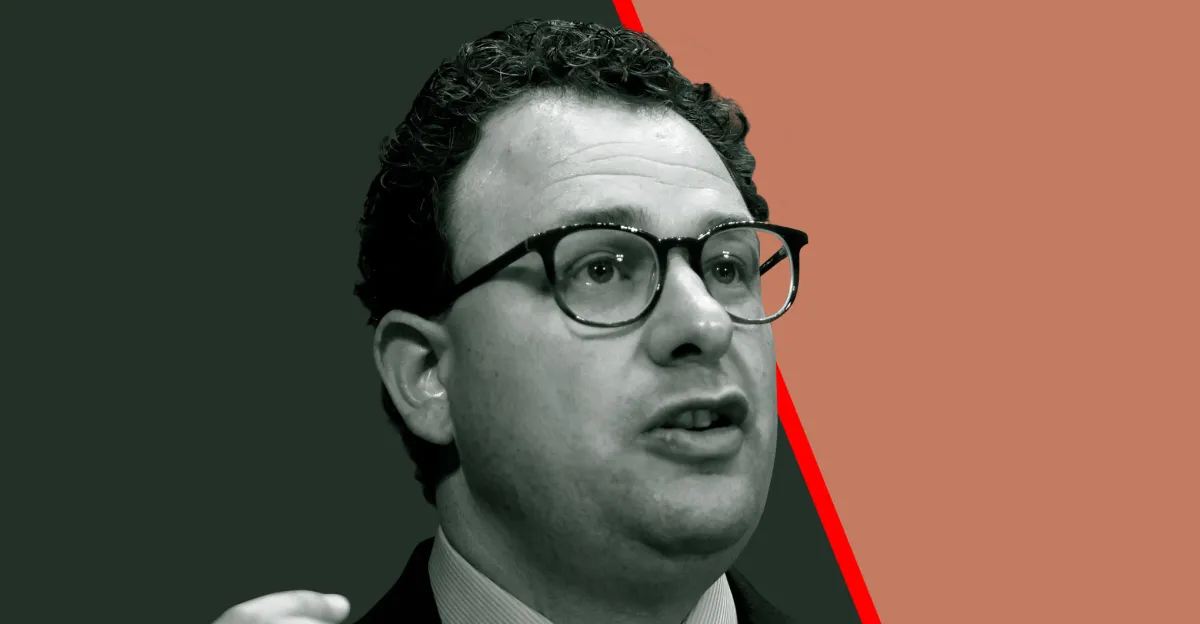
One of the most prominent voices urging caution is Anthropic CEO Dario Amodei, whose weekend essay argued for a more deliberate approach to frontier AI development. His view is that the industry and governments need better coordination before systems become even more capable and potentially harder to manage.
Amodei’s position reflects a growing camp of leaders who do not oppose AI progress outright but want stronger checks, standards and oversight. Their concern is not only about job disruption, but also about model behavior, security, misuse and the possibility that rapid advancement could outrun human institutions.
Trump’s response stood in direct contrast to that caution-first framing. Where Amodei emphasized pacing, Trump emphasized momentum. Where safety advocates emphasize uncertainty, Trump emphasized confidence and economic upside. The summit appearance made that divide visible in a way that a written policy statement never could.
How the AI industry is splitting over speed and safety
The AI industry is splitting because the technology is valuable enough to inspire both enthusiasm and alarm at once. Some leaders believe slowing development would reduce danger and create room for governance. Others believe delay would hand strategic advantage to rivals and reduce the United States’ ability to shape the future of the technology.
This tension has intensified as frontier models have improved and as governments around the world consider how to regulate them. In practice, the debate now covers multiple layers at once: model capabilities, chip supply, energy access, security concerns, labor effects and international competition.
Trump’s comments signal which side of that divide he is more likely to reinforce. His framing suggests that the administration may favor acceleration, industrial expansion and a competitive posture over precautionary slowdown. For companies like Nvidia, that may sound favorable. For critics who want stronger safeguards, it could heighten concerns that the policy environment is shifting toward rapid deployment.
| Moment | What happened | Why it mattered |
|---|---|---|
| Monday, All-In Summit | Jensen Huang put President Trump on speakerphone during his onstage appearance. | It turned a tech conference into a live debate over AI’s future. |
| Trump’s remarks | The president dismissed fears that robots would take over and called AI panic a hoax. | His comments rejected a safety-first narrative that many in the industry have been discussing. |
| Anthropic essay | Dario Amodei argued for slowing frontier AI development and better coordination. | It highlighted the growing divide over how fast AI should advance. |
| Huang’s response | The Nvidia chief said America should ensure everyone benefits from the AI race. | He framed AI as a national economic opportunity rather than a threat. |
What this means for Nvidia and the broader industry
The appearance matters for Nvidia because the company sits at the center of the AI boom and depends on a policy environment that supports rapid deployment, large-scale infrastructure and continued demand for advanced chips. When Huang speaks about the need for everyone to win in the AI race, he is making a market argument as much as a civic one.
For the broader industry, the moment shows how AI conversations are no longer confined to labs and earnings calls. They now involve presidents, podcasts, infrastructure planners and local governments. Every major public statement can shape investor sentiment, political expectations and the public’s sense of where the technology is headed.
It also demonstrates that AI has become a rare issue that crosses ideological and institutional lines. A single speakerphone call could contain a pro-growth presidential message, a tech executive’s national competitiveness pitch and the echo of a safety debate happening across the industry all at once.
What investors and policymakers will watch next
Investors and policymakers will be watching three things closely: whether the White House backs acceleration-focused AI policy, whether major companies keep pushing to expand infrastructure quickly, and whether safety advocates can build stronger consensus around restraint or oversight.
- Federal policy on AI regulation and data-center development.
- Statements from major AI labs about model pacing and deployment.
- Energy and infrastructure planning tied to the AI buildout.
Those decisions will shape not only which companies win the next phase of AI growth, but also how widely the benefits are distributed and how much risk governments are willing to tolerate. The All-In Summit call was brief, but it made clear that the politics of AI are now as important as the technology itself.
The bigger picture: AI as economics, politics and power
AI is increasingly a test of industrial policy, national security and economic strategy. The debate is no longer just about whether a chatbot writes better text or an image model produces sharper pictures. It is about who builds the compute, who controls the chips, who supplies the power and who sets the rules.
That is why a spontaneous speakerphone call could carry so much weight. Trump’s comments offered a blunt, public rejection of apocalyptic AI fears. Huang’s response reinforced the idea that the next wave of technological power will be measured by national participation, not just corporate valuation.
Whether those views lead to faster deployment, lighter regulation or new political battles remains to be seen. But the scene onstage at the All-In Summit showed that the AI race is now firmly in the center of American politics, where the stakes are no longer theoretical and the voices shaping the debate include the president himself.
Timeline of the latest AI flashpoint
The summit exchange was part of a rapid sequence of public statements and policy arguments that sharpened the discussion around frontier AI.
| Date | Event | Impact |
|---|---|---|
| Weekend before the summit | Anthropic CEO Dario Amodei publishes a long essay urging a slower frontier AI pace. | Triggers debate across the AI industry about safety and coordination. |
| Monday morning | Trump responds publicly on Truth Social. | Sets up a more confrontational posture toward AI alarmism. |
| Monday at All-In Summit | Huang puts Trump on speakerphone during his stage appearance. | Brings the debate directly to a live audience of industry insiders. |
In the end, the speakerphone moment said as much about the current state of AI politics as any formal policy speech could. The industry is moving fast, the stakes are large, and the argument over whether that speed is a strength or a danger is only getting louder.
Frequently asked questions
What happened between Trump and Jensen Huang at the All-In Summit?
Trump joined Huang by phone during Huang’s onstage appearance at the All-In Summit. Trump used the call to dismiss fears about AI taking over jobs and society, while Huang stressed that the United States should make sure the AI race benefits everyone.
Why did Trump call AI fears a hoax?
Trump called AI panic a hoax because he wanted to push back against warnings that the technology should be slowed down. His message focused on growth, national competitiveness and the economic upside of building more data centers and AI infrastructure.
How did Jensen Huang respond to Trump’s comments?
Huang responded cautiously and did not contradict Trump. He instead said the goal should be for every industry, company, state and worker to benefit from America’s AI race, reinforcing Nvidia’s pro-growth stance.
Why does this moment matter for AI policy?
This moment matters because it shows how central AI has become to politics and industrial policy. The exchange put a safety-versus-speed debate in front of a major audience, with the president and one of the industry’s most powerful executives signaling support for rapid expansion.