Updated September 2, 2026 6:53 pm
In short
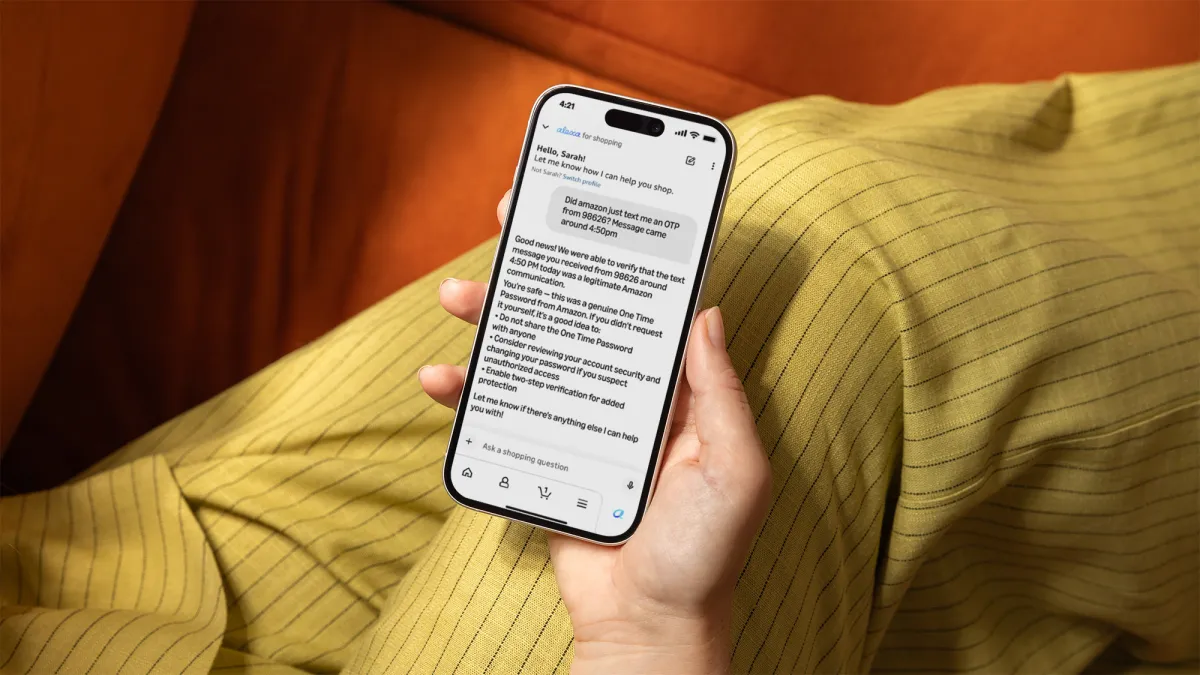
Amazon’s Alexa for Shopping can now verify whether a message is a scam, and Amazon says the system will improve as customers report more suspicious messages.
- Amazon is adding scam verification to Alexa for Shopping.
- The AI checks sender details, content, timing and metadata against Amazon’s message history.
- The feature targets fake order alerts, Prime scams, package notices and job fraud.
- Amazon says about 360,000 customers a year ask support whether a message is real.
- The new tool complements existing verification options like verify@amazon.com.
Update — September 2, 2026 6:53 pm
Amazon says the scam-checking tool will get better over time as users flag more suspicious messages, giving the AI more examples to learn from.
The company also clarified that Alexa for Shopping is available through both Amazon’s website and its mobile app.
Amazon has added a new AI-powered scam checker to Alexa for Shopping, allowing customers to ask whether a message claiming to come from Amazon is legitimate. The update matters because the company says hundreds of thousands of customers each year contact support to verify suspicious emails and texts.
The new feature is designed to help shoppers quickly spot fake order alerts, Prime renewal notices, account warnings, delivery updates and even job scams by comparing a message against Amazon’s own records and communication patterns.
Amazon takes aim at a persistent scam problem
Amazon’s latest consumer AI update is less about shopping inspiration and more about trust. The company said on Wednesday that it is extending Alexa for Shopping so customers can ask whether a suspicious message actually came from Amazon or is part of a scam.
The move comes as fake Amazon communications have become a common tool for criminals. Scammers often exploit the retailer’s enormous customer base and the urgency built into e-commerce notifications, using bogus emails or texts to trigger fear, confusion or a quick click on a malicious link.
Amazon said roughly 360,000 customers contact its customer service teams every year to ask whether a message is real. That volume suggests the problem is not isolated to a few edge cases; it is a broad, recurring issue that affects shoppers across the platform.
The company is pitching the new AI system as a faster and more convenient way to get answers than waiting on support or trying to interpret the message alone.
How does Amazon’s scam-checking AI work?
Amazon says the assistant can determine whether a communication originated from its systems by comparing it with the billions of messages the company has sent worldwide. In practice, the feature does not rely on one clue alone. It weighs several signals at once, including sender details, message content, timing and metadata.
That multi-factor approach is important because scam messages are often crafted to look convincing on the surface. Attackers may copy Amazon branding, mimic shipping language or create a sense of urgency that pushes users toward a false link or reply. By checking the message against a wider set of technical and behavioral markers, Amazon says the AI can make a more reliable call.
The company described the system as able to confirm authenticity definitively when the message matches Amazon’s records, though like any automated tool it will depend on the quality of the data it receives and the evolving tactics of scammers.
What kinds of scams is Amazon worried about?
Amazon says the feature is intended to help with a range of common fraud attempts, not just simple phishing emails. The company specifically pointed to fake order confirmations, false Prime membership renewal alerts, account suspension warnings, package delivery notifications and job scams.
Those examples reflect how scams increasingly mirror ordinary customer-service messages. A package notification may prompt someone to click a link. A membership warning may create pressure to “fix” a problem immediately. A job scam may target users looking for work with promises tied to a well-known brand.
By folding verification into Alexa for Shopping, Amazon is positioning AI as a front-line helper for everyday digital safety rather than a back-end support tool only used after something goes wrong.
Why Amazon is putting more responsibility on Alexa
Amazon’s new scam checker also shows how the company is reshaping Alexa around practical shopping assistance. The assistant is increasingly being used to help customers make buying decisions, track purchases and surface proactive alerts tied to products or brands they care about.
That shift has accelerated as Amazon looks to make Alexa more relevant in the age of generative AI. Rather than framing the assistant only as a voice-controlled speaker feature, Amazon has been layering in tools that help users manage shopping tasks, discover deals and respond to timely updates.
The scam-verification feature fits that broader strategy because it ties directly to a core customer pain point in e-commerce: uncertainty. If Amazon can use AI to reduce hesitation around suspicious messages, it could strengthen confidence in the company’s communication channels and reduce burden on support staff.
It also nudges Alexa further into a role that is more utility-driven than entertainment-driven, which is where Amazon appears to believe its assistant has the strongest consumer value.
What else can Alexa for Shopping do now?
Amazon has been steadily expanding the assistant’s shopping-related abilities. Today, Alexa for Shopping can help surface personalized deals, generate shopping guides, reorder everyday items, provide AI-based product summaries and transcribe handwritten shopping lists.
Amazon also added a feature on Tuesday that lets customers create alerts for new or relevant developments, such as a favorite brand releasing a new product, a preferred author publishing another book or a musician dropping a new album.
That combination of shopping help and proactive notifications suggests Amazon wants Alexa to be more of a personal retail concierge. The scam checker is the safety layer in that model: if Alexa is going to be part of a customer’s purchasing and notification workflow, it also needs to help separate real communication from fraud.
What Amazon already offered before the Alexa update
Amazon had already created separate tools for people who wanted to verify suspicious messages. Earlier this year, it launched the email address verify@amazon.com, which allows anyone to forward a questionable message and receive a response about whether it is genuine or fraudulent.
The company also operates an online form on its customer-service site that serves the same purpose. These options mean the new Alexa feature is not Amazon’s first attempt to tackle the problem; instead, it is the company’s attempt to make verification more immediate and conversational.
That distinction matters. Customers who are already inside Amazon’s app or website can now use the assistant rather than switching to email forwarding or filling out a separate form. For many users, reducing that friction could be enough to increase the number of messages they check before falling for a scam.
Key details at a glance
| Item | Details |
|---|---|
| New feature | Alexa for Shopping scam verification |
| Announced | Wednesday, Sept. 2, 2026 |
| Primary purpose | Help customers identify fake Amazon messages |
| Reported annual support inquiries | About 360,000 customers |
| Signals analyzed | Sender info, message content, timing, metadata and more |
| Earlier verification tools | verify@amazon.com and an online support form |
| Where available | Amazon website and mobile app |
Why scam verification is becoming a bigger consumer AI use case
Consumer AI products are increasingly being judged not just on how well they generate text or recommendations, but on whether they solve practical, repetitive problems. Scam detection is a strong example because it sits at the intersection of automation, trust and everyday digital behavior.
People are flooded with notifications from stores, banks, delivery services and subscription platforms. That constant stream gives criminals more opportunities to impersonate legitimate companies. An AI assistant that can verify messages on demand has the potential to save time, reduce anxiety and stop losses before they happen.
For Amazon, this is also a strategic move. The company can use its scale as a communications advantage: billions of authentic messages give it a large dataset to compare against suspicious claims. Few retailers have that kind of advantage, which may make this an especially natural application for Amazon’s AI stack.
At the same time, the feature may raise expectations. If Alexa can confidently say a message is real or fake, customers may begin to rely on it more broadly for digital safety. That could invite scrutiny if scams evolve faster than the system does or if legitimate messages are misidentified.
How does this fit into Amazon’s broader Alexa strategy?
Amazon has been trying to make Alexa more useful in concrete, repeatable shopping scenarios rather than only a general-purpose voice assistant. The new scam checker extends that logic by covering a moment in the shopping journey when users are vulnerable and looking for reassurance.
In the past year, Amazon has leaned into features that make Alexa feel more proactive: deal alerts, product discovery tools, reorder support and AI summaries that help customers compare items. The company now appears to be building an assistant that can not only recommend purchases but also protect the user relationship around those purchases.
That is a meaningful shift from a purely convenience-focused assistant to one that helps manage the risks attached to online commerce. If Amazon can make Alexa the place customers go to check whether a message is real, the company may deepen loyalty while reducing the likelihood that a scam undermines trust in its brand.
What this could mean for shoppers
For shoppers, the practical benefit is simple: less guesswork. Instead of trying to parse an email address, inspect a link or compare formatting, users can ask Amazon’s assistant to help determine whether the communication is authentic.
That may be especially useful for older customers, less technical users or anyone dealing with a message that looks plausible but feels off. It may also help during busy shopping periods, when people are more likely to receive real order notices mixed in with fake ones.
- It could reduce the chance of clicking a malicious link.
- It may lower the number of support calls tied to fake messages.
- It gives customers a quicker path to verification inside Amazon’s ecosystem.
- It adds another layer of protection to Amazon’s shopping notifications.
What remains unclear
Amazon has not publicly detailed every aspect of how the feature is deployed, including how much of the experience is automated versus assisted by human review in edge cases. The company also has not spelled out all of the limits of the system or whether it will work equally well across every message type and region.
Like any scam-prevention tool, effectiveness will likely depend on user adoption and how quickly the system learns from new fraud patterns. Amazon said the AI will improve as customers report more suspicious messages, suggesting it expects the model to get better with use.
That could be a meaningful advantage. Fraud detection systems tend to improve when they have a constant flow of labeled examples, and Amazon’s enormous customer base gives it a large stream of real-world signals to study.
Timeline: Amazon’s anti-scam efforts so far
| Date | Action | Why it matters |
|---|---|---|
| Earlier in 2026 | Launched verify@amazon.com | Gave customers a direct email route to check suspicious messages |
| Earlier in 2026 | Expanded online verification form | Offered another way to confirm whether communications were real |
| Tuesday, Sept. 1, 2026 | Added proactive alerts in Alexa | Helped users track relevant product, book and music updates |
| Wednesday, Sept. 2, 2026 | Announced Alexa scam checking | Moved message verification into the assistant itself |
The bigger picture
Amazon’s new scam-detection feature highlights how AI is moving beyond novelty and into consumer protection. The most valuable use cases are not always flashy. Sometimes they are the ones that answer an anxious, practical question in seconds: is this real?
That is exactly the sort of problem Amazon is trying to solve with Alexa for Shopping. By blending e-commerce data, message analysis and consumer-friendly AI, the company is betting that trust tools can become just as important as shopping tools.
For now, the update gives customers a new way to check whether a message from Amazon is legitimate before acting on it. In a world where fake notices are increasingly sophisticated, that may be one of the more useful applications of consumer AI yet.
Amazon says the new tool is designed to help customers confirm whether a message came from the company’s systems by comparing it with billions of past communications and multiple data signals.
Frequently asked questions
How does Amazon’s scam checking AI work?
Amazon’s scam checking AI works by comparing a suspicious message with the company’s own communication data. It examines sender information, content, timing and metadata to judge whether the message likely came from Amazon or is part of a scam.
What kinds of scams can Alexa for Shopping detect?
Alexa for Shopping can help identify fake order confirmations, Prime renewal warnings, account suspension notices, delivery updates and job scams. Amazon says those are among the most common ways criminals impersonate the company.
Is the new verification feature available everywhere?
The new verification feature is available through Amazon’s website and mobile app. Amazon has not published a detailed list of every region or device limitation, so availability may depend on where customers access Alexa for Shopping.
Did Amazon already have a way to check suspicious messages?
Yes. Amazon already offered verify@amazon.com and an online customer-service form that let users submit suspicious messages for confirmation. The Alexa feature adds a faster, more conversational way to do the same thing.
Why is Amazon adding scam checking to Alexa?
Amazon is adding scam checking to Alexa because message fraud is a large and recurring problem for its customers. The company says about 360,000 customers a year contact support about suspicious messages, making faster verification a useful consumer service.