Updated August 13, 2026 2:54 pm
In short
Google’s Pixel Watch 5 keeps leaning on software over hardware, adding new AI-powered health, fitness and GPS features while delaying some wellness tools until September.
- Pixel Watch 5 focuses on software, with only minor hardware changes and a $50 price increase.
- Offline Gemini can handle simple tasks like timers and app launching without a data connection.
- Google is adding trend-based health tools, including breathing emergency detection, blood pressure trends and insulin resistance trends.
- Several of the new health features will also roll out to older Pixel Watches and Fitbit Air.
- The watch is available for preorder now and ships August 20, with a special edition coming September 3.
Update — August 13, 2026 2:54 pm
Google’s latest update adds a new health feature for the Pixel Watch 5: nightly breathing-quality tracking with monthly summaries, designed to show how longer-term habits may affect respiration.
The company also says its blood pressure trend tool and insulin resistance trend tool won’t be available at launch after all. Both are now due in September, and both will expand beyond the new watch to the Pixel Watch 3 and later, plus Fitbit Air.
Google is also highlighting a new way to clean up GPS data after a workout by combining satellite and weather-station information with Google Maps building models, alongside AI-generated strength-training plans for the wrist.
Update — August 12, 2026 5:55 pm
Google’s latest details add one more health feature: the Pixel Watch 5 will also track nightly breathing quality and send monthly summaries, with the data meant to show how longer-term routines affect respiration.
The company also says its blood pressure and insulin resistance trend tools won’t be available at launch. Both are now slated to roll out in September, and both will extend to Pixel Watch 3 and newer models as well as Fitbit Air.
Google is also pitching a new GPS fix-up system that uses satellite and weather-station data plus Google Maps building models to clean up outdoor tracking after the fact, and it’s bringing AI-generated strength-training plans to the watch.
Google’s Pixel Watch 5 launches August 20 with a bigger bet on software than hardware, adding offline Gemini, new proactive AI prompts and a suite of health features that include Breathing Emergency Detection, blood pressure trends and insulin resistance trends. The watch starts at $399, but its biggest story is how aggressively Google is pushing AI and preventive health on the wrist.
That means the Pixel Watch 5 is less a redesign than an extension of Google’s broader wearables strategy, which has increasingly centered on health coaching, smarter alerts and background analysis rather than flashy industrial changes. The hardware update list is modest, but the software roadmap is unusually ambitious for a smartwatch.
What Google changed on the Pixel Watch 5
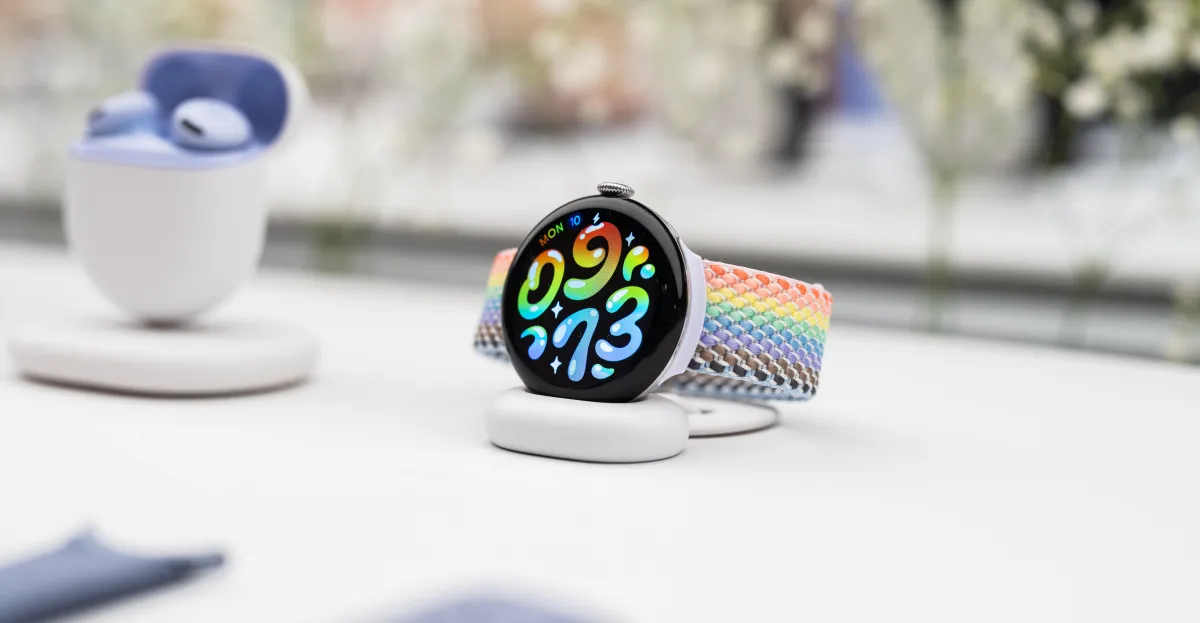
The Pixel Watch 5 does include a few hardware tweaks, but they are not the main attraction. Google says the new model arrives in a satin pyrite finish, adds a handful of new band colors and introduces a Steph Curry Special Edition. Under the hood, the device uses a slightly faster Qualcomm chip and a small battery increase. The watch is also arriving with a $50 increase over the previous generation.
In practice, the update list suggests a familiar Google pattern: keep the device recognizable, then make each generation feel meaningfully different through software. That approach is especially visible here because many of the headline features are also coming to some older Pixel Watches and Fitbit hardware.
| Pixel Watch 5 at a glance | Details |
|---|---|
| Launch date | Available for preorder now; on sale August 20 |
| Starting price | $399 |
| Special edition | Steph Curry Special Edition, arriving September 3 |
| Key AI feature | Offline Gemini for simple commands and app launching |
| Major health features | Breathing Emergency Detection, blood pressure trends, insulin resistance trends |
| Subscription tie-in | Several features feed into Google Health Premium |
How is Gemini changing on the wrist?
Gemini is becoming more useful on the watch by working offline for basic tasks and by surfacing context-aware suggestions more often. Google showed examples of the assistant starting timers and opening apps without a phone connection, although the offline version appeared slower than the cloud-connected experience during a demo.
The company is also building more proactive behavior into the assistant. If a text message asks about availability, the watch can suggest checking Google Calendar. A small icon on the watch face now surfaces live information such as timer status, estimated ride times and workout progress, making the interface feel more like a dynamic control center than a passive display.
Google is also leaning into gesture-based controls. The wrist-flick and pinch interactions that arrived on Pixel Watches via software update last year are now more deeply integrated into Wear OS 7, helping the watch feel more responsive when used one-handed.
Why offline AI matters on a smartwatch
Offline AI matters because watches are often used in situations where the phone is not available, the connection is weak or speed is critical. Starting a timer, launching a workout or getting an answer to a simple command are the kinds of everyday tasks that benefit from local execution, even if the results are less powerful than a full cloud model.
That tradeoff is important. Google is not trying to turn the wrist into a miniature phone replacement for complex tasks. Instead, it is making the watch more dependable for quick actions, which may matter more in day-to-day use than flashy generative features that only work when the user has a strong signal.
Can you really make a watchface with AI?
Yes, but the result is more playful than polished. Google lets users generate watchfaces with AI, including stylistic requests that sound highly specific. In a demo, a request for a watchface with “fat cats and an elegant font” produced something looser than expected: the cats were not literal illustrations, but rounded cat-like clock numerals instead.
The feature is clearly a novelty, yet it fits Google’s broader effort to make AI feel personal and expressive on small devices. It also gives the company another way to showcase its image-generation tools beyond phones and photo editing.
What health problems is Google trying to catch early?
Google is aiming to detect signs of acute breathing trouble, long-term sleep issues and metabolic stress before they become obvious. The company’s most attention-grabbing announcement is Breathing Emergency Detection, an expansion of last year’s Loss of Pulse feature.
When the watch detects a severe drop in blood oxygen saturation, it can trigger an emergency call and alert designated contacts. Google says the system uses several sensors together, including heart rate, motion and altitude, to reduce false alarms. The watch is designed to avoid activating during sleep-related low oxygen episodes and is not intended for people with chronic respiratory conditions.
Google says the breathing alert is meant for acute emergencies rather than ongoing medical management, and it will only activate after the watch sees a serious, sustained oxygen drop that suggests the wearer may have stopped breathing.
That distinction matters. Google is trying to position the feature as a safety tool, not a diagnostic device or a substitute for clinical care. In Europe, the feature is expected to be available at launch on both the Pixel Watch 4 and Pixel Watch 5. In the United States, rollout depends on approval from the Food and Drug Administration.
How does Breathing Emergency Detection work?
Breathing Emergency Detection combines data from the watch’s sensors to decide whether a severe oxygen drop is likely real. According to Google’s demo explanation, the feature is intended to trigger only when blood oxygen saturation falls to roughly 83 percent or lower for a prolonged period.
The watch also turns the feature off after detecting that the wearer has been asleep for 30 minutes, a safeguard meant to avoid false alarms from normal sleep-related breathing patterns, sleep apnea or side-sleeping. In other words, Google is trying to thread a difficult needle: catch life-threatening events without overwhelming users with noise.
Why is Google focusing so heavily on trend-based health tools?
Google is focusing on trend-based tools because they are better suited to consumer wearables than one-off medical readings. The company’s new Blood Pressure Trends and Insulin Resistance Trends features are both designed to look for patterns over time rather than to diagnose a condition in a single moment.
That is a meaningful shift in product strategy. Instead of promising instant medical precision, Google is presenting its watch as a device that can quietly monitor long-term changes and flag when a user may want to pay closer attention.
Blood Pressure Trends explained
Blood Pressure Trends uses the optical heart-rate sensor and motion data to estimate how pulse waves move through the body. Google’s AI model then interprets the shape and speed of those waves to infer whether blood pressure is trending higher or lower.
The company is careful not to overstate what the feature does. It will not provide systolic or diastolic values, and it is not a replacement for a cuff-based measurement. Instead, it behaves more like an alert system that says, in effect, “your overall trend may be worsening.”
What makes Insulin Resistance Trends unusual?
Insulin Resistance Trends is the most novel health feature in the Pixel Watch 5 lineup because Google is using wearable data to estimate a metabolic pattern that is notoriously difficult to identify early. Insulin resistance happens when the body has trouble using glucose effectively, forcing the pancreas to produce more insulin and increasing the risk of fatigue, weight gain and eventually Type 2 diabetes if untreated.
Google says the feature estimates whether resistance is trending up or down over the course of a month by looking at signals such as heart rhythm, sleep quality and movement. To validate the model, the company says it compared algorithm results with blood draws and published the findings in a peer-reviewed Nature study.
Just as importantly, Google is not claiming to offer noninvasive blood glucose monitoring. The feature is not a diabetes screening tool and does not produce direct measurements. It is a lifestyle-trend indicator intended to highlight sustained metabolic strain.
Google frames the new insulin-related tool as an early warning system rather than a diagnosis, comparing it to a check-engine light that can prompt users to investigate further with a clinician.
Who gets the new health features first?
The Pixel Watch 5 is not the only device getting these features, but it will be the first major showcase for them. Breathing Emergency Detection arrives on both the Pixel Watch 4 and Pixel Watch 5 in Europe at launch, while U.S. availability depends on regulatory approval.
Blood Pressure Trends and Insulin Resistance Trends are scheduled to roll out in September, not on day one. Google says those features will also come to the Pixel Watch 3 and later, as well as the Fitbit Air, expanding the reach of the company’s health platform beyond the newest watch model.
That compatibility matters for two reasons. First, it keeps Google from making the most interesting software feel artificially locked to the latest hardware. Second, it helps Google build a larger health ecosystem around its subscription services, including Google Health Premium.
How do these features compare with rivals?
Google is entering territory where Apple, Whoop and other wearable brands have already made claims about blood pressure or wellness tracking, but the Pixel Watch 5 package is notable for combining multiple long-horizon health tools in one product cycle. The company is also making a bolder bet on AI-assisted analysis than many competitors, tying its wearable story directly to Gemini and the Google Health app.
Where the competition often emphasizes either athletic metrics or consumer-friendly notifications, Google is trying to blend both with a stronger health-coaching narrative. That may appeal to users who want insight without wearing a clinically minded device, though the usefulness of these tools will depend on how accurately they perform in everyday life.
| Feature | What it does | Limits |
|---|---|---|
| Breathing Emergency Detection | Calls for help if oxygen saturation falls sharply for long enough | Not for chronic respiratory conditions; requires regulatory approval in the U.S. |
| Blood Pressure Trends | Flags monthly upward or downward blood pressure tendencies | No direct systolic or diastolic readings |
| Insulin Resistance Trends | Estimates whether metabolic stress is getting better or worse | Not a glucose monitor or diabetes screening tool |
| Offline Gemini | Handles simple watch commands without a data connection | Slower than cloud-based responses in demos |
What role does Fitbit Air play in Google’s plan?
Fitbit Air appears to be the other key endpoint in Google’s strategy, serving as a broader health platform companion to the Pixel Watch line. The company’s new features are being shared across devices, which suggests Google wants the health stack to feel ecosystem-wide rather than exclusive to a single premium smartwatch.
That matters because Google’s wearables business has historically needed more than hardware upgrades to compete consistently. By tying health insights, AI coaching and subscription services together, the company is trying to create reasons for users to stay inside its ecosystem over the long term.
What does the Pixel Watch 5 tell us about Google’s wearables strategy?
The Pixel Watch 5 shows that Google is comfortable making a smartwatch compelling without a dramatic design overhaul. Instead of chasing attention through a new shape or radical materials change, the company is using software to push the watch into a more assistant-like and health-aware role.
That strategy reflects a broader shift across consumer tech. As hardware differences narrow, companies are increasingly competing on what their devices can predict, suggest and automate. Google is betting that AI can make a watch feel more useful even when the physical product looks familiar.
The risk is clear: if the features feel gimmicky or unreliable, the watch may not justify its price increase. But if the proactive suggestions, breathing alerts and trend tools prove genuinely helpful, the Pixel Watch 5 could become one of the most consequential software updates Google has shipped for wearables in years.
What happens next?
For now, the Pixel Watch 5 is available to preorder and will reach stores on August 20, with the Curry-branded edition following on September 3. The more interesting milestone may arrive later, when Google begins rolling out the September health features and, in the United States, waits to see whether regulators approve the breathing detection system.
That timeline will matter because the Pixel Watch 5’s best ideas are not primarily about design or speed. They are about whether Google can make a smartwatch feel like an intelligent health companion that quietly notices things a user may miss.
- Google’s Pixel Watch 5 adds only modest hardware changes but a major software and AI push.
- Offline Gemini, proactive prompts and AI watchfaces are part of the update.
- The most important health features are Breathing Emergency Detection, Blood Pressure Trends and Insulin Resistance Trends.
- Several of the new health tools will also come to older Pixel Watches and Fitbit Air.
- The watch goes on sale August 20, with a Steph Curry Special Edition arriving September 3.
Frequently asked questions
What is new about the Pixel Watch 5?
The Pixel Watch 5 adds modest hardware upgrades but leans heavily on software, including offline Gemini, more proactive AI suggestions, new watchface generation tools and several health features focused on breathing, blood pressure trends and insulin resistance trends.
Does the Pixel Watch 5 have blood pressure monitoring?
Not in the traditional sense. The Pixel Watch 5 does not provide direct systolic or diastolic blood pressure readings; instead, Blood Pressure Trends uses sensor data and AI to estimate whether a user’s blood pressure pattern is moving higher or lower over time.
Can the Pixel Watch 5 detect breathing emergencies?
Yes, in a limited, safety-focused way. Google’s Breathing Emergency Detection is designed to trigger emergency help if the watch detects a severe, sustained oxygen drop that may indicate the wearer has stopped breathing, but U.S. release depends on FDA approval.
Is the Pixel Watch 5 getting offline Gemini?
Yes. Google says Gemini on the Pixel Watch 5 can work offline for simple actions like starting timers and launching apps, although it was slower in demonstration than the cloud-connected version.
When does the Pixel Watch 5 go on sale?
The Pixel Watch 5 is available to preorder now and goes on sale August 20. Google says the Steph Curry Special Edition will arrive later, on September 3.