Updated August 13, 2026 3:24 pm
In short
Google’s Made by Google 2026 lineup adds tougher Pixel 11 devices, a more durable foldable, a new Pixel Tag tracker and deeper Gemini features, while the Pixel Watch 5 gets new health tools and a Stephen Curry edition.
- Google launched the Pixel 11, Pixel 11 Pro, Pixel 11 Pro XL and Pixel 11 Pro Fold.
- Gemini features now include ASL support in Live Transcribe, Rambler voice input and more camera-based search.
- Pixel Tag is Google’s new $29 tracker that competes directly with Apple’s AirTag.
- The Pixel Watch 5 adds monthly health trend summaries in the Google Health app.
- Google emphasized durability, higher base storage and tighter ecosystem integration across the Pixel lineup.
Update — August 13, 2026 3:24 pm
Google also said the Pixel 11 Pro Fold is built to be even more rugged, with a glass-fiber composite back and a redesigned hinge aimed at better protecting the inner display. The company says those changes make the foldable three times more durable than its predecessor.
The Pixel Watch 5 now comes with a Stephen Curry edition priced at $579, while the standard 41mm and 45mm models start at $399 and $429. Google also said Pixel Buds Pro will arrive in a new Olive color.
Update — August 12, 2026 6:25 pm
Google’s new Pixel Tag tracker will also come in a four-pack for $99, giving buyers a cheaper way to outfit multiple items at once.
The Pixel Watch 5 adds monthly health summaries in the Google Health app, including trends for blood pressure and insulin resistance. Google also said Pixel Buds Pro will be sold in a new Olive color.
Google used its Made by Google 2026 event on Wednesday to introduce the Pixel 11 family, a refreshed Pixel Watch 5 and a new item tracker designed to compete with Apple’s AirTag. The company also pushed Gemini deeper into its hardware lineup with new voice, camera and accessibility tools that are meant to make its devices more helpful in everyday use.
The announcement matters because it shows Google leaning harder into a strategy that blends premium phones, wearable health features and AI-powered convenience features into a single ecosystem. It also signals a more direct challenge to Apple in both phone hardware and device tracking.
What Google announced at Made by Google 2026
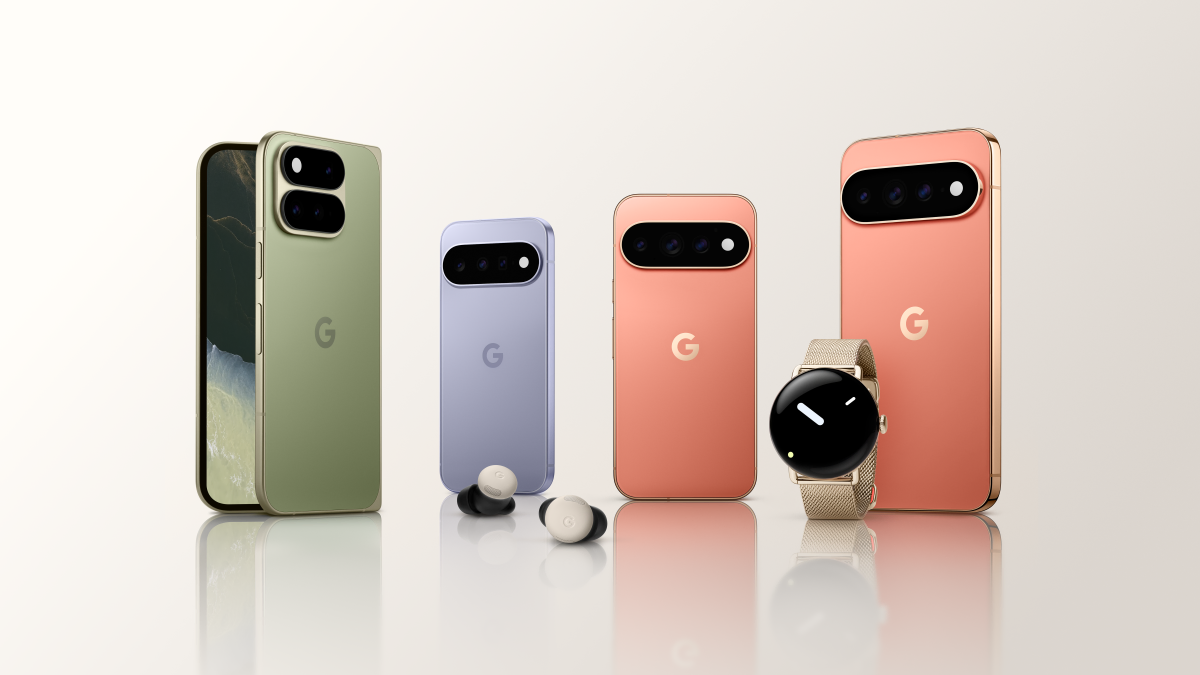
Google’s latest hardware showcase was less about a single headline product than about a broad refresh across the Pixel line. The company unveiled the standard Pixel 11, the Pixel 11 Pro, the Pixel 11 Pro XL, the Pixel 11 Pro Fold, the Pixel Watch 5, a new Pixel Tag accessory and a set of Gemini-driven software features that spread across devices.
That mix reflects the direction Google has been taking for years: hardware that serves as a showcase for its software and AI services. This year, the company tied together product design changes, durability improvements, accessibility updates and a new tracking platform under the same umbrella.
Gemini gets more deeply woven into Pixel devices
Google devoted a substantial part of the event to AI features, particularly those built around Gemini. Rather than treating AI as a standalone product, the company positioned it as a layer that improves communication, search and device interaction on Pixel phones and accessories.
How is Live Transcribe expanding on Pixel?
The expansion of Live Transcribe to support American Sign Language is one of the most notable accessibility additions. Using the Pixel Camera, users can now have sign language translated into text, giving people another way to communicate without depending on typing or spoken input.
For users who communicate through ASL, that could make Pixel devices more useful in situations where quick text translation helps bridge a gap. It also shows Google continuing to invest in accessibility features that are powered by on-device camera and AI capabilities.
Google framed the update as part of a broader effort to make Pixel devices more inclusive and practical in everyday communication, especially when typing or voice input is not ideal.
What is Rambler and why does it matter?
Rambler is Google’s new voice-input feature designed to better handle how people actually speak. Instead of requiring carefully organized commands, it is built to make sense of run-on sentences, filler words and more casual speech patterns while still extracting the user’s intent.
That is important because voice tools often struggle when people speak naturally. If Rambler works as promised, it could make hands-free interaction feel less rigid and more conversational, which is especially useful in cars, on the move or when users are multitasking.
Circle to Search moves closer to the camera
Google also expanded Circle to Search by integrating it more directly with the Pixel Camera. Users can identify objects, search for distant items, translate text or ask questions about what they are seeing without leaving the camera interface.
This is a subtle change, but one that fits Google’s larger search strategy. The company is trying to make search feel less like a destination and more like a capability embedded into everyday device use.
Pixel 11: a thinner camera bar and higher starting storage
The standard Pixel 11 gets the most visible design update in the series. Google says the camera bar is now more than 40% thinner than the one on the previous generation, and it stretches across the phone with an all-glass finish.
That design shift gives the handset a cleaner back panel while still preserving the look that has long distinguished the Pixel line from other Android phones. Google also raised the base storage to 256GB, doubling the previous starting point.
| Model | Starting price | Base storage | Notable changes |
|---|---|---|---|
| Pixel 11 | $899 | 256GB | Thinner camera bar, all-glass camera surface |
| Pixel 11 Pro | $1,099 | Not specified in announcement | Improved drop resistance, new scratch coating |
| Pixel 11 Pro XL | Not specified in announcement | Not specified in announcement | Shares durability upgrades with Pro model |
| Pixel 11 Pro Fold | Not specified in announcement | Not specified in announcement | Lighter, thinner, tougher foldable design |
| Pixel Tag | $29 | Not applicable | Tracker for keys, wallets and luggage |
The price increase is also notable. The Pixel 11 starts at $899, which is $100 more than the Pixel 10 debut price. Google said the move reflects the removal of the 128GB tier and ongoing strain in RAM supply.
The phone will be sold in Frost, Hibiscus, Pistachio and Obsidian.
Why did Google raise the Pixel 11 price?
Google raised the Pixel 11 price because it dropped the 128GB entry model and said memory market conditions are still tight. That combination pushed the new starting price higher, even as the company increased the base storage to 256GB.
For buyers, the practical result is a simpler lineup with more storage out of the box. For Google, the change may help offset component pressures while keeping the entry-level Pixel positioned as a premium device rather than a budget option.
Pixel 11 Pro and Pro XL focus on durability
Google is also making the Pro models more resistant to damage. The Pixel 11 Pro and Pixel 11 Pro XL come with better drop resistance and a new anti-scratch display coating that Google says more than doubles scratch resistance compared with the Pixel 10 Pro lineup.
The Pixel 11 Pro starts at $1,099, up from $999 for the previous generation. The Pro phones come in Canyon, Fog, Olive and Obsidian, with the Obsidian version now sporting an all-matte finish.
These changes suggest Google is trying to justify the higher price with upgrades that matter in daily use, not just higher benchmark numbers or more camera specs. Durability has become a stronger selling point as smartphone buyers hold onto devices longer and expect them to survive daily wear.
Pixel 11 Pro Fold gets thinner, lighter and more durable
The foldable model may be the most technical product in the lineup. Google says the Pixel 11 Pro Fold is nearly 10% lighter and almost 1mm thinner than the Pixel 10 Pro Fold, while also gaining slimmer bezels and a 48-megapixel main camera with 30x Super Zoom.
Foldables still face a perception problem around fragility, so Google is clearly trying to address that concern. The Pixel 11 Pro Fold keeps the IP68 water and dust resistance introduced with the previous generation, but now adds a glass-fiber composite back cover and a redesigned hinge intended to better protect the inner display.
Google says the result is a device that is three times more durable than its predecessor. That claim, if borne out in real-world use, could make the Pixel foldable line more credible to mainstream buyers who have so far stayed cautious about foldable phones.
How does the new Fold compare with the previous generation?
The new Fold is lighter, slimmer and more durable than the Pixel 10 Pro Fold, according to Google. It also adds camera improvements and retains the water and dust protection that helped the previous version stand out in the foldable category.
Below is a quick comparison of the key changes Google highlighted.
| Feature | Pixel 10 Pro Fold | Pixel 11 Pro Fold |
|---|---|---|
| Weight | Heavier | Nearly 10% lighter |
| Thickness | Thicker | Almost 1mm thinner |
| Main camera | Earlier-generation sensor | 48-megapixel main camera |
| Zoom | Lower level | 30x Super Zoom |
| Durability | IP68 plus foldable design | Three times more durable, with reinforced hinge and back cover |
The Pixel 11 Pro Fold will be offered in Olive and Obsidian.
Google launches Pixel Tag to take on Apple’s AirTag
Google has finally entered the item-tracking market with Pixel Tag, a small accessory meant for locating keys, wallets, luggage and other personal items. The device connects to Android’s Find Hub network, allowing users to track its location through the Find Hub app in a way that mirrors Apple’s Find My system.
That makes Pixel Tag one of the clearest competitive moves in the event. For years, Android users have watched Apple build out a more mature tracking ecosystem around AirTag. Google is now trying to offer a native alternative inside its own platform.
The tag costs $29 individually or $99 for a four-pack. It can also be located from a Pixel Watch, and Pixel Buds users can ask Gemini to find or ring a Pixel Tag, adding a voice layer to the tracking experience.
Google presented Pixel Tag as a practical utility device rather than a flashy gadget, emphasizing that it is meant to help people recover everyday belongings quickly and with minimal friction.
What makes Pixel Tag different from AirTag?
Pixel Tag is built for Android users and works through Google’s Find Hub network rather than Apple’s Find My system. It also ties into Gemini and Pixel hardware more directly, letting users search for a tag with voice assistance from Pixel Buds or check on it from a Pixel Watch.
For consumers, the main differences are ecosystem and convenience. If someone already uses Pixel phones, watches and earbuds, the tag becomes part of a more integrated Google setup. That integration may be the key advantage Google is betting on.
Pixel Watch 5 adds health summaries
The Pixel Watch 5 continues Google’s push into health and wellness tracking. The company says the Google Health app will now provide monthly summaries of blood pressure trends and insulin resistance trends, helping users monitor patterns over time rather than just see single data points.
Those summaries could be useful for people who want a broader view of changes in their health metrics. The update also signals that Google wants its wearable to do more than count steps or display notifications.
The 41mm Pixel Watch 5 starts at $399, while the 45mm version starts at $429. Google also introduced a Stephen Curry edition priced at $579, aimed at users who want a more athletic design package.
Pixel Buds Pro will also arrive in a new Olive color.
Why these launches matter for Google’s hardware strategy
The 2026 Pixel lineup suggests Google is trying to compete on several fronts at once. It is using AI to make its devices more intelligent, relying on design and durability to strengthen premium hardware appeal, and broadening the ecosystem through accessories like Pixel Tag and Pixel Watch.
That approach matters because Google no longer appears interested in being just another Android phone maker. Instead, it is shaping Pixel as a platform where software, hardware and AI features reinforce one another.
The strategy also reflects the market pressure on Google. Smartphone buyers expect longer support, better cameras, stronger materials and more useful AI. Meanwhile, Apple continues to set the pace in ecosystem integration. By introducing a tracker, adding health summaries and pushing Gemini deeper into common tasks, Google is trying to close those gaps in visible ways.
Timeline of the major Pixel 11 announcements
Google’s event packed a lot into a short window, but the sequence of announcements shows how the company framed its product story. It began with AI-driven features and then moved through the hardware lineup, ending with accessory and wearable updates that complete the ecosystem picture.
| Announcement | What Google introduced | Why it matters |
|---|---|---|
| Gemini features | Live Transcribe with ASL support, Rambler voice input, expanded Circle to Search | Makes Pixel devices more accessible and easier to use |
| Pixel 11 | Thinner camera bar, 256GB base storage, $899 starting price | Refreshes the core model with more storage and a new design |
| Pixel 11 Pro / Pro XL | Improved durability and scratch resistance | Targets premium buyers who value longevity |
| Pixel 11 Pro Fold | Lighter, thinner foldable with durability upgrades | Pushes foldables further toward mainstream use |
| Pixel Tag | $29 tracker for Android’s Find Hub network | Direct challenge to Apple’s AirTag |
| Pixel Watch 5 | Monthly health trend summaries | Deepens Google’s wearable health story |
What comes next for Pixel buyers
For buyers, the biggest questions now are availability, real-world battery life, and whether the AI features feel genuinely useful outside a demo stage. Google has made a strong argument that its devices are becoming smarter and more durable, but shoppers will still want independent testing before deciding whether the upgrades justify the prices.
The price tiers also suggest Google is comfortable pushing further upmarket. With the Pixel 11 starting at $899 and the Pro model at $1,099, the company is clearly aiming at customers who expect flagship features and are willing to pay for them.
At the same time, Pixel Tag gives Android users a long-awaited option in a category Apple has dominated. If Google can build enough network coverage and keep the device inexpensive, it could become a significant everyday accessory.
In the end, the event was not just about new phones. It was about Google presenting a more complete hardware ecosystem, one that uses Gemini, health data, camera intelligence and accessory integration to make Pixel feel less like a phone line and more like a connected platform.
Whether that strategy pays off will depend on how well the devices perform in the wild. But on stage, Google made its message clear: the Pixel era is no longer only about cameras and clean Android software. It is about AI-assisted hardware that tries to be useful in more parts of a user’s day.
Frequently asked questions
What did Google announce at Made by Google 2026?
Google announced the Pixel 11 family, the Pixel Watch 5, a new Pixel Tag tracker and several Gemini-powered features. The company used the event to show how AI, hardware design and accessory integration are becoming a bigger part of the Pixel ecosystem.
How much does the Pixel 11 cost?
The Pixel 11 starts at $899. Google said the price is higher than last year because the company removed the 128GB option and is dealing with ongoing RAM supply pressure, while raising the base storage to 256GB.
What is Pixel Tag?
Pixel Tag is Google’s new item tracker for Android devices. It helps users locate things like keys, wallets and luggage through the Find Hub network, and it costs $29 individually or $99 for a four-pack.
What is new in the Pixel 11 Pro Fold?
The Pixel 11 Pro Fold is lighter, thinner and more durable than the previous model, according to Google. It also adds slimmer bezels, a 48-megapixel main camera, 30x Super Zoom and a redesigned hinge for better inner-display protection.
What AI features are coming to Pixel devices?
Google is adding Live Transcribe support for American Sign Language, a new voice feature called Rambler that handles natural speech better, and a more direct Circle to Search experience inside the Pixel Camera for visual queries and translations.