In short
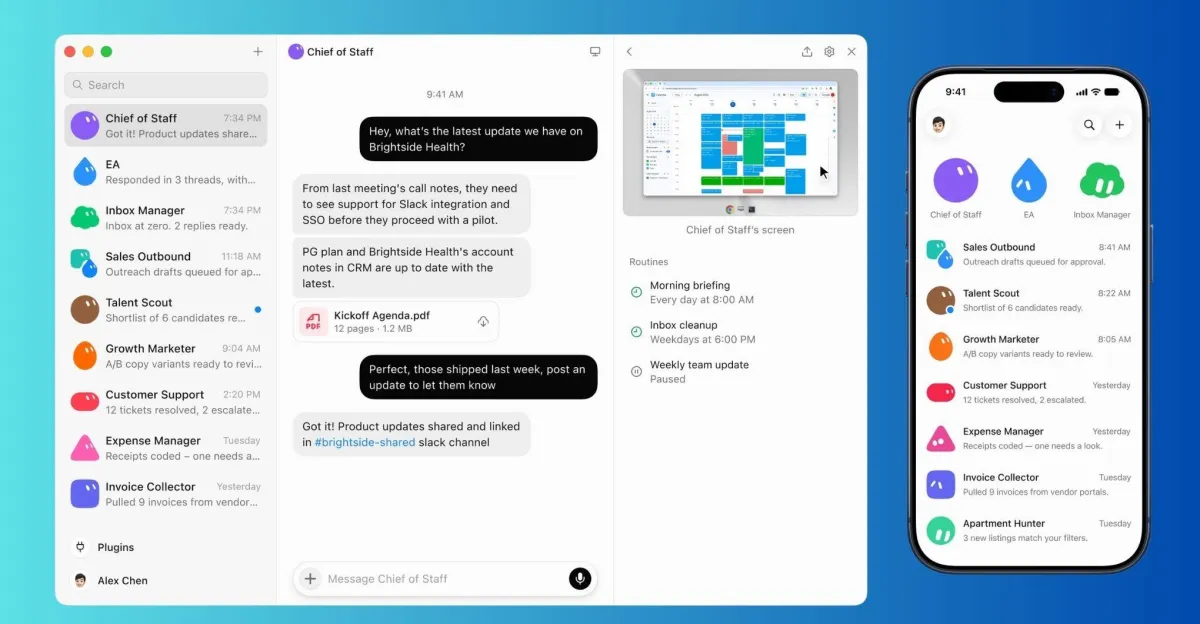
xAI has launched Grok Bot, a beta AI agent that can independently use cloud-based tools to handle workplace tasks. The release positions xAI in the growing race to build AI teammates for business and productivity use.
- xAI launched Grok Bot as a beta AI agent for desktop and iOS.
- The system can use its own cloud computer to complete multi-step tasks in apps and websites.
- xAI says the bots can work in parallel, share context and learn user workflows over time.
- Access is currently limited to select subscribers, with enterprise users placed on a waitlist.
xAI has launched Grok Bot, a beta AI agent service that can log into tools, websites and workplace apps on a user’s behalf, complete multi-step tasks and return only when it needs approval or finishes the job. The move puts Elon Musk’s AI company squarely into the fast-growing race to sell “teammate” style agents to businesses and power users.
The rollout matters because it pushes Grok beyond a chat interface and into the emerging market for autonomous work assistants. Instead of just answering questions, the new system is designed to execute workflows, preserve context across conversations and coordinate with other bots in parallel.
What xAI is launching with Grok Bot
Grok Bot is an always-on agent product that xAI says behaves less like a conventional chatbot and more like a delegated coworker. Users can assign work from a phone or desktop, and the bot will operate inside its own cloud-based computer environment to carry out tasks independently.
According to xAI, the service is built to handle complex, multi-step work without forcing users to assemble automations manually. That means the bot can be told to complete a task in natural language, then use the apps, accounts and websites already connected to the user’s workflow to do the work in the background.
In practical terms, that could mean anything from updating records and drafting outreach to moving information between systems, monitoring threads and following up when a task has been abandoned.
Why this launch is strategically important
The launch is important because it shows how quickly AI companies are trying to move from conversation tools to action tools. The next phase of competition is no longer about which chatbot can answer the fastest, but which platform can actually take work off people’s desks.
xAI is entering a crowded field. OpenAI, Anthropic and Microsoft have all moved toward workplace-focused AI products that promise similar gains in productivity. Grok Bot is xAI’s answer to that trend, and it gives the company a more direct pitch to professionals and businesses that want AI to do tasks, not just suggest them.
How does Grok Bot actually work?
Grok Bot works by using a dedicated cloud computer that can interact with software and websites much like a human assistant would. That setup allows the agent to sign into tools, move between pages, fill forms, manage tabs and continue working until the assigned objective is complete.
xAI says users can message the bot the way they would message a colleague. The company is emphasizing ease of delegation: instead of building a workflow tree or setting up a chain of rules, a user can simply describe the job and let the bot take over.
Parallel work and coordination between bots
One of the more notable parts of the launch is xAI’s focus on multi-bot collaboration. The company says users can run several bots at once, with one bot overseeing others that are each handling a specialized piece of work.
These bots can also message one another directly to exchange context when tasks overlap. In group chat settings, xAI says the agents can coordinate and decide who owns what, which suggests an effort to make the product feel like a small digital team rather than a lone automation tool.
That approach reflects a broader shift in agent design. The most competitive systems are moving toward delegation, specialization and memory, not just one-off prompting.
| Feature | What xAI says Grok Bot can do | Why it matters |
|---|---|---|
| Cloud-based computer | Works inside its own virtual environment | Lets the bot operate software and websites independently |
| App and website access | Can sign into existing tools and services | Helps complete real workplace tasks end to end |
| Multi-bot coordination | Bots can run in parallel and share context | Supports larger or more complex workflows |
| Workflow memory | Can save routines and retain context | Reduces repeated setup and improves consistency |
| Proactive follow-up | Can resume dropped threads and flag issues | Makes the system more useful over time |
What kinds of work is xAI targeting?
xAI says Grok Bot grew out of an internal prototype that was already being used inside the company. The list of tasks the company names gives a clear picture of its ambitions: sales outreach, marketing, office operations and even bug fixes.
That is a broad target, but it is also a realistic one. These are the sorts of jobs where repeated context switching, routine communication and multi-step follow-through often consume large amounts of human time.
By focusing on office tasks and technical support work, xAI is positioning Grok Bot as a productivity layer for knowledge workers rather than as a consumer novelty. The emphasis is on practical delegation, especially for users who already spend most of their day inside cloud software.
How much autonomy will users really get?
The answer is: some, but not unlimited. xAI says the bots will return when a task is finished or when something requires approval. That suggests a human-in-the-loop design meant to balance convenience with oversight.
The company also says the agents can learn from existing workflows and retain context in order to preserve a user’s personal voice. In theory, that could help the bot draft messages and handle tasks in a way that feels less generic and more aligned with how a user normally works.
xAI says Grok Bot is designed to “pick up work before you need to ask” and to know when something needs attention, reflecting a push toward more proactive assistant behavior.
That promise is significant, because proactive behavior is one of the hardest things for AI systems to do well. It requires not only remembering information, but also deciding when a pattern or delay should trigger action.
Who can use Grok Bot right now?
Grok Bot is available in beta starting today, but access is limited. xAI says the service is live on desktop and iOS for SuperGrok Heavy, Cursor Ultra and Cursor Teams Premium subscribers.
For teams and enterprise customers, xAI is taking a waitlist approach for future access. That is a common move for early agent products, especially when the company wants time to gather feedback, refine safety controls and expand infrastructure before a wider rollout.
The limited availability also signals that xAI is treating Grok Bot as a premium product rather than a free consumer feature. In the AI market, that pricing strategy is increasingly common for agent systems that rely on more compute and more persistent cloud access than basic chatbots.
How Grok Bot compares with rival AI assistants
xAI’s launch lands in a highly competitive part of the AI market. Rivals are racing to bundle agents into existing enterprise and productivity ecosystems, each trying to define what an AI coworker should be able to do.
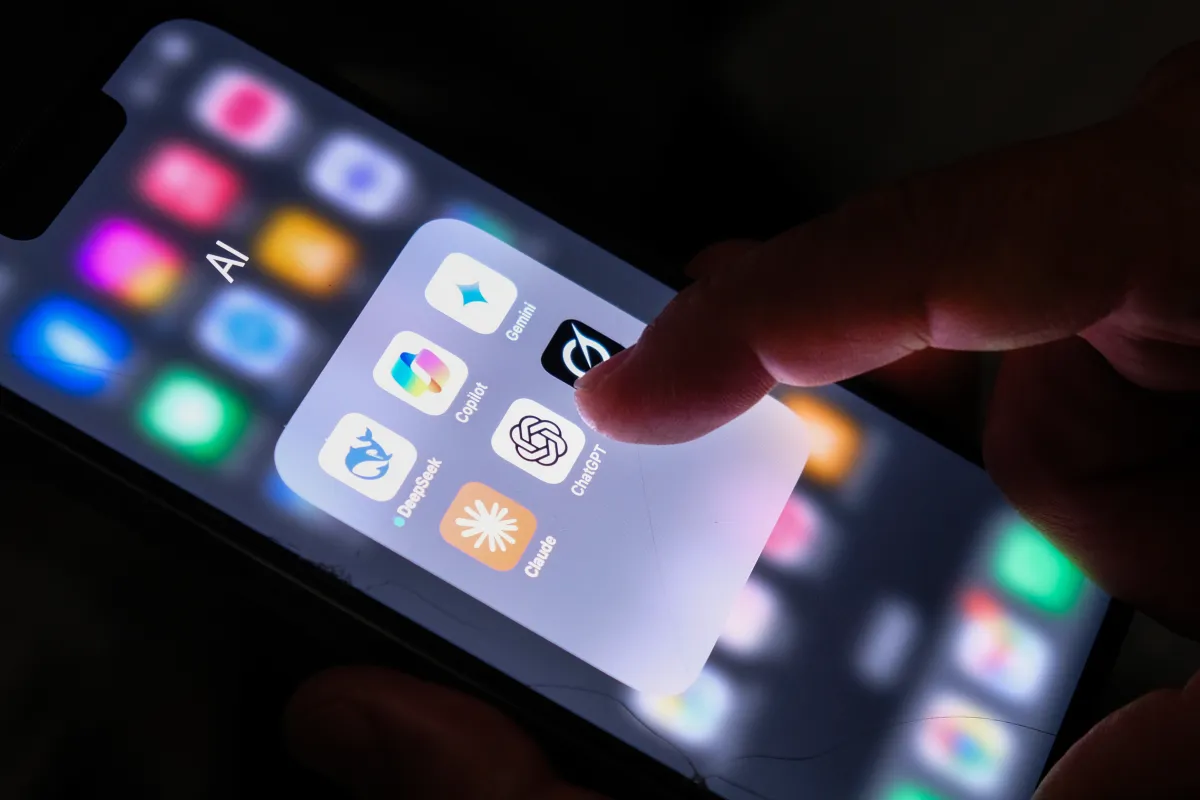
OpenAI has been moving toward work-focused products under the ChatGPT brand, Anthropic has positioned Claude as a capable office and coding assistant, and Microsoft has continued folding Copilot deeper into business workflows. xAI’s approach is similar in spirit but branded around the more personalized and informal “teammate” idea.
The competitive question is not only which model writes the best response. It is which platform can safely operate in real accounts, keep track of long-running work and interact with software without constant supervision.
What makes the “teammate” framing different?
The teammate framing is different because it implies collaboration rather than command-and-response interaction. A chatbot answers; a teammate takes ownership.
That subtle shift matters for adoption. Businesses are more likely to pay for a system that can carry tasks through completion, check in when needed and coordinate with other digital workers than for one that simply generates text on demand.
It also raises expectations. Once a product is marketed as a teammate, users will expect it to understand context, avoid mistakes and know when to ask for help. Those are difficult standards for any AI system to meet consistently.
Why the launch matters for the future of AI agents
The launch of Grok Bot shows how quickly AI agents are becoming the centerpiece of product strategy across the industry. The direction is clear: vendors want to move from being answer engines to action engines.
That change could reshape how people work with software. Instead of opening several tools and manually repeating the same steps, users may increasingly delegate chunks of their job to agents that live across systems and return only once the work is done.
If that model succeeds, it could reduce friction in sales, operations, support, administration and software maintenance. It could also create new expectations around accountability, reliability and auditability, since autonomous agents will inevitably touch sensitive information and business processes.
Potential benefits for users and teams
- Less time spent on repetitive cross-app tasks
- Faster follow-up on incomplete work and stale threads
- More consistent execution of routine workflows
- Possible gains in productivity for small teams and solo workers
- Better coordination for tasks that require multiple parallel steps
Potential limitations and risks
- Errors could compound if an agent misreads instructions
- Connected accounts and cloud access raise security concerns
- Users may still need to approve sensitive actions
- Proactive behavior can be helpful, but also intrusive if poorly tuned
- Enterprise adoption will likely depend on controls, logging and reliability
Those trade-offs help explain why agent products are arriving first in beta form and why access is often restricted. Companies are still learning how much autonomy users are willing to grant and how to prevent agents from wandering off course.
What the internal use case says about xAI’s ambitions
xAI’s claim that the system was already used internally for sales, marketing, office work and bug fixes suggests the product is not being built in a vacuum. The company appears to be productizing tools it has already relied on itself.
That matters because internal dogfooding often reveals where AI systems are genuinely useful and where they break down. If xAI has been using these bots on real tasks, it likely has some evidence that the model can handle day-to-day operational work well enough to market externally.
Still, the leap from internal assistance to customer-ready software is substantial. Enterprises will care about permissions, traceability, error rates and the ability to limit what an agent can access. Those concerns will shape how far Grok Bot can go beyond early adopters.
What happens next?
For now, Grok Bot is a beta product with limited access, which means the launch is as much a signal as a finished platform. xAI is telling the market that it wants a place in the emerging AI agent category, and that it plans to compete where work gets done.
The next test will be whether users trust the bot with real responsibilities and whether the product can deliver enough autonomy without becoming unpredictable. If xAI can prove both usefulness and control, Grok Bot could become one of the company’s most commercially important offerings.
For the wider AI industry, the release underscores a larger trend. The newest battleground is not just who can chat the best, but who can act the best. Grok Bot is xAI’s bet that the future of AI belongs to systems that behave less like assistants and more like reliable coworkers.
| Milestone | What happened | Why it matters |
|---|---|---|
| Internal prototype | xAI used early bots inside the company | Shows the product had real-world testing before launch |
| Beta launch | Grok Bot became available to select subscribers | Marks xAI’s entry into the AI agent market |
| Enterprise waitlist | Teams and businesses can request future access | Indicates a broader commercial rollout is planned |
In the short term, the beta will likely serve as a proof of concept. In the longer term, it will test whether users are ready to hand over meaningful slices of work to an AI that is no longer just answering questions, but actively doing the job.
Frequently asked questions
What is Grok Bot?
Grok Bot is xAI’s new beta AI agent service designed to act like a digital teammate. It can use a cloud-based computer to sign into apps and websites, complete tasks and return when the work is done or when approval is needed.
Who can use Grok Bot right now?
Grok Bot is currently available in beta on desktop and iOS for SuperGrok Heavy, Cursor Ultra and Cursor Teams Premium subscribers. xAI says teams and enterprise customers can join a waitlist for future access.
How is Grok Bot different from a normal chatbot?
Grok Bot is different because it is meant to take action, not just answer questions. xAI says it can manage multi-step workflows, coordinate with other bots, remember context and continue work across chats and tasks.
Why is xAI launching an AI agent now?
xAI is launching Grok Bot to compete in the fast-growing market for workplace AI agents. Rival companies such as OpenAI, Anthropic and Microsoft are all pushing similar products, making autonomous task execution a major industry battleground.