Updated August 12, 2026 1:54 pm
In short
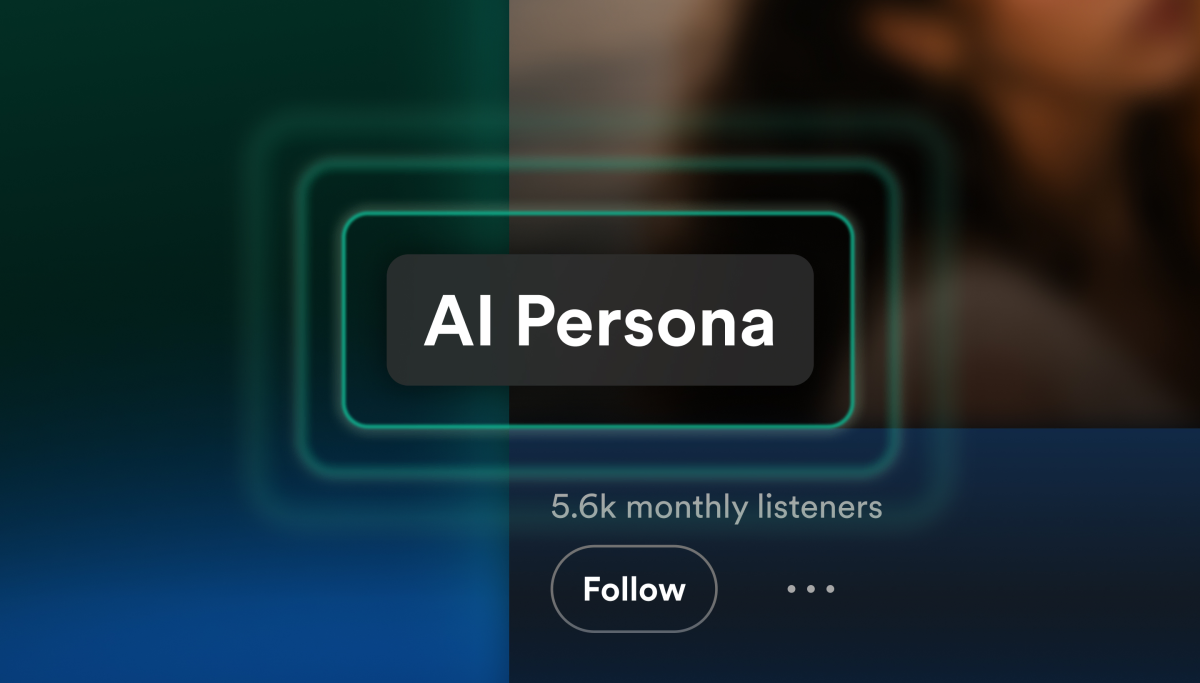
Spotify will label AI-generated artist profiles as AI Personas, keep them out of recommendations, and now says the badges will also help distinguish those accounts from coming AI-generated remixes and covers.
- Spotify will start tagging synthetic artist profiles as AI Personas in mid-September.
- AI Persona music will be excluded from recommendations unless a user follows the profile.
- Spotify will combine self-disclosure, internal review and user reports to identify accounts.
- Artists can appeal labels they believe were applied incorrectly.
- The policy is separate from Spotify’s features that explain how tracks themselves were produced.
Update — August 12, 2026 1:54 pm
Spotify also said the AI Persona badges will be used to help listeners tell synthetic artist profiles apart from its upcoming AI-generated remixes and covers, which are expected under new licensing deals.
The company reiterated that artists can start self-disclosing AI Persona accounts through Spotify for Artists on August 11, 2026, while the labels themselves are slated to roll out next month.
Update — August 11, 2026 4:54 pm
Spotify says the new AI Persona labels will also keep those artists out of users’ personalized recommendations, not just editorial and algorithmic playlists, unless a listener follows the account.
The company also added that artists will be able to self-disclose as AI Personas starting August 11, 2026, through Spotify for Artists, while the labels themselves are due to appear next month.
Spotify further clarified that the badge is meant to identify the artist profile, not judge how the music was created, and said the labels will help users distinguish AI Personas from upcoming AI-generated remixes and covers.
Spotify will start labeling AI-generated artist profiles as “AI Persona” accounts in mid-September and will keep their music out of editorial and algorithmic recommendations. The change matters because it gives listeners a clearer signal about who, or what, is behind a profile while limiting the spread of AI-made music through the platform’s discovery tools.
The company said the new labels are part of a broader effort to manage the growing volume of synthetic music on its service without blocking legitimate creative uses of AI. Spotify also plans to let listeners report unmarked AI Persona profiles and will give artists a way to appeal if they believe the label was applied incorrectly.
Spotify’s latest move against AI-generated music
Spotify is tightening its rules around artificial intelligence at a time when music platforms are under pressure to distinguish human artists from synthetic ones. The streaming giant announced that some artist profiles will soon carry an “AI Persona” badge when the account appears to represent a generated identity rather than a real person.
The rollout is set to begin in mid-September, with artists able to self-disclose starting August 11 through Spotify for Artists. But self-reporting will not be the only way a profile gets flagged. Spotify said it will also review accounts on its own, especially those that match patterns of photorealistic AI-generated names and images.
That approach suggests the company wants to avoid relying entirely on voluntary disclosure, which can be incomplete or inconsistent. In practice, Spotify is building a system meant to catch high-profile or widely listened-to AI personas first, before broadening the review process.
What is an AI Persona on Spotify?
An AI Persona is Spotify’s term for an artist profile that represents a synthetic identity rather than a human creator. The badge is not a judgment on whether AI was used to make the music; it is a label for the public-facing identity of the artist profile itself.
Spotify said the distinction is important because an artist can use AI in many different ways. A musician might rely on AI tools for parts of the production process and still be a human artist. By contrast, an AI Persona profile is meant to signal that the person behind the account is not real, even if the music itself may be indistinguishable from other releases on the platform.
Spotify said the badge is intended to clarify whether a profile represents an actual person, not to assess how every track was produced.
The company also said information about how a song was made will continue to surface through other product features, including AI Credits and SongDNA. Those tools are meant to provide more detail about credits, creation methods and contributors, even when the public artist identity remains separate from the underlying production process.
How will the label affect recommendations?
Spotify will keep AI Persona music out of editorial playlists and algorithmic recommendations by default. That means the platform will not proactively surface those artists in the same way it promotes regular music for discovery, unless a user has specifically chosen to follow that AI Persona.
Following an artist on Spotify is treated as a deliberate expression of interest. In the company’s view, that makes it an appropriate exception: if a listener intentionally subscribes to an AI-generated act, Spotify will allow that music to continue appearing for that user.
The recommendation restriction is one of the most significant parts of the new policy. On a service where discovery drives listening habits and, ultimately, royalties, being excluded from recommendation systems can sharply limit reach. For AI-made acts, that means visibility will depend more on direct audience interest and less on Spotify’s own curation and ranking systems.
Why Spotify is drawing this line now
Spotify’s decision reflects a wider industry concern that cheap, fast AI generation could flood streaming services with low-value tracks. The company did not use the phrase “slop” in the policy itself, but the problem it is trying to address is familiar across the music business: if synthetic songs overwhelm playlists and search results, the listening experience deteriorates for everyone.
That risk is not just about taste. It can affect trust, discovery and subscription retention. If users keep running into repetitive or misleading content, they may spend less time on the service or question the quality of its recommendations. In a competitive streaming market, those are problems Spotify cannot afford to ignore.
Spotify is also trying to thread a difficult needle. The company is experimenting with its own AI-powered features, including Prompted Playlists, AI DJ and chat-based tools, while also preparing for AI remixes that it says will arrive under new licensing arrangements. The new policy suggests Spotify wants to encourage AI as a creative tool, but not at the cost of turning the platform into an uncurated machine-generated feed.
How will Spotify identify AI Persona profiles?
Spotify will use a mix of artist self-disclosure, internal review and user reporting to find AI Persona accounts. The company said it will begin with profiles that have already reached certain audience thresholds so the most widely heard accounts are addressed first.
That focus matters because the largest accounts are also the ones most likely to affect user experience and platform trust. A mislabeled or unlabelled synthetic act with a sizable following can shape trends, appear in recommendations and create confusion at scale, so Spotify appears to be prioritizing the highest-impact cases.
Once a profile is identified, the AI Persona badge will appear in several places: the artist’s profile banner, the About section, search results and track rows inside playlists. In other words, the label will not be hidden in a single settings panel. Spotify wants the status to be visible wherever listeners are likely to encounter the artist.
The platform also plans to launch a reporting tool in the coming months so users can flag accounts they believe should be labeled but have not yet been reviewed. That adds a crowdsourced layer to the enforcement process and gives Spotify an additional way to catch missed profiles.
What happens if an artist disagrees?
Spotify says artists will be able to appeal an AI Persona label if they think the designation was placed on their profile by mistake. That appeals process is important because AI use in music is not binary, and a broad automated system could incorrectly classify some artists or projects.
The company has acknowledged that there is a wide spectrum of AI use in music creation. Some musicians use generative tools for editing, arrangement or production assistance, while others create entirely synthetic identities. Spotify’s framework appears designed to distinguish between those cases rather than penalize all AI involvement equally.
Spotify said it wants to make a clear call only when a profile’s identity appears to be synthetic, while treating the music-production question as a separate issue.
Spotify’s AI policy is expanding beyond labels
This announcement builds on AI guidelines Spotify introduced in September 2025. Those earlier rules focused on identifying and labeling AI music using industry-standard detection methods and on banning unauthorized voice clones and deepfakes.
In that sense, the company has moved from a narrow anti-fraud posture to a broader system of disclosure and discovery controls. The first phase was about removing harmful or deceptive content. The new phase is about helping listeners understand what kind of artist they are hearing and keeping synthetic acts from being promoted as if they were conventional performers.
Spotify’s product strategy helps explain why the company is acting now. It is already building AI-native listening tools, including conversational features and personalized assistance. But the same technology that powers those experiences also lowers the barrier to mass-producing tracks and personas. The policy is an attempt to preserve the upside while limiting abuse.
How the new policy fits the music industry
The music industry has been wrestling for years with questions about authorship, likeness rights and machine-generated content. AI-generated voices, cloned performances and synthetic bands have made it harder to tell where human creativity ends and algorithmic imitation begins.
Streaming services sit at the center of that conflict because they are both distribution systems and discovery engines. If platforms fail to label synthetic identities, listeners may be misled and legitimate artists may be crowded out. If platforms clamp down too hard, they risk alienating creators who use AI as part of normal production workflows.
Spotify’s new system attempts to separate identity from method. That is a subtle but important distinction. It allows the company to say: we are not banning AI from the studio, but we are going to tell users when the “artist” they see is itself an AI construct.
Why the distinction matters for listeners
The distinction matters because listeners often care about authenticity in two different ways. Some want to know whether the song was made with AI assistance. Others want to know whether the artist is a real person with a real career. Spotify’s new labels address the second question directly and leave the first to separate credits and metadata tools.
That may reduce confusion around the platform’s coming AI remixes and covers, which Spotify says will be introduced through licensing arrangements with UMG and Merlin. Those products are expected to allow fan-made reworks while still channeling revenue to participating rights holders. The AI Persona label gives Spotify a way to distinguish those licensed creative formats from fully synthetic performers.
In a crowded ecosystem where generative music can look, sound and market itself like anything else, the label could become a useful trust marker. It may not solve every transparency problem, but it gives Spotify a visible way to explain what a user is hearing before they press play.
Key dates and policy changes
Spotify’s AI Persona rollout arrives in stages. The company is opening disclosure tools first, then moving to labeling and enforcement. The following table summarizes the timeline and what each step is meant to do.
| Date | Change | What it means |
|---|---|---|
| September 2025 | Spotify first announced its AI music policy | Established rules for labeling AI music and banning unauthorized voice clones and deepfakes |
| August 11, 2026 | Artists can self-disclose AI Personas in Spotify for Artists | Gives creators a way to identify synthetic profiles themselves |
| Mid-September 2026 | AI Persona badges begin appearing on profiles | Listeners see labels in profiles, search and playlists |
| Coming months | User reporting tool rolls out | Listeners can flag profiles that appear to be unlabeled AI Personas |
What Spotify is trying to protect
At its core, Spotify is trying to protect the integrity of its recommendation system. The platform’s value depends heavily on trust: trust that playlists surface relevant music, trust that search results are useful and trust that the service is not being overrun by content designed purely to exploit algorithms.
By excluding AI Persona music from recommendations, Spotify is making a judgment about distribution, not artistic worth. The company is not saying synthetic music can’t exist on the platform. It is saying the platform will not actively promote it the same way it promotes conventional artists unless a listener has made a clear choice to follow it.
That may prove to be a workable compromise. It leaves room for AI-generated acts to reach audiences, but it keeps the burden of discovery on the listener rather than on Spotify’s own promotion systems.
What comes next?
In the short term, listeners should start seeing the new badges in September, while artists can begin self-identifying now. In the longer term, the success of the policy will depend on how accurately Spotify can identify synthetic identities, how many users use the reporting tool and whether the appeals process is fast enough to prevent unnecessary friction for legitimate artists.
It will also be a test of whether audiences accept a two-tier view of AI in music: one for tools that help create songs and another for personas that may not represent real people at all. Spotify is betting that users want transparency, but not a wholesale ban on AI experimentation.
That bet could shape how other streaming services respond. If Spotify’s labels reduce confusion without hurting engagement, similar systems may spread more quickly across the industry. If they create new disputes over classification, the conversation around synthetic music could become even more complicated.
For now, Spotify is making its position clear: AI may be part of the future of music on its platform, but hidden synthetic identities will not be treated like ordinary artists.
- AI Persona badges will label synthetic artist profiles starting in mid-September.
- Those profiles will be excluded from editorial and algorithmic recommendations by default.
- Spotify will use self-disclosure, internal review and user reports to identify accounts.
- Artists can appeal if they believe the label was applied incorrectly.
- The policy is separate from Spotify’s tools that disclose how music itself was made.
Frequently asked questions
What is an AI Persona on Spotify?
An AI Persona on Spotify is an artist profile that represents a synthetic identity rather than a real person. The label is about the public artist profile, not necessarily a claim that every song on the account was made without human involvement.
When will Spotify start showing AI Persona labels?
Spotify will begin showing AI Persona badges in mid-September 2026. Artists can start self-disclosing through Spotify for Artists on August 11, 2026, but the public labels will appear later as the rollout begins.
Will AI Persona music be recommended on Spotify?
No, not by default. Spotify says AI Persona tracks will be excluded from editorial and algorithmic recommendations and from personalized recommendations unless a user follows the AI Persona account directly.
Can artists challenge an AI Persona label?
Yes. Spotify says artists will have a process to appeal if they believe the AI Persona designation was applied in error. That matters because AI use in music exists on a spectrum and some accounts may be misclassified.
How will Spotify find unlabeled AI Persona accounts?
Spotify will use a combination of artist self-disclosure, internal review and user reporting. It says it will start with higher-audience profiles first so the most widely heard synthetic accounts are covered before expanding the review process.