Updated July 31, 2026 4:54 pm
In short
Friend has relaunched its AI pendant with a speaker, a $249 price tag, and a new $10 monthly subscription for longer conversation memory.
- Friend’s updated pendant now includes a speaker for voice responses.
- The new price is $249, compared with the original $129 launch price.
- The company is trying to reposition the device as a more natural conversational companion.
- Friend previously drew backlash over its advertising and the concept of AI companionship.
- The relaunch follows public protests and a year of scrutiny around the brand.
Update — July 31, 2026 4:54 pm
Friend’s relaunch now includes a new paid tier: the company is charging $10 a month for a subscription that lets the pendant retain conversations for longer than its current 30-day memory limit.
The new ad also makes the branding reset more explicit. Avi Schiffmann described the refreshed product as “Friend 2.0,” even though it still appears under the same name on the company’s site.
Update — July 30, 2026 7:56 pm
Friend’s relaunch includes another change beyond the new speaker: the company is now charging $10 a month for a subscription that extends how long the pendant can remember conversations, beyond the current 30-day limit.
The updated ad also reinforces the company’s branding reset. Avi Schiffmann called the new version “Friend 2.0,” even though the product still appears under the same name on its site.
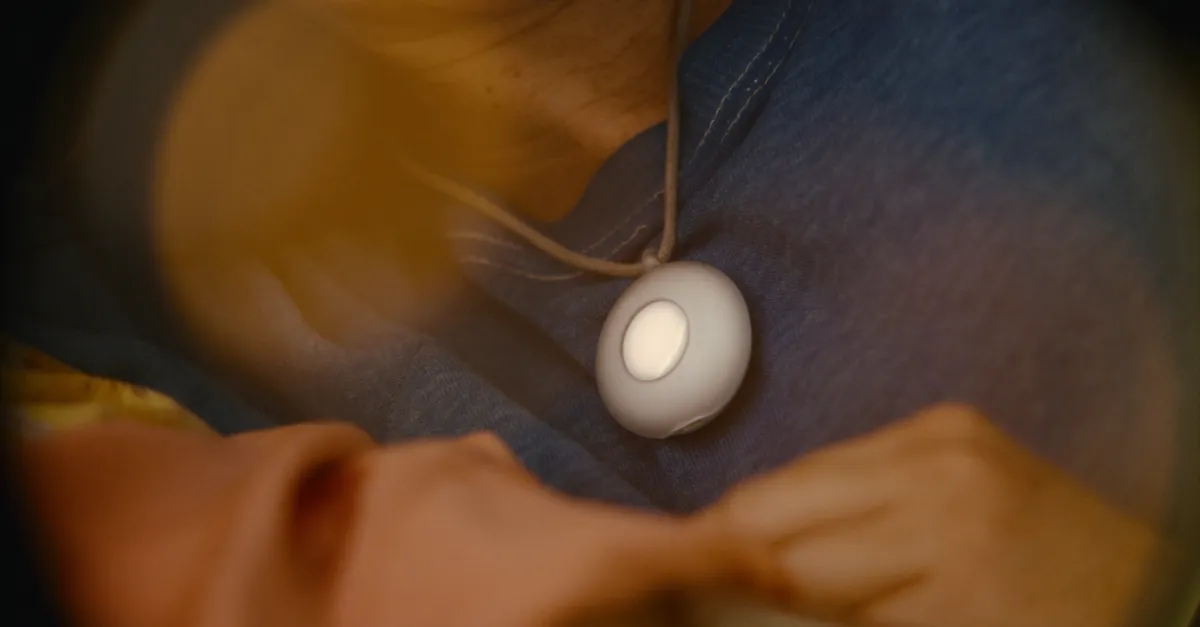
Friend has relaunched its AI pendant with a built-in speaker, turning the wearable from a text-only companion into a device that can talk back — and it now costs $249, nearly double its original $129 price. The reboot arrives less than a year after the company became a symbol of backlash against AI companionship and surveillance-like wearables.
The update matters because Friend is not just changing a product spec; it is testing whether adding voice interaction can make a deeply criticized gadget more appealing, or whether the company is simply asking customers to pay more for the same controversial idea.
Friend’s comeback is also a reminder of how quickly the AI hardware market is shifting. Companies are still experimenting with where artificial intelligence should live — in phones, earbuds, glasses, pendants, and other wearable devices — but consumer acceptance remains uneven, especially when the product’s premise feels intimate, persistent, or emotionally manipulative.
What Friend changed in the new version
Friend’s relaunch centers on one major hardware addition: a speaker. In the original version, the pendant could send written replies to the user, but the new model can respond out loud as well, making it feel more like a conversational companion than a message-based assistant.
The company promoted the updated product with a new ad showing two people speaking with their pendants about highly personal problems. Friend did not spell out every technical detail in the marketing, but the implication was clear: the pendant is now designed to listen, respond, and talk, not just quietly generate text on demand.
That shift gives Friend a more obvious use case. A wearable AI device that can speak may feel less like a notification accessory and more like a real-time helper. At the same time, it also heightens the social discomfort that surrounded the product from the start, because a talking pendant can seem even more intrusive than a silent one.
How much does Friend cost now?
Friend now costs $249, up from $129 at launch. In practical terms, the company is charging $120 more for the new speaker-equipped version.
That is a steep jump for a device that has already faced skepticism over its value proposition, especially since the pendant remains a niche product competing for attention in a crowded AI hardware market. The price change is likely to be one of the first things potential buyers notice, and perhaps the hardest to justify.
| Version | Feature set | Launch price | Price change |
|---|---|---|---|
| Original Friend pendant | AI replies via text/messages | $129 | — |
| Relaunched Friend pendant | AI replies via text and speaker voice | $249 | +$120 |
Why Friend became such a lightning rod
Friend drew attention long before the relaunch because it tried to sell artificial companionship as a physical object you could wear every day. That concept struck many people as unsettling, partly because it blurred the line between technology as a tool and technology as a stand-in for human connection.
The company also made headlines for its marketing choices. Friend spent heavily on advertising in New York City, including subway placements that made the pendant hard to ignore. Those campaigns turned the brand into a public conversation piece almost immediately, but not always in a favorable way.
Another part of the story was the company’s unusually aggressive branding bet. Friend reportedly spent $1.8 million of its $2.5 million on acquiring the friend.com domain, a move that signaled how much the startup valued a simple, memorable identity. That kind of spend can be a powerful brand play, but it also raised questions about priorities when the product itself was still unproven.
What happened in New York?
Last year, a protest in New York City targeted Friend and the broader idea of technology dependence. The demonstration became a focal point for criticism of the company’s approach, with activists treating the pendant as a visible symbol of the emotional and social risks they saw in AI companionship products.
Friend’s founder, Avi Schiffmann, did not distance himself from the attention. He shared a post promoting the protest and later appeared there in person, reinforcing the sense that the company was comfortable being in the middle of a cultural fight, even if the debate was sharply negative.
“Friend 2.0,” Schiffmann wrote in a post showing the new ad, signaling that the relaunch was meant to feel like a fresh start even though the product name on the website remains the same.
Why add a speaker now?
Adding a speaker is the most obvious way to make an AI wearable feel more responsive and human-like. Text alone can make an assistant feel distant; voice creates immediacy, personality, and the illusion of presence.
For a product built around companionship, that matters. Voice can make an AI seem warmer, more attentive, and more natural in emotionally charged moments. It may also help Friend differentiate itself from the many AI products that still feel like chatbots in disguise.
But the same feature can cut both ways. If the original product seemed to some observers like a lonely person’s gadget, the voice-enabled version may seem even more like a device that encourages overattachment. In other words, the update could increase engagement while also deepening criticism.
How does this fit the AI wearables market?
It fits into a broader wave of experimentation across the consumer AI device market, where startups and established brands are still searching for the right form factor. Wearables are appealing because they can stay close to the user and act in real time, but they also raise tougher questions about privacy, dependency, and social acceptability.
Friend’s pendant is one of the more polarizing attempts in that space because it is so openly centered on emotional connection. Other AI gadgets often emphasize productivity, translation, summarization, or convenience. Friend, by contrast, sells a relationship.
Who is Avi Schiffmann, and why is he central to this story?
Avi Schiffmann is the founder of Friend, and his role is central because the company’s public identity is inseparable from his choices. He helped shape both the product and the publicity strategy, and he has embraced the attention rather than trying to minimize it.
That matters because Friend has not behaved like a quiet startup trying to avoid controversy. Schiffmann’s willingness to lean into provocation has made the company more visible, but it has also amplified scrutiny over whether the pendant solves a real problem or simply monetizes isolation.
His decision to publicly frame the relaunch as a new era suggests that Friend is trying to reset the narrative around the device. Whether customers will see the speaker upgrade as meaningful innovation or as a gimmick is another question entirely.
What the relaunch says about AI companionship
The Friend relaunch highlights a bigger tension in the AI industry: the gap between technical capability and social acceptance. It is easy to build a device that responds, listens, and speaks. It is much harder to convince people that they want to wear one around their neck.
AI companionship products sit at the intersection of convenience, loneliness, and controversy. Supporters argue they can provide comfort, responsiveness, and a lightweight form of help. Critics worry they blur boundaries, encourage emotional dependence, and create new forms of surveillance or manipulation.
Friend’s latest version does not resolve that debate. If anything, it sharpens it. A pendant that only texts back might seem awkwardly futuristic; a pendant that speaks introduces the possibility of ongoing conversation, stronger attachment, and more audible reminders that an algorithm is always nearby.
Why the price increase may matter as much as the speaker
Price can be a proxy for confidence. By raising the cost from $129 to $249, Friend is signaling that it sees the new product as more capable and more valuable. But the move also raises the stakes: a higher price means higher expectations, and higher expectations can be difficult to satisfy for a product still fighting for legitimacy.
For consumers, the jump invites a simple question: what exactly changed besides the addition of a speaker? If the answer is “not enough,” the price increase may reinforce doubts rather than alleviate them.
For Friend, the pricing strategy may reflect a bet that a smaller, more committed audience is better than chasing mass appeal. That approach can work in specialty hardware categories, but only if the product offers enough utility or emotional resonance to sustain interest after the novelty fades.
Timeline: how Friend got here
The company’s latest relaunch makes more sense when viewed alongside the rapid sequence of events that brought it to this point.
| Timeframe | Event | Why it matters |
|---|---|---|
| Original launch | Friend introduces an AI pendant priced at $129 | Establishes the wearable as a consumer companion device |
| Brand-building phase | Friend spends heavily on the friend.com domain and runs broad subway ads in New York | Creates major awareness, but also backlash |
| Late 2025 | Public protests in New York target the company and AI dependence | Turns Friend into a symbol of concern about AI companionship |
| July 2026 | Friend relaunches the pendant with a speaker and a new ad campaign | Attempts to reframe the product as Friend 2.0 |
How consumers may react
Reactions are likely to split along familiar lines. Some buyers may see the speaker as the missing feature that makes the pendant feel complete. Others may view the higher price and the more talkative design as proof that the company is doubling down on an idea many people already found strange.
For early adopters, the relaunch could be enough to spark curiosity. For everyone else, the question is whether the pendant offers enough practical value to overcome the stigma attached to wearable AI friendship.
That stigma may be the real challenge. Even if the technology works well, Friend still has to persuade people that they want this kind of product in their lives — and on their bodies.
What comes next for Friend?
The company’s future will likely depend on whether this relaunch can move the product from novelty to necessity. In consumer tech, that usually requires a combination of improved functionality, stronger software, and a clearer reason to exist.
Friend has now made its pitch more direct: the pendant can talk, not just type. If the company can show that voice meaningfully improves daily use, it may have a path forward. If not, the relaunch may simply become another chapter in a long-running story about expensive branding and unresolved skepticism.
For now, the message from Friend is straightforward. The company that once shocked the public with an AI pendant is back with the same idea, a louder interface, and a much higher price tag.
Whether that makes the product more useful or just more expensive will determine if Friend 2.0 becomes a comeback — or another punchline.
At a glance
- Friend has relaunched its AI pendant with a built-in speaker.
- The device now costs $249, up from $129.
- The company is pitching the update as a more conversational version of the original product.
- Friend was previously criticized for its heavy marketing and for promoting AI companionship.
- The relaunch comes after protests and public backlash in New York City.
Frequently asked questions
What is new about Friend’s AI pendant?
The new version adds a built-in speaker, allowing the pendant to respond out loud instead of only sending written replies. That makes the device feel more like a conversational AI companion and less like a text-only wearable assistant.
How much does the Friend pendant cost now?
It now costs $249. That is $120 more than the original $129 price, making the relaunch significantly more expensive than the first version of the device.
Why has Friend been controversial?
Friend has been controversial because it sells the idea of artificial companionship in a wearable form. Critics also objected to its aggressive marketing, including subway ads in New York, and saw it as a symbol of unhealthy technology dependence.
Who founded Friend?
Avi Schiffmann founded Friend and remains closely tied to the company’s public image. He has leaned into the attention around the product, including by sharing the relaunch ad and publicly engaging with criticism.
Why does the speaker matter for the product?
The speaker matters because it gives the pendant a voice, which makes interactions feel more immediate and personal. For a device built around companionship, voice may increase usefulness — but it may also intensify concerns about emotional dependence.