In short
New Similarweb data suggests Google’s AI search features are rapidly becoming the default way users find information online. The shift is boosting time spent inside Google while reducing referral traffic for publishers.
- Google AI Overviews now appear in 43% of searches, up from 15% a year earlier.
- AI Mode visits more than doubled, reaching 279 million in May 2026.
- Publishers are losing referral traffic as AI answers reduce the need to click through.
- ChatGPT referrals improved after a May update, showing that link design still matters.
- Cloudflare is offering tools that let publishers block AI crawlers unless they are paid.
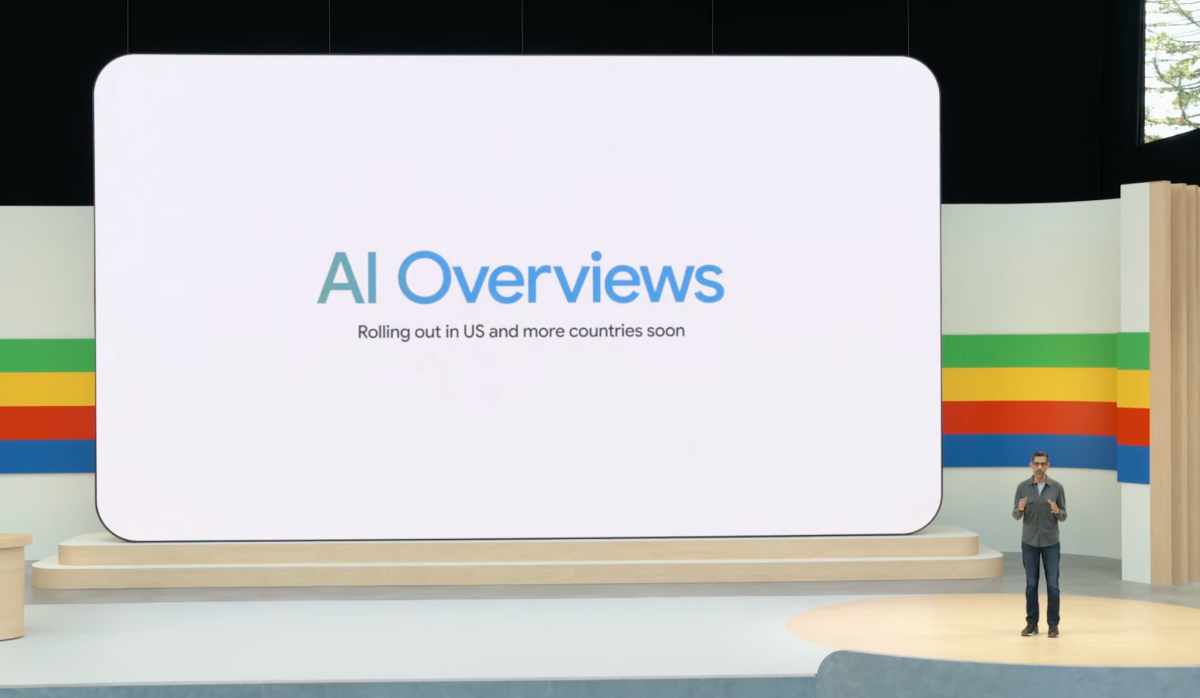
Google’s AI-generated search answers are becoming the default way many people get information online, with AI Overviews expanding from 15% of searches a year ago to 43% today, according to new Similarweb data. The shift matters because it is changing search from a gateway to the web into a destination of its own, reducing clicks to publishers while keeping more users inside Google’s ecosystem.
The new figures add fresh evidence that AI search is no longer an experiment layered on top of traditional search results. Instead, it is increasingly shaping how users ask questions, how Google presents answers, and how much traffic the broader web receives in return.
What the new data says about Google’s AI search
Google’s AI search products are growing fast enough to alter user behavior at scale. Similarweb’s latest analysis shows that AI Overviews now appear in 43% of searches, up sharply from 15% a year earlier. At the same time, visits to Google’s AI Mode climbed from 126 million in June 2025 to 279 million in May 2026.
That combination suggests Google is pushing beyond a simple summary panel. Users are increasingly being steered from a conventional results page into a conversational search experience that resembles a chatbot more than a classic search engine.
| Metric | June 2025 / Earlier Baseline | May-June 2026 | Change |
|---|---|---|---|
| Google AI Overviews share of searches | 15% | 43% | Up 28 percentage points |
| AI Mode visits | 126 million in June 2025 | 279 million in May 2026 | More than doubled |
| Average search length | Shorter keyword queries | Longer, more conversational queries | Searches are becoming more natural-language driven |
| AI responses with citations | Lower earlier rate | More than five times higher than a year ago | Substantial increase in cited answers |
How Google is changing the search journey
Google is changing the search journey by making the answer itself the starting point, not just the results page. In the old model, users typed a query, scanned a list of blue links, and clicked through to outside websites. In the new model, Google often presents an AI-generated answer first and then invites the user to continue the conversation inside AI Mode.
That makes Google less of a directory and more of an information destination. It still depends on the web it indexes, but the user experience now keeps many people within Google’s own interface for longer.
Search queries are becoming more conversational
One of the clearest signs of this shift is the length and style of queries. Similarweb says average search length has increased over the past year, which points to a move away from terse keyword strings and toward fuller, natural-language prompts.
This is exactly the kind of behavior AI products encourage. Instead of searching for “best protein bars,” for example, users may now ask a more elaborate question like “What are the best high-protein snacks for long workdays that are not too sweet?” The result is more context, more AI interpretation, and fewer visits to external pages.
Why AI Overviews matter more than they first seemed to
AI Overviews matter because they have shifted from being a novelty to a dominant interface element. When Google places AI-generated summaries in nearly half of searches, it changes not only what users see, but also what they feel compelled to do next.
If a result answers the question well enough on the search page, many users will not click farther. That has major implications for news, reference, and affiliate publishers that historically relied on Google as a traffic source.
Similarweb’s analysis suggests that what began as an optional AI layer has become embedded in the search experience itself, with users increasingly routed into Google’s own conversational tools rather than out to the open web.
Why publishers are worried
Publishers are worried because AI-powered search can satisfy a user without sending that user to the original source. That means fewer referrals, fewer page views, and less advertising revenue for websites that supply the underlying information.
The pain has been especially acute for news publishers, which depend on search traffic for audience growth and monetization. As AI-generated citations become more common, the click that used to accompany a search result is no longer guaranteed.
AI citations are rising, but clicks are not guaranteed
Similarweb reports that the share of AI answers containing citations has climbed more than fivefold over the last year. On paper, that looks like a win for source attribution. In practice, however, citations do not always translate into visits.
Users may read the AI summary and move on. In other cases, they may treat citations as supporting material rather than a reason to click. The result is a system in which websites can be named without necessarily benefiting from the traffic those names once brought.
Some sectors still get cited more often than others
Not all query categories behave the same way. According to Similarweb, travel, retail, and sports searches are more likely to produce cited AI answers than some other types of queries. That makes sense: these categories often involve practical decisions, product comparisons, and quick factual lookups that AI can summarize neatly.
But for publishers, the broader pattern is still concerning. Even when citations are present, the user may stay on Google rather than visiting the underlying article, product page, or guide.
What the data shows about ChatGPT referrals
The Google trend is not the only important part of the story. Similarweb’s report also shows that chat-based search experiences can drive different referral patterns depending on how links are presented.
For U.S. desktop users, ChatGPT query citations remained relatively limited overall, reaching just 6.8% as of May 2026. But referrals improved after a search update rolled out on May 7, suggesting that interface changes can meaningfully influence whether users leave the AI environment.
| ChatGPT desktop referral metric | March 2026 | May 30, 2026 | Trend |
|---|---|---|---|
| Share of visits landing on webpages | 25% | Nearly 60% | More than doubled after the update |
| U.S. desktop queries with citations | Lower earlier rate | 6.8% | Still limited overall |
| Search update date | May 7, 2026 | Appears to have improved outbound referrals | |
How did ChatGPT’s update change referrals?
ChatGPT’s update changed referrals by making outbound links more visible and useful. After the May 7 search update, the proportion of visits landing on webpages more than doubled, rising from 25% in March to nearly 60% by the end of May.
That is an important contrast with Google’s approach. It suggests that when AI interfaces highlight blue links clearly, users will still click. The lesson for publishers is that design details matter: citations can help, but only if they are prominent enough to draw traffic.
What this means for the open web
The broader implication is that Google is no longer just helping users discover the web. It is increasingly absorbing the discovery process into its own product, making the company the place where search begins and often ends.
That does not mean the web is disappearing. It means the economics of discovery are changing. Websites still create the source material, but a growing share of users may never reach them directly.
The old SEO playbook is under pressure
For years, publishers and brands optimized for rankings, snippets, and click-through rates. AI Overviews complicate that model by answering questions before the click happens.
That puts pressure on content businesses to think differently about visibility, authority, and monetization. Some may invest more in brand recognition, direct audience relationships, newsletters, apps, or subscription models. Others may try to adapt their content to the kinds of questions AI systems are most likely to quote.
Cloudflare is among the companies pushing back
Resistance is also starting to take shape technically and commercially. Cloudflare recently introduced tools designed to help publishers block AI crawlers unless the AI company pays for access through Cloudflare’s marketplace.
The move reflects growing frustration among content owners who believe they are being asked to subsidize AI systems that summarize their work without returning enough value. It also signals that the fight over who gets to use web content — and on what terms — is far from settled.
Why this shift matters now
This matters now because the change is happening quickly and at scale. A feature that began as a limited test is now central to the search experience for a large share of queries, and users are adapting their behavior accordingly.
As search becomes more conversational, Google’s role is also changing. Instead of sending users outward, it increasingly retains them longer, captures more of the session, and inserts its own AI layer between the user and the source material.
That is a major business and product shift for the company — and a potentially disruptive one for the rest of the online information economy.
Timeline: how AI search has accelerated
The pace of adoption helps explain why the issue has become so urgent for publishers and competitors alike.
| Date | Development | Why it matters |
|---|---|---|
| June 2025 | Google AI Mode receives 126 million visits | Shows early scale for Google’s conversational search product |
| March 2026 | ChatGPT desktop webpages landing rate is 25% | Outbound referrals remain limited before the update |
| May 7, 2026 | ChatGPT search update rolls out | Improves the visibility of blue links and boosts clicks |
| May 30, 2026 | ChatGPT webpages landing rate nears 60% | Signals that link design can materially affect traffic |
| May 2026 | Google AI Mode reaches 279 million visits | Confirms explosive growth in AI-first search behavior |
| July 2026 | Similarweb reports AI Overviews at 43% of searches | Shows AI answers becoming mainstream in search results |
Where the search market may go next
The next phase is likely to be a contest over presentation, attribution, and control. Search platforms will try to make AI answers more useful and sticky, while publishers and infrastructure providers will look for ways to preserve the economic value of original reporting and reference content.
Users, meanwhile, are likely to keep rewarding whichever product answers questions fastest with the least friction. If that means staying inside Google longer, the trend line may continue upward.
For now, the evidence points in one direction: AI search is not merely arriving. It is becoming the default behavior for a growing share of users, and Google is at the center of that transition.
Frequently asked questions
How much has Google’s AI search grown?
Google’s AI search has grown quickly, with AI Overviews rising from 15% of searches to 43% in roughly a year, according to Similarweb. AI Mode also surged from 126 million visits in June 2025 to 279 million in May 2026.
Why are publishers concerned about AI Overviews?
Publishers are concerned because AI Overviews can answer a question without sending users to the original article. That reduces referral traffic, weakens ad revenue potential, and makes it harder for news and reference sites to benefit from Google search.
Do AI citations guarantee clicks?
No, AI citations do not guarantee clicks. Similarweb says cited AI answers have become much more common, but users often stop at the summary. Citations can improve attribution while still leaving publishers without the traffic they used to receive.
Did ChatGPT referrals improve after its search update?
Yes, ChatGPT referrals improved after a May 7 search update. The share of visits landing on webpages rose from 25% in March 2026 to nearly 60% by May 30, suggesting that more visible links can drive outbound traffic.